High-Performance Tennis & Field Turf Systems
Explore factory-direct engineered surfaces verified for ITF tournament speed ratings, high shear resistance, non-directional pile stability, and extreme climate durability.
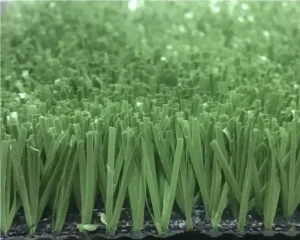
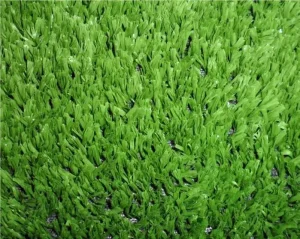
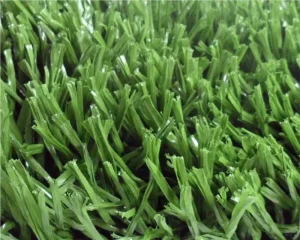
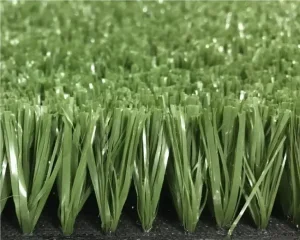
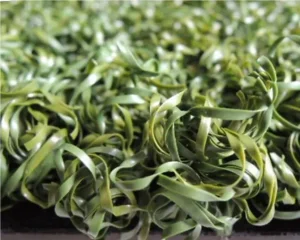
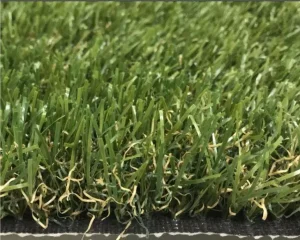
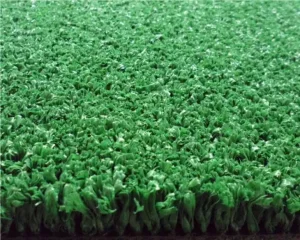
Engineering Precision in Tennis Turf Manufacturing
Vertical mastery over polymer synthesis and tufting mechanics is the decisive factor separating tournament-grade tennis courts from commodity residential landscaping.
Five Decades of Monofilament Provenance
Founded in March 2002 as Suntex Sports-Turf (Kunshan) Corporation, our manufacturing infrastructure draws directly from our parent company, RiThai International, which spearheaded industrial nylon and polyolefin monofilament extrusion in Taipei beginning in 1977. Rather than procuring commoditized yarn from fragmented open markets, our tennis turf surfaces benefit from 48+ years of dedicated yarn molecular alignment, crystallization rheology, and precise spinneret development.
This historical edge guarantees that every meter of our sports turf achieves optimal tensile yield, ensuring fiber elasticity persists even under severe, repetitive horizontal shearing forces typical of competitive baseline play.
Strategic TenCate Partnership & Yarn Architecture
As an authorized partner and distributor of TenCate Grass Turf Yarn since 2002, we unite globally renowned synthetic fiber science with mega-scale precision manufacturing. Tennis turf imposes mechanical demands distinct from soccer: fibers must endure high-velocity ball impacts, aggressive lateral foot drag, and concentrated sand abrasion without fibrillation fatigue or premature spine collapse.
By deploying proprietary C8 Linear Low-Density Polyethylene (LLDPE) and copolymer polypropylene (PP) blends texturized with micro-crimping algorithms, our courts retain continuous pile memory, avoiding fiber laying and erratic ball skid across multi-year operational lifecycles.
PFAS-Free Integrity & Systematic Compliance
Global environmental mandates—specifically the European Chemicals Agency (ECHA) regulations and US state-level per- and polyfluoroalkyl substances restrictions—demand rigorous non-toxic material traceability. Suntex tennis surfaces are manufactured under strictly monitored PFAS-free formulation regimes, verified via comprehensive DIN and EN laboratory gas chromatography-mass spectrometry testing.
Governed by strict ISO 9001 (Quality), ISO 14001 (Environmental Stewardship), and ISO 45001 (Occupational Safety) certifications maintained uninterrupted since 2003, our factory delivers verified chain-of-custody documentation necessary for municipal tenders and institutional projects worldwide.
Why Tier-1 Chinese Turf Factories Dominate Global Supply
The convergence of vertically integrated petrochemical feedstocks, advanced robotic tufting clusters, and deep port logistics confers decisive advantages in performance consistency, yield, and landed economics.
1. Vertical Raw Material Synthesis
Unlike European or North American assembly-only plants that rely on cross-border transport of pre-extruded bobbins, our Kunshan facility operates directly adjacent to the world's most sophisticated petrochemical supply nodes in the Yangtze River Delta. Polymer compounding, masterbatch blending (including Ciba-Geigy UV stabilizers and organometallic pigments), texturizing, and twisting occur in uninterrupted sequence. This vertical coupling dampens input volatility and guarantees lot-to-lot color matching within a stringent Delta E < 0.8 tolerance.
2. High-Gauge Tufting Micro-Engineering
Tennis turf necessitates precise tufting densities—routinely reaching 35,000 to over 55,000 stitches per square meter using 3/8", 5/16", or 3/16" gauge configurations. Our production floor houses advanced computer-controlled tufting machines outfitted with pneumatic yarn compensators and laser loop sensors. This micro-engineering eliminates pile height variation across 4-meter wide rolls, providing the uncompromising flat plane necessary for predictable tennis ball bounce.
3. Advanced Polyurethane & SBR Backing Chemistries
A tennis court's longevity is fundamentally determined by secondary backing integrity under high hydrothermal cycling. Our continuous drying ovens apply carboxylated styrene-butadiene (SBR) latex or solvent-free Polyurethane (PU) compound at precisely metered dry-coat weights (up to 1,000 g/m²). This achieves tuft pull-out forces exceeding 45–55 Newtons—far outperforming ISO standard minimums (30N) and ensuring fibers remain locked under explosive lateral slides.
4. Optimized Scalability & Project Logistics
Operating dedicated production lines with annualized multi-million square meter capacities enables fast turnaround for turnkey contracts. Consolidated access to Shanghai and Ningbo deep-water ports allows optimized 40' High Cube container loading matrices, minimizing roll deformation via custom heavy-gauge cardboard cores and UV-resistant poly-wrap packaging. Importers benefit from 28% to 35% overall capital cost reductions compared to Western contract converters.
ITF Court Pace Ratings (CPR) & Kinetic Performance
Deconstructing the physical mechanics governing ball skid, vertical rebound velocity, and player joint deceleration on synthetic turf tennis systems.
| ITF Category | Pace Rating (CPR) | Typical Pile & Yarn Build | Sand Infill Specification | Target Playing Dynamics |
|---|---|---|---|---|
| Category 1 (Slow) | ≤ 29 | 15–20mm PE Monofilament, Texturized | High infill (sand within 2mm of tips) | High vertical bounce, extended rally time, similar to European red clay. |
| Category 2 (Medium-Slow) | 30 – 34 | 13–15mm PE/PP Hybrid Fibrillated | Moderate dressed (sand 3-4mm below tips) | Balanced player slide, predictable topspin responsiveness. |
| Category 3 (Medium) | 35 – 39 | 12–15mm TenCate High-Memory Monofilament | Sand-dressed calibrated silica (0.2–0.6mm) | All-court balance; standard for high-level club play and training centers. |
| Category 4 (Medium-Fast) | 40 – 44 | 10–13mm Short-pile PP Curled Texturized | Low infill, dense fiber concentration | Lower bounce trajectory, faster through-court ball velocity. |
| Category 5 (Fast) | ≥ 45 | 10mm Dense Texturized Monofilament | Minimal micro-sand stabilization layer | Aggressive serve-and-volley advantage, low angle of skid reflection. |
The Physics of Sand-Dressed Systems
Unlike unfilled landscape grass or heavy rubber-infilled soccer fields, premium tennis turf relies on precisely graded washed and dried rounded silica sand (typically 80–90% roundness factor, 0.2mm to 0.8mm mesh size). Angular crushed sands are strictly avoided as their sharp edges shear the synthetic fibers during play.
The sand serves three vital functions: it stabilizes the tufted fabric without mechanical anchors, exposes just 2–4mm of the fiber tips to ensure continuous non-directional ball spin response, and facilitates controlled foot sliding, reducing peak rotational torque on athletes' knees and ankles by up to 40% compared to rigid acrylic hard courts.
Vertical Deformation & Shock Absorption
Competitive tennis requires a fine equilibrium between energy restitution and player protection. By pairing our 15mm tennis turf with closed-cell cross-linked polyethylene (XPE) or in-situ elastomeric shock pads (5mm to 8mm thickness), the system achieves a force reduction value of 25% to 35% in compliance with EN 14808.
This dynamic attenuation mitigates chronic micro-trauma to players' lumbar spines and lower-extremity joints, extending daily playing capacity for tennis academies, resorts, and senior club memberships without sacrificing the sharp, true ball roll required by high-performance athletes.
Macro Industry Trends Reshaping Tennis & Racquet Facilities
Technological disruption, environmental imperatives, and multi-sport court conversions are redefining synthetic sports turf engineering worldwide.
1. The Global Padel & Pickleball Explosion
The rapid worldwide expansion of Padel and Pickleball has ignited extraordinary demand for specialized short-pile, ultra-dense synthetic turf. Padel courts subject surfaces to extreme rotational wear concentrated along the glass walls and service boxes.
Suntex engineers developed 10–12mm non-directional texturized monofilament profiles that eliminate the grain effect, ensuring the ball reacts identically whether striking near the net or off the back screen. Factory production lines now routinely deliver integrated court kits featuring precision pre-tufted white line markers, significantly compressing on-site installation timelines.
2. Circular Economy: Fully Recyclable Mono-Material Turf
Conventional synthetic grass utilizes a polyethylene fiber stitched into a polypropylene primary backing, bonded with a styrene-butadiene rubber secondary compound. This multi-polymer mix complicates end-of-life recycling, usually consigning decommissioned pitches to landfills. The leading frontier—actively running in our Kunshan plant—is 100% Polyethylene Mono-Material Systems.
By fusing PE yarn to a specialized woven PE backing utilizing thermal hot-melt resin bonding, the entire spent turf roll can be directly granulated, re-pelletized, and extruded back into industrial polymer applications without chemical separation.
3. Non-Infill & Hydro-Cooling Masterbatch Technologies
Urban rooftop clubs and premium indoor centers increasingly demand non-infilled systems to eliminate sand migration, dust generation, and maintenance overhead. This is achieved through hyper-dense stitch rates (up to 65,000 stitches/m²) using multi-ply curled texturized fibers that stand fully upright unsupported.
Concurrently, for outdoor courts in severe solar thermal zones, we integrate solar-reflective additives into the polymer masterbatch that reflect near-infrared radiation, reducing surface temperatures by 8°C to 12°C compared to conventional synthetic turf.
Localized Engineering for Extreme Climate Conditions
A specification that excels in a temperate European facility will rapidly degrade in the Arabian Gulf or fail during Canadian freeze-thaw cycles without customized thermal and hydraulic stabilization.
Arid & High-UV Environments (Middle East & Australia)
Solar irradiance exceeding 2,200 kWh/m² combined with ambient ground heat above 50°C accelerates photo-oxidative degradation of cheap polyolefins. We deploy high-dosage Hindered Amine Light Stabilizers (HALS) coupled with UV-stabilized pigments rated for 12,000+ hours in accelerated QUV weathering chambers.
The secondary backing is reinforced with dual-layer woven geotextiles to resist thermal dimensional expansion, ensuring the court remains laser-flat without bubbling or seam failure under scorching summer heat.
Severe Sub-Zero & High Freeze-Thaw Zones (Nordics & Canada)
In high-latitude installations, water trapped within backing layers undergoes frost heave, splitting latex bonds and detaching yarn tufts. Our cold-climate turf incorporates specialized polyurethane backing matrices formulated to maintain elastomeric ductility down to -40°C.
Coupled with punched vertical drainage perforations yielding infiltration capacities exceeding 180 liters/minute/m², water evacuates into sub-base frost-protection aggregate blankets before crystallization can occur.
High-Humidity Coastal & Tropical Belts (Southeast Asia & Florida)
Continuous marine humidity and salt spray promote algal colonization and fungal decay within damp sand infill. We formulate our fibers with broad-spectrum antimicrobials compounded into the polymer resin rather than surface-sprayed.
Furthermore, we specify premium kiln-dried, dust-free quartz infill coated with specialized acrylic polymers to inhibit bacterial biofilm adherence, maintaining drainage permeability and traction throughout intense monsoon seasons.
Educational & Multi-Sport Institutional Facilities
Schools, universities, and municipal parks rarely have the luxury of single-use tennis infrastructure. They require multi-sport versatility where tennis, field hockey, netball, and five-a-side soccer co-exist on a single surface.
We configure hybridized 15–20mm dual-fiber systems featuring high-denier texturized yarns tufted alongside fibrillated blades. Inlaid multi-colored line markings (white for tennis, yellow for hockey, blue for five-a-side) are factory-integrated to eliminate labor-intensive field cutting while ensuring absolute compliance with governing sports dimensions.
Civil Sub-Base Engineering, Drainage & Installation Rigor
The finest synthetic turf will inevitably fail if placed upon an inadequate sub-base. The turf surface and civil engineering layers operate as an inseparable athletic system.
Porous Asphalt (Macadam) vs. Concrete Base Slabs
For elite tennis facilities, open-graded porous macadam remains the global gold standard. Engineered with single-sized aggregate and low-binder bituminous content, it enables vertical water flow straight through the surface into underground ring drains, permitting immediate play after torrential downpours.
Where reinforced concrete slabs are utilized (common in high-water-table regions or indoor conversions), the slab must be engineered with a strict 0.5% to 1.0% cross-fall toward perimeter drain channels. A mechanical moisture barrier or epoxy primer is essential to prevent moisture vapor transmission from delaminating latex backing compounds.
Laser Screeding, Tolerances & Planarity Testing
Tennis ball rebound mechanics permit near-zero surface deviation. Governing sports authorities require that when tested with a 3-meter straight edge, surface deviations cannot exceed 3mm at any point across the entire playing enclosure.
Sub-base preparation requires dual-axis laser graders during the dynamic crushed-stone compaction phase. Once the base is cured, dynamic cone penetrometer (DCP) testing verifies a California Bearing Ratio (CBR) exceeding 15% to safeguard against localized settlement beneath heavy service baselines.
Seaming Chemistry & Infill Distribution Protocol
The physical seams connecting turf rolls represent potential weak points under aggressive braking stresses. We mandate the use of high-tensile 300mm wide spun-bonded polypropylene join tape paired with two-part polyurethane moisture-curing adhesives.
Infill distribution must occur strictly during dry conditions utilizing calibrated motorized drop-spreaders in multiple micro-passes (typically 4 to 5 kg/m² per pass), interspersed with counter-rotating cylindrical power brushing to ensure sand grains seat deep into the base of the pile without trapping or burying fiber tips.
Global B2B Procurement, Tendering & OEM Specifications
A direct guide for commercial importers, contractors, and municipal procurement directors navigating technical bidding, lab verification, and freight optimization.
Container Loading Matrices & Ocean Freight Engineering
Ocean freight represents a major component of landed square-meter costs. Standard tennis rolls are produced at 4.0-meter widths (with 2.0-meter widths for line-work and runoffs). Roll outer diameters must be mathematically calibrated to maximize internal container cubic utilization.
By engineering high-density roll winding under hydraulic tension and utilizing reinforced 100mm heavy-wall cardboard cores, our factory fits up to 4,200 m² of 15mm tennis turf inside a single 40' High Cube container without creasing or roll core collapse during multi-week marine transits.
Laboratory Testing: Lisport Wear & Mechanical Aging
Commercial tender documents require verifiable proof of durability. Suntex surfaces undergo continuous third-party testing via accredited independent laboratories (such as Labosport and Sports Labs). Key parameters confirmed prior to production release include:
Lisport Mechanical Abrasion: Verified stability across 20,000 to 50,000 cycles with zero spine detachment; Tuft Anchorage: Pullout resistance verified > 35N (ISO 4919); Colorfastness to Light: Grey Scale > 4 under xenon-arc radiation (ISO 105-B02); and Water Permeability: Flow rate > 500 mm/hour (EN 12616).
OEM Private Labeling & Turnkey Customization
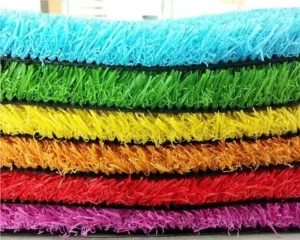
For international sports surface brands and regional master distributors, we provide complete private-label manufacturing programs. Customization parameters include yarn cross-sectional extrusion (diamond, spine, oval, or flat), custom Pantone color matching (from classical Wimbledon green to Australian Open electric blue and clay-court terracotta), custom stitch densities, branded tear-proof backing foils, and automated pre-cut court kit labeling for error-free job site unrolling.
Frequently Asked Questions: Technical & Procurement Clarity
In-depth responses covering engineering specifications, maintenance protocols, compliance certifications, and factory operations.
What is the structural difference between monofilament and fibrillated tennis turf?
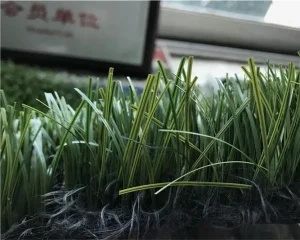
Fibrillated yarn begins as an extruded flat tape that is micro-slit in a honeycomb network. Under play and sand compaction, these slits open up, encapsulating the sand tightly. It provides exceptional sand stability and cost-efficiency. Monofilament turf consists of individual, solid extruded yarn strands. Monofilament offers superior mechanical longevity, heightened resilience against fiber laying, and a significantly more realistic grass visual profile, making it the preferred choice for tournament-grade and high-traffic private tennis facilities.
How does quartz sand infill volume dictate ball bounce and pace rating?
Sand infill depth directly controls surface hardness and fiber exposure. If a 15mm pile court is infilled with sand up to 13mm (leaving only 2mm of fiber exposed), the ball contacts compacted quartz immediately, yielding a firm, high vertical bounce and faster pace rating (ITF Category 4 or 5). Conversely, reducing the sand depth to 8–10mm exposes more pliable fiber, cushioning ball impact, reducing rebound velocity, and slowing the court pace to an ITF Category 1 or 2 rating.
How does Suntex verify compliance with global PFAS-free legislation?
We enforce strict supply chain screening on all raw polymer resins, color masterbatches, and processing extrusion aids. Third-party testing via certified international laboratories confirms total fluorine content is beneath detectable limits using oxygen bomb combustion followed by ion chromatography, ensuring full compliance with European REACH Annex XVII proposals and US EPA reporting standards.
Can artificial tennis turf be installed directly over existing hard courts?
Yes. Cracked or weathered asphalt and concrete acrylic courts represent ideal structural substrates for synthetic turf overlays, saving significant demolition expenses. However, before installation, any major structural cracks must be filled with elastic polymer mortar, surface hollows leveled to within planarity tolerances, and proper slab slope verified to guarantee lateral runoff into surrounding drainage swales.
What is the anticipated commercial lifespan and maintenance routine for a tennis turf court?
A properly installed, high-density monofilament tennis turf surface typically delivers an operational lifespan of 8 to 12 years under normal club play conditions. Ongoing maintenance is minimal compared to natural grass or clay: drag-matting once or twice weekly to redistribute sand uniformly, clearing surface debris, and semi-annual power brushing to decompact the sand matrix and prevent moss or algae accumulation in shaded corners.
What is the standard production lead time and Minimum Order Quantity (MOQ) for custom project builds?
Our standard production lead time for full-court runs ranges from 10 to 18 days from technical specification sign-off. The standard project MOQ is one full tennis court kit (approximately 650 to 700 m²), which integrates all main playing surface rolls and pre-tufted or inlaid line boundaries. For custom yarn color extrusions or dedicated private-label backing print runs, typical MOQs are 2,000 m².
Comprehensive Sports, Multi-Use & Architectural Solutions
Review our specialized synthetic turf systems engineered across landscape, commercial golf, multi-sport recreation, and institutional stadium installations.