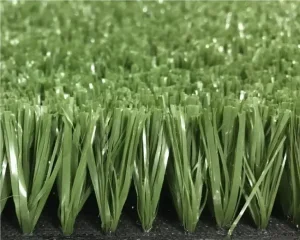
High-Spec Turf Formulations (Series I)
Direct manufacturer tufted solutions built on high tensile monofilament engineering, optimized for impact dispersion, high UV tolerance, and multi-functional recreational utility.
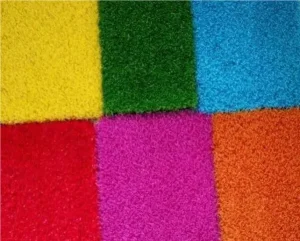
Buy High Quality Colorful Ornamental Grass Products, Suppliers
Explore Specs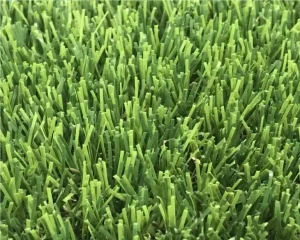
Buy Best Non-toxic Kids Playground Grass Manufacturer, Factory
Explore Specs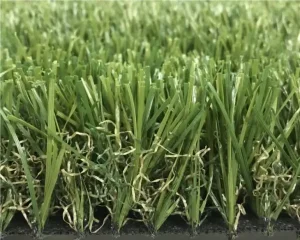
Wholesale Customized Tough And Nonslip Decorative Grass Product, Supplier
Explore Specs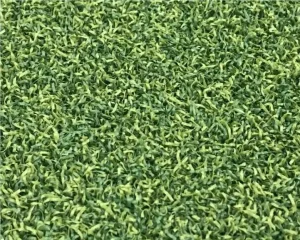
Buy Wholesale Nonslip Putting Green Turf Factories, Factory
Explore Specs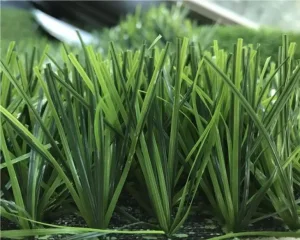
Buy Affordable Football Grass For Schools Manufacturer, Factories
Explore Specs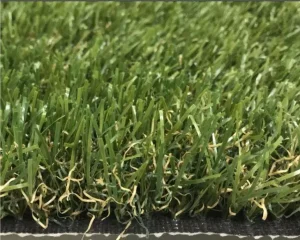
Buy Pet Artificial Grass manufacturer Product, Factories
Explore Specs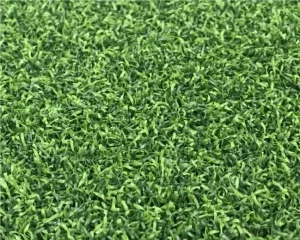
Wholesale Harmless Indoor Putting Green Turf Manufacturers, Manufacturer
Explore Specs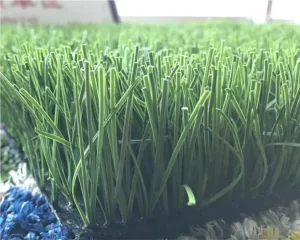
Buy Artificial Soccer Field Turf Factories, Suppliers
Explore SpecsCommercial Status & Paradigm Shift in Playground Surfacing
Transitioning from loose-fill materials (wood mulch, pea gravel) and pour-in-place (PIP) rubber to high-density, bio-mechanical landscaping grass systems.
The global playground infrastructure landscape has reached an unprecedented regulatory and structural pivot point. Historically dominated by loose organic mulch or rubber crumb bound by aromatic polyurethanes, commercial recreational facilities now demand unified surfaces that eliminate inhalation hazards, soil displacement, and maintenance cycles. High-specification landscaping grass for playground products serves this modern infrastructure requirement by coupling sports-grade mechanical endurance with natural aesthetics.
According to municipal safety audits across North America and the European Union, standard fall surfaces degrade unevenly under heavy cycle impact, leading to micro-regions of safety failure beneath swings and slide exits. Synthetic playground turf systems, integrating precision-engineered polyolefin monofilaments and cross-linked expanded polyethylene (XPE) shock pads, maintain consistent HIC (Head Injury Criterion) performance below the threshold value of 1,000 across a 10-year operating life. Engineered turf eliminates tracking of foreign contaminants indoors while mitigating pathogenic risks inherent to moist organic fills.
ASTM F1292 & EN 1177 Strict Alignment
Impact attenuation remains non-negotiable. Modern playground landscaping grass is formulated to function as an interdependent sandwich system, dissipating kinetic vector forces safely via multi-tier shock pad matrices.
Safety BenchmarkZero Heavy Metals & PFAS-Free Formulations
Driven by strict EU REACH compliance and US EPA regulations, modern extrusion uses pure high-purity virgin PE/PP resins with zero intentionally added per- and polyfluoroalkyl substances (PFAS) and zero lead trace.
Chemical PurityLifecycle ROI & Water Management Optimization
Eliminating irrigation, aerating, and mulch replacement cycles translates to full capital recoupment within 28–36 operating months, alongside high percolation drainage handling up to 500+ mm/h of rainfall.
Economic UtilityEmerging Technologies & Structural Paradigms
The progression of yarn geometry, backing chemistries, and circular recycling economics powering current and future playground surfaces.
Thermal Dissipation & Cool Fiber Tech
Reflective pigments and inorganic micro-fillers redirect infrared wavelengths, dropping composite surface temperatures by 10°C to 15°C compared to conventional dark turf.
Infrared ReflectionPolyurethane & Hot-Melt PO Backings
Transitioning from traditional styrene-butadiene latex (SBR) to durable Polyurethane (PU) and 100% Polyolefin (PO) melt bonds locks tufts tightly while enabling mono-material recycling.
Tuft Bind IntegrityCurled High-Dtex Texturized Thatch
By interweaving densely curled polypropylene or polyethylene thatch layers within straight monofilament yarns, the system locks infill sand solidly in place and cushions child impact.
Structural StabilityInherent Antibacterial Additives
Bio-compatible antimicrobial agents embedded directly into the masterbatch prevent algae, mould, and bacterial proliferation without washing off over outdoor rain cycles.
Hygiene AssuranceLocalized Engineering Application Scenarios
Customizing system depth, infill weight, drainage capacity, and yarn profiles for varying global environmental and institutional conditions.
Early Childhood & Daycare Centers
Specification: 25–30 mm non-abrasive PE monofilament + 20 mm XPE underlayment.
Priority: Skin-friendly soft touch, zero dust or airborne particulates, and low-friction profiles that eliminate floor burn when toddlers crawl and tumble.
Public Municipal Parks & Playgrounds
Specification: 35–45 mm high-dtex C/W-spine fibers paired with anti-compaction infill and heavy-duty shock pads.
Priority: Resisting extreme, continuous foot traffic, harsh sunlight, dynamic vandalism resistance, and universal wheelchair access under ADA guidelines.
Rooftops, Terraces & Urban Balconies
Specification: 20–30 mm rapid-drain turf with grid-core dimpled drainage backing boards.
Priority: Lightweight structural dead load, class Bfl-s1 fire retardance, and instant directional stormwater evacuation toward building roof drains.
Macro Engineering Solutions & Cross-Section Roadmap
A certified playground installation is a comprehensive civil composite structure engineered layer by layer to guarantee long-term dimensional stability and safety compliance.
Layer 1: Permeable Sub-Base
Compacted crushed dynamic stone aggregate or porous asphalt provides total structural load-bearing capacity and horizontal drainage routing to prevent pooling.
Geotechnical FoundationLayer 2: Energy Attenuation Pads
Closed-cell interlocking or continuous roll cross-linked foam pads (15 mm to 45 mm) engineered specifically to absorb fall acceleration and achieve critical fall height compliance.
Impact AbsorberLayer 3: Reinforced Primary Turf
High-grade virgin polyethylene monofilament tufted with dual UV stabilizers into multi-layered PP backing fabric, locked permanently via resilient PU adhesive formulations.
Wearing SurfaceLayer 4: Ballast & Stabilizing Infill
High-purity rounded quartz silica sand (0.5–1.0 mm) ballast balances blade resilience, provides ballast weight against shrinkage, and shields backing polymers from UV aging.
Ballast MediumFrequently Answered Technical Questions
Expert answers addressing the critical parameters considered by municipal engineers, playground contractors, and landscape architects.
How does artificial playground grass comply with ASTM F1292 / EN 1177?
Turf alone cannot absorb high-velocity impacts. It is part of an engineered assembly. Compliance relies on the interaction between turf pile height, ballast weight, and an underlying closed-cell shock pad. Certified drop tests verify that the HIC value stays below 1,000 and maximum G-force remains under 200 Gs from target equipment heights up to 10 feet (3.05 m).
Is the turf free from PFAS and harmful heavy metals?
Yes. Our dedicated playground formulations use exclusively certified virgin polyolefins. Standard testing adheres to European REACH 1907/2006, EN 71-3 (Safety of Toys - Migration of Certain Elements), and zero intentionally added PFAS guidelines, ensuring complete biological safety for infants and children.
How does the system handle intense stormwater and drainage?
Standard synthetic grass for playgrounds features perforated backing systems with punch-hole matrices yielding drainage rates exceeding 500 mm per hour. When installed over an open-graded stone base or drainage shock pads, puddling and mud accumulation are entirely eliminated, allowing immediate post-rain play.
What prevents turf yarn shrinkage or seam separation over time?
Linear dimensional stability is achieved via a reinforced double-woven polypropylene backing reinforced with fleece and locked with durable polyurethane (PU) compound. When combined with correct silica ballast sand loading (8–12 kg/m²), thermal expansion and contraction are minimized across severe freeze-thaw and summer cycles.
High-Spec Turf Formulations (Series II)
Specialized multi-sport, decorative, and performance football artificial grass systems manufactured under rigorous ISO 9001 and ISO 14001 process standards.
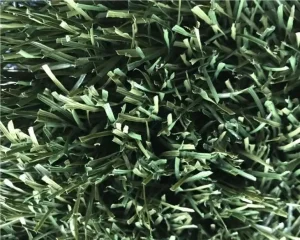
Buy FIFA Approved Turf Football Field Manufacturer, Products
Explore Specs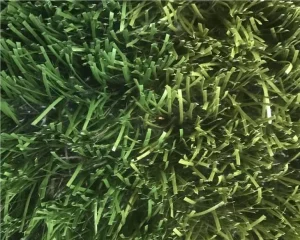
Wholesale High Quality TenCate Rugby Surface Turf Manufacturer, Products
Explore Specs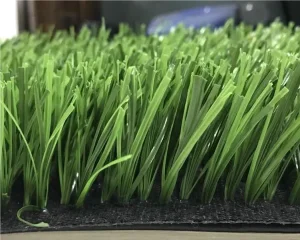
OEM Customized Affordable Artificial Football Turf Manufacturer, Factory
Explore Specs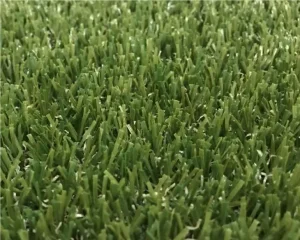
Wholesale Artificial Golf Landscaping Green Grass Manufacturer, Supplier
Explore Specs
Wholesale Customized Tough And Nonslip Decorative Grass Product, Supplier
Explore Specs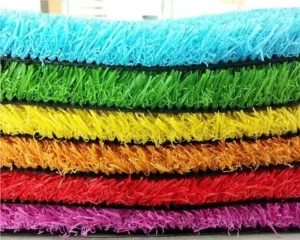
Buy Stylish And Durable Ornamental Grass Products, Product
Explore Specs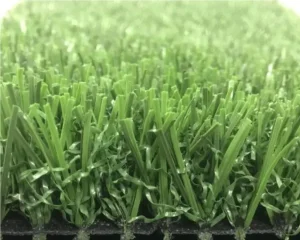
Wholesale New Developed Best Multi-sports Turf Products, Product
Explore Specs