Direct Sourcing Catalog
High-Performance Garden & Landscaping Turf Series
Engineered for high-traffic villa lawns, architectural rooftop gardens, and multi-functional residential outdoor spaces.
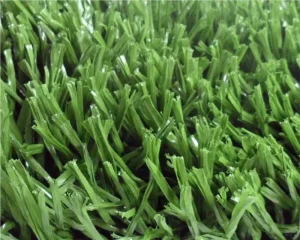
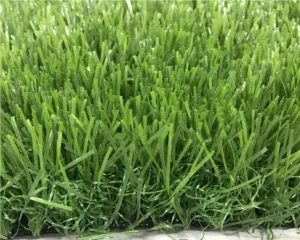
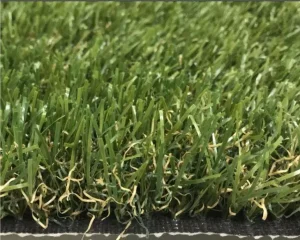
Industrial Status Quo
The Global Commercial State of Landscaping Grass
A structural shift from decorative substitution toward climate-resilient civil infrastructure.
The global market for synthetic landscaping turf has transcended the legacy perception of "plastic carpet." Driven by prolonged meteorological droughts across North America, the Mediterranean basin, and Australasia, landscaping grass for garden deployments is now calculated as a fundamental utility conservation asset. Commercial developers, municipal landscape planners, and residential property consortiums operate under severe water allocation limits and soaring labor costs. Suntex Sports-Turf (Kunshan) Corporation, operating under Taiwanese precision manufacturing traditions since March 2002 and backed by RiThai International’s yarn extrusion history dating back to 1977, bridges the gap between raw petrochemical innovation and landscape architectural realities.
22+
Years Tufting Mastery
30+
Global Export Territories
6–75
Pile Height Range (mm)
100%
PFAS-Free Audited
Macroeconomic Arbitrage
Traditional garden maintenance yields a compounding expenditure curve involving potable water tariffs, gas-powered mowing equipment, and seasonal pesticide re-application. High-density Polyethylene (PE) systems decouple lawn aesthetics from ongoing operational maintenance, returning capital expenditures within 24 to 36 months across tier-one commercial venues.
Hydrological Crisis Response
In municipal jurisdictions such as the American Southwest and Southern Europe, water authorities have instituted mandatory turf-replacement rebates alongside severe punitive fines for non-functional turf irrigation. Engineered garden turf allows multi-family residential projects to maintain requisite biophilic green space ratings without water drawing permits.
Supply Chain Realignment
The global distribution matrix has matured. Modern B2B importers bypass secondary packaging agents, demanding direct integration with primary extrusion and tufting facilities. Control over yarn tensile strength, masterbatch pigmentation stability, and primary backing lamination represents the fundamental baseline for high-volume distributor relationships.
Market Evolution
Emerging Technology Trends in Garden Turf Manufacturing
How polymer breakthroughs and ESG directives are transforming modern lawn fabrication.
PFAS Elimination & REACH Compliance
Regulatory scrutiny around Per- and polyfluoroalkyl substances (PFAS) has permanently changed processing aid formulations. Suntex manufactures verified PFAS-free yarn architectures using specialized fluoropolymer-free masterbatches, compliant with stringent EU REACH 1907/2006 protocols and United States state-level environmental mandates.
Thermal Mitigation Polymers
Historically, synthetic turf suffered from radiant heat absorption under peak solar irradiance. Contemporary polymer engineering integrates infrared-reflective pigments (IR-reflective chemistry), reducing surface heat index levels by up to 10°C to 15°C compared to conventional dark-pigmented fibers, enhancing residential comfort.
Mono-Polymer Circularity
Traditional turf systems bonded PE monofilaments to polypropylene backing with SBR latex, complicating post-consumer mechanical recycling. The industry is rapidly adopting mono-material systems where fibers, backing, and polyurethane or hot-melt adhesives belong to identical polyolefin families, facilitating direct closed-loop pelletization.
Application Matrix
Localized Engineering Paradigms
Specific spatial installations require dedicated hydrodynamic and physical specifications.
| Target Scenario | Recommended Pile & Dtex | Fiber Geometry | Backing & Hydraulic Target | Engineering Justification |
|---|---|---|---|---|
| Private Garden Lawn | 30mm – 40mm | 7,500 – 10,000 Dtex | C-Shape / W-Shape PE + PP Thatch | Perforated Polyurethane / SBR (>60 L/min/m²) | Optimizes spring-back under foot traffic while secondary thatch conceals substrate pins and sand infill. |
| Pet-Centric Garden Runs | 20mm – 30mm | 8,800 – 11,000 Dtex | Dense Monofilament Spine (Anti-Bacterial) | 100% Permeable Non-Porous Backing (>300 L/min/m²) | Short pile prevents waste entrapment; rapid-drain fluid dissipation avoids odor accumulation and bacteria. |
| Rooftop / Balcony Terrace | 25mm – 35mm | 6,000 – 8,000 Dtex | Soft S-Shape or Flat Oval Monofilament | Lightweight Non-Woven Composite Backing | Meets structural roof load limits, incorporates Class B1 non-flammability, paired with drainage grid mats. |
| Architectural Ornamental | 40mm – 50mm | 10,000 – 13,000 Dtex | Multi-Tone Diamond Blade + Golden Thatch | Dual PP Fabric + Mesh Secondary Layer | Maximizes visual authenticity, color depth under varied lighting, and lush tactile feel for display areas. |
Technical Roadmap
Manufacturing Technology Roadmap (2025–2030)
The progression toward bio-based polymers, automated micro-tufting, and automated QA systems.
Phase 1: Bio-Based Resins
Replacing fossil-derived ethylene with sugar cane-derived bio-polyethylene. Retaining identical mechanical properties, UV resilience, and tensile resistance while driving a negative net carbon calculation in raw material sourcing.
Phase 2: Vision-Guided QA
Integrating real-time high-speed industrial optical scanning cameras on tufting lines. Detecting missing stitches, yarn tension anomalies, and uneven coating weights instantly at line speeds of 40 meters per minute.
Phase 3: Engineered Thatch Realism
Developing multi-polymer gradient thatch systems that replicate native turf varieties, such as Zoysia, Bermuda, and Fescue, using randomized microscopic crimping patterns to eliminate commercial synthetic sheen.
Procurement Engineering
Macro Supply Chain & OEM Sourcing Solutions
End-to-end manufacturing oversight designed to mitigate B2B import risks.
Comprehensive OEM Formulation Specification
For international private labels, Suntex tailors yarn parameters down to the micrometer. Distributors configure precise Dtex targets (from 5,500 to 16,000), needle gauges (3/8", 5/8", 3/4"), stitch rates (120 to 220 stitches/meter), and multi-colored primary/thatch combinations. Complete branded roll packaging, core labeling, and cut-length dispatching are coordinated directly from the factory floor.
Triple ISO Verification & Traceable Materials
Manufacturing adheres strictly to ISO 9001 (Quality Assurance), ISO 14001 (Environmental Management), and ISO 45001 (Occupational Safety) certifications. As an authorized partner and distributor of TenCate turf yarn since 2002, alongside proprietary extrusion assets, Suntex maintains traceable masterbatch records, UV aging test reports (DIN 53387 / ASTM G154), and fire safety documentations (EN ISO 11925-2).
Technical FAQ
Engineering Inquiries & Technical Analysis
Expert answers addressing yarn stability, thermal behavior, backing durability, and global compliance.
How does fiber cross-section geometry govern resilience in garden landscaping applications?
Flat ribbon fibers lack structural moment of inertia and collapse under repeated foot traffic, yielding a glossy, matted surface. Engineered geometries—such as C-Shape, W-Shape, and Diamond profiles—integrate vertical spines and dual memory ribs. These structures act as microscopic mechanical springs that distribute compressive weight and bounce back, ensuring the blades stand upright over years of residential use while diffusing ambient sunlight to prevent unwanted artificial sheen.
What is the chemical significance of PFAS-free artificial turf certifications?
PFAS (Per- and Polyfluoroalkyl Substances) were historically utilized as extrusion processing aids to reduce friction within the die and boost output rates. Given their environmental persistence and bioaccumulative nature, stringent international markets have banned products containing detectable fluorinated compounds. Suntex uses proprietary fluorine-free polymer processing aids (PPAs) that pass strict total fluorine and targeted PFAS laboratory testing, safeguarding residential backyards, schools, and pet areas.
How does backing selection influence drainage efficiency and dimensional stability?
The backing system secures the tufted fibers and stabilizes the carpet against thermal expansion and contraction. High-grade systems combine a woven polypropylene primary fabric with a fiberglass-reinforced mesh secondary layer, locked in place via carboxylated styrene-butadiene (SBR) latex or thermoset polyurethane (PU). Polyurethane offers enhanced resistance to pet urine and moisture while maintaining high tuft bind (>35–45 N). Punch-hole perforations (typically 4mm–5mm every 10cm x 15cm) deliver drainage flows exceeding 60 liters per minute per square meter.
What measures protect Polyethylene (PE) landscape turf from intense UV degradation?
Direct sunlight exposes polymers to ultraviolet photons, which initiate free radical reactions that cause fiber chalking, fading, and brittleness. Suntex blends virgin polyethylene masterbatches with advanced Hindered Amine Light Stabilizers (HALS) and antioxidant additives. Formulated for extreme radiation zones (such as Australia, the Middle East, and the American Sunbelt), our landscape yarns endure 5,000 to 8,000 hours of accelerated UVA/UVB weathering tests without showing significant tensile strength loss or chromatic shift.
What is the difference between Dtex and stitch density when specifying garden turf?
Dtex (Decitex) measures the mass in grams per 10,000 meters of individual yarn, serving as an indicator of yarn thickness and structural strength. Stitch density reflects the number of needle insertions per square meter (e.g., 14,700 to 21,000 stitches/m²). A high-performing landscape grass balances high Dtex (ensuring blade rigidity) with optimal stitch density (providing soft, lush coverage without over-packing the yarn), creating an authentic natural appearance with reliable spring-back.
Specialized Field & Landscape Series
Multi-Application Synthetic Grass Factory Range
Tested athletic grades, decorative lawn solutions, and tailored leisure turf directly from our manufacturing facilities.