
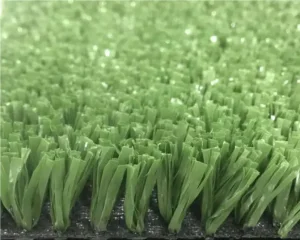
All-Weather Multi-Use
Engineered to withstand extreme Midwestern freeze-thaw cycles, high player torsion, and dual-purpose indoor/outdoor athletics. Delivered direct from our manufacturing lines to Cook, DuPage, and Lake County projects.
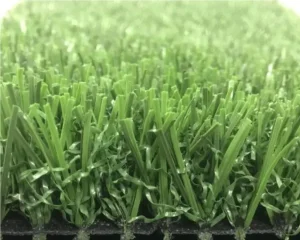
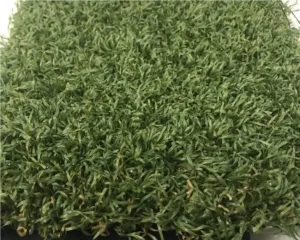
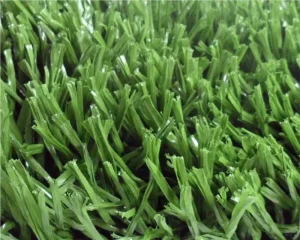
Why Chicagoland athletic directors, landscape architects, and municipal facility operators are rapidly retiring natural sod in favor of advanced polymeric multi-sport turf systems.
Chicago's USDA Hardiness Zone 5b/6a subjects athletic field bases to severe ground heave and deep frost penetration down to 42 inches. Standard natural sod surfaces turn into waterlogged mud during the critical March thaw or brittle, frozen ruts by late November. Our multi-sport turf systems use custom-formulated cross-linked polyurethane backings that stay pliable at -30°F (-34°C), eliminating cracking, fiber delamination, and backing separation.
Urban runoff regulations set by the Metropolitan Water Reclamation District of Greater Chicago (MWRD) mandate strict storm retention rates to prevent combined sewer overflows into Lake Michigan. Our turf surfaces incorporate hyper-permeable perforated backings capable of draining upwards of 55 gallons per square foot per hour (>1,200 mm/h), integrating seamlessly with underground stone detention beds.
The Chicago Park District manages over 600 parks, yet youth athletics across the IHSA (Illinois High School Association) suffer thousands of canceled games every spring due to unplayable grass. By retrofitting dual-use athletic stadiums with multi-sport synthetic turf, school districts like CPS (Chicago Public Schools) and suburban facilities in Schaumburg, Naperville, and Rosemont expand usable hours from 300 to over 2,500 hours annually.
Suntex delivers authentic manufacturing depth backed by over four decades of polymer monofilament extrusion heritage, partnering directly with TenCate Grass to deliver uncompromised yarn stability.
In the wholesale synthetic turf ecosystem, a severe quality divergence exists between turnkey extrusion manufacturers and downstream tufting assemblers. Many suppliers in the United States operate solely as cut-and-roll warehouses or secondary tufters sourcing white-label yarns from disparate Asian extrusion mills. When yarn masterbatches lack traceable C4 or C6 metallocene linear low-density polyethylene (LLDPE) polymers, turf surfaces exhibit rapid UV embrittlement, splitting within 36 months under mid-latitude solar radiation.
Founded on a legacy dating back to RiThai International's precision nylon spinning founded in 1977, Suntex operates fully controlled, vertically integrated tufting plants. By maintaining an authorized yarn partnership with TenCate Grass since 2002, our engineering team manages the complete polymer synthesis lifecycle—from antioxidant stabilization and Ciba UV Masterbatch doping to high-precision spinneret extrusion and automated robotic tufting.
With Cook County, the State of Illinois, and federal EPA regulators tightening per- and polyfluoroalkyl substances (PFAS) standards under the Safe Drinking Water Act, commercial project specifiers cannot afford supply chain liability. Suntex artificial grass is rigorously tested and certified PFAS-free, eliminating processing aids containing PTFE or fluorinated surfactants. Every batch is validated under EN 71-3 (Safety of Toys - Migration of Certain Elements), ASTM F2765 (Standard Specification for Total Lead Content in Synthetic Turf Fibers), and California Proposition 65 criteria, ensuring zero heavy metal leaching into Chicagoland municipal aquifers.
| Performance Characteristic | Suntex Multi-Sports Turf | Commodity Landscape Grass | Natural Kentucky Bluegrass Sod |
|---|---|---|---|
| Annual Usable Operating Hours | 2,500 – 3,000 hrs (Weather agnostic) | 800 – 1,200 hrs (Rapid fiber matting) | 300 – 400 hrs (Severe rain delays) |
| Midwest Freeze-Thaw Resilience | Engineered PU backing (-40°F crack threshold) | Latex backing (High embrittlement risk) | Frost heave, root kill, spring mudding |
| Vertical Drainage Capacity | >1,200 mm/hr (Perforated Matrix) | 300 – 500 mm/hr | 15 – 40 mm/hr (Soil compaction prone) |
| PFAS & Microplastic Regulatory Status | Certified 100% PFAS-Free / Non-toxic | Often unverified imported resin | Requires synthetic fertilizers & pesticides |
| Multi-Sport Surface Uniformity (Ball Roll) | Constant Stimp 10.5 / True omnidirectional roll | Variable, irregular ball deflection | Degrades rapidly over match season |
From high-density urban sports centers to sprawling suburban athletic complexes, our engineered multi-sports turf fulfills diverse athletic demands.
Suburban school districts across DuPage, Will, and Lake Counties demand fields that host Varsity Football on Friday night, Girls' Field Hockey on Saturday morning, and Youth Soccer on Sunday afternoon. Our dense 32-40mm multi-sport systems feature permanent tufted-in line markings for multi-code regulations, removing recurring field-painting overhead and eliminating cleat-wear in goalmouths.
Facilities such as the indoor training centers in Bedford Park, Rosemont, and McCook operate 16 hours daily during Illinois winters. Indoor air quality is paramount: our non-infill multi-sport turf systems eliminate airborne SBR tire rubber particulate matter, dust, and unpleasant petrochemical odors while delivering high shock absorption via integrated closed-cell cross-linked polyethylene (XPE) shock pads.
Faced with scarce land in downtown Chicago neighborhoods like the West Loop, South Loop, and River North, commercial real estate developers are converting commercial building rooftops into multi-sport athletic amenities. Our lightweight 15-20mm multi-sport turf with high-permeability backings integrates with pedestals and drainage mats, achieving ASTM E108 Class A fire-rating compliance for rooftop safety.
Strategic advancements shaping the 2026–2035 synthetic sports surfacing horizon for commercial buyers and specifiers.
Traditional turf systems permanently marry polyethylene yarn fibers with SBR latex backings, making end-of-life recycling cost-prohibitive and sending thousands of tons of turf to Illinois landfills annually. Suntex is pioneering 100% polyolefin monomaterial assemblies where yarn, primary backing cloth, and thermal fusion backing consist of identical polyethylene chemistry. At the end of its 12-year lifespan, the entire pitch can be re-pelletized into raw resin without manual delamination.
Urban heat islands in Chicago can elevate artificial turf surface temperatures to 160°F (71°C) on humid July days. Our latest high-performance yarns incorporate specialized infrared-reflecting inorganic pigment cores. These core-shell monofilaments selectively scatter near-infrared (NIR) solar radiation, decreasing core turf temperatures by 20°F to 28°F compared to standard commodity turf without relying on evaporative watering.
To preempt impending municipal restrictions on synthetic crumb rubber infills, our factory engineers have developed ultra-high-density texturized non-infill turf. By combining 16-ply curled monofilament thatch with stiff structural spine fibers at over 28,000 stitches per square meter, this system maintains player foot stability and proper shock attenuation purely through fiber architecture, entirely dispensing with crumb rubber.
A multi-sports turf system is only as durable as its civil foundation. Recommended sub-base structural design for Chicagoland clay soils.
Northern Illinois soils predominantly comprise cohesive silty clays (glacial till) with low permeability and high shrink-swell potential. When winter water pools beneath an athletic surface, freeze-thaw cycles create severe hydraulic expansion that fractures concrete curbs and produces surface undulations. Suntex civil engineering consultants mandate the following sub-base profile for Midwest outdoor multi-sport turf installations:
| Profile Stratum | Material Specification | Compaction / Performance Criteria |
|---|---|---|
| 1. Geotechnical Subgrade | Native undisturbed clay with 0.5% - 1.0% laser-guided planar grade | Compacted to 95% Standard Proctor density; treated with lime if expansive clay is detected. |
| 2. Separation Geotextile | 4 oz/yd² non-woven needle-punched polypropylene geotextile | Prevents clay fines from migrating upward into the aggregate stone drainage reservoir. |
| 3. Sub-Base Drainage Aggregate | 6 to 8 inches of virgin CA-1 or CA-7 open-graded crushed limestone | Provides dynamic water retention & frost-heave buffer; void ratio >30% for rapid storm storage. |
| 4. Fine Choke Layer | 2 inches of open-graded CA-16 or washed limestone chips (1/4" minus) | Laser-graded to within 1/4 inch per 10 feet tolerance; provides smooth planar tuft support. |
| 5. Elastic Layer (Shock Pad) | 10mm – 15mm cross-linked closed-cell polyolefin (XPE) pad | Delivers critical Head Injury Criterion (HIC <1000) and G-Max (<105) protection regardless of temperature. |
| 6. Synthetic Turf System | Suntex TenCate-engineered multi-sport turf with PU backing | Seams double-bonded with two-part polyurethane adhesive on heavy spunbond seam tape. |
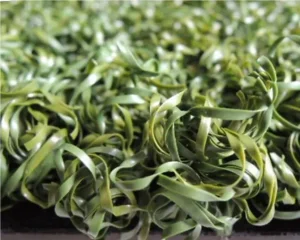
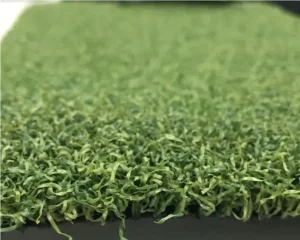
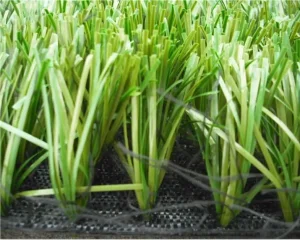
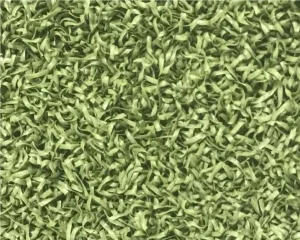
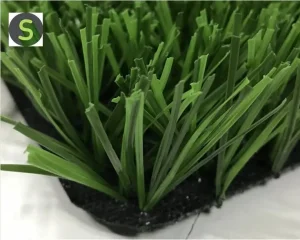
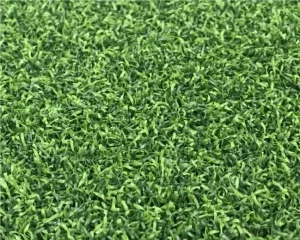
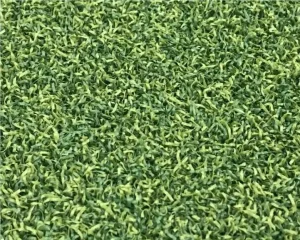
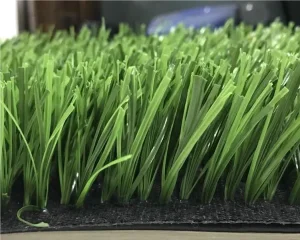
Explore our specialized institutional and commercial athletic grass catalog. Backed by TenCate fiber engineering, FIFA-standard test data, and direct containerload pricing for Chicago developers.
Architectural answers to critical engineering, safety, and logistical questions raised by Midwestern facility directors and sports contractors.
Whether you are planning an athletic field conversion for a Chicago public high school, retrofitting a suburban private sports academy, or stocking wholesale distribution inventory across the Midwest corridor, our engineering team is ready to assist with CAD layout cut plans, lab test certifications, and direct factory pricing.