Engineered Synthetic Turf for Commercial Real Estate & Factories
Formulated with TenCate polymer yarn, advanced micro-nerve structures, and dual-layer polyurethane backings to withstand heavy pedestrian throughput and climatic extremes across Nagoya.
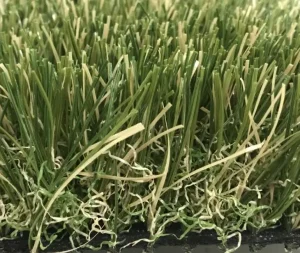
Nagoya High-Density Dual-Tone Architectural Landscaping Turf
View Product Specs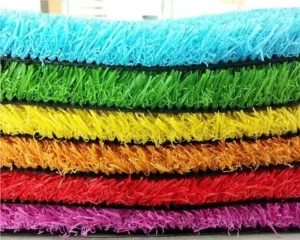
Sakae District Heavy-Traffic Ornamental Commercial Grass
View Product Specs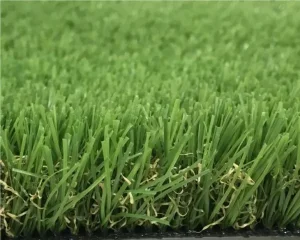
PFAS-Free Non-Toxic Green Lawn for Nagoya Industrial Facilities
View Product Specs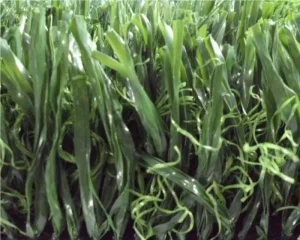
Chubu Corporate League High-Resilience Athletic & Baseball Turf
View Product SpecsThe Commercial Landscape Grass Market in Nagoya & Greater Aichi
As the economic epicenter of Japan’s Chubu region, the Greater Nagoya Metropolitan Area represents an unprecedented convergence of heavy manufacturing prowess, cutting-edge automotive logistics, and aggressive urban ecological revitalization. Under municipal frameworks such as the CASBEE Nagoya (Comprehensive Assessment System for Built Environment Efficiency), commercial developers and industrial conglomerates are under statutory obligations to integrate high-performance permeable greenery into architectural master plans.
In dense industrial corridors across Minato Ward, Tokai City, and the Port of Nagoya logistics belt, facility managers confront severe environmental stress profiles: heavy particulate deposition, micro-vibrations from heavy plant machinery, intense summer heat island amplification, and seasonal torrential deluges brought by Pacific typhoons. Natural turfgrass consistently fails in these enterprise environments due to exorbitant municipal water costs, high chemical fertilizer run-off into Ise Bay, and prohibitive maintenance labor costs exacerbated by Japan’s shifting demographic landscape.
Regulatory Compliance Insight: Factory greening initiatives governed by the Japanese Factory Location Act (工場立地法, Kōjō Ritchihō) necessitate that designated industrial production zones allocate up to 20% of their operational campus footprint to environmental buffer greening. Our wholesale commercial turf products directly satisfy these zoning ratios while delivering zero-water maintenance.
Automotive HQ Campuses
Toyota-corridor engineering facilities and Tier-1 supplier campuses require prestige-grade corporate courtyards, employee wellness terraces, and green buffer perimeters that maintain pristine year-round verdure under rigorous inspection.
Meieki & Sakae Rooftops
Ultra-dense urban commercial developments flanking Nagoya Station demand lightweight, flame-retardant (JIS A 1322 compliant) artificial turf matrices engineered for rooftop thermal abatement and stormwater attenuation.
Typhoon-Grade Drainage
Nagoya experiences heavy summer monsoon rainfall (reaching >200mm/hr during peak events). Our polyurethane-perforated systems provide hydraulic discharge capacities exceeding 60 liters/min/m².
Macro-Industry Trends: Circular Polymers, Non-Infill, & PFAS Elimination
The global artificial turf sector is navigating an epochal transition away from legacy crumb-rubber, multi-component non-recyclable assemblies toward circular mono-material architectures. In commercial real estate, corporate ESG declarations require that every exterior building material provide verified Life Cycle Assessments (LCA) and Environmental Product Declarations (EPD).
Global Decarbonization & Circular Supply Chains
Historically, commercial landscaping turf relied on composite backings where polypropylene grass fibers were locked into primary backing meshes via styrene-butadiene rubber (SBR) latex coatings. This multi-polymer mix rendered post-consumer mechanical recycling economically unviable, forcing tens of thousands of tons into incineration or landfill.
Our factory partners have pioneered mono-material polyolefin formulations. By utilizing modified polyethylene backing compounds synchronized with pure C4/C6 LLDPE virgin grass yarns, our specialized commercial systems can be melted down at end-of-life directly into secondary compounding pellets without backing-fiber separation stages.
Rigorous Chemical Safety (RoHS, REACH & Japan Chemical Act)
Under stringent regulatory mandates such as the European Union’s microplastic restrictions and Japan’s Act on the Evaluation of Chemical Substances and Regulation of Their Manufacture (化審法, Kashinhō), the total ban on intentionally added per- and polyfluoroalkyl substances (PFAS) is paramount.
Every batch exported to Chubu facilities carries independent laboratory certification confirming non-detectable levels of heavy metals (Lead, Cadmium, Hexavalent Chromium), zero volatile organic compounds (VOCs), and full compliance with EN 71-3 safety directives for commercial spaces hosting corporate daycare and recreational zones.
Architectural Specification Matrix: Commercial Grade Solutions
Engineered specifically for landscape architects, general contractors (ゼネコン, Zene-kon), and commercial property procurers operating throughout Nagoya and the broader Chubu economic sphere.
| Commercial Grade / Application | Fiber Geometry & Polymer | Dtex & Gauge | Stitch Density | Backing & Permeability | Target Compliance |
|---|---|---|---|---|---|
| Nagoya High-Density Plaza Corporate Plaza & Courtyards |
Stem C-Shape PE Monofilament + Texturized PP Thatch | 12,500 Dtex 3/8 inch |
18,900 stitches/m² | Triple PP + High-Spec PU Coating (>65L/min/m²) | JIS L 1021-16 (Abrasion) JIS A 1322 (Fire) |
| Meieki Urban Rooftop Heat Island Mitigation |
W-Wave Anti-Glare Thermal Diffusive PE | 11,000 Dtex 3/8 inch |
21,000 stitches/m² | Dual Polypropylene + Net + Pure PU Backing | CASBEE Heat Abatement ISO 9239-1 Critical Flux |
| Aichi Plant Buffer Turf Factory Perimeter & Embankments |
Diamond Spine High-Memory Monofilament | 14,000 Dtex 5/8 inch |
14,500 stitches/m² | Reinforced Latex/PU Hybrid Matrix | Factory Location Act Compliant UV-A / UV-B 8000h Xenon |
| Corporate Athletic / Multi-Use Employee Fitness & Field Days |
Non-Infill Multi-Directional Curl Polymer | 9,500 Dtex 3/16 inch |
27,300 stitches/m² | Grid-Woven Geotextile Base + PU Compound | FIFA Quality Practice std. Shock Absorption EN 14808 |
| Hydro-Max Pet & Child Turf Commercial Daycare & Facilities |
Micro-Textured S-Shape Antimicrobial PE | 10,500 Dtex 3/8 inch |
19,500 stitches/m² | 100% Fully Permeable Monofilament Micro-Pore | Zero Lead / Heavy Metals Antimicrobial ISO 22196 |
Macro Solutions: Substrate Engineering & Lifecycle Economics
Installing commercial-grade synthetic turf in Greater Nagoya demands precise civil engineering adaptations. Between high seismic resilience requirements, seasonal moisture expansion, and urban wind tunnel dynamics generated by Meieki’s high-rises, successful execution relies on system-level synchronization between the sub-base, shock pad layer, and the turf carpet itself.
1. Porous Asphalt & Aggregate Sub-Bases
Unlike simple residential installations, Nagoya commercial campuses deploy graded open-graded crushed stone (RC-40 topped with non-woven geotextile) or permeable asphalt, guaranteeing rapid subterranean drainage without frost-heave or ground subsidence during seasonal shifts.
2. Ten-Year Lifecycle Value Engineering (LCC)
Commercial ROI modeling demonstrates that natural grass on a 2,500m² factory campus in Aichi costs over ¥4,800,000 annually in watering, mechanical trimming, weed removal, and aeration. Industrial synthetic turf achieves full capital amortization within 32 months post-installation.
3. Future Material Roadmap (2026–2035)
Our R&D pipeline integrates bio-based ethylene synthesized from non-food agricultural waste, carbon-negative mineral backings, and smart thermal-dissipation pigments that reduce surface temperatures by up to 12°C during scorching Chubu summer heatwaves.
Frequently Answered Technical & Regulatory Questions
Clear answers concerning compliance, shipping logistics to Chubu ports, and installation guidelines for municipal tenders and private enterprise developments.
Does your commercial landscaping turf satisfy Japanese fire safety regulations (JIS A 1322)?
Yes. All commercial-specification artificial grass intended for Japanese enterprise installations, indoor atriums, and commercial rooftop terraces is manufactured with proprietary fire-retardant compound masterbatches. The resulting carpets achieve full compliance with JIS A 1322 (testing method for flammability of interior thin materials) and ISO 9239-1 flame resistance standards, preventing flame propagation in the event of dropped embers or thermal exposure.
How does your turf assist commercial projects in attaining CASBEE Nagoya certification?
Under CASBEE Nagoya rating systems, commercial buildings are scored on Environmental Quality (Q) and Environmental Load Reduction (LR). Our turf systems contribute directly to the "Heat Island Mitigation" index through high-albedo, IR-reflective yarn formulations. Furthermore, by replacing irrigation-dependent lawns, projects secure maximum points under the "Resource & Materials" category by saving municipal water and preventing synthetic fertilizer run-off into urban watershed systems.
What are the freight lead times and minimum order quantities (MOQ) for Nagoya Port delivery?
For custom OEM production runs (custom roll widths of 2m or 4m, tailored pile heights from 15mm to 50mm, and project-specific stitch densities), our baseline MOQ is 1,000 square meters. Production turnaround is generally 10 to 14 days, with direct container shipping from our state-of-the-art tufting and coating facility to the Port of Nagoya (Meiko) taking approximately 4 to 6 days at sea, facilitating extremely lean inventory cycles for contractors.
How does the turf perform under intense summer UV index levels common in Aichi Prefecture?
Our polymers incorporate high-purity Ciba-Geigy class hindered amine light stabilizers (HALS) directly compounded into the virgin polyethylene resin during yarn extrusion. The synthetic fibers are tested under accelerated QUV weathering (exposure to intense UV-A and UV-B spectrum radiation along with condensation cycles) for over 8,000 continuous hours—equivalent to more than 10 to 12 years of natural high-insolation sunlight in Nagoya without visible color degradation, embrittlement, or tensile loss.
What backing system is recommended for high-volume commercial foot traffic?
For high-throughput plazas, retail parks, and corporate gathering spaces, we recommend our dual-layer woven polypropylene primary backing reinforced with a dimensional fiberglass grid, finished with a solvent-free polyurethane (PU) compound. Polyurethane backings offer 35% higher tuft-lock withdrawal force compared to conventional SBR latex, will not degrade or crack when exposed to long-term soil moisture, and prevent root puncture or perimeter shrinkage.
Specialized Turf Solutions for Every Enterprise Facility
From tournament-grade putting greens for executive suites to heavy-duty non-infill multi-sport pitches for employee sports complexes across Greater Nagoya.
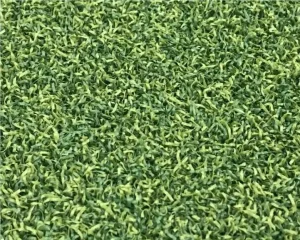
Nagoya Executive Suite Non-Slip Professional Putting Green Turf
View Product Specs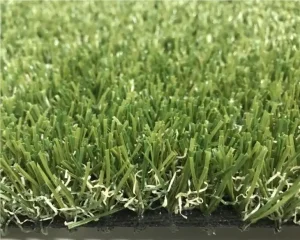
Aichi Resort-Grade Tough Golf Fairway Commercial Surface
View Product Specs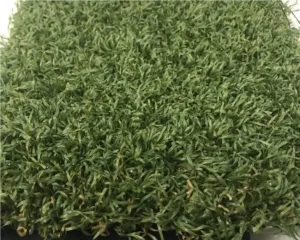
Nagoya Enterprise Non-Infill Multi-Sport High-Traffic Turf
View Product Specs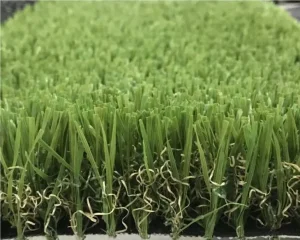
High-Permeability Anti-Odor Pet & Landscape Commercial Turf
View Product Specs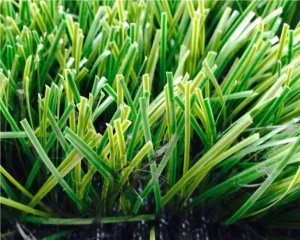
Chubu Corporate League Heavy-Toughness Soccer Field Turf
View Product Specs
Eco-Safe Heavy-Metal-Free Commercial Green Lawn Carpet
View Product Specs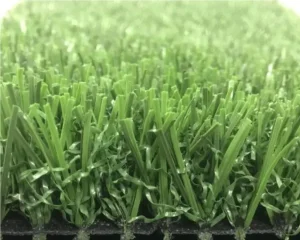
Advanced High-Tensile Multi-Sports Turf for Nagoya Plants
View Product Specs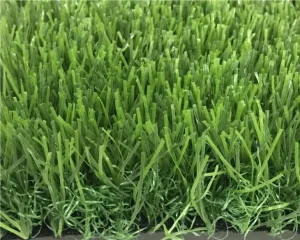
High Water Permeability Decorative Yard & Campus Grass
View Product SpecsInitiate Your Nagoya Commercial Turf Tender Consultation
Connect directly with our senior polymer engineering team. Obtain full physical swatch boxes, custom CAD roll layout optimization, and wholesale CIF Nagoya harbor quotation packages.
Send Inquiry Now