High-Performance Pitch Systems for German Infrastructure
Engineered to endure severe freeze-thaw cycles across Central Europe, verified by Lisport XL mechanical rolling and accelerated UV testing under DIN EN 14836.
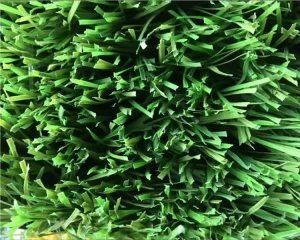
The German Synthetic Turf Market: DIN 18035-7 & Microplastics Realities
A rigorous examination of municipal procurement mandates, federal environmental standards, and the transition path toward 2031 EU REACH microplastic restriction compliance.
The Dual Paradigm: Municipal Pragmatism vs. Strict Regulatory Compliance
Germany hosts over 6,500 full-size artificial football pitches, representing one of the highest densities of synthetic sports surfaces globally. Driven by the Deutscher Fußball-Bund (DFB), local sports clubs (Sportvereine), and municipal administration bodies (Sportämter), synthetic turf in Germany serves an average of 1,800 to 2,400 operational hours per year per pitch. This intense utilization rate places unprecedented demands on fiber resilience, shock-absorption retention, and dimensional stability during harsh sub-zero Bavarian winters and dry Rhine-Ruhr summers.
Unlike many regional markets that evaluate synthetic turf merely by pile weight and cosmetic color, the German market adheres stringently to DIN 18035-7:2019-12 (Sports Grounds - Part 7: Artificial Turf Areas) and RAL Quality Assurance marks (RAL-GZ 944). These standards dictate exact thresholds for force reduction (KA ≥ 55% - 70%), vertical ball bounce (0.60 m – 1.00 m), and rotational resistance (30 – 45 Nm). Furthermore, testing according to DIN EN 12230 and DIN 53387 must guarantee that UV aging over 3,000 continuous hours causes less than a 25% reduction in tensile break strength.
EU Regulation 2023/2055
The European Commission's ban on intentionally added microplastics takes definitive effect in October 2031. German procurement tenders today demand immediate compatibility with organic infills (cork, walnut, pine kernel) or completely non-infilled sand-supported structural builds.
Microplastics ComplianceVOB Tendering Strictness
Public tenders governed by the German Vergabe- und Vertragsordnung für Bauleistungen (VOB) require non-negotiable proof of heavy metal absence (EN 71-3), comprehensive PFAS-free yarn certification, and documented ISO 9001/14001 factory provenance before bids open.
VOB/A Public TendersSevere Frost & Drainage Resilience
DACH winters require backings that resist embrittlement down to -25°C, paired with permeable secondary coatings engineered for vertical drainage capacities exceeding 1,200 mm/hour under DIN EN 12616.
Climate AdaptationMaterial Engineering Roadmap: From TenCate Yarn to Mono-Material Recyclability
Vertical mastery over polyolefin extrusion, polymer cross-sections, and latex-free PU backings delivers the resilience required for professional German football leagues.
Cross-Sectional Geometries for Germany
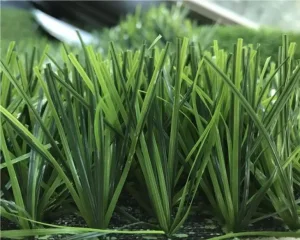
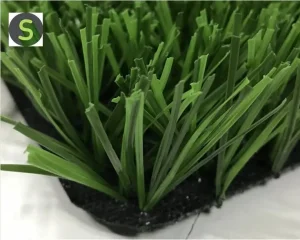
Blade geometry determines whether a pitch maintains its vertical orientation or flattens under persistent stud friction. In German league play, where multi-directional sliding and ball roll regularity are audited by FIFA-accredited testing institutes (such as Labosport, Sports Labs, and ISA-Sport), yarn shape is decisive:
- Diamond Monofilament (360–420 μm): Engineered with a reinforced central spine. Provides optimum resistance against splitting under the intensive cleats of senior amateur and semi-professional teams.
- C-Shape with Memory Rib: Incorporates curved tension zones that automatically spring upright post-impact, reducing the need for aggressive weekly rotary brushing in community sports parks.
- Texturized Root Thatch Systems: Dense curly PP/PE core zones that trap clean quartz sand and cork infill, eliminating the risk of infill splash and migration into surrounding waterways.
Circular Economy & Mono-Polymer Backing
Traditional SBR (Styrene-Butadiene Rubber) latex backing requires energy-intensive mechanical stripping to separate the polypropylene backing cloth from polyethylene fibers at end-of-life. German waste directives (Kreislaufwirtschaftsgesetz - KrWG) are rapidly penalizing unrecyclable composite waste.
Suntex answers this market requirement by deploying 100% Recyclable Pure Polyolefin Systems and cross-linked Polyurethane (PU) backing. By utilizing a 100% PE tuft and 100% PE thermal-bonded secondary backing, our entire turf carpet can be melted down directly into high-grade polymer granules at decommissioning without delamination costs.
| System Architecture | Typical Pile / Dtex | Infill System | DIN 18035-7 & FIFA Compatibility | Key Application in Germany |
|---|---|---|---|---|
| ProLeague Diamond 60 | 60 mm / 12,000–16,000 Dtex | Quartz Sand + TPE / EPDM / Coated Sand | FIFA Quality Pro • RAL-GZ 944 Full Pass | Bundesliga Academy training grounds & Regional League stadia |
| EcoBio Municipal 50 | 50 mm / 13,500 Dtex Spine | Quartz Sand + 100% Pure Cork Granules | DIN EN 15330-1 • Zero Leaching DIN 18035-7 | City Sports Offices (Sportämter) & Public Municipal Parks |
| Non-Infill Elite Multi 35 | 35 mm / 18,000 Dtex Dual-Fiber | Non-Infill / Micro Sand Stabilization only | EU 2031 Microplastic Exemption Compliant | School Sports Facilities (Schulsportanlagen) & Indoor Arenas |
| TenCate Heritage Heavy 55 | 55 mm / 14,000 Dtex TenCate Yarn | Sand + Pure Organic Virgin Olive Core | FIFA Quality • Lisport XL > 25,000 Cycles | High-wear club facilities operating > 2,200 hours per annum |
Direct-From-Factory Advantage for German Importers & EPCs
Eliminating broker markups with reliable containerized logistics directly serving the Ports of Hamburg, Bremerhaven, and Rotterdam.
5 Decades of Polymer Heritage
Founded in Kunshan in 2002 and backed by RiThai International’s yarn extrusion experience dating back to 1977 in Taipei. We control masterbatch coloration, anti-UV compounding, and precision tufting in-house without outsourcing core steps.
Authorized TenCate Partnership
An official partner of TenCate Grass yarns since 2002, providing guaranteed fiber batch traceability. Importers receive raw material origin certificates alongside every commercial container bill of lading.
Public Tender Documentation Dossiers
Every German B2B shipment can be accompanied by an export documentation pack containing DIN certificates, VOC emission reports, ISO 9001/14001/45001 certificates, and bilingual technical data sheets (TDS).
Frequently Asked Questions by German Buyers & Pitch Builders
Authoritative technical answers to common queries regarding DIN standards, microplastic bans, warranty structures, and shipping logistics.
How do Suntex football turf systems comply with Germany's DIN 18035-7 standard?
What are the options for German clients preparing for the EU 2031 microplastics restriction?
Are Suntex football turf products guaranteed PFAS-free?
How do you handle shipping logistics, containerization, and customs clearance into Germany?
What warranty structures and post-installation assurances are provided?
Full Commercial Range for German Contractors & Municipalities
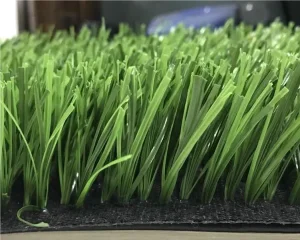
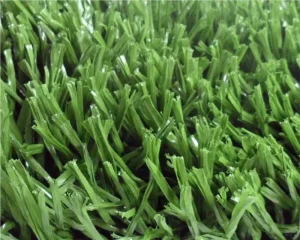
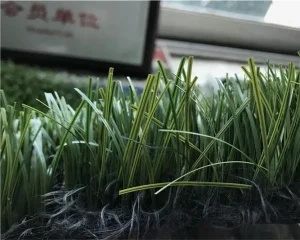
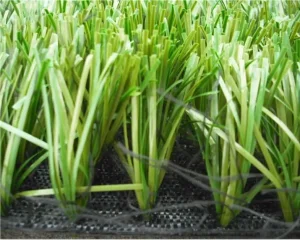
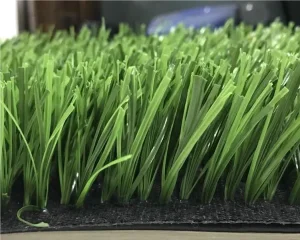
Explore our complete spectrum of specialized football turf configurations, from cost-effective school pitch solutions to premium wear-resistant TenCate systems.
Partner Directly with an Accountable Manufacturer
Eliminate intermediary costs on municipal and commercial sports infrastructure projects across Germany, Austria, and Switzerland.
Send Inquiry Now • Contact German Export Desk