
High-Performance Baseball & Multisport Turf for Mexican Climates
Direct supply from precision tufting mills engineered with TenCate yarn, reinforced triple-layer backing, and strict bounce-coefficient calibration.
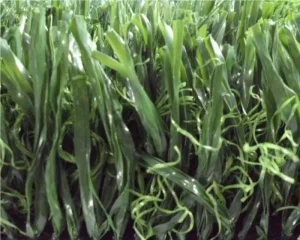
Pro Diamond Baseball Turf System for Mexico Leagues
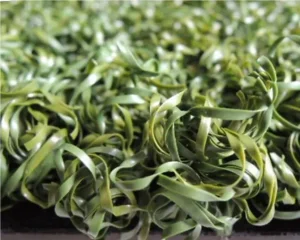
Synthetic Turf for Baseball Surfaces & Training Academies
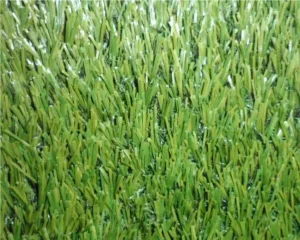
Heavy-Duty Wholesale Baseball Turf for Mexican Municipalities
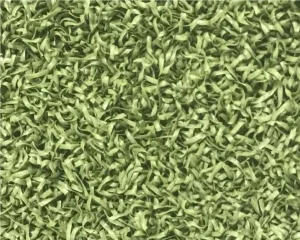
FIH Grade Multisport & Precision Field Turf for Mexico
The Mexican Baseball Turf Sector: Commercial Realities & Ecological Drivers
An in-depth operational analysis of sports infrastructure investments, CONAGUA water restrictions, and technical fiber engineering across the United Mexican States.
1. Commercial Transformation of Baseball Infrastructure in Mexico
Baseball is deeply embedded in the cultural and economic fabric of Mexico, serving as the dominant athletic pastime across key commercial regions including the Northwest (Sinaloa, Sonora, Baja California), Northern Industrial Corridors (Nuevo León, Coahuila), and the Southeastern Gulf (Veracruz, Yucatán, Tabasco). The simultaneous expansion of the Liga Mexicana de Béisbol (LMB) and the winter Liga Mexicana del Pacífico (LMP) has catalyzed unprecedented modernization of sports facility surfaces. Historically, Mexican ballparks relied on natural sod—primarily bermudagrass—which requires extensive subterranean aeration, continuous overseeding, and monumental volumes of irrigation water.
Today, professional stadium operators, municipal sports development institutes (such as INDE in Nuevo León and CODESON in Sonora), and private youth academy networks are executing wholesale conversions from organic sod to high-density synthetic turf systems. This shift is driven by commercial facility monetization: natural grass fields support fewer than 60 competitive games annually before soil compaction and divoting compromise athletic safety, while synthetic diamond systems comfortably accommodate over 1,200 operating hours each year—enabling youth development clinics, commercial tournaments, concerts, and continuous batting cage throughput without field degradation.
Water Scarcity & CONAGUA Directives
Over 70% of Mexico's landmass experiences severe to extreme water stress. Northern municipalities enforce strict water quotas that render maintaining 12,000 m² of natural outfield grass financially and ecologically untenable.
Solar Degradation & UV Index 12+
Fields in Hermosillo, Mexicali, and Monterrey experience extreme thermal cycles exceeding 45°C and intense UV radiation. Specialized Hindered Amine Light Stabilizers (HALS) are essential to prevent fiber brittleness.
Severe Monsoons & Hurricane Drainage
Coastal ballparks in Mazatlán, Culiacán, and the Yucatán peninsula face sudden tropical downpours. Backing perforations must sustain drainage permeability exceeding 3,000 mm per hour to prevent field flooding.
2. Polymer Engineering & Ball Physics Calibration
Baseball presents singular engineering demands that differ fundamentally from soccer or American football. Ground ball velocities in collegiate and professional play frequently surpass 160 km/h (100 mph). A baseball surface must deliver uniform coefficient of friction, predictable true-bounce behavior, and realistic roll deceleration without irregular fiber skidding or excessive synthetic bounce.
The Dual-Zone Baseball System: A professional turf field comprises two rigorously engineered components:
- Outfield Grass Zones: Engineered utilizing 40mm to 50mm diamond-spine or C-shape Polyethylene (PE) monofilaments (8,800 to 12,000 Dtex). The spine configuration ensures instantaneous blade memory recovery following cleat impact, preventing field flattening and unnatural low-trajectory ball skipping.
- Infield Clay/Turf Replacement Zones: Basepaths, home plate surrounds, and infield dirt areas utilize specialized 30mm to 35mm texturized nylon (PA) or heavily crimped PE thatch layers. The clay-red pigmented yarn replicates natural compacted infield clay while maintaining uniform ball speed and reliable sliding resistance without skin abrasions.
Infill Stratification: Infill composition is critical. For the Mexican climate, where surface temperatures can climb rapidly, standard crumb rubber from recycled tires can reach unplayable heat levels (>65°C). Our technical factory recommendations specify a high-purity washed silica sand base layer (rounded sub-angular grain, 20/40 mesh) capped with eco-friendly Virgin TPE granules, EPDM, or organic infill coatings. This dual-layer matrix maintains dimensional stability, anchors the turf backing against thermal expansion, and keeps ball rebound within the standard 20%–35% coefficient range specified by collegiate and professional bodies.
B2B Specification Matrix: Pro Diamond vs. Commercial Pitch vs. Practice Facility
| Specification Attribute | LMB / Professional Pro Diamond | Municipal & University Ballparks | Commercial Batting Cages & Academies |
|---|---|---|---|
| Primary Fiber Polymer | 100% TenCate C3/Diamond PE Monofilament | Heavy-Duty Virgin PE Monofilament + Thatch | Texturized High-Tenacity Polypropylene/Nylon |
| Yarn Linear Density (Dtex) | 11,000 – 13,500 Dtex | 9,000 – 11,000 Dtex | 8,000 – 9,500 Dtex |
| Pile Height (mm) | 45mm (Outfield) / 32mm (Infield) | 40mm – 50mm Standard Field | 25mm – 35mm Dense Non-Infill / Semi-Infill |
| Stitch Density (stitches/m²) | 16,800 – 21,000 stitches/m² | 14,700 – 18,900 stitches/m² | 21,000 – 25,200 stitches/m² |
| Backing Structure | Anti-Abrasive PP + Mesh + Polyurethane (PU) | Double PP + SBR Latex Matrix | Reinforced Multi-Layer Latex Compound |
| UV Resistance (ASTM G154) | 8,000+ Hours Exposure (ΔE ≤ 2) | 6,000 Hours Exposure | Indoor Optimized / 5,000 Hours Outdoor |
| Water Permeability | > 3,500 mm / hr (Multi-Perforated) | > 2,500 mm / hr | Non-Perforated or Standard Drainage |
| Warranty Life in Mexico | 8 – 10 Years Continuous Outdoor | 6 – 8 Years Regional Use | 5 – 7 Years Heavy Mechanical Wear |
Equipping a Professional or Commercial Ballpark in Mexico?
Get instant factory-direct engineering estimates, roll cutting diagrams, and container freight calculations directly to your project location.
3. Direct Chinese Manufacturing Infrastructure & Logistics to Mexico
Procuring wholesale artificial turf for Mexican stadiums requires navigating import economics, quality certification, and rigorous delivery timelines. As a direct manufacturer operating world-scale tufting facilities with roots tracing to 1977, our manufacturing plant provides distinct advantages over local trading intermediaries and domestic distributors:
Direct Vertical Integration & Yarn Integrity
Unlike regional re-sellers who stitch pre-bought domestic yarn of uncertain provenance, our facility controls masterbatch blending, extrusion, twisting, tufting, and backing application. Being an authorized partner for premium global fibers (including TenCate) ensures absolute batch consistency across 15,000 m² stadium installations.
Maritime Freight Economics to Key Mexican Ports
We dispatch consolidated 40-foot High Cube (40'HQ) containers directly from modern container terminals in Shanghai and Ningbo straight to Mexico's principal Pacific ports—Puerto de Manzanillo and Puerto de Lázaro Cárdenas (18–24 days transit)—as well as Puerto de Ensenada for Baja California, and Puerto de Altamira / Veracruz for Gulf operations.
4. Localized Compliance, NOM Regulations & Environmental Safety
Municipal tenders launched by CONADE (Comisión Nacional de Cultura Física y Deporte) and private institutional developments in Mexico mandate strict verification of material safety. Our artificial turf systems comply fully with:
- PFAS-Free Verification: Certified laboratory testing confirming non-detection of per- and polyfluoroalkyl substances (PFAS), ensuring no persistent toxic chemicals leach into municipal water tables.
- NOM Heavy Metal Limits: Rigorous compliance with Mexican Official Standards regarding leachable lead, cadmium, mercury, and hexavalent chromium (NOM-001/NOM-252-SSA1), safe for child athletes.
- Non-Flammability & Smoke Density: ASTM D2859 and EN 13501-1 Class Cfl-s1 fire certifications, meeting civil protection standards for covered batting facilities and enclosed community field houses.
- ISO Tri-System Quality Discipline: Manufactured strictly under audited ISO 9001 (Quality Assurance), ISO 14001 (Environmental Stewardship), and ISO 45001 (Occupational Safety) certifications.
5. Capital Economics: Lifecycle ROI vs. Natural Sod in Mexico
Financial evaluation of municipal sports infrastructure frequently reveals that while synthetic turf requires higher initial capital expenditure (CAPEX), its operational expenditure (OPEX) delivers payback within 24 to 36 months under Mexican utility and maintenance conditions:
| Operational Metric (12,000 m² Baseball Complex) | Natural Bermuda Grass Diamond | Suntex Pro Synthetic Diamond System |
|---|---|---|
| Annual Irrigation Water Volume | ~14,000,000 Liters (Extremely costly in Northern Mexico) | < 200,000 Liters (Occasional dust rinse only) |
| Fertilizer, Herbicide & Chemical Treatments | Bi-weekly organic / synthetic applications ($12,000 USD/yr) | $0 USD (Zero agrochemicals required) |
| Labor & Machinery (Mowing, Aerating, Rolling) | 3 full-time groundskeepers + specialized equipment lease | 1 part-time worker for weekly mechanical drag-brushing |
| Maximum Safe Playing Hours per Week | 12 – 18 hours max (requires recovery rest) | 70 – 80 hours (Continuous multi-team throughput) |
| Rainout Recovery Time | 24 to 48 hours post-storm in sub-tropical zones | 20 minutes (Instant subterranean gravity drainage) |
| 10-Year Cumulative Operational Cost | High Risk (Dependent on severe water tariffs) | Predictable Fixed Asset Amortization |
6. Turnkey Application Scenarios Across Mexico
Our specialized turf configurations target the specific operational realities of sports venues across Mexico's diverse regions:
Professional LMB & LMP Venues
Full 45mm monofilament diamond solutions engineered for televised games, custom two-tone green mowing patterns, and regulation clay-red turf for the home plate, bases, and warning tracks.
Youth Academies & Little Leagues
Resilient, high-density 40mm surfaces engineered for extreme daily usage across Hermosillo, Culiacán, and Tijuana youth baseball programs, featuring impact-absorbing pad underlays.
Indoor Commercial Batting Cages
Dense 25mm–30mm texturized, non-infill turf systems designed to withstand continuous cleat grinding, pitching machine base vibration, and heavy batting traffic in indoor entertainment complexes.
Full Spectrum Synthetic Turf Portfolio for Commercial & Athletic Projects
Explore our export-certified product lines: from high-abrasion playground landscaping and school athletic pitches to PGA-grade sand-filled putting greens and FIH-certified hockey fields.
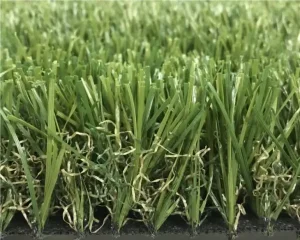
Tough Non-Slip Commercial Decorative Turf for Mexican Facilities
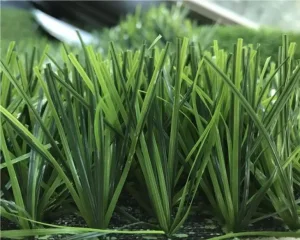
Affordable High-Durability Football Grass for Mexican Schools
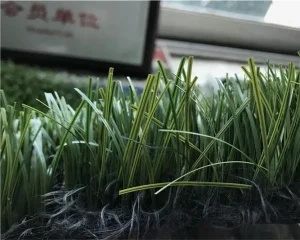
Professional Synthetic Turf for Multi-Use Mexican Stadiums
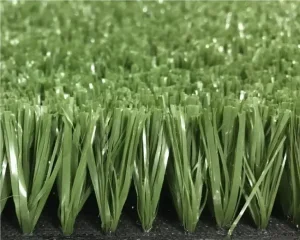
Professional Sand-Filled Putting Green Turf for Mexican Resorts
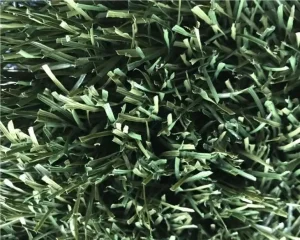
International Championship Approved Football Turf Systems
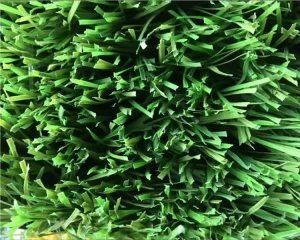
High-Resilience Sports Grass for Municipal Athletic Arenas
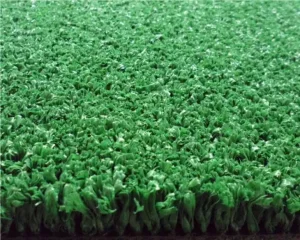
Precision High-Density Multi-Court Turf for Mexican Clubs
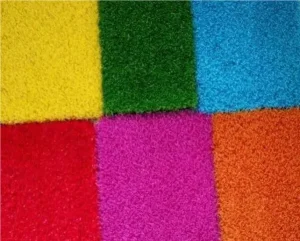
Multi-Color Functional & Warning Track Grass for Ballparks
Frequently Asked Questions: Sourcing Baseball Turf for Mexican Projects
Comprehensive engineering and commercial responses to the technical inquiries most commonly raised by Mexican contractors, architects, and government purchasing bodies.
All yarn extruded at our facility for Mexican export incorporates proprietary BASF Tinuvin® / Chimassorb® Hindered Amine Light Stabilizers (HALS) alongside concentrated carbon-based UV inhibitors. In standard accelerated weatherometer testing (ASTM G154 / ISO 4892-2), our fibers endure over 8,000 continuous hours of intense UVA/UVB exposure with tensile strength retention exceeding 85% and a color difference score (ΔE) under 2.0. This prevents premature fiber snapping and powdered degradation under the harsh sun of Sonora, Sinaloa, and Baja California.
Yes. We regularly manufacture complete stadium packages that combine traditional field greens with custom pigment-matched terra-cotta/clay-red turf specifically engineered for the home plate circle, batter's boxes, base paths, and warning tracks. The clay-red yarn utilizes texturized, crimped monofilament to deliver uniform sliding friction while preventing infill sand displacement during aggressive slides.
Standard manufacturing production for a full regulation baseball stadium (~12,000 to 14,000 m²) takes approximately 12 to 18 business days. Ocean transit from Ningbo/Shanghai to the Pacific ports of Manzanillo or Lázaro Cárdenas is typically 18 to 22 calendar days. For northern regions like Tijuana or Mexicali, shipping via Ensenada or Long Beach (with bonded transshipment) is available. We provide complete documentation for Mexican customs clearance (Agente Aduanal), including Commercial Invoice, Bill of Lading, Packing List with roll numbers, and Certificate of Origin.
For hurricane and monsoon-prone regions (Veracruz, Quintana Roo, Mazatlán), we recommend our perforated PU backing or reinforced latex backing engineered with drainage holes every 10cm x 10cm. This configuration delivers vertical drainage rates exceeding 3,500 mm per hour. When installed over a properly compacted permeable stone aggregate base (3/4" crushed limestone over pea gravel), the diamond drains standing surface water within minutes of torrential rain, preventing game cancellations.
No. Our artificial grass products are 100% free of heavy metals (lead, cadmium, arsenic, mercury) and meet stringent international safety thresholds as well as Mexico's NOM standards for consumer products. We provide independent third-party laboratory test reports (SGS, TÜV Rheinland) verifying PFAS-free status, making our turf safe for young players, water collection systems, and local environmental compliance.
Yes. Our internal sports engineering department uses CAD roll-layout software to analyze your exact diamond blueprints. We map standard roll widths (2.0m and 4.0m) and cut roll lengths up to 75m to align seams outside high-impact sliding areas. This optimization reduces cutting waste from standard contractor scrap rates of 12% down to less than 4%, saving our Mexican wholesale partners significant capital per container.
Partner Directly with China's Premier Baseball Turf Manufacturer
Eliminate distributor markups and secure factory-direct pricing, customized roll engineering, and full NOM compliance certification for your sports surface developments in Mexico.