
Featured High-Performance Systems for Indonesia
Precision-engineered synthetic surfacing optimized for extreme UV resilience and tropical drainage.
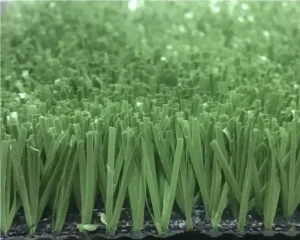
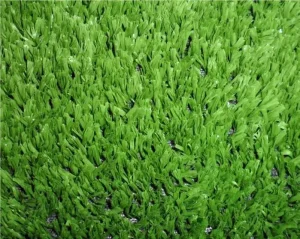
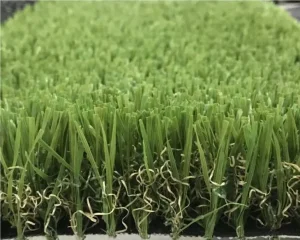
The Commercial & Industrial Landscape of Tennis Turf in Indonesia
Navigating infrastructural modernization, sports tourism dynamics, and the architectural shifts in tropical climate sports developments.
Commercial Modernization Across Key Metropolitans
The sports facility sector in Indonesia is experiencing a substantial structural evolution. Commercial operators across Jabodetabek (Greater Jakarta), Surabaya, and Bandung are systematically transitioning from traditional, weather-compromised clay and high-maintenance acrylic surfaces to synthetic tennis turf systems. Acrylic surfaces crack rapidly under intense tropical thermal shock, while outdoor clay courts become unusable during monsoon conditions.
High-grade synthetic tennis turf offers commercial facility managers year-round availability, drastic reductions in labor overhead, and predictable court characteristics. Furthermore, the massive decentralization initiatives surrounding the construction of Indonesia's new capital, Nusantara (IKN), have established strict green building parameters, prioritizing porous, recyclable, low-water surfacing systems across municipal sports complexes.
Hospitality & Sports Tourism Expansion in Bali & Lombok
Bali and West Nusa Tenggara have transformed into international sporting and wellness epicenters. High-end resorts, private athletic clubs, and boutique academies demand tennis and padel surfaces that harmonize aesthetic luxury with relentless durability. Marine salinity, extreme ambient humidity (often exceeding 85%), and unrelenting ultraviolet index ratings (UVI 11+) rapidly degrade substandard turf fibers.
Direct-from-factory custom configurations engineered with C5-anti-corrosive primary backings and C8 high-purity Masterbatch UV stabilizers prevent fiber embrittlement and rot, allowing luxury resorts in Uluwatu, Canggu, and Seminyak to maintain pristine tournament-grade court standards that appeal to global clientele.
Global Industry Context: Upstream Polymers to Indonesian Court Deployment
Why direct factory-tier procurement of TenCate monofilaments and specialized PP fibrillated fibers outperforms general commodity distributors.
Upstream Polymer Integrity
Global tennis turf manufacturing hinges on polymer consistency. Standard commodity turf blends low-density polyethylenes with volatile masterbatches that fissure under continuous friction. By integrating virgin TenCate synthetic filaments alongside localized precision compounding, our manufacturing facility controls melt flow index, tensile break-force, and molecular orientation from the polymer granule outward.
Tufting Density & Infill Mechanics
Tennis turf differs fundamentally from landscape or soccer turf. It requires extreme dimensional stiffness, short pile profiles (12mm to 20mm), and ultra-high stitch counts (typically exceeding 45,000 to 60,000 stitches/m²). This prevents infill displacement under hard-court slide mechanics, maintaining uniform sand-lock and consistent ball-rebound coefficient (CPR) across the playing envelope.
Direct Factory Price Optimization
Bypassing multi-tier trading brokers allows Indonesian sports contractors, resort developers, and government agencies to secure significant cost advantages. Direct factory engineering means custom pile heights, tailored roll widths (avoiding costly seam lines along baseline service boxes), and container loading schemes optimized for major ports like Tanjung Priok (Jakarta) and Tanjung Perak (Surabaya).
Technical Engineering Blueprint: Tropicalization Matrix
Precision parameters required for synthetic sports systems surviving the Indonesian microclimate.
| Performance Spec | Standard Import Baseline | Suntex Factory Tropicalized Spec | Indonesian Climate Significance |
|---|---|---|---|
| Fiber Polymer Base | Recycled / Mixed Grade PP | 100% Virgin TenCate C8 Polyethylene / Copolymer | Resists brittle fracture caused by equatorial UV radiation |
| Linear Mass Density (Dtex) | 5,500 – 6,600 Dtex | 8,800 – 11,000 Dtex | Ensures blade uprightness under monsoon rain volume |
| Stitch Rate & Density | 28,000 – 35,000 Stitches/m² | 48,000 – 62,500 Stitches/m² | Prevents silica sand migration; guarantees true ITF ball bounce |
| Primary & Secondary Backing | Single PP + Basic SBR Latex | Anti-Microbial Multi-Layer PP + Polyurethane (PU) | Impervious to rot, bacterial odor, and subterranean humidity pooling |
| Perforation Hydraulic Flow | 25–30 Liters/min/m² | > 65 Liters/min/m² (High-Flow Micro-Porous) | Eliminates post-monsoon court puddling within 15 minutes |
| UV Degradation Resistance | < 3,000 Hours QUV Accelerated | > 6,500 Hours QUV (ISO 4892-3 Verified) | Guarantees 8-10 year operational lifecycle in Sumatra, Java, & Bali |
Localized Application Scenarios: Custom Solutions for Indonesian Developments
Engineered specifically to solve complex site conditions across the provinces.
Private Residential Villas & Estates (Jabodetabek & Bali)
Demanding quiet play, soft footing for joint protection, and immaculate manicured aesthetics. Homeowners avoid concrete hard courts due to micro-fracturing and radiant heat reflection. Our custom dual-color olive/field green texturized tennis turf provides a plush, natural aesthetic that stays up to 7°C cooler than asphalt when surface temperatures soar.
Commercial Clubs & Sports Academies
For high-throughput facilities in Medan, Semarang, and Makassar operating 14 hours a day. High friction loads from frequent pivoting, sliding, and baseline rallies demand exceptional tuft bind strength (>45N). By utilizing reinforced woven backing paired with pure silica sand infill, our courts deliver predictable ball spin and consistent court pace over hundreds of hours of monthly play.
High-Rise Rooftop Courts & Integrated Urban Developments
Jakarta’s extreme density has driven modern athletic developments onto skyscraper podiums and parking garage roofs. Structural dead-load limitations make heavy asphalt/clay systems unfeasible. Our lightweight synthetic turf configurations, paired with shock-absorbing porous drainage underlayment tiles, provide featherweight structural compliance with exceptional storm attenuation.
Technical Roadmap & Environmental Compliance
Future-proofing sports infrastructure through PFAS-free compounding, closed-loop recyclability, and intelligent court engineering.
PFAS-Elimination & Environmental Health
Global environmental mandates, particularly in Europe and North America, are actively prohibiting Per- and Polyfluoroalkyl Substances (PFAS) in synthetic textiles. Anticipating strict incoming ASEAN environmental standards, our factory processes completely eliminate fluorinated extrusion aids. Our Indonesian clients receive verified, laboratory-tested non-toxic surfaces completely free of lead, zinc, and bio-accumulative toxins.
Monocomponent Circular Design
Traditional turf systems pair polypropylene fibers with complex latex backings, rendering post-consumer recycling functionally impossible. Our next-generation product roadmap features 100% pure Polyolefin monocomponent systems. The face fiber, backing matrix, and locking adhesives share identical polymer chains, allowing decommissioned Indonesian courts to be entirely melted down and recycled into local industrial plastics without cross-contamination.
Frequently Asked Questions: Sourcing & Engineering for Indonesia
Authoritative engineering answers for procurement managers, civil engineers, and facility owners.
How does synthetic tennis turf endure the heavy monsoon rains of Indonesia?
Can this turf be tuned to match specific ITF (International Tennis Federation) Court Pace Ratings?
What are the lead times and shipping procedures for delivery to Indonesian ports?
What maintenance is required in a tropical, algae-prone environment?
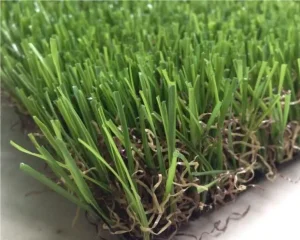
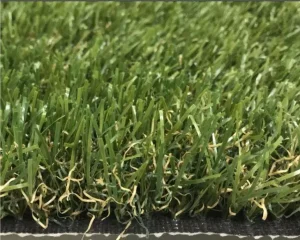
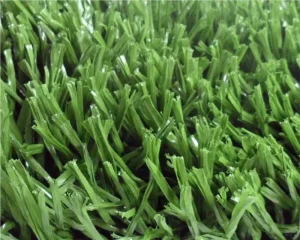
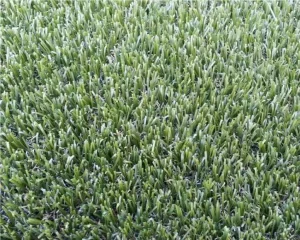
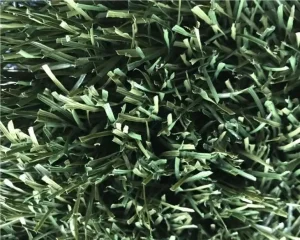
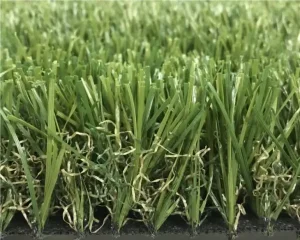
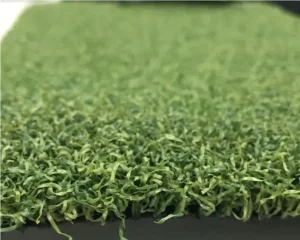
Multi-Category High Performance Systems & Turf Varieties
Engineered synthetic turf varieties manufactured directly for athletic facilities, hospitality developments, and sports complexes across Indonesia.
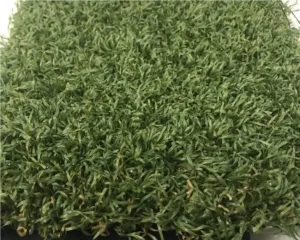
Partner with a World-Class Tennis Turf Factory for Your Indonesian Projects
From customized container roll cuts to comprehensive ITF performance submittal data, our engineering team is ready to support your tennis court construction timeline.
Send Inquiry Now