
High-Performance Pitch Systems for London & UK Clubs
Engineered for high impact, intensive training regimes, and multi-code performance under stringent British weather conditions.
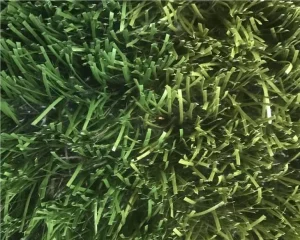
TenCate Rugby Surface Turf (London Match-Grade)
View Specification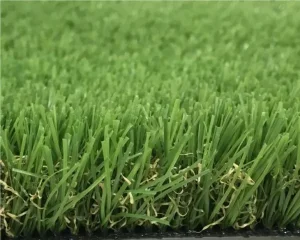
Safe & Non-Toxic Multipurpose London Sports Grass
View Specification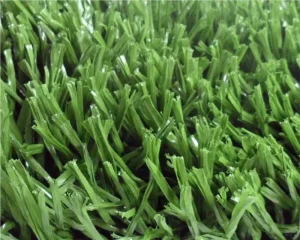
Dual-Code FIFA & Rugby Pitch Turf System
View Specification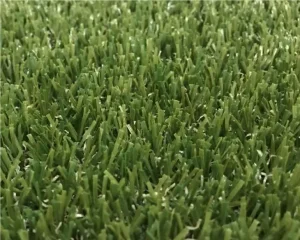
High-Density Conditioning & Training Surface
View SpecificationRugby Turf Infrastructure in Greater London: The Urban Dynamics
A comprehensive examination of land utilization, climate demands, and municipal sporting asset renewals across London's 32 boroughs.
Intense Land Scarcity & Dual-Code Demands
London athletic directors and borough councils face severe limitations on recreation ground space. Traditional natural turf pitches in South West London (such as Richmond, Wandsworth, and Kingston) fail under multi-club pressure, sustaining a maximum of 6–8 playing hours weekly during wet winter months. Suntex's 3G/4G hybrid rugby systems unlock 40–60 hours of weekly usage, enabling simultaneous grassroots rugby development and community football training.
London Clay Soil & SuDS Integration
The Thames Basin's London Clay geological profile creates notorious subgrade water retention. When winter downpours saturate local grounds, conventional turf becomes waterlogged and unstable. Our engineered rugby systems integrate tailored permeability layers exceeding 1,500 mm/hour drainage rates, complying seamlessly with London Sustainable Drainage Systems (SuDS) regulations and ensuring zero fixture cancellations.
RFU Artificial Grass Pitch (AGP) Initiatives
The Rugby Football Union (RFU) continues to expand its AGP strategy across England to counter climate disruptions. Educational trusts, university grounds, and historic London clubs demand surfaces certified rigorously against World Rugby Regulation 22. Suntex supplies directly to UK civil engineering contractors, ensuring our fiber formulations sustain severe scrummage rotational forces and repeated ruck abrasive actions.
Engineering Solutions for B2B Importers & UK Sports Contractors
How global polymer heritage and state-of-the-art tufting geometry resolve life-cycle degradation in high-impact turf investments.
The Biomechanical Challenge of Rugby Surfaces
Rugby contact dynamics impose unique mechanical stresses unmatched by association football. Cleat penetration, high-load scrum pushes, dynamic rucking, and tackle impacts generate extreme shear energy on yarn blades and base tufts. Low-tier synthetic grass experiences fibrillation breakdown, premature fiber shedding, and infill compaction, resulting in dangerously high Head Injury Criterion (HIC) values within 24 months. Suntex combats this through monofilament fibers engineered from premium TenCate polymers, featuring diamond and spine cross-sections that provide vertical memory and superior resistance to splitting.
Total Cost of Ownership (TCO) & Commercial Feasibility
For municipal authorities and independent London schools, the capital expenditure of constructing a full-size 3G rugby pitch (£700,000 to £1.1M installed) necessitates a guaranteed 10+ year operational lifespan. Suntex manufactures turf rolls using advanced multi-layer backing matrices coated with high-performance polyurethane (PU) or customized latex compounds. This delivers tuft bind strength exceeding 45 Newtons—far outperforming the EN 15330-1 threshold. High tuft anchorage directly prevents bare patch emergence in the high-wear scrum corridor.
| Performance Characteristic | World Rugby Regulation 22 Standard | Suntex Heavy-Duty Rugby System | Commercial Value to London Venues |
|---|---|---|---|
| Critical Fall Height (CFH) | ≥ 1.3 meters (Standard requirement) | 1.45 m – 1.65 m (with tuned shock pad) | Mitigates concussion risk; complies with RFU safety audits. |
| Rotational Resistance / Traction | 25 Nm to 50 Nm | 32 Nm – 44 Nm (Balanced biomechanics) | Prevents cleat lock; minimizes ACL/MCL strain during quick direction cuts. |
| Tuft Withdrawal Force | ≥ 30 N (post-conditioning) | ≥ 48 N (Reinforced cross-weave backing) | Eliminates fiber loss in high-stress scrum and maul zones. |
| Water Permeability | ≥ 500 mm/hour | ≥ 1,800 mm/hour (Dual-punched backing) | Resists torrential Thames storms; zero water pooling during play. |
| Skin Friction & Abrasion | 0.35 to 0.75 (BS EN 15306 tested) | 0.42 (Hydrophilic lubricated yarn) | Substantially cuts turf burn injuries during sliding tackles and tries. |
Technical Roadmap: Sustainability, Circularity & UK Infill Compliance
Addressing the European Chemicals Agency (ECHA) microplastics restriction and the UK's Net Zero sports facility guidelines.
Next-Gen Microplastic Containment
With UK DEFRA closely monitoring the EU's 8-year transition away from intentionally added polymeric microplastics (crumb rubber SBR), London sports pitch developers must adapt today. Suntex's technical roadmap provides non-infill rugby surfaces and advanced mineral/organic infill matrices (including coconut coir, cork, and coated quartz). These maintain shock absorption without violating emerging urban environmental mandates.
100% Circular Mono-Material Carpet
Historically, synthetic turf disposal has challenged circular economy targets due to the difficulty of separating polyethylene (PE) blades from latex backings. Suntex is pioneering 100% Polyethylene Mono-Component systems, where yarn, primary backing, and secondary adhesive belong to identical olefin polymer families. At the end of pitch life, the entire turf system can be melted down and re-extruded without energy-intensive mechanical stripping.
Smart IoT Pitch Diagnostic Integration
The future of metropolitan London athletic turf lies in real-time predictive monitoring. Our sports laboratory is validating sub-base sensor arrays that track shock pad damping decay, G-Max compaction, and moisture retention directly via localized telemetry. This offers grounds managers proactive maintenance alerts, scheduling brushing and decompaction precisely when player safety parameters begin to drift.
London Regional Support, Freight Handling & QA Compliance
Factory-direct assurance from manufacturing source to Thames Gateway and Port of Tilbury delivery.
Direct Logistics to Greater London Hubs
Managing sports turf roll transport requires precision handling. Full-size rugby rolls weigh up to 1,200 kg each and span 4.0 meters in width. Suntex provides optimized roll length mapping based on specific pitch CAD drawings, minimizing transverse seams across the active playing field. We route shipments directly through deep-water UK container ports, providing customs documentation, bill of lading traceability, and offloading coordination for installation contractors across Surrey, Kent, Essex, and Greater London.
Full Regulatory Validation & Lab Audits
Every batch destined for UK facilities is backed by factory test certification covering toxicological safety (EN 71-3 safety compliance, PFAS-free guarantees), BS 4790 flammability certification, and UV weathering tests exceeding 5,000 hours of accelerated QUV exposure. Our dedicated OEM division works hand-in-hand with sports surface consulting engineers, guaranteeing that newly installed fields pass independent World Rugby laboratory test accreditation upon completion.
Frequently Asked Questions: Sourcing & Engineering
Essential guidance for facilities directors, general contractors, and procurement professionals.
What pile height and specification are mandated for World Rugby Regulation 22 pitches?
World Rugby Regulation 22 dictates that the entire surface system—comprising the synthetic carpet, performance infill, stabilizing sand, and elastic shock pad—meets strict player welfare criteria. While pile heights typically range from 60 mm to 65 mm for 3G systems using SBR or TPE infill, shorter pile heights (40–50 mm) can be used when coupled with engineered, high-performance in-situ or prefabricated e-layers. The critical factor is achieving a Critical Fall Height (CFH) of at least 1.3 meters throughout the pitch life cycle.
Can a single artificial grass pitch be dual-certified for both Rugby and FIFA soccer play in London?
Yes. Due to urban land shortages in Greater London, multi-sport dual-code certification is very common. The turf system must be formulated to meet both FIFA Quality Pro and World Rugby Regulation 22 standards. This demands balanced rotational traction (ensuring studs release safely in both football and rugby cuts) and tailored ball roll dynamics that accommodate soccer play while providing the necessary shock damping for high-impact rugby collisions.
How does London's climate impact artificial rugby turf longevity and maintenance?
London experiences mild, damp winters and increasingly warm, dry summer heatwaves. The damp autumn and winter period demands excellent water evacuation to prevent moss development and infill washouts, which is why our turf offers water permeability exceeding 1,800 mm/hr. During dry summer spells, UV stabilization (high masterbatch quality) is crucial to avoid polymer brittleness. Routine de-compaction, grooming, and infill top-ups are recommended every 40–50 hours of intensive use.
Are Suntex rugby turf surfaces completely free of PFAS and harmful chemicals?
Yes. All Suntex synthetic turf materials are produced under ISO 9001 and ISO 14001 certified manufacturing frameworks and are 100% PFAS-free. We supply official independent laboratory test certificates confirming that our products contain no heavy metals, per- and polyfluoroalkyl substances, or hazardous plasticizers, meeting UK REACH and European toy safety standard EN 71-3.
What lead times can UK contractors expect when ordering full-pitch container consignments?
For standard full-pitch projects (approximately 7,500 to 9,000 square meters of rugby carpet), factory production lead time is typically 12 to 18 business days. Maritime container shipping from our international manufacturing plant to London Gateway, Tilbury, or Southampton generally requires 28 to 35 transit days. We advise UK contractors to initiate specification reviews and order locking 8 to 10 weeks prior to on-site base construction completion.
Specialized Athletic & Landscaping Systems Serving London
Explore our complete manufacturing series, engineered for athletic facilities, academy fields, recreation grounds, and multi-sport enclosures.
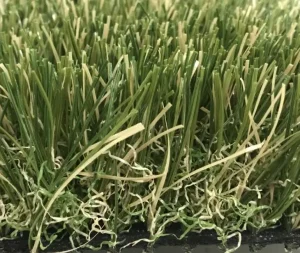
High-Density Stadium Perimeter & Run-off Turf
View Specification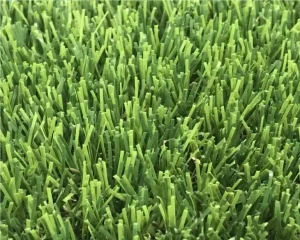
High-Impact School & Playground Sports Grass
View Specification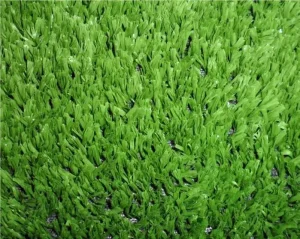
ITF-Approved TenCate Multi-Court Tennis Turf
View Specification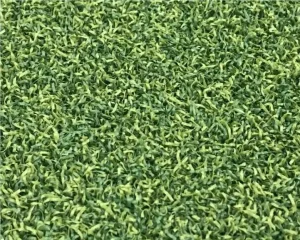
Non-Slip Precision Ball-Roll Performance Turf
View Specification
All-Weather Professional Court Synthetic Grass
View Specification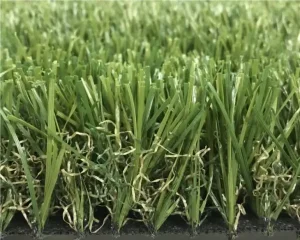
Heavy-Duty Traction Grass for Training Facilities
View Specification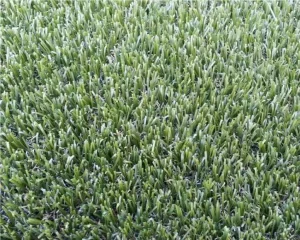
UV-Resistant Commercial Surrounding & Lawn Turf
View Specification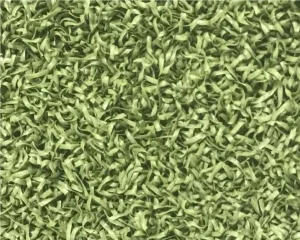
FIH-Grade High-Precision Hockey Sports Surface
View SpecificationPartner Directly with a World-Class Rugby Turf Manufacturer
From tender specification development to factory roll cutting and container consolidation for Greater London and international destinations. Contact our senior sports engineering team today.
Send Inquiry Now