Featured Production Lines
Engineered for Precision: Ghana Project Showcase
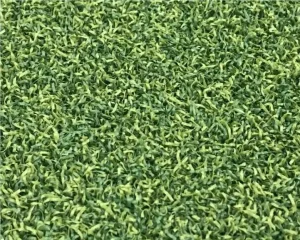
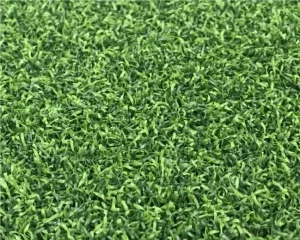
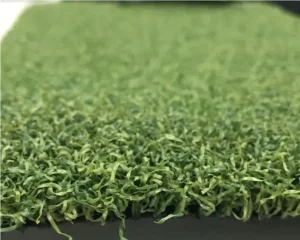
Direct from our precision tufting lines: heavy-duty commercial and residential putting turf engineered for zero shrinkage, true ball roll, and tropical UV stability across Accra, Kumasi, and Takoradi developments.
Regional Market Intelligence
The Golf & Leisure Infrastructure Boom in Ghana
A comprehensive analysis of water economics, high-end real estate developments, and sports infrastructure demands shaping the shift toward synthetic putting greens across the Republic of Ghana.
Ghana is experiencing a substantial structural economic transformation across West Africa. Driven by sustained GDP growth, an influx of multinational regional headquarters, and an ambitious diaspora repatriation movement (ignited by the "Year of Return" and subsequent initiatives), the urban landscape across Greater Accra, Kumasi, and the oil-rich Western Region around Sekondi-Takoradi is witnessing an unprecedented architectural renaissance. In tandem with this commercial expansion, corporate real estate, luxury gated developments, and premier sports establishments are aggressively prioritizing high-specification athletic recreational amenities—with dedicated golf facilities and bespoke putting greens at the vanguard.
Water Economics & Scarcity
Maintaining natural Bermuda or Paspalum turf in Accra requires up to 45,000 liters of potable water daily per green. Synthetic turf saves over 95% in life-cycle municipal utility costs under Ghana Water Company Limited (GWCL) commercial tariff structures.
Prestige Real Estate Inlays
Luxury residential enclaves across Cantonments, Airport Residential Area, East Legon, and Trasacco Valley demand maintenance-free, emerald-green architectural putting greens integrated into executive villas and rooftop terraces.
Club Modernization Drive
Historic institutions—including the Achimota Golf Club, Celebrity Golf Club in Sakumono, and the Royal Golf Club Kumasi—are increasingly procuring modular synthetic practice greens to guarantee uninterrupted year-round play.
The Structural Shift: Natural Agronomy vs. Precision Synthetic Systems
Historically, golf greens in tropical West Africa relied on native or hybridized warm-season grasses. However, maintaining tournament-quality natural greens under Ghana’s bimodal rainfall regime presents severe logistical and financial bottlenecks. During the intense wet seasons (May–July and September–November), excessive moisture promotes fungal pathogens, soil compaction, and root rot. Conversely, the prolonged dry spell accompanied by the northeastern Harmattan winds deposits fine Saharan dust particles while stripping moisture from the soil, causing natural paspalum and bermuda to brown out, develop invasive weed infestations, and form irregular ball trajectories.
For facility directors, corporate hospitality operators, and golf course superintendents in Ghana, synthetic putting turf systems engineered by Suntex Sports-Turf Corporation offer definitive operational equilibrium. With calibrated fiber stiffness, high tuft density exceeding 65,000 stitches per square meter, and specialized UV polymer stabilization, synthetic putting greens provide a consistent Stimpmeter reading of 10.0 to 11.5, irrespective of drought, deluge, or scorching coastal equatorial sunlight.
Engineering Takeaway for Ghanaian Project Bidders: Synthetic putting greens eliminate up to 92% of operational expenditures associated with continuous mowing, scarification, aeration, chemical fungicides, and pesticide management. Furthermore, our systems prevent toxic agrochemical runoff into sensitive local watersheds such as the Sakumo Ramsar site and coastal lagoons.
Material Science & Durability
Formulating Turf for Equatorial West Africa
How Suntex polymer chemistry conquers Ghana's intense ultraviolet radiation index, torrential monsoonal downpours, and abrasive Harmattan dust layers.
Substandard synthetic turf installations in West Africa typically fail within 18 to 24 months due to three distinct ecological stressors: photo-oxidative degradation caused by near-vertical UV exposure, backing delamination from unyielding atmospheric humidity, and pore clogging resulting from Harmattan silt. At Suntex, our five decades of polymer yarn heritage—originating through parent firm RiThai International in 1977 and cemented as an authorized TenCate distributor since 2002—enables us to engineer bespoke compound chemistries specifically calibrated for tropical operations.
| Environmental Parameter | Standard Commercial Turf | Suntex Equatorial Putting Green System | Ghana Field Advantage |
|---|---|---|---|
| UV Radiation Resistance | 3,000 – 4,000 Hours (QUV test) | 8,000+ Hours QUV Class 5 (HALS Stabilized) | 8-10 Year Colorfastness |
| Hydraulic Drainage Rate | 300 – 600 mm / hour | > 2,200 mm / hour (Super-Flo Perforated) | Zero waterlogging during Accra downpours |
| Backing Integrity (Humidity) | Single SBR Latex Coating | Dual Reinforced Multi-Layer Polyurethane / Anti-Microbial Latex | Immune to rot, mold, or dimensional shrinkage |
| Fiber Silt Infiltration | Standard Fibrillated Blades | Texturized Curled Memory Polymer (Nylon / High-Density PE) | Resists dust packing; simple power-sweep maintenance |
| Chemical Safety (PFAS/Lead) | Undisclosed / Variable Sources | 100% PFAS-Free, REACH & RoHS Compliant | Safe for children, residential villas, and eco-resorts |
Advanced Monofilament Geometry & Ball Roll Physics
A championship putting green is defined not by its appearance, but by its physics. The interaction between the dimpled surface of a regulation golf ball and synthetic grass fibers dictates true roll, check, friction coefficients, and trueness of line. Standard landscaping grass features long, directional blades that cause the ball to bounce, deviate, or brake erratically.
Suntex putting green products utilize high-density curled polyethylene (PE) and texturized monofilament nylon (PA) or polypropylene (PP). By weaving high-stitch counts (often between 50,000 to 75,000 stitches/m²) with cross-curled thatch, we eliminate directional grain bias. The golfer experiences identical resistance regardless of putting orientation. When paired with kiln-dried rounded silica sand infill, our systems allow course architects across Ghana to tune the surface to match European Tour or PGA Tour speed thresholds (Stimpmeter 10.5–12.0) with micro-tolerances.
8,000+
Hours UV Exposure Certified
2,200mm
Water Drainage Capacity / Hour
75,000
Maximum Stitches / m² Density
100%
Eco-Certified PFAS-Free Formula
Smart Manufacturing & Global Supply Chains
Factory 4.0 Reliability: Direct Supply to Tema & Takoradi
Vertical polymer control, automated tufting consistency, and agile freight logistics bridging China’s premier manufacturing capacity with West Africa’s infrastructure developers.
For general contractors, landscape architects, and municipal procurement directors in Ghana, the success of large-scale infrastructure tenders hinges on two pillars: unassailable product quality and supply chain resilience. Intermediary trading houses frequently introduce unpredictable lead times, fragmented batch color variations, and escalated distributor margins. Suntex eliminates these variables through end-to-end vertical integration.
Precision Industry 4.0 Looms
High-speed, computer-guided tufting machinery from 1/8", 3/16", to 5/32" gauge guarantees zero skipped stitches, uniform pile compression, and structural perfection across 4-meter wide master rolls.
Tri-ISO Certified Management
Our operations follow ISO 9001 (Quality), ISO 14001 (Environmental Stewardship), and ISO 45001 (Occupational Safety), backed by comprehensive third-party lab verification for global compliance.
Direct Maritime Shipping
Strategically situated near primary deepwater sea ports, we ship full 20GP and 40HQ container loads with customized roll lengths, anti-crush core tubes, and moisture-barrier shrink-wrapping directly to Ghana.
Logistical Pathways to Ghana: Demystifying Containerized Turf Freight
Shipping artificial turf internationally requires meticulous packing geometry. Turf rolls are heavy, volumetric goods. Improper packaging leads to crushed yarn, creased primary backings, and permanent pile deformation during transit across the Indian and Atlantic Oceans. Suntex employs high-tensile inner cardboard and PVC cores, reinforced geotextile protective wrapping, and calibrated container stuffing algorithms that maximize cubic meter utilization while safeguarding edge integrity.
Whether your consignment clears through the Port of Tema (serving Greater Accra, Eastern, Volta, and inland corridors) or the Port of Takoradi (serving Western mining concessions, coastal luxury resorts, and Central regions), our dedicated documentation team provides fully compliant Bills of Lading, Certificates of Origin, commercial invoices, packing lists, and pre-shipment inspection verifications (including Ghana Standards Authority [GSA] and FDA compliance documentation where required).
Implementation Architecture
Bespoke Application Blueprints Across Ghana
From prestigious private residences to commercial leisure destinations and institutional golf centers, see how specialized synthetic putting green turf elevates property values and athletic utility.
Executive Residential Enclaves
Locations: Cantonments, Airport Hills, East Legon, Trasacco Valley, Ridge (Accra), and Ahodwo (Kumasi).
Application: Turnkey backyard putting greens and private chipping complexes. Dual-color fringe turf combined with 13mm non-directional putting surfaces creates an elite estate feature with zero watering or gardening personnel.
Commercial Hospitality & Rooftops
Locations: Osu, Labone, Airport City, Ada Foah river resorts, and Busua Beach lodges.
Application: Sky-bar putting lounges, boutique hotel amenity greens, and corporate relaxation zones. Lightweight, fire-retardant artificial turf applied directly over waterproof membrane surfaces.
Championship Practice Academies
Locations: Achimota Golf Club, Tema Country Club, Celebrity Golf Club Sakumono, Tafo Golf Club.
Application: Dedicated warm-up putting tracks, junior golf training academies, and high-wear target practice zones that endure hundreds of thousands of ball strikes without turf divoting.
Sub-Base Engineering over Ghanaian Laterite Soils
A world-class synthetic putting green relies fundamentally on what lies beneath the surface. In southern and central Ghana, the dominant soil profile consists of red laterite clay—a substrate characterized by high iron oxide content, extreme swelling when wet, and cracking when desorbed of moisture. Direct installation over laterite invariably leads to substrate undulations, ponding, and seam disruption.
Suntex technical advisors mandate an engineered multi-tier dynamic base for all Ghanaian installations:
- Subgrade Stabilization: Excavation of 100–150mm of expansive laterite topsoil, followed by mechanical compaction (95% Standard Proctor density) and the application of a high-tensile, non-woven geotextile separation membrane.
- Primary Drainage Layer: 75–100mm of crushed granite aggregate (aggregate size 10–20mm) providing high compressive strength and rapid horizontal water transmission.
- Fines Dressing Layer: 25–35mm of compacted granite crusher dust or 0–4mm quarry sand, micro-laser leveled to the precise gradient design (0.5%–1.0% slope for positive watershedding).
- Turf Anchoring & Shock Attenuation: Perimeter concrete curb anchors or rot-proof composite timbers securing the perimeter, paired with an optional 8–10mm closed-cell polyethylene shock pad for optimal ball check and joint impact absorption.
Comprehensive Sports & Golf Systems
Full Specification Turf Series for Contractors & Clubs
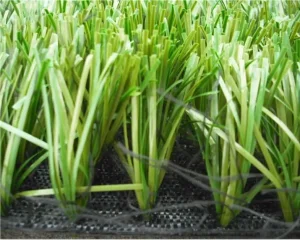
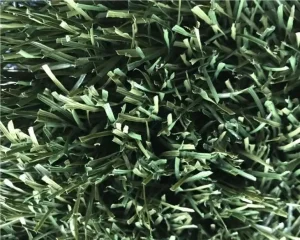
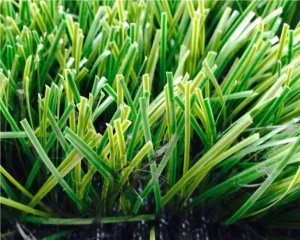
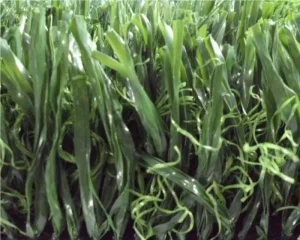
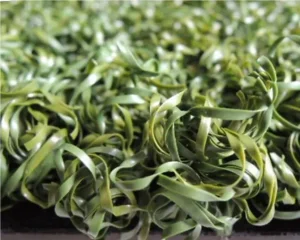
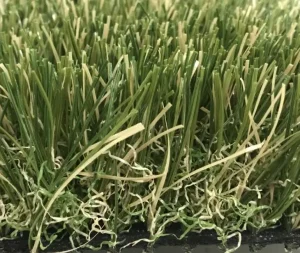
Explore our complete export catalog: heavy-wear golf greens, FIFA-standard football turfs, high-durability baseball surfaces, and multi-tier landscaping systems.
Technical & Commercial FAQ
Frequently Answered Engineering Inquiries
Authoritative technical guidance for contractors, engineers, and landscape architects planning artificial putting green deployments across Ghana.
How does Suntex synthetic putting green turf withstand Ghana's high UV index and Harmattan season?
Ghana experiences extreme UV indices (consistently reaching 11 to 12+ year-round in Accra and Kumasi). Our putting green fibers are compounded with proprietary Hindered Amine Light Stabilizers (HALS) and premium anti-oxidants during monofilament extrusion. Certified under QUV accelerated weathering tests to exceed 8,000 continuous hours without tensile breakdown or chalking, the fibers retain their vibrant emerald luster for 8 to 10+ years. Furthermore, our cross-curled texturized yarn geometry creates a dense thatch that prevents airborne Saharan Harmattan dust from binding deep within the backing, allowing easy maintenance through simple leaf blowers or high-pressure water rinse cycles.
What is the typical shipping lead time and customs process for container delivery to Tema or Takoradi?
Factory production for standard containerized orders (20GP holding approx. 2,500–3,500 m² or 40HQ holding approx. 6,000–8,500 m² of putting green turf) typically requires 10 to 15 working days. Ocean freight from Shanghai or Ningbo to the Port of Tema or Port of Takoradi takes approximately 32 to 40 days depending on the shipping line (e.g., Maersk, CMA CGM, MSC). Our export department provides full GSA (Ghana Standards Authority) compliant documentation, Clean Report of Findings (if requested), commercial invoices, and packing manifests for swift customs clearance through the Integrated Customs Management System (ICUMS).
What is the difference between sand-filled and non-sand filled putting greens for West African projects?
Sand-Filled Systems: Utilize an open-tufted texturized nylon or polypropylene fiber (15–18mm pile height) infilled with round-grain, washed, dried silica sand (typically 15–20 kg/m²). This enables full customization of green speed (Stimpmeter 9.5 to 12.0) and delivers realistic ball bite on approach shots from 50+ yards out. Highly recommended for golf academies and country clubs.
Non-Sand Filled Systems: Feature an ultra-dense, low-profile curled polyethylene thatch (12–15mm pile height, 65,000–75,000 stitches/m²). They require zero silica infill, eliminating sand compaction and silt contamination during torrential tropical rainstorms. Ideal for rooftop terraces, residential gardens, and indoor executive putting labs.
Can your turf systems handle torrential monsoonal rains without waterlogging or mold formation?
Yes. Every square meter of Suntex putting green and sports turf features precision-punched CNC drainage perforations spaced at regular 10x10cm intervals, producing an infiltration capacity greater than 2,200 mm per hour. This vastly exceeds Accra’s highest recorded peak rainfall intensity (which rarely exceeds 150 mm/hour during monsoonal cloudbursts). Provided the aggregate crushed stone sub-base is engineered with appropriate lateral drainage, water passes through the turf immediately, allowing golf play to resume within minutes after heavy tropical downpours. Additionally, our backing compounds are infused with anti-fungal agents to prevent mildew in humid coastal microclimates.
Does Suntex provide OEM private labeling and customized roll configurations for Ghanaian distributors?
Absolutely. We partner extensively with building material distributors, landscape architecture firms, and sports installation contractors across West Africa. We offer complete OEM customization, including custom roll widths (2.0m and 4.0m standard; bespoke sizes available), customized roll lengths to minimize job-site cutting waste, custom stitch rates, personalized backing branding, barcode and logo labeling, and tailored sample presentation cases for your sales showroom.
Factory Direct Partnership
Ready to Engineer Your Golf Facility in Ghana?
Connect directly with Suntex Sports-Turf engineering specialists. Receive complete technical specifications, CAD layout consultations, free courier sample kits to Accra or Kumasi, and competitive factory-direct CIF container shipping rates.