
Tokyo Flagship Multi-Sport Turf Configurations
Pre-tested against severe UV degradation, heavy foot traffic, and high-frequency athletic scheduling across Tokyo’s academic, commercial, and municipal complexes.
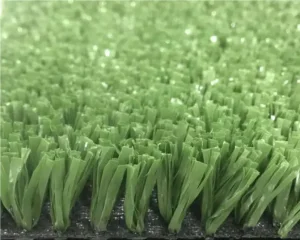
Sand-Filled Multi-Sport Synthetic Turf (Tokyo Dual-Field System)
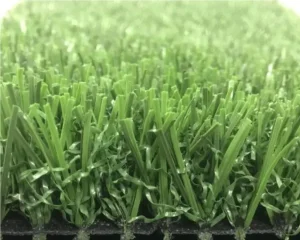
Advanced Multi-Sports High-Density Turf (Kanto Athletic Series)
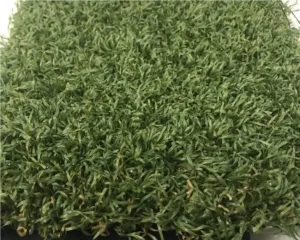
OEM Non-Infill Multi-Sport Artificial Turf (Urban Rooftop Profile)
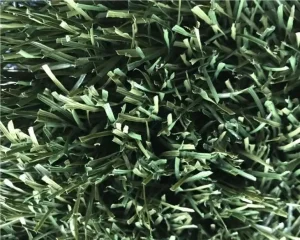
FIFA Quality Approved Multi-Sport Hybrid Football Turf
The Tokyo Multi-Sport Turf Commercial Landscape
Balancing extreme land efficiency, strict urban microclimate regulations, and intensive public recreational programming within the Kanto Plain.
The Tokyo Metropolitan Area represents one of the world's most intricate and demanding operating environments for synthetic sports surfaces. Characterized by unprecedented land values, rigorous architectural safety standards, and strict urban greening directives enacted by the Tokyo Metropolitan Government (TMG), sports facility engineering has shifted decisively toward multifunctional versatility. In key commercial and civic wards—including Minato, Koto, Shibuya, and the emerging bayside waterfront redevelopments in Harumi and Ariake—standalone, single-sport fields are economically unviable. Instead, schools, private athletic clubs, corporate wellness centers, and public recreation centers require a unified surface platform capable of switching seamlessly among soccer, field hockey, tennis, lacrosse, and track athletics.
Moreover, Tokyo's microclimatic realities impose exacting engineering constraints. The capital contends with the dual extremes of the urban heat island (UHI) effect during scorching humid summers and high-velocity precipitation events, notably the localized, extreme torrential downpours known colloquially as guerrilla rainstorms (ゲリラ豪雨). These environmental pressures dictate that multi-sports synthetic turf exported to Tokyo cannot simply replicate generic Western designs. Surfaces require high water permeability ratings exceeding 180 millimeters per hour, infrared-reflective fiber compounds that lower surface skin temperatures, and high yarn recovery memory that withstands consecutive 14-hour daily usage cycles without rapid fibrillation or matting.
Vertical Rooftop Integration
Over 35% of recent Tokyo installations occur on reinforced structural rooftops of educational institutions and commercial towers. Systems must incorporate lightweight polyurethane backings, minimal static weight profiles, and stringent non-flammability performance conforming to Article 8 of the Japanese Fire Service Act.
Microplastic Avoidance Shifts
In step with global sustainability compacts and Japan's Circular Economy Vision 2020, Tokyo developers increasingly mandate non-infill multi-sport systems. Eliminating crumb rubber infill mitigates storm-drain runoff contamination into Tokyo Bay and substantially reduces lifecycle maintenance budgets.
Earthquake & Settlement Tolerance
Tokyo's geotechnical landscape demands subterranean elastomeric shock pads and geotextile stabilization layers capable of absorbing minor seismic ground settlements and lateral shears without tearing backing seams or compromising horizontal planarity.
Material Science: TenCate Yarn Dynamics & Polymer Architecture
Analyzing the balance among yarn geometry, tactile friction, rotational resistance, and tensile molecular degradation for multi-use operations.
A true multi-sports turf system must reconcile fundamentally divergent athletic requirements. Football demands a tall, resilient blade with lower fiber density to accommodate clean stud penetration and sliding ergonomics. Field hockey and tennis, conversely, necessitate short, extremely dense, texturized or fibrillated fibers that ensure absolute ball roll predictability, continuous high-velocity trueness, and minimal directional friction bias. To achieve this in the Tokyo market, our manufacturing lines integrate world-leading TenCate Grass polymer yarns, supported by nearly five decades of monofilament extrusion expertise inherited from our parent group, RiThai International.
Through co-extruded polyethylene (PE) and polypropylene (PP) formulations paired with multi-rib, diamond, and curved C-spine cross-sections, our fibers exhibit extraordinary resilience under Lisport mechanical wear cycles exceeding 50,000 rotations. Our polymer masterbatches incorporate premium Ciba UV stabilizers, preserving yarn elasticity and preventing photo-oxidative degradation despite prolonged exposure to Tokyo's summer solar intensity.
| Performance Parameter | Sand-Dressed Multi-Court | High-Density Non-Infill System | Hybrid 3G Multi-Sport (Soccer/Rugby) | Evaluation Method / Testing Protocol |
|---|---|---|---|---|
| Typical Pile Height | 15 mm – 22 mm | 25 mm – 32 mm | 40 mm – 50 mm | ISO 2549 / JIS L 1021-4 |
| Fiber Dtex & Micron | 8,800 – 11,000 Dtex / 120μm | 13,000 – 16,000 Dtex / 280μm | 12,000 – 14,000 Dtex / 360μm | EN 14836 / Polymer Spectroscopy |
| Stitch Density (Stitches/m²) | 24,150 – 31,500 | 18,900 – 25,200 | 8,820 – 10,500 | Direct Sensor Tuft Count |
| Shock Absorption (Force Reduction) | 42% – 52% (with E-layer pad) | 55% – 64% (with shock pad) | 60% – 68% (infilled + pad) | EN 14808 / FIFA Quality Criteria |
| Vertical Ball Rebound | 0.75 m – 0.95 m (Tennis/Hockey) | 0.65 m – 0.85 m (Multi-Court) | 0.60 m – 0.85 m (Soccer standard) | EN 12235 / FIH Standard 3 |
| Tuft Withdrawal Force | ≥ 45 N (Reinforced PU Backing) | ≥ 50 N (High-Lock Secondary Backing) | ≥ 40 N (Latex / PU dual composite) | ISO 4919 Laboratory Protocol |
| Water Permeability | ≥ 2,200 mm/hour | ≥ 3,000 mm/hour | ≥ 1,800 mm/hour | EN 12616 (Constant Head Water Method) |
Rotational Resistance & Player Ergonomics: The primary safety concern on multi-use surfaces is managing torque transmission to players' knees and ankles during rapid deceleration and directional pivoting. Our textured PE fibers are engineered with a balanced rotational resistance rating between 30 Nm and 45 Nm (measured via EN 15301-1 rotational resistance testing), falling comfortably within the safe athletic threshold defined by both FIFA and the International Tennis Federation (ITF). This eliminates the excessive rotational grip often found on dry sand-filled courts while mitigating the slip hazard of untreated long-pile turf.
Tokyo Regulatory Framework & Supply Chain Resilience
Comprehensive alignment with Japanese Industrial Standards (JIS), Ministry of Land, Infrastructure, Transport and Tourism (MLIT) protocols, and direct Tokyo Bay customs routing.
JIS A 1322 Non-Flammability
Every roll intended for Tokyo indoor arenas, rooftop fields, and municipal spaces holds verified third-party non-flammability test certificates conforming to JIS A 1322 (Method for fire retardancy of thin materials), preventing flame propagation and limiting toxic fume emission under emergency scenarios.
PFAS-Free Environmental Testing
In accordance with Japan’s Chemical Substances Control Law (CSCL) and strict municipal procurement regulations in the Kanto region, all Suntex turf products are 100% free of intentionally added PFAS compounds (Per- and Polyfluoroalkyl Substances), verified by rigorous GC-MS/LC-MS laboratory testing.
Streamlined Tokyo Port Logistics
Optimized freight operations serving the Port of Tokyo (Oi and Shinagawa Terminals) and Yokohama Port. We offer precision-cut roll dimensions, pre-marked game lining, and customized labeling designed to clear bonded warehouses and Japanese customs with zero jobsite re-trimming delays.
Sub-base Engineering & Extreme Drainage Strategy: In the low-lying coastal regions along Tokyo Bay (including Shinagawa, Koto, and Edogawa wards), the subterranean water table sits exceptionally close to the surface. Suntex engineering specialists supply contractors with specialized structural cross-section drawings, detailing graded permeable crushed rock assemblies, geogrid stabilization, and perforated horizontal drain pipes that work synergistically with our multi-punched turf backings. This ensures that even during seasonal typhoon downpours dropping over 100 millimeters of rainfall within two hours, multi-sports surfaces shed surface water immediately, eliminating ponding and allowing competitive play to resume immediately after rainfall stops.
Technology Roadmap: The Future of Turf in Urban Japan
Pioneering circular economy monomaterials, infrared thermal dispersion coatings, and embedded digital pitch sensing.
100% Mono-Polymer True Recycling
Current industrial research focuses on unified PE turf architectures where face fiber, woven primary backing, and secondary thermoplastic polyurethane (TPU) coating consist entirely of identical polymer families. This eliminates the arduous mechanical delamination step at end-of-life, enabling 100% closed-loop recycling into clean industrial pellets within Tokyo's domestic recycling framework.
Thermoregulatory Infrared Deflection
By blending nanoscale titanium dioxide and specialized infrared-scattering pigments directly into the core resin melt, our latest development prototypes demonstrate a demonstrable reduction in surface temperatures of 8°C to 12°C compared to standard turf under peak July solar conditions in central Tokyo, directly addressing urban heat island mitigation guidelines.
Embedded Sub-Surface IoT Telemetry
Collaborating with athletic facility architects, we are developing turf integrated with sub-surface capacitive pressure-sensing grids. These arrays stream continuous, real-time foot-traffic heatmaps and impact dynamics directly to facility management software, predicting wear hot-spots and alerting operators before fiber degradation occurs.
Technical Questions for Tokyo Facility Developers
Direct answers regarding specifications, Japanese building code compliance, seismic preparation, and containerized dispatch.
Specialized Sports & Multipurpose Synthetic Turf Solutions
Comprehensive synthetic surfaces covering high-impact soccer pitches, precision golf greens, residential landscaping, and pet-friendly commercial developments.
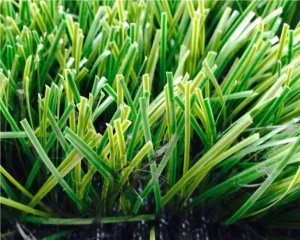
High Toughness Football Turf (Tokyo Multi-Sports Complex)
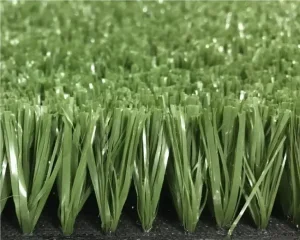
Professional Sand-Filled Putting Green Turf (Kanto Golf Club Edition)
Multi-Sport Sand-Filled Artificial Grass (All-Weather Tokyo Court)
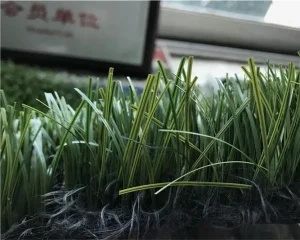
Professional Competition Synthetic Turf (Tokyo Stadium Standard)
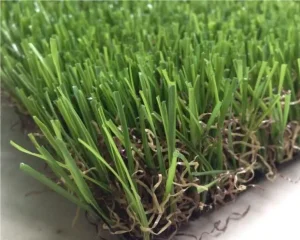
OEM Multipurpose Golf Rough Turf (Tokyo Commercial Country Club)
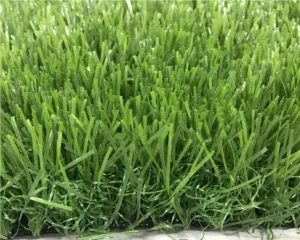
High-Drainage Pet & Multi-Leisure Grass (Tokyo Condo Complexes)
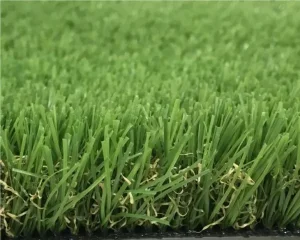
Eco Non-Toxic Multi-Use Lawn Grass (Tokyo Kindergarten Directives)
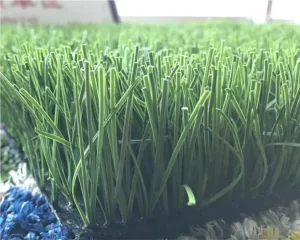
Engineered Multi-Sport & Soccer Field Turf (Tama Academic Sector)
Request a Tokyo Project Specification & Sample Kit
Connect directly with our senior polymer engineers and regional logistics coordinators. Receive comprehensive laboratory test reports, CAD layout consultation, and competitive direct-factory container pricing within 24 hours.