Featured Iberian Field Hockey Specifications
Download Technical Tender Sheets →
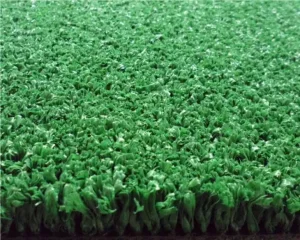
OEM FIH Category 1 Certified Professional Wet & Dry Hockey Turf Factory Spain
View System Specs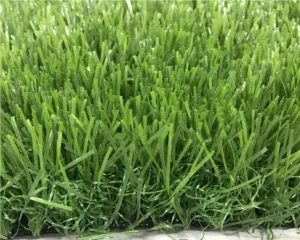
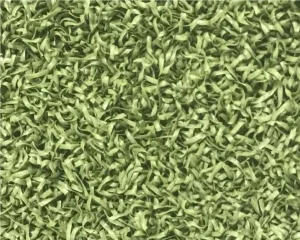
High-Drainage Anti-Microbial Multi-Use & Agility Pet Turf for Spanish Facilities
View System Specs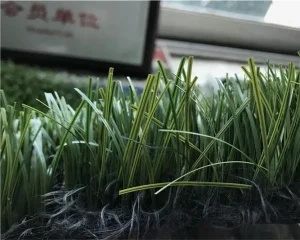
Professional Hybrid Sports & Football Turf Systems for Spanish Municipalities
View System Specs
Iberian Sports Infrastructure Report
Current Commercial & Industrial Realities of Hockey Turf in Spain
Evaluating field hockey pitch engineering against severe Mediterranean drought declarations, municipal procurement protocols (Pliegos de Condiciones), and the historic sporting clusters of Terrassa, Madrid, and Valencia.
The Catalonian Epistemic Core & The Water Crisis Paradox
Field hockey in Spain is not merely a collegiate pastime; it represents an elite sporting legacy concentrated heavily within Catalonia (principally Terrassa and Barcelona), the Comunidad de Madrid, the Basque Country, and the Valencian Community. Terrassa alone—host to the 1992 Olympic Hockey competitions and the 2022 FIH Women's World Cup at the Estadi Olímpic—operates as the operational nucleus for the Real Federación Española de Hockey (RFEH). However, this historical sporting infrastructure currently faces its most severe operational crisis since synthetic grass surfaces became mandatory in the late 1970s.
Under recent Catalan Water Agency (Agència Catalana de l'Aigua - ACA) Special Drought Plans and Decrees (specifically emergency stages enforced across the Ter-Llobregat system), the irrigation of sports turf surfaces using potable water has been severely curtailed or outright banned. Standard FIH Global Category 1 water-based pitches require approximately 18,000 to 30,000 liters of water per official match cycle (pre-game drenching and half-time refresh) to suppress surface friction, prevent player skin abrading, and eliminate directional ball deviation. With sports complexes across Catalonia, Andalusia, and the Levant facing municipal closures due to non-compliance with regional water restrictions, the Spanish procurement ecosystem is experiencing an unprecedented structural pivot away from legacy hydraulic fields toward next-generation dry hockey turf systems.
Municipal Tenders & The RFEH Alignment
Spanish municipal procurement authorities (Ayuntamientos) and regional athletic directorates now mandate that every euro allocated via public tenders (Pliegos de Prescripciones Técnicas) satisfies both the UNE-EN 15330-1 standard and strict ecological criteria under Ley 9/2017 de Contratos del Sector Público. Historic clubs such as Club de Campo Villa de Madrid, Real Club de Polo de Barcelona, Atlètic Terrassa, and Junior FC require elite surface stability without exposing their facility managers to local ecological sanctions.
Consequently, European suppliers and localized converters who historically dominated Spanish turf installations are failing to meet delivery schedules and raw material price points, given escalating energy overheads in EU yarn extrusion plants. Procurement officers are now directly auditing Tier-1 synthetic turf manufacturing facilities capable of vertical monofilament chemistry, verifiable compliance with EU microplastic directives, and high-volume consistency to guarantee field replacements before official league seasons commence.
>30,000 L
Water Saved Per Game (Dry Turf)
100%
PFAS-Free EU REACH Compliance
≤ 0.7 mm
Directional Ball Deviation Tolerance
14 Days
Factory 4.0 Pitch Production Cycle
Polymer Science & Tribology
Technology Roadmap: The Evolution to Waterless Dry Turf
From first-generation abrasive sand-filled surfaces to non-directional texturized monofilaments engineered with low-friction coatings for Paris 2024, LA 2028, and Mediterranean stadiums.
Knit-de-Knit (KDK) Fiber Texturization
Legacy field hockey turf suffered from "directional pile lay," which biased ball trajectory across pitch axes. Through high-heat thermal KDK crimping of low-density polyolefin filaments, our production matrix creates a true omnidirectional curly pile structure (over 65,000 to 85,000 tufts/m²). This locks the ball on a consistent plane, ensuring predictable rebound and 3D stick skill execution without turf grain interference.
Zero-PFAS Hydrophilic Polymer Alloys
Anticipating the European Chemicals Agency (ECHA) universal restriction on per- and polyfluoroalkyl substances (PFAS), our extrusion process eliminates fluoropolymer processing aids (PPA). Instead, we introduce modified organosilicon lubricating additives directly into the masterbatch matrix. This lowers dry surface skin friction coefficients (μ ≤ 0.35), completely neutralizing frictional turf burns without applying water.
UV Stabilization for High-Solar-Index Zones
The Iberian Peninsula experiences severe ultraviolet radiation loads exceeding 160 kLy/year, particularly across Andalusia, Castile-La Mancha, and Madrid. Our hockey monofilaments integrate hindered amine light stabilizers (HALS Chimassorb/Tinuvin formulations) calibrated to withstand 5,000 hours of accelerated UVA/UVB exposure under ISO 4892-3, maintaining >85% residual tensile elongation.
| System Classification | Surface Tribology | Water Demand per Match | Ball Roll Speed (FIH Standard) | Player Friction Index (μ) | Iberian Climate Suitability |
|---|---|---|---|---|---|
| FIH Global Category 1 (Wet) | Dense KDK PE Monofilament | 18,000 – 30,000 Liters | 10.0 – 14.0 meters | 0.25 – 0.32 (Wet State) | High Drought Risk |
| Next-Gen FIH Dry Turf (Innovation) | Low-Friction Modified PE Matrix | 0 Liters (Completely Waterless) | 10.5 – 13.5 meters | 0.30 – 0.35 (Dry State) | Optimal / Future-Proof |
| Sand-Dressed (National Standard) | Texturized PP / PE Hybrid | 0 Liters (Mineral Sand Stabilized) | 8.0 – 11.0 meters | 0.45 – 0.58 (Abrasive) | Moderate / Community Use |
| Sand-Filled (Legacy Municipal) | Fibrillated Polypropylene | 0 Liters (Full Sand Bed) | 6.0 – 9.0 meters | 0.60 – 0.75 (High Friction) | Obsolete for Elite Play |
Macro Industry System Architecture
Full-Pitch Engineering Solutions & EU Microplastic Bans
Commission Regulation (EU) 2023/2055 restricts intentionally added microplastics. Discover why elite hockey turf systems represent the cleanest regulatory asset for municipal sports complexes.
Sub-Base & Dynamic Elasticity Layers
A world-class hockey field functions as a synchronized tri-layer dynamic system. Beneath our carpet lies a high-precision sub-base of open-graded asphalt or dynamic porous aggregate engineered to strict longitudinal and transversal flatness tolerances (≤ 3mm under a 3-meter straightedge, per UNE 41951).
Directly above the base, we integrate prefabricated, crosslinked closed-cell polyolefin (XLPE) shock pads or in-situ polyurethane-bound SBR elastic layers (15mm to 20mm). This provides tailored force reduction (55% to 65% shock absorption) and critical vertical deformation (6.0mm to 8.5mm), guaranteeing joint longevity for athletes while preventing hollow dead spots beneath the turf carpet.
Zero-Infill Microplastic Ban Immunity
On September 25, 2023, the European Commission adopted Regulation (EU) 2023/2055, banning the sale of synthetic polymer microparticles (polymeric crumb rubber infill such as SBR, EPDM, and TPE <5mm) across European playing fields after an 8-year transition period ending in 2031.
Unlike modern 3G long-pile football surfaces that rely heavily on elastomeric performance infill, elite hockey fields utilize non-infill or clean sub-surface rounded silica sand dressing (non-respirable round quartz sand, purity >98%, 0.2–0.8mm) anchored deeply within the dense root zone. Investing in specialized hockey manufacturing matrices ensures complete municipal exemption from EU environmental sanction exposure.
Drainage Hydraulics & Flash-Flood Infiltration
The Iberian Mediterranean coast is frequently subject to the intense autumn weather phenomenon known as "DANA" (Depresión Aislada en Niveles Altos), delivering torrential cloudbursts that overwhelm civil drainage grids.
Our turf carpet backings are custom-perforated or manufactured with proprietary multi-hole drainage matrices delivering infiltration rates in excess of 1,800 mm/hour—vastly exceeding the UNE-EN 12616 baseline of 500 mm/hour. This ensures that even during violent storms in Valencia or Barcelona, surface water clears instantly without ponding, floating the turf, or causing hazardous hydroplaning during high-speed play.
Spanish Standards & Quality Codes
Localized Compliance: Navigating UNE-EN 15330-1 & CTE Directives
Commercializing and installing synthetic sports surfaces in Spain requires navigation of the national Código Técnico de la Edificación (CTE) alongside European sports surface norms. Our manufacturing protocols operate in lockstep with Spanish certified testing bodies (such as Instituto de Biomecánica de Valencia - IBV), ensuring smooth project sign-offs for general contractors and municipal tender bidders.
-
CTE DB-SUA 1 Slip Resistance (Resbaladicidad): Tested via pendulum test method (UNE-ENV 12633), certifying Class 3 slip safety performance under wet and dry conditions for high-traffic public sports infrastructure.
-
FIH Quality Programme Handbook Compliance: Strict verification across FIH Category 1 (Global Elite), Category 2 (National), and Category 3 (Multisport) classifications, audited for true ball roll, bounce, and rotational resistance.
-
Fire Reaction & Toxicity Under UNE-EN 13501-1: Certified Cfl-s1 flame retardance ratings for indoor arena hockey complexes and covered rooftop athletic facilities across Madrid and Basque sports halls.
Direct Logistics Pipeline to Spanish Ports
We maintain consolidated freight schedules directly connecting our automated export terminal with Spain's principal maritime logistics hubs. Every shipment is packaged with moisture-barrier sleeves, core stabilization plugs, and barcoded roll assignment mapping for rapid jobsite positioning.
Port of Valencia (Noatum / MSC)
28–32 Days Transit
Port of Barcelona (APM / Hutchison)
30–34 Days Transit
Port of Algeciras (Southern Hub)
26–30 Days Transit
Smart Industrial Manufacturing
China Factory 4.0: Global Supply Chain Resilience & Precision
Leveraging nearly five decades of monofilament extrusion heritage, high-precision German tufting technology, and vertically integrated quality control to outperform fragmented European assembly lines.
01. Polymeric Heritage
Vertical Extrusion Lineage
With roots stemming from parent company RiThai International's nylon monofilament operations since 1977, our masterbatch mixing, draw ratio calibration, and molecular annealing prevent blade splitting and fibrillation under aggressive stick impact.
02. Precision Tufting
Cobble 5/16" & 3/16" Machine Beds
Our facility deploys computerized high-speed tufting lines operating at sub-millimeter tolerances. By maintaining continuous loop-pile tension, we achieve the dense 70,000+ stitches/m² required for non-directional FIH play without secondary manual trimming.
03. Backing Chemistry
Polyurethane & Latex Coating
Equipped with 90-meter drying stenter ovens, our backing line locks turf fibers with premium cross-linking polyurethane (PU) or carboxylated styrene-butadiene rubber (SBR), delivering tuft withdrawal forces exceeding 45 N (far surpassing the 30 N EN baseline).
04. Complete Traceability
ISO 9001, 14001, 45001
Every master roll undergoes digital spectrophotometer color matching, tensile yield analysis, and Lisport XL mechanical wear simulation before release, backed by lot-specific test certificates provided for Spanish tender audits.
Procurement Specification Protocol
Engineering Checklist for Hockey Pitch Tender Specifications
Direct from our technical applications team: Essential physical parameters and testing thresholds to write into your next RFEH, municipal, or private club RFP.
Fibre Architecture & Density
Yarn Polymer: 100% Polyethylene (PE) texturized monofilament; no abrasive Polypropylene (PP) in exposed high-friction zones.
Linear Density (Dtex): 5,500 to 8,800 Dtex / 6–8 ply.
Pile Height: 10 mm to 13 mm strictly controlled.
Stitch Density: 65,000 to 88,200 stitches/m² to guarantee zero directional bias.
Mechanical & Backing Properties
Primary Backing: Multi-layer Polypropylene woven fabric + fiberglass fleece grid (weight ≥ 220 g/m²).
Secondary Backing: Polyurethane (PU) compound ≥ 750 g/m² or High-Grade Latex ≥ 900 g/m².
Tuft Withdrawal Force: ≥ 40 N according to ISO 4919.
Dimensional Stability: Shrinkage ≤ 0.1% under ISO 2551 (80°C water bath).
FIH Tribology & Biomechanics
Ball Roll Distance: 10 to 14 meters (Standard FIH Ramp Test).
Ball Rebound Height: 100 mm to 400 mm (from 2.0-meter drop height per EN 12235).
Shock Absorption: 55% to 65% when installed over approved dynamic shock pad.
Vertical Deformation: 6.0 mm to 8.5 mm per UNE-EN 14808.
Frequently Asked Technical Inquiries
Expert FAQ: Sourcing, Installing & Regulating Hockey Turf
Clear, direct answers for municipal procurement directors, civil engineering contractors, and club presidents across the Iberian Peninsula.
How does the new FIH "Dry Turf" perform in Spain compared to traditional wet pitches?
FIH Dry Turf utilizes advanced low-friction polymer formulations and hydrophilic surface chemistry that mimic the hydrodynamic sliding resistance of wet pitches without requiring irrigation. Ball roll speeds (10–13.5m) and vertical bounce consistency match Category 1 Global standards, eliminating the massive water expenditure (up to 30,000L/match) that currently violates Catalan and Andalusian emergency drought laws.
Are these synthetic surfaces affected by the 2023 EU Microplastics Ban?
No. Commission Regulation (EU) 2023/2055 specifically targets intentionally added loose microplastics (such as loose SBR or EPDM rubber granules under 5mm used on 3G football fields). Elite hockey turf systems are completely non-infilled or use sub-surface rounded quartz sand ballast locked within a dense thatch root zone. They remain 100% compliant and exempt from EU microplastic bans.
Can Chinese manufacturers provide certified PFAS-free laboratory reports for Spanish tenders?
Yes. Suntex supplies comprehensive third-party laboratory test reports (via SGS and TÜV) validating zero intentionally added PFAS substances, conforming strictly to EU REACH regulations, SVHC candidate lists, and Spanish regional tender requirements.
What is the typical transit duration and customs clearance procedure to Spanish ports?
Maritime container shipping from Shanghai or Ningbo to the Port of Valencia or Port of Barcelona averages 28 to 34 days on direct liner services. Cargo is accompanied by complete documentation including Bill of Lading, Form A / Certificate of Origin, packing plans with numbered pitch rolls, and CE Declaration of Performance (DoP) under EN 14041 / EN 15330-1.
What sub-base preparation is required for high-level hockey fields in Spain?
Top-tier hockey demands zero surface undulations. Sub-bases must consist of open porous asphalt or free-draining unbound aggregate compacted to 98% Modified Proctor, with surface tolerances ≤ 3mm under a 3m straightedge. A prefabricated cross-linked polyolefin foam pad (10–12mm) or in-situ elastic layer (15mm) is essential to meet FIH shock absorption requirements.
Do you support OEM / custom line markings tufted directly into the carpet?
Yes. We offer both factory-tufted line systems (permanent white and yellow lines tufted directly into the rolls during the primary stitch cycle) and matching roll goods for on-site hot-melt polyurethane seam bonding. Factory-tufted lines reduce on-site cutting labor by up to 40% and eliminate seam failure points.
Complete Sports & Landscaping Catalog
Full Field & Multi-Sport Synthetic Grass Range for Spain
Explore our full line of FIFA, ITF, and FIH compatible synthetic surfaces engineered for stadiums, golf resorts, and athletic complexes across the Iberian market.
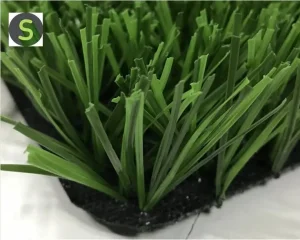
Wholesale FIFA Quality Pro Soccer Field Turf for Spanish Sports Arenas
View System Specs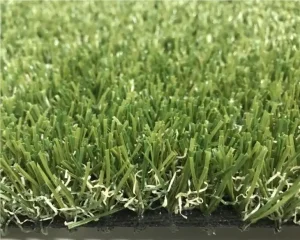
High-Durability Golf Fairway & Practice Turf for Iberian Peninsula Resorts
View System Specs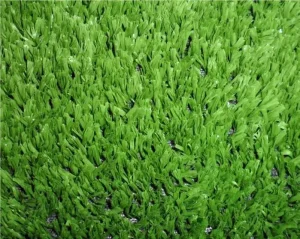
ITF Standard TenCate Fiber Tennis & Padel Turf Factory Supply Spain
View System Specs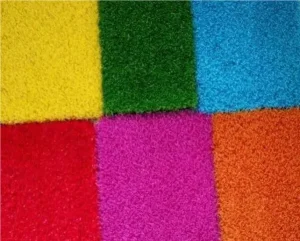
High-Density Colorful Multi-Sport Runway & Tactical Marking Turf Spain
View System Specs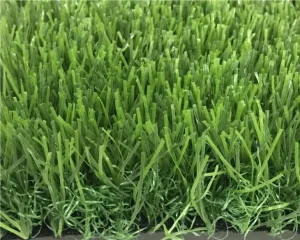
Ultra-Permeable UV-Resistant Commercial Surround Turf for Spain Sports Complexes
View System Specs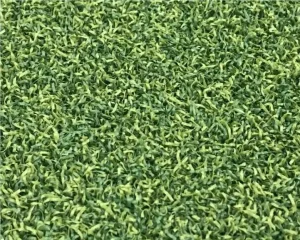
Pro-Caliber Non-Slip Putting Green & Short-Pile Precision Turf for Spanish Golf
View System Specs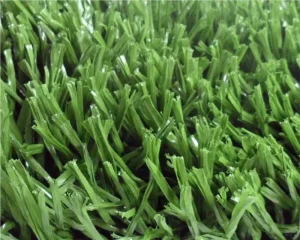
OEM FIFA Certified Synthetic Turf System for Iberian Sports Infrastructure
View System Specs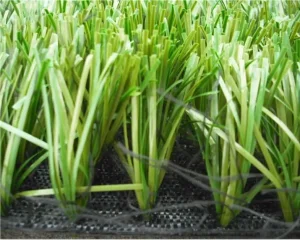
High-Abrasion TenCate Monofilament Pitch Turf for Multi-Sport Academies in Spain
View System SpecsAccelerate Your Next Iberian Hockey Project
Connect directly with our senior sports turf engineers. Receive comprehensive tender drafting guidance, customized pitch seam roll calculations, and complete FIH laboratory compliance packs within one business day.
✓ Direct Factory OEM
✓ Full CIF Valencia / Barcelona Logistics
✓ Guaranteed FIH Certification Standard