
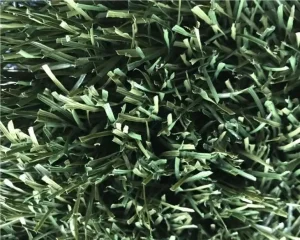
Featured Houston Athletic Systems
Engineered to withstand excessive convective rainfall and high-heat solar indexes in Harris County.
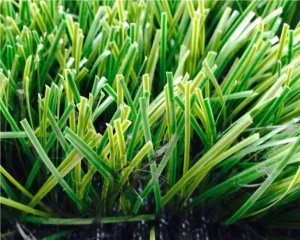
High-Toughness Resilient Soccer Turf
View Product Specs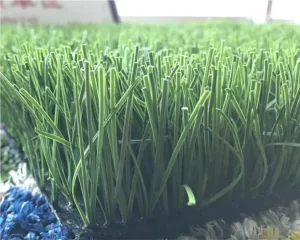
Elite Synthetic Competition Soccer Turf
View Product Specs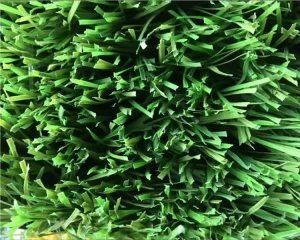
Wholesale Professional Football Turf
View Product SpecsHouston Turf Ecosystem: Climatic Stress Factors & Engineering Demands
The Greater Houston metropolitan area—encompassing Harris, Fort Bend, and Montgomery counties—represents one of North America's most demanding proving grounds for synthetic athletic turf systems. Municipal facilities, independent school districts (ISDs) including Houston ISD and Katy ISD, and commercial sports megaplexes encounter a unique trifecta of climatic stresses: high solar ultraviolet (UV) degradation indices, sustained ambient humidity exceeding 80%, and torrential tropical downpours capable of delivering over 3 to 4 inches of rain per hour during gulf atmospheric events.
53.4 in
Average Annual Rainfall
2,600+
Annual Sun Hours (UV Load)
>140°F
Peak Surface Temperatures
100%
PFAS-Free Tested Backings
In standard low-specification artificial turfs, continuous exposure to Houston's high UV index leads to premature polymer photodegradation, manifesting as blade chalking, micro-splitting, and catastrophic loss of tensile strength. Simultaneously, Gulf Coast clay subsoils—predominantly expansive vertisols—exhibit intense shrink-swell cycles that threaten foundational field geometry. Modern systems serving this market require advanced dual-core monofilament chemistry, specialized Hindered Amine Light Stabilizers (HALS), and high-flow secondary backing matrices engineered to prevent field hydraulic pooling and anaerobic degradation.
Global Macro Industry Trends: Transition to Non-Infill & Circular Polymers
The international sports surface sector is undergoing the most consequential regulatory transformation in its history. Driven by the European Chemicals Agency (ECHA) microplastics restriction timeline and shifting environmental requirements across US municipalities, the transition away from conventional end-of-life tire-derived crumb rubber (SBR) infill toward bio-based, encapsulated, and non-infill multi-sport systems has accelerated.
🔬 Polyolefin Fiber Metallurgy
Modern extrusion uses elite C4/C6 metallocene linear low-density polyethylene (LLDPE) blends. This architecture prevents premature fiber splitting, ensuring dynamic resilience through 50,000+ Lisport mechanical abrasion cycles.
🌱 Sustainable Matrix Backings
Traditional SBR latex coatings are increasingly replaced by hot-melt polyurethane or 100% recyclable single-polymer woven polyolefin backings, enabling complete cradle-to-cradle reclamation without chemical separation.
⚡ Micro-Hydraulic Permeability
Through-hole perforation is yielding to fully porous woven structures yielding drainage capacities over 1,200 mm/hour, insulating Houston facilities from the catastrophic flooding cycles seen in tropical storm events.
Comparative Technical Specifications for Houston Installations
Consult this engineering matrix to evaluate pile heights, yarn cross-sections, and drainage rates for Texas climatic resilience.
| System Category | Polymer Composition | Pile Height Range | Dtex & Micron | Drainage Throughput | Houston Application Fit |
|---|---|---|---|---|---|
| Elite Pro Football | Monofilament PE with Spine Core | 50 mm – 60 mm | 12,000 – 16,000 Dtex / 360μm | > 500 mm/hr | High School Stadiums, NCAA Training Facilities |
| All-Weather Community Soccer | Diamond & W-Shape Monofilament | 40 mm – 50 mm | 11,000 – 14,000 Dtex / 320μm | > 650 mm/hr | Municipal Parks, Club Sports Megaplexes |
| Multi-Sport Non-Infill | Texturized PE & Dense PP Thatch | 25 mm – 35 mm | 9,000 – 11,000 Dtex / 250μm | > 800 mm/hr | ISD Elementary Playgrounds, Rec Centers |
| Municipal High-Wear | Fibrillated / Slit-Film Heavy Duty | 45 mm – 50 mm | 10,000 – 12,000 Dtex / 120μm | > 450 mm/hr | High-Rotation Practice Fields, Intramural Parks |
Localized Application Scenarios in Greater Houston
Synthetic turf deployments in Houston cannot rely on generic Midwestern or European architectural specs. Subsurface hydrologic profiles differ dramatically across regional micro-locations:
Harris County ISD Complexes
Facing high-frequency multi-sport demands from August two-a-days through spring track seasons. Demands high Dtex fibers with specialized thermal reduction coatings to lower field temperatures under summer conditions.
Coastal Storm-Surge Zones (Clear Lake/Pasadena)
Facilities positioned along storm-surge boundaries prioritize rapid horizontal water discharge sub-bases and microbial-resistant polyolefin backing to eliminate sulfur odor and mold in humid air.
Urban Commercial Megaplexes (Central Houston)
Indoor and rooftop soccer complexes requiring dense, low-emission, non-infill artificial turf compliant with strict Class-A indoor fire ratings and local building safety codes.
Technology Roadmap: The Next Era of Football Turf (2025–2030)
As polymer engineering aligns with algorithmic manufacturing, next-generation turf systems are evolving from passive mats to reactive athletic surfaces:
- Infrared-Reflective (IR) Fiber Extrusion: Integration of specialized titanium oxide micro-pigments reflecting near-infrared radiation, achieving measurable surface temperature drops of 15°F–25°F without water misting.
- Biometric Shock-Absorption Pads: Next-gen expanded polypropylene (EPP) mechanical interlocking underlayments providing uniform Head Injury Criterion (HIC) and Critical Fall Height values under intense temperature swings.
- Circular Polymer Mono-Materials: 100% single-family polyethylene assemblies (yarn, primary mesh, and hot-melt backings) that eliminate manual shred separation during reclamation cycles.
Engineered Turf Solutions for Texas Project Bids
Complete product range for commercial contractors, municipal boards, and athletic directors in Houston.
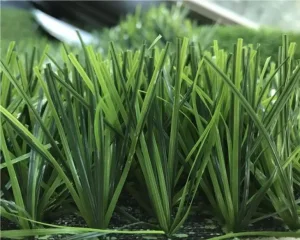
School Athletic Field Economical Turf
View Product Specs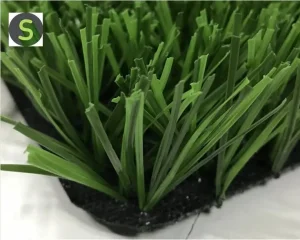
Standard High-Density Soccer Pitch Turf
View Product Specs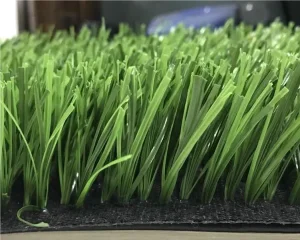
OEM Custom Resilient Football Turf
View Product Specs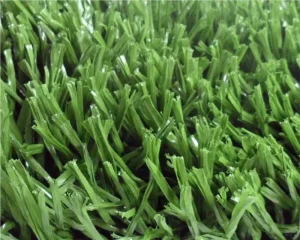
Championship FIFA Standard Pitch Turf
View Product Specs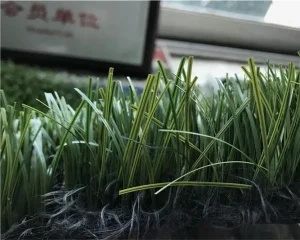
Pro-Grade Monofilament Match Turf
View Product Specs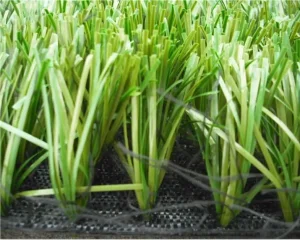
Wear-Resistant TenCate Fiber Turf
View Product Specs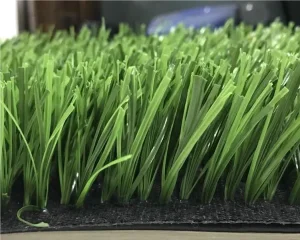
Heavy-Duty Athletic Stadium Surface
View Product Specs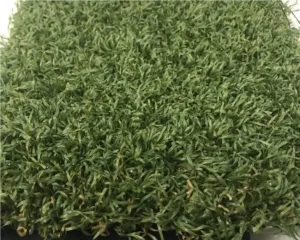
Non-Infill Multi-Sport Rapid Field
View Product SpecsEngineering FAQ: Football Turf Specification & Houston Logistics
Technical guidance for landscape architects, specifiers, and procurement teams serving the Greater Houston area.
How do intense Houston UV index levels affect artificial turf lifespans?
Houston registers over 200 sunny days annually with midday summer UV index ratings frequently exceeding 10. Low-grade polyethylene fibers without adequate stabilization experience early polymer chain scission, resulting in brittle, fractured blades and yarn degradation. Our formulations incorporate specialized Ciba/BASF Hindered Amine Light Stabilizers (HALS) that resist free-radical photodegradation, maintaining tensile retention above 85% after 5,000+ hours of accelerated QUV weathering tests.
What sub-base design is required for Houston's expansive clay vertisol soils?
Due to the high shrink-swell capacity of native Gulf Coast clays, direct-to-dirt installation leads to rapid surface unevenness. A standard Houston athletic specification requires lime/cement stabilization of the subgrade, followed by an impermeable geotextile barrier, a 4–6 inch compacted open-graded crushed limestone aggregate base (such as ASTM No. 57 stone), and a 1-inch dynamic choking layer (ASTM No. 89). This base system supports effective lateral drainage into perimeter collector pipes during cloudburst storms.
Are your sports turf products certified PFAS-Free and heavy metal compliant?
Yes. Every batch of turf fiber and backing material undergoes strict third-party testing (EN 71-3, EPA Method 3052/6010D, and total fluorine screening). Test reports verify our football turf contains no detectable per- and polyfluoroalkyl substances (PFAS), lead, cadmium, or hazardous phthalate plasticizers, making them fully compliant with school district safety requirements.
What is the difference between infill and non-infill football turf in Texas heat?
Traditional infilled systems (using sand and crumb rubber or coated silica) offer superior shock attenuation and cleat release for full-contact football, but traditional SBR rubber infill can heat surfaces to 150°F+ on hot summer afternoons. Non-infill multi-sport turf uses dense, texturized thatch yarns to hold blades upright without infill particles. For high-contact football in Houston, our recommended solution is a spine-reinforced monofilament system paired with an engineered shock pad and alternative cool infills (such as coated quartz or plant-based matrix granules).
What are the logistics lead times and freight routing options into the Port of Houston?
We routinely manage direct ocean freight to Port Houston (Barbours Cut and Bayport Terminals). Ocean transit times typically range from 28 to 35 days, followed by streamlined customs clearance through our logistics partners. Production lead times for custom-tufted football rolls range from 10 to 18 business days, ensuring reliable, predictable scheduling for Texas sports project tenders.
Require a Project-Specific Specification Review?
Our engineering division reviews project CAD files, drainage profiles, and tender documents within 24 hours.
Send Inquiry Now