
Featured Brazil-Ready Synthetic Turf Solutions
Direct factory-manufactured polymer turf configurations optimized for extreme UV indexes, heavy monsoonal moisture, and intensive commercial footfall.
-
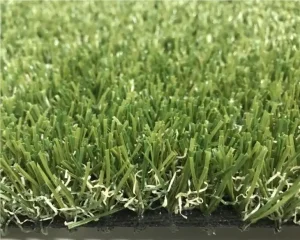
Brazil High-Resilience Golf Fairway & Resort Synthetic Turf
View Product Specifications -
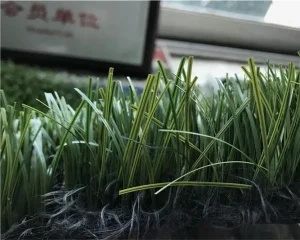
Brazilian CBF/FIFA Standard Football Turf for Municipal Pitches
View Product Specifications -
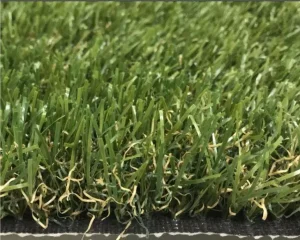
Fast-Drainage Antimicrobial Pet Turf for Urban Developments
View Product Specifications -
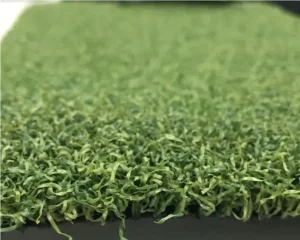
OEM Non-Sand Filled Golf Putting Green for Luxury Condominiums
View Product Specifications
The Synthetic Turf Landscape in Brazil: Commercial Realities & Surging Demand
Brazil's synthetic turf sector has evolved far beyond leisure landscaping into a critical infrastructure segment driven by municipal sports expansion, real estate verticalization, and private athletic facilities.
Tropical Weathering & Thermal Degradation
In regions like the Brazilian Northeast (Recife, Fortaleza) and Central-West (Brasília, Goiânia), UV radiation regularly reaches Index 12–14. Conventional synthetic turf imported from non-tropical suppliers suffers photo-oxidation within 18 months, leading to fiber embrittlement, chalking, and premature pile shedding. B2B procurement demands advanced Hindered Amine Light Stabilizers (HALS) and C6/C8 polymer foundations.
The "Futebol Society" & Padel Club Boom
Private sports arenas operating 7-a-side ("Society") pitches and paddle tennis courts represent one of Brazil's fastest-growing small-business asset classes. With venues booking 12 to 16 hours of intensive daily play, field operators cannot afford weekly maintenance or natural turf downtime. They require high-density monofilament fibers engineered for 50,000+ Lisport cycles without structural splitting.
Metropolitan Water Restrictions & ESG
In Tier-1 metropolises like São Paulo and Rio de Janeiro, periodic municipal water rationing and steep commercial utility tariffs have forced corporate campuses, commercial real estate developers, and international schools to eliminate natural lawn irrigation. Synthetic turf yields instant ROI while complying with corporate ESG standards, slashing millions of liters of non-potable water usage per site annually.
Global Procurement Bottlenecks & Macro Technical Solutions
Overcoming the triple threat of Brazilian importation: extreme climatic wear, punitive logistic dwell times, and complex Mercosur customs classifications.
Engineering Solutions for Tropical Hydrolysis & Mold
Standard synthetic grass backings utilize low-grade Styrene-Butadiene Rubber (SBR) latex compounds. In Brazil's high-humidity zones (such as Manaus, Belém, and coastal Santos), trapped water induces bacterial growth and hydrolytic delamination within the backing cloth, causing fibers to pull loose with little resistance.
Our OEM production lines integrate advanced Polyurethane (PU) secondary coatings or specialized carboxylated latex with closed-cell antimicrobial agents. Combined with a two-layer woven polypropylene (PP) plus non-woven fleece primary backing, tuft withdrawal force exceeds 45 Newtons—far surpassing European (EN 15330-1) and Brazilian national testing standards.
Cross-Border Logistics: Mitigating Santos & Paranaguá Port Risks
Maritime shipments entering the Port of Santos or Paranaguá encounter extended customs inspection periods (Canal Vermelho/Amarelo under SISCOMEX). If rolls are inadequately packaged, high container humidity and pressure cause permanent roll-ovalization and pile creasing.
- Heavy-Gauge Core Tubes: High-density winding cores resist longitudinal bending under multi-tier container stacking.
- Thermal-Sealed Multi-Layer Packaging: Waterproof outer wrap with integrated desiccants prevents maritime mildew during 35-45 day transoceanic voyages.
- Precise NCM Classification: Accurate HS code documentation under Mercosur Common Nomenclature (NCM 5703.30) avoids demurrage penalties and clearance stalls with Receita Federal.
B2B Specification Guide for the Brazilian Market
Engineered parameter guidelines formulated to align with Brazilian project types, weather profiles, and sub-base conditions.
| Application Sector | Recommended Pile & Dtex | Yarn Geometry & Polymer | Drainage & Backing System | Key Standard Compliance |
|---|---|---|---|---|
| Professional Soccer (Futebol 11) | 50mm – 60mm 12,000 – 16,000 Dtex |
Monofilament Diamond with Reinforced Spine (100% PE) | Perforated PU Backing or High-Tack SBR (65L/min/m²) | FIFA Quality / FIFA Quality Pro / ABNT NBR 15737 |
| Commercial 7-a-Side (Futebol Society) | 40mm – 50mm 11,000 – 13,000 Dtex |
Stem / C-Shape Monofilament High Resilience | Double PP woven backing + reinforced latex seal | Lisport 50,000 Cycles / Tensile Strength >45N |
| Padel Courts & Multi-Sports | 12mm – 15mm 8,800 – 9,500 Dtex |
Texturized / Fibrillated Monofilament (100% PE/PP) | Dense puncture-proof backing with precision sand infill | FIP Guidelines / Uniform Friction & Ball Rebound |
| Commercial Landscaping & Rooftops | 30mm – 40mm 8,000 – 10,000 Dtex |
W-Shape or Wave-Profile with PE/PP Thatch Layer | High-permeability matrix with micro-drainage perforations | ISO 4892-3 UV Aging / Fire Retardant Class Bfl-s1 |
| Pet Areas & Municipal Playgrounds | 25mm – 35mm 9,000 – 11,000 Dtex |
Soft-touch anti-static PE with high stitch density | 100% Polyurethane backing with non-absorbent fibers | PFAS-Free / DIN 18035-7 Heavy Metal Free |
Brazilian Localized Compliance, ABNT Standards & Tariffs
Eliminating legal, customs, and performance risks for Brazilian distributors, EPC contractors, and institutional tender participants.
ABNT Standards & Public Bids (Licitações)
Municipal sports projects under Brazil's Lei nº 14.133/2021 (Nova Lei de Licitações) require strict technical validation. Turf specifications must comply with ABNT NBR 15737 (artificial sports surfaces) and ABNT NBR 15924. Our laboratory test dossiers accompany every production lot, giving municipal bidders the certified assurance required to win government contracts.
PFAS-Free Certification & Environmental Safety
Modern corporate real estate developers operating under Green Building Council Brasil (LEED certification) and municipal tenders prohibit per- and polyfluoroalkyl substances (PFAS). Our artificial turf is extruded strictly using fluorochemical-free masterbatches, backed by SGS and TÜV Rheinland non-toxicity test certifications.
Tax & Customs Optimization (Custo Brasil)
Navigating II (Import Tax), IPI, PIS, COFINS, and ICMS demands precision. Our international documentation department provides comprehensive packing lists, certificates of origin, and certified container weights (VGM), ensuring swift green-channel processing at customs and minimizing the impact of the historical "Custo Brasil."
Technology Roadmap: The Next Decade in Brazilian Synthetic Surfaces
Innovations shaping the next generation of artificial turf products tailored for sustainability and climate resilience.
1. 100% Recyclable Mono-Material Turf Systems
Traditional turf fuses polyethylene (PE) blades to polypropylene (PP) backings with SBR rubber latex, creating a composite that is difficult and costly to recycle. Our upcoming 2026/2027 industrial product pipeline introduces pure All-PE turf systems, where the yarn, woven backing, and thermo-bonding secondary layer belong to the same polymer family. At the end of its 10-12 year lifecycle, the entire roll can be pelletized directly without chemical separation.
2. CoolTurf IR Pigments & Non-Infill Sports Systems
Midday field temperatures on synthetic pitches in Cuiabá or Ribeirão Preto can climb to over 65°C due to black SBR rubber infill absorption. Our factory is pioneering infrared-reflective (IR) fiber formulations that reflect the invisible solar infrared spectrum, lowering field surface temperatures by 8°C to 12°C. Additionally, high-density non-infill crimped turf systems remove rubber granule splash completely, creating a cleaner, cooler, and low-maintenance playing surface.
Frequently Asked Questions: Sourcing Artificial Grass for Brazil
Answers to key questions on technical specs, lead times, minimum order quantities (MOQ), and Brazilian port logistics.
What are the typical lead times and transit routes for ocean freight to Brazilian ports?
How do your artificial turf formulations withstand Brazil's intense UV radiation?
Can you support custom roll widths and pre-inlaid line markings for soccer and padel fields?
What is the Minimum Order Quantity (MOQ) for custom OEM production runs?
Are test reports and laboratory certifications provided for municipal tenders (Licitações)?
Hot Artificial Grass Products for Direct Brazilian Wholesale & OEM
Explore our full line of specialized synthetic turf systems engineered for multi-sport arenas, professional clubs, commercial properties, and urban landscape projects.
-
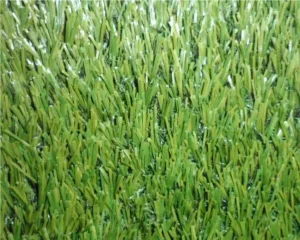
High-Durability Multi-Sport & Baseball Synthetic Turf for Brazilian Complexes
View Product Specifications -
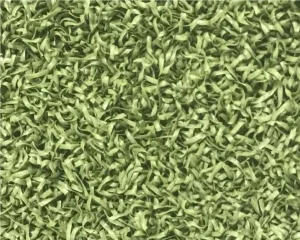
OEM FIH-Approved Professional Field Hockey Turf for Tournament Arenas
View Product Specifications -
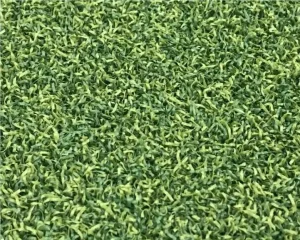
Non-Slip Putting Green Surface for Luxury Brazilian Rooftops & Clubs
View Product Specifications -
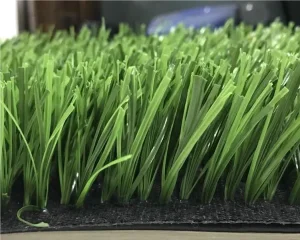
Heavy-Duty Football Fake Turf System for Commercial Society Arenas
View Product Specifications -
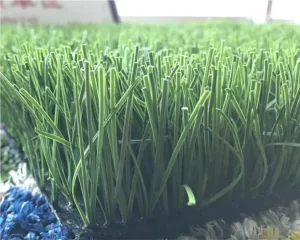
Commercial Artificial Soccer Turf for Municipal Stadium Installations
View Product Specifications -
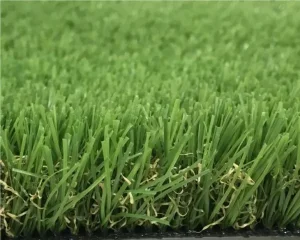
Eco-Safe Non-Toxic Commercial Landscaping Turf for Corporate Developments
View Product Specifications -
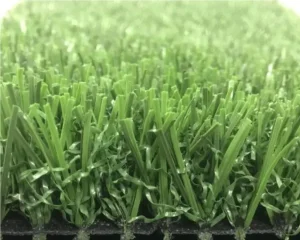
Advanced Multi-Sports Turf for Padel, Tennis & Institutional Courts
View Product Specifications -
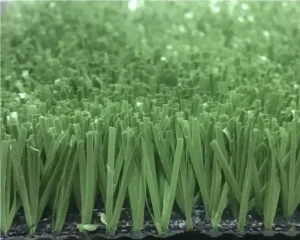
Professional Synthetic Turf for Brazilian Tennis & Padel Club Operations
View Product Specifications
Connect Directly with Our Engineering & Export Team
Are you sourcing synthetic turf for an upcoming municipal tender, a multi-court padel club development, or container-load distribution in Brazil? Request custom pricing, technical dossiers, and physical sample kits delivered directly to your office.