High-Spec Football Turf Systems Certified for Japanese Pitches
Engineered to satisfy FIFA Quality Pro requirements and the stringent climatic resilience demands of Japanese sporting venues, from Hokkaido's frost cycles to Kyushu's monsoon season.
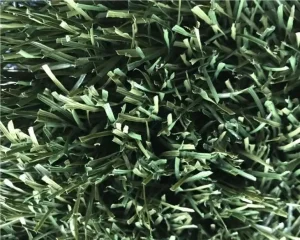
- Pile Height: 50mm - 60mm Monofilament
- UV Stability: 8,000+ Hrs Weathering
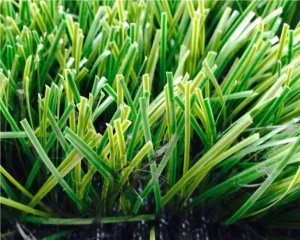
- Dtex: 12,000 - 14,000 High Tenacity PE
- Lisport Test: >50,000 Cycles Intact
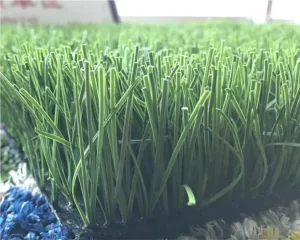
- Backing: Polyurethane (PU) / Multi-layer PP
- Drainage Rate: >3,000 mm/h Rain Capacity
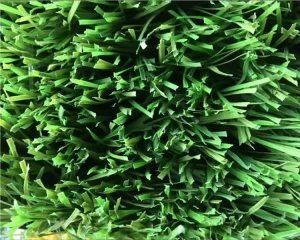
- Yarn Profile: Reinforced Double Diamond
- Environmental: 100% Lead-Free & PFAS-Free
Commercial & Industrial Realities of Football Turf in Japan
Understanding the unique convergence of Ministry guidelines, extreme climatic variation, and high-frequency athletic programming driving synthetic turf adoption in Japan.
MEXT School Greening Policy
The Japanese Ministry of Education, Culture, Sports, Science and Technology (MEXT) has accelerated the conversion of traditional bare-earth school grounds (校庭の芝生化 - Kōtei no Shibafuka) into advanced artificial turf surfaces. Primary drivers include reducing heat stroke incidents, lowering dust particle inhalation, and mitigating pediatric impact injuries.
Procurement departments for municipal boards of education require third-party laboratory verification for heavy metal non-toxicity, zero VOC emission during summer heat, and non-abrasive skin-friction indexes to safeguard elementary through high school athletes.
Monsoon & Seismic Engineering
Japan presents an unforgiving natural environment. From typhoons hitting Shizuoka and Kyushu to deep snowpack and frost-heave cycles in Tohoku and Hokkaido, football turf systems must be engineered with hyper-porous multi-hole backing films and open-cell shock pads.
Furthermore, because pitches serve as official disaster evacuation centers during seismic events, the sub-base and synthetic carpet interface must maintain structural cohesion without buckling or seam delamination under lateral tectonic shifts.
J-League & Commercial Utilization
With J1 through J3 league clubs mandating hybrid or elite synthetic surfaces for academy complexes (WE League women's soccer facilities following suit), usage intensity routinely exceeds 45 hours per week. Natural turf cannot survive this schedule in dense urban centers like Tokyo, Kanagawa, or Osaka.
Project developers demand factory-direct yarn formulations with specialized cross-sections (e.g., Diamond core, C-shape with spine) that bounce back autonomously, preserving ball bounce and roll characteristics without excessive maintenance.
Global Enterprise Procurement Standards for the Japanese Territory
B2B importers, general contractors (Zenecon), and sports surfacing specialists require strict alignment between international FIFA certifications and domestic Japanese Industrial Standards (JIS).
| Evaluation Parameter | FIFA Quality Programme Criteria | Japanese Domestic Standard (JIS/JFA) | Suntex Factory Direct Compliance |
|---|---|---|---|
| Vertical Ball Rebound | 0.60 m – 1.00 m (Quality Pro Standard) | JFA Recommended Field Guide Clause 4.2 | Passed: 0.75 m Nominal with Infill |
| Ball Roll Velocity & Distance | 4.0 m – 8.0 m at release | Compliant with JFA Academy specifications | Passed: 5.5 m Smooth Glide |
| Shock Absorption (Force Reduction) | 60% – 70% Force Attenuation | JIS A 5732 (Synthetic Turf for Sports Grounds) | Passed: 65% with 10mm Pad |
| Skin Friction & Abrasion Index | Rotational Resistance 30 – 45 Nm | MEXT School Field Safety Index | Low-friction PE monofilament blend |
| PFAS & Heavy Metals | EU REACH SVHC list screening | Japan Food Sanitation Act & Eco Mark | 100% PFAS-Free Lab Certified |
| Tuft Bind & Seam Shear Strength | >30 N tuft withdrawal force | Tensile resistance >1,800 N/50mm | 45 N – 55 N Advanced Polyurethane Lock |
The Microplastics Regulation Paradigm
Following the European Chemicals Agency (ECHA) restriction on intentionally added microplastic infills (such as virgin SBR crumb rubber), Japanese municipal project owners are transitioning rapidly toward alternative infill paradigms. Factory buyers are seeking non-infill woven designs or engineered organic infill composites (cork, walnut shell, and elastomeric-coated quartz).
JIS A 5732 Weatherability Verification
Japan experiences elevated UV-B exposure during humid summer months coupled with acidic precipitation. Our polymer masterbatches incorporate hindered amine light stabilizers (HALS) and antioxidant additives that prevent premature fiber splitting, embrittlement, and chalking over a decade of continuous exposure.
Flame Retardancy & Non-Flammability
Because synthetic pitches are adjacent to high-density school buildings or municipal gymnasiums, fire safety certification under the Fire Service Act of Japan is frequently written into project tenders. Suntex sports turfs undergo testing to ensure self-extinguishing behavior and minimal toxic gas generation.
Advanced Material Architecture: Vertical Yarn Science
A football pitch's operational lifespan is dictated at the microscopic level: raw resin purity, extrusion cooling kinetics, and molecular chain orientation.
TenCate Turf Yarn Authorization
Suntex has maintained an authorized partnership with TenCate Grass since 2002. By extruding fibers from top-grade C4/C6 LLDPE polymers combined with RiThai International's five decades of monofilament spinning experience (since 1977), we guarantee consistent tensile resilience, zero fibrillation degradation, and color fastness across thousands of shipping containers.
Blade Geometries: Diamond, Stem & W-Shape
Flat ribbons collapse under continuous player cleat loads. Our cross-sections feature reinforced structural ribs:
- Diamond Monofilament (360-400 microns): Unrivaled wear resistance for intense 11v11 competitive play.
- Stem / Spine Monofilament: High elastic memory, keeping yarn upright to optimize ball roll.
- W & C-Shape Filaments: Deflects solar reflection, curbing heat accumulation under Japanese summer conditions.
Backing Matrix: Polyurethane vs. SBR Latex
Japanese engineering firms increasingly disallow standard styrene-butadiene (SBR) latex backings due to moisture embrittlement and risk of tuft pullout during monsoon floods. Suntex provides customized single-layer and dual-layer Polyurethane (PU) secondary coatings, offering:
- 100% water-impervious fiber lock
- Zero chemical degradation when submerged
- Extended 10-15 year operational durability
Technology Roadmap: The Next Era of Sustainable Pitches in Japan
Addressing Japan’s Green Growth Strategy toward 2050 carbon neutrality through closed-loop polymer recycling, bio-resins, and non-infill sports surface innovations.
PFAS-Free & Heavy-Metal Detox
Complete phase-out of fluorinated processing aids (PPA) across all spinning and tufting operations. Full certification under Japanese hazardous substance screening for child welfare.
Non-Infill 5G Systems
Combining ultra-dense texturized thatch fibers with high-dtex upright spines. Eliminates microplastic infills completely, dropping annual maintenance costs by up to 60% for Japanese municipal facilities.
Single-Polymer (Mono-PE) Turf
Engineering yarn, primary backing, and coating exclusively from Polyethylene (PE). Enables direct mechanical pelletization and remanufacturing at end-of-life without separation processes.
Bio-PE & Sensor Telemetry
Integrating sugarcane-derived ethanol bio-polymers reducing cradle-to-gate carbon footprints by 70%, accompanied by sub-surface IoT temperature and moisture sensors tailored for smart city stadiums.
Procurement Portfolio: Complete Football & Multi-Sport Systems
Select from our core factory-manufactured grades below. All product lines support tailored Dtex, pile height, gauge, roll width (2.0m to 4.0m), and custom roll lengths to minimize seam cutting waste on Japanese installation sites.
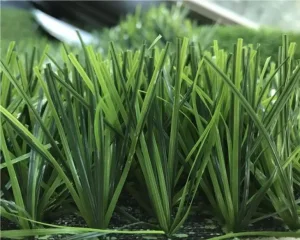
- High Density Thatch & Straight Spine
- Safe Skin Contact / Zero Harsh Friction
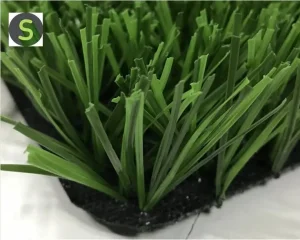
- Lisport XL 20,000+ Cycles Durability
- Professional Infill System Matching
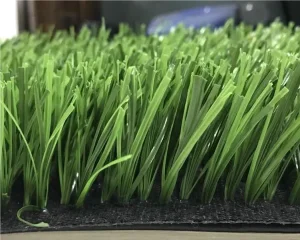
- Custom Dtex, Density & Stitch Count
- OEM Private Label Backing Options
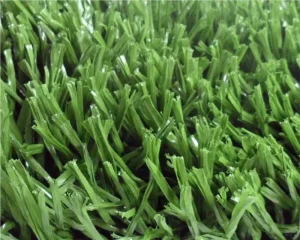
- Optimal Ball Roll & Elastic Response
- Integrated Shock Absorption Geometry
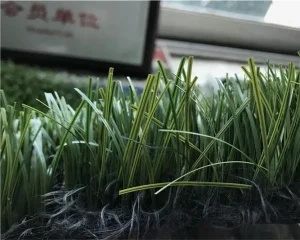
- High Tuft Bind Lock (>45 N)
- Reinforced Dual-Grid Primary Base
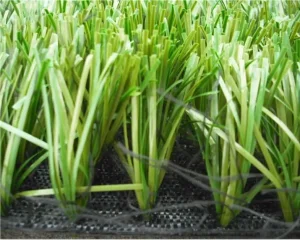
- Authentic TenCate Monofilament Fibers
- Exceptional Cleat Release Kinematics
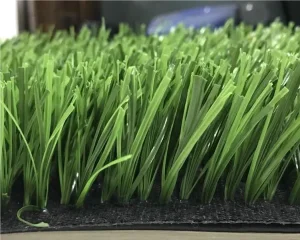
- Rapid Surface Drainage Perforations
- Consistent Stride Traction Balance
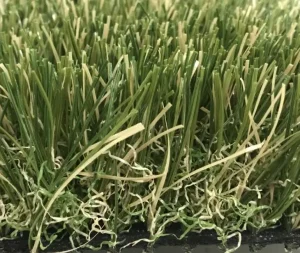
- Dual-Tone Emerald & Olive Realistic Look
- Heavy-Traffic Perimeter Buffer Grade
Direct Factory Logistics & Installation Assurance for Japan
Eliminating middleman markups while providing precise delivery schedules into major Japanese container ports: Tokyo, Yokohama, Nagoya, Osaka, Kobe, and Hakata.
Japan Customs & Documentation
Navigating Japanese import clearance requires exact material data safety sheets (MSDS), non-CFC certification, and strict Certificate of Origin documentation under RCEP agreements. Our dedicated international trade office prepares complete customs packets to guarantee zero demurrage delays at Keihin or Hanshin ports.
Sub-Base Coordination with Japanese Contractors
In Japan, the standard sub-base construction incorporates graded crushed stone (砕石 - Saiseki), porous asphalt (透水性アスファルト), or open-graded aggregate layers designed for rapid vertical and lateral water dispersal. Our technical engineers provide AutoCAD seam mapping and cutting plans calibrated to these specific base designs.
Full 8–10 Year Direct Warranty
Unlike trading companies that offer third-party disclaimers, Suntex issues direct factory warranties covering tensile retention, fiber degradation under Japanese UV indices, and tuft binding stability. Every production batch is backed by sample archiving for full supply-chain traceability.
Frequently Asked Questions by Japanese Importers & Contractors
Direct technical answers addressing procurement, specifications, climatic performance, and factory OEM capabilities for artificial turf projects across Japan.
What are the key technical differences when specifying football turf for Japan vs. Europe or North America?
How does Suntex turf perform under heavy snow and sub-zero freeze-thaw cycles in Hokkaido or Tohoku?
Can Suntex supply customized roll dimensions to match Japanese field layouts without excess cutting waste?
Are test reports available demonstrating non-toxicity, lead-free composition, and PFAS-free status?
What is the standard production and shipping lead time from factory to Japanese container ports?
Initiate Your Japanese Football Turf Project Today
Partner directly with a certified manufacturer established in 2002. Request complimentary sample kits, TenCate yarn technical datasheets, CAD roll layout schedules, and direct wholesale pricing for your upcoming Japanese sports construction projects.