
High-Performance Football Turf for Sri Lankan Commercial Venues
Direct-from-plant sports turf configured for heavy tropical monsoon exposure, saline ambient air, and around-the-clock foot traffic common in Colombo, Kandy, and Galle arena hubs.
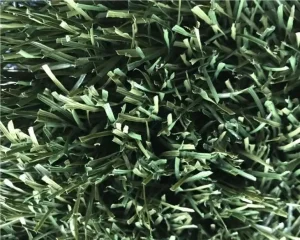
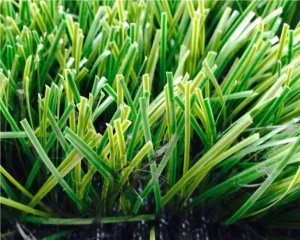
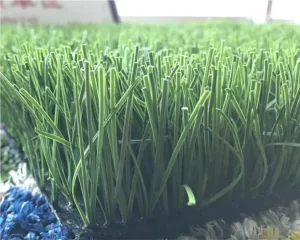
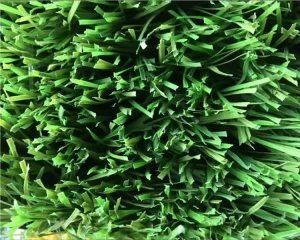
The Sri Lankan Football Infrastructure Boom: Commercial Realities
With severe land pressure in urban zones and an erratic equatorial monsoon pattern, synthetic turf adoption across Sri Lanka has moved from a luxury alternative to a mandatory infrastructure investment.
The Tropical Climate Dilemma
Natural grass pitches in Colombo, Negombo, and Jaffna deteriorate swiftly under continuous heavy rainfall followed by intense 35°C+ solar radiation. Waterlogging destroys natural root structures, causing pitch closures for weeks during peak tournament calendars. Synthetic turf guarantees 365-day playability with 60L/min/m² dynamic drainage capacity.
Commercial 5-a-Side Futsal Shift
Urban real estate developments in the Western Province are capitalizing on night sports culture. Private sports operators are transforming rooftops, industrial parks, and suburban zones into income-generating 5-a-side and 7-a-side pay-to-play football arenas. High-density monofilament turf ensures 50+ hours of weekly gameplay without surface compaction or bald patches.
Institutional & Academic Adoption
Premier schools, universities, and military athletic grounds across Sri Lanka are pivoting to artificial football turf to eliminate recurrent groundkeeper costs, expensive pesticide cycles, and heavy sprinkler irrigation requirements. Synthetic sports fields provide uniform, non-slip friction that minimizes youth player injury rates.
Chinese Factory Supply Chain Superiority: Engineering Turf for Durability
Why tier-one procurement agents and sports contractors in Sri Lanka bypass intermediaries and source synthetic football grass directly from dedicated Chinese extrusion and tufting plants.
Polymer Masterbatch Precision & TenCate Partnership
The longevity of artificial turf depends entirely on yarn extrusion integrity. Unlike localized blenders, our manufacturing facility operates automated masterbatch dosing systems utilizing genuine TenCate Grass yarns combined with proprietary hindered amine light stabilizers (HALS). This prevents the premature photochemical degradation and yarn brittleness frequently observed when low-grade PP/PE grass is installed in high UV zones near the equator.
Our turf fibers pass exhaustive Lisport mechanical rolling tests for 50,000 to 100,000 cycles, reproducing up to 8 years of intensive athletic impact without fiber fragmentation or micro-fissuring.
Request Technical Data Sheets (TDS)Specification Matrix: Commercial & Professional Football Turf
Engineered to satisfy rigorous FIFA Quality and FIFA Quality Pro physical benchmarks.
| Physical Parameter | Commercial 5-A-Side Standard | FIFA Quality Pro Equivalent |
|---|---|---|
| Yarn Composition | 100% PE Monofilament Spine | TenCate Diamond / Omega PE |
| Dtex Range | 8,800 – 11,000 Dtex | 12,000 – 16,000 Dtex |
| Pile Height | 40 mm – 50 mm | 50 mm – 60 mm |
| Gauge & Stitch Rate | 5/8 inch (160–180 stitches/m) | 5/8 inch (180–200 stitches/m) |
| Backing Layering | PP Woven + Mesh + SBR Latex | Double PP + Polyurethane (PU) |
| Tuft Withdrawal Force | > 45 N (ISO 4919) | > 55 N (ISO 4919) |
Tailored Sourcing, Port Logistics & Regulatory Compliance in Sri Lanka
From Colombo Port customs documentation to sub-base engineering specifications, we mitigate delivery bottlenecks and provide end-to-end support for procurement directors.
Direct Ocean Freight to Colombo Port
Our Kunshan logistics facility coordinates optimized high-cube container (40ft HQ) packaging. We provide roll optimization drawings to eliminate dead freight space, delivering artificial turf rolls, white marking lines, seam tape, and polyurethane two-part adhesive directly to the Port of Colombo with competitive CIF/FOB terms.
Import Clearance & TIEP Assistance
Navigating Sri Lanka’s import protocols requires precise HS code allocation (typically 5703.30.00 / 5703.90.00) and strict adherence to Sri Lanka Customs inspection criteria. We support authorized projects under Temporary Importation for Export Processing (TIEP) schemes and provide formal Certificates of Origin (Form COO) to minimize duty burdens.
Sub-Base Drainage Consultation
Tropical precipitation in Sri Lanka demands specialized civil sub-base construction. Our technical engineering desk assists contractors in Colombo and Kandy with dynamic gravel stone grading diagrams, perforated drainage pipe layouts, and permeable geotextile membrane recommendations to prevent sub-base settling.
Global Procurement Shifts: The Future of Synthetic Football Turf
Modern buyers no longer evaluate sports turf based solely on initial cost per square meter. Total lifecycle economics, environmental safety, and thermal dissipation represent the new procurement standard.
Non-Infill & Low-Infill Systems
Traditional fields use 25–30 kg/m² of quartz sand and SBR rubber granules. Environmental concerns regarding microplastics are causing global demand to migrate toward non-infill or engineered organic infill football turf. Using high-density curled thatch yarn to cushion player footsteps, our non-infill turf minimizes field maintenance overhead.
PFAS-Free Non-Toxic Formulation
Institutional and educational buyers globally demand rigorous chemical safety certifications. Our entire football turf catalogue is guaranteed 100% PFAS-free, lead-free, and REACH-compliant, safeguarding athletic participants from harmful skin irritation, volatile chemical emissions, and leaching into local groundwater tables.
Cooling Yarn Technology
In equatorial markets like Sri Lanka, turf surfaces under direct noon sunlight can achieve temperatures exceeding 60°C. Advanced cross-section geometries (such as W-shape and concave C-shape) combined with infrared-reflective additives lower field skin temperatures by 8°C–12°C compared to conventional flat fibrillated fibers.
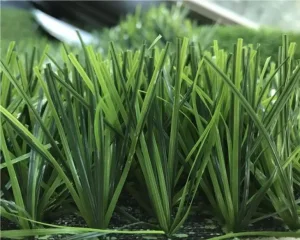
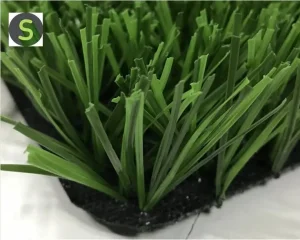
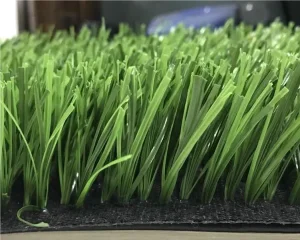
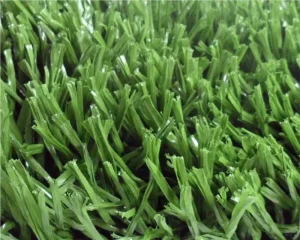
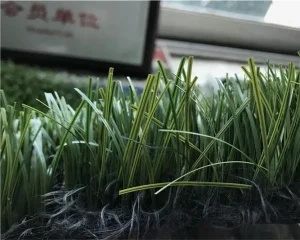
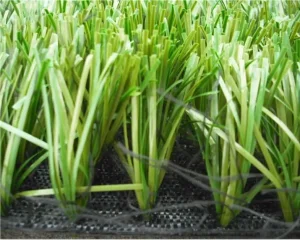
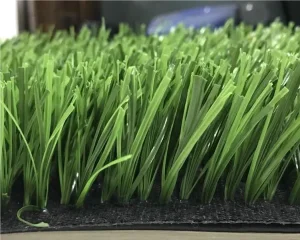
Complete Football Turf Manufacturing Portfolio
Engineered to accommodate distinct project budgets across Sri Lanka—from community school training grounds to premier professional tournament stadia.
Frequently Asked Questions: Sourcing Turf for Sri Lanka
Authoritative guidance on freight timelines, technical specifications, customs clearing, and infield maintenance.
How does the monsoon season in Sri Lanka affect artificial football turf?
What is the lead time and shipping duration to the Port of Colombo?
What pile height and density are recommended for commercial futsal arenas in Colombo?
How do Suntex football turf backings resist coastal humidity and saline air?
Can your factory supply complete field accessories and line marking?
Procure Factory-Direct Football Turf for Your Sri Lankan Project
Connect directly with our engineering and export team. Get tailored architectural CAD roll layouts, accurate CIF Colombo price quotes, and comprehensive technical sample kits shipped via express courier to your office.