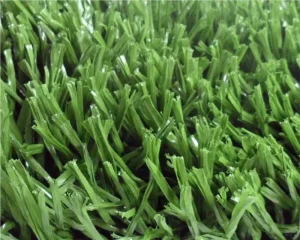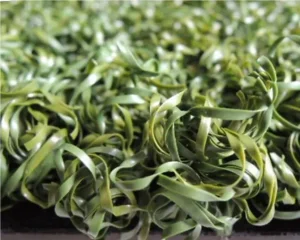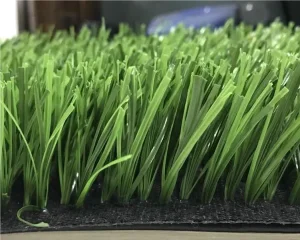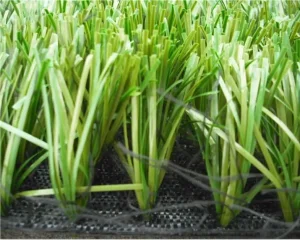
Industrial Catalog Selection
High-Performance Synthetic Surface Solutions
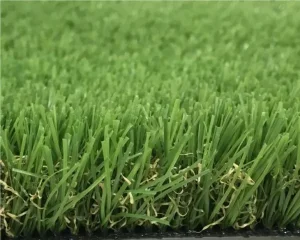
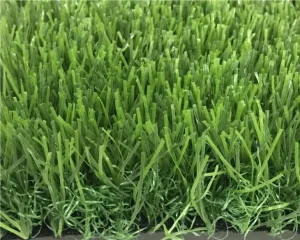
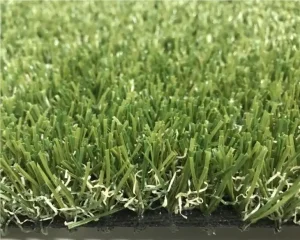
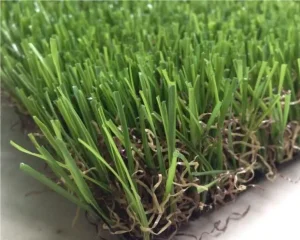
Direct factory tufting, engineered monofilament architectures, and custom polymer formulations tested for rigorous pet facilities, athletic complexes, and landscape projects.
Industry Dynamics & White Paper
Macro Dynamics in Synthetic Pet Grass Manufacturing
The global pet grass market is undergoing an engineering revolution, moving away from repurposed residential landscaping toward specialized bio-mechanical polymer systems designed for animal welfare, high-traffic boarding facilities, and strict sanitary containment.
Rapid Permeability & Fluid Extraction
Standard punch-hole backing fails under continuous pet waste loads. Modern production lines utilize fully porous polyurethane backing and multi-layer woven geotextiles that boost liquid evacuation up to >800 mm/hour, preventing pool formation and ammonia crystallization at the base layer.
Antimicrobial Polymer Chemistry
Rather than topical spray-on treatments that degrade after three washes, tier-1 manufacturers blend zinc pyrithione and inorganic silver-ion antimicrobial masterbatches directly into virgin polyethylene before filament extrusion, establishing lifetime resistance against fungal and bacterial biofilms.
Non-Toxic & PFAS-Free Verification
Stringent EU REACH, SVHC, and US Proposition 65 directives mandate 100% heavy-metal-free and PFAS-free formulations. Commercial pet grass products must undergo stringent third-party tests to ensure zero oral toxicity or dermal sensitization for canines and domestic animals.
22+
Years Manufacturing Experience
>800mm
Hourly Drainage Permeability
100%
PFAS & Heavy-Metal Free
30+
Countries Global Export Network
B2B Procurement Matrix
Engineering Standards for Professional Facilities
Enterprise buyers from municipal dog parks, luxury boarding resorts, veterinary clinics, and distributor networks require rigorous testing benchmarks to ensure continuous uptime and minimize remediation liability.
| Evaluation Parameter | Standard Landscape Turf | High-Spec Pet Facility Grass | Factory Compliance Standard |
|---|---|---|---|
| Primary Yarn Material | Standard C-Shape Polyethylene | Heat-Dissipating Monofilament + Texturized PP Thatch | TenCate Fiber Authorized |
| Backing Technology | SBR Latex with Standard Perforations | Permeable Polyurethane (PU) or 100% Recyclable Polyolefin | ISO 9001 Tested |
| Tuft Bind Strength | 25N – 35N Pull Force | ≥ 45N – 55N High-Tension Anchored Tuft | ISO 45001 Standard |
| Bio-Safety & Chemical Testing | Standard RoHS Baseline | PFAS-Free, Lead-Free, Zinc-Enriched Antimicrobial Extrusion | EN71-3 / REACH SVHC |
| UV Degradation Resistance | 3,000 hrs QUV Artificial Weathering | 6,000+ hrs UVA/UVB Accelerated Aging (Delta E < 2) | ASTM G154 Certified |
R&D Roadmap
Next-Generation Technology Evolution in Pet Synthetic Surfaces
A systematic technical overview illustrating our production group's transition toward closed-loop circularity, infrared reflection, and advanced enzymatic deodorizing substrates.
Phase 01 // Thermal
Solar Thermal Cool-Blade Tech
Infrared-reflective pigments incorporated into monofilament extrusion lower surface temperatures by 10°C to 15°C compared to standard synthetic grass, safeguarding animal paws during peak summer irradiation.
Phase 02 // Cleanliness
Enzyme-Infused Polyurethane Backing
Micro-encapsulated organic bio-catalysts embedded within the backing composite naturally activate during hydration, accelerating the breakdown of uric acid salts and eliminating persistent odors at the source.
Phase 03 // Structure
Zero-Infill High-Density Tufting
Utilizing high-Dtex crimped monofilament architectures (over 18,000 stitches/m²) that eliminate the requirement for loose rubber or silica infill, preventing ingestion risks and digestive tract obstruction in pets.
Phase 04 // Circularity
Monopolymer 100% Recyclable System
Yarn, primary backing, and secondary bonding formulated entirely from pure polyolefin resins, allowing complete post-industrial melting and recycling without expensive polymer separation processes.
Global Logistics & Compliance
Complete OEM/ODM Localization & Supply Resilience
Serving wholesale buyers, project general contractors, and private brand operators in over 30 countries across North America, Europe, the Middle East, and the Asia-Pacific region.
Tailored Technical Submittals
We provide full laboratory documentation, certified test certificates, flammability test reports (Class 1 / ASTM E648), and tensile bind data specifically structured to pass municipal tendering and architectural submittal reviews.
Private Labeling & Packaging Customization
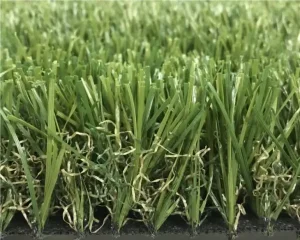
From roll widths (2.0m to 4.0m) to custom lengths, custom color blending (olive, field, emerald with brown thatched underlayers), custom backing branding, and export-grade moisture-sealed packaging tailored for retail distribution.
Integrated Freight & Port Logistics
Consolidated container loading directly from our automated tufting lines. Full container load (FCL) optimization with specialized roll rolling systems eliminates core distortion, creasing, and transit yarn crushing.
Frequently Answered Queries
Wholesale & OEM Pet Turf Engineering FAQ
Direct technical answers addressing structural composition, sanitary maintenance, supply chain parameters, and warranty verification for commercial purchasers.
Why is standard landscaping grass unsuitable for commercial pet facilities?
Standard residential landscaping grass is engineered with traditional SBR latex backing that only features punched holes every 10–15 cm. In high-traffic pet environments, this design creates drainage bottlenecks, trapping animal urine, bacterial residue, and moisture in the infill layer. Commercial-grade pet turf utilizes full-matrix permeable polyurethane backings or specialized high-flow knitted substrates that drain liquids at five times the rate of standard lawn products, preventing odor accumulation and mold growth.
How do your factories ensure the turf is completely safe and non-toxic for domestic animals?
Our synthetic pet grass products are manufactured using 100% virgin polyethylene and polypropylene resins from traceable suppliers like TenCate. We guarantee zero lead, zero cadmium, zero heavy metals, and zero PFAS compounds. The polymer is rigorously tested under EN 71-3 (Safety of Toys / Heavy Elements Migration) and REACH SVHC compliance protocols, ensuring that even if an animal chews or digs into the fiber, there is zero chemical leaching hazard.
What tuft bind specifications and yarn geometry are optimal for dogs with digging habits?
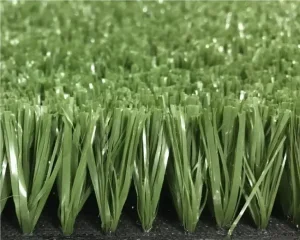
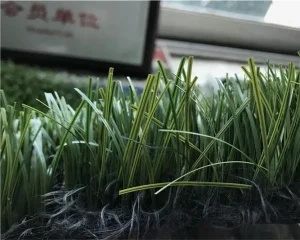
We recommend our specialized C-Shape or Diamond-spine monofilament yarn (pile height 25mm to 35mm) paired with a high-density, texturized PP thatch layer and a minimum tuft bind strength of ≥50N. The curved spine acts like a mechanical spring to resist flattening under paw traffic, while the superior pull-force bind prevents dogs from unravelling or pulling fiber loops out of the primary backing during vigorous scratching.
What are the production minimum order quantities (MOQ) and customization turnaround times?
For standard stocked specifications, our MOQ starts at 500 square meters. For custom OEM formulations (custom pile heights, specific yarn shapes, antimicrobial additives, or proprietary backing colors), typical production batch MOQs start at 1,500–2,000 square meters. Standard industrial production cycles require 14 to 21 business days upon specification approval.
How does the drainage system perform in extreme freeze-thaw winter climates?
Polyurethane and advanced polyolefin backings retain structural flexibility between -40°C and +80°C, unlike traditional SBR latex backings which can become brittle and crack during severe frost cycles. When installed over an open-graded aggregate base (clean crushed stone), the rapid permeability allows liquid waste and melted snow to evacuate immediately before surface refreezing occurs.
Factory-Direct Product Selection
Precision Synthetic Surfaces & Specialized Grass Solutions
Engineered for global wholesale buyers, commercial contractors, and sports facility builders seeking ISO-certified quality and long-term mechanical reliability.