High-Performance Sports Turf Systems & Applications
Explore our industrial-grade synthetic turf selection engineered for athletic clubs, municipalities, commercial stadiums, golf fairways, and multi-sport school facilities.
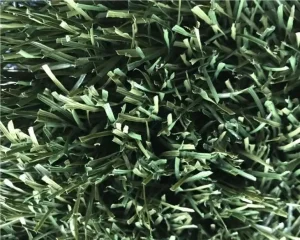
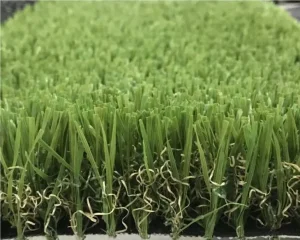
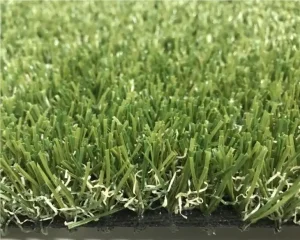
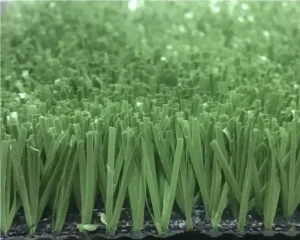
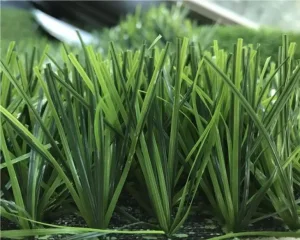
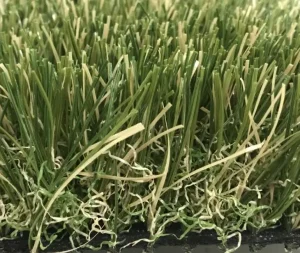
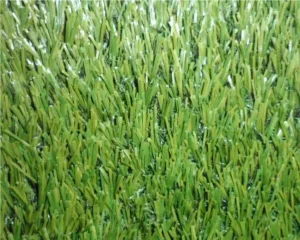
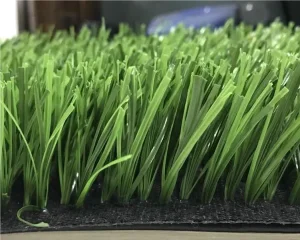
Wholesale Sports Field Grass: Industrial Standards, Polymer Metallurgy & Global Sourcing
In the contemporary sporting infrastructure landscape, artificial turf has evolved from a simple aesthetic alternative into a multi-layered mechanical engineering solution. Institutional sports field buyers, municipal contractors, and commercial facility developers demand surfaces capable of withstanding intense mechanical wear (exceeding 20,000 cycles on Lisport testing benches), maintaining ball-to-surface interaction tolerances within strict FIFA Quality Pro parameters, and surviving ultraviolet radiation indexes exceeding 160 kLy per annum.
Suntex Sports-Turf (Kunshan) Corporation, operating under Taiwanese investment since March 2002 and inheriting nearly five decades of polymer science from RiThai International (founded in Taipei, 1977), manufactures sports field grass systems that bridge raw resin polymer precision with high-speed automated tufting and polyurethane (PU) backing chemistry. By eliminating intermediary trading entities and controlling yarn extrusion, texturizing, tufting, and secondary coating under a unified ISO 9001, ISO 14001, and ISO 45001 operational envelope, Suntex provides international B2B importers with verifiable quality, technical documentation, and long-term cost stability.
| Application Arena | Recommended Pile Height | Polymer & Fiber Geometry | Dtex & Stitch Density | Sub-Base / Infill System |
|---|---|---|---|---|
| Professional Football (FIFA Standard) | 50 mm – 60 mm | PE Diamond / C-Spine Monofilament | 12,000 – 16,000 Dtex | 8,820 – 10,500 stitches/m² | Silica Sand + Performance EPDM/TPE/Cork Infill |
| School & Municipal Soccer | 40 mm – 50 mm | PE Stem-Reinforced or S-Shape Monofilament | 9,000 – 11,000 Dtex | 9,500 – 11,500 stitches/m² | Non-infill shock pad or sand-rubber balance |
| Commercial Tennis Courts | 12 mm – 20 mm | High-tenacity PP / PE Fibrillated or Texturized | 6,600 – 8,800 Dtex | 40,000 – 65,000 stitches/m² | Graded rounded silica sand (0.3 – 0.8 mm) |
| Multisport / AG Fields (Hockey/Futsal) | 15 mm – 32 mm | PE Curly Monofilament + Texturized Thatch | 8,000 – 13,000 Dtex | 18,000 – 28,000 stitches/m² | Elastic shock pad (8–10 mm) + fine silica sand |
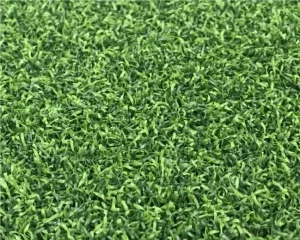
| Championship Putting Greens | 10 mm – 15 mm | PA 6.6 Nylon or Crimped Polypropylene | 5,500 – 8,000 Dtex | 60,000 – 80,000 stitches/m² | Ultra-fine round quartz sand dressed to stimp speed |
| Baseball Diamond Infields & Outfields | 35 mm – 50 mm | Hybrid PE Dual-Fiber Slit-Film & Mono | 11,000 – 14,000 Dtex | 10,500 – 13,000 stitches/m² | Multi-tiered clay/sand-rubber hybrid infill |
Localized Application Scenarios: Engineered Across Global Climates
A sports surface installed in Scandinavia faces radically different thermodynamic and moisture stresses than a pitch deployed in the Arabian Peninsula or tropical Southeast Asia.
Arid & Hyper-Arid Middle East / Gulf
Fields in Saudi Arabia, UAE, and Qatar confront surface temperatures exceeding 65°C and intense UV irradiation. Suntex incorporates specialized Hindered Amine Light Stabilizers (HALS) into virgin C4/C6 LLDPE polymers. Our heat-reflective infrared (IR) pigment formulations lower surface heat absorption by 8–12°C compared to conventional carbon-dyed green yarns, preventing fiber embrittlement and maintaining ball bounce uniformity.
Monsoon & High-Precipitation Zones
For installations in Southeast Asia, the Pacific Northwest, and Central America, rapid surface drainage is vital to avoid hydroplaning and waterlogging. Our secondary backings feature precision macro-punch drainage holes engineered at 10 cm x 10 cm grids, alongside porous polyurethane coatings achieving percolation rates above 2,500 mm/hour (exceeding standard municipal requirements tenfold).
Sub-Zero & Freeze-Thaw Environments
In Northern Europe, Canada, and Northern China, freeze-thaw cycles crack conventional SBR latex backing compounds. Suntex manufactures specialized Polyurethane (PU) secondary coatings and thermoplastic backing layers that retain molecular elasticity at -40°C. This prevents dimensional contraction, seam rupture, and fiber pull-out during sub-zero operational stress.
Intensive High-Density Municipal & School Campuses
Educational institutions in North America and Western Europe operate athletic fields for up to 60 hours per week across multiple sports (soccer, lacrosse, field hockey, physical education). These fields require high-resilience diamond or stem-monofilament yarn architectures with memory-retention ridges that resist crushing under persistent cleat traffic without requiring constant grooming.
Commercial Indoor Sports Arenas & Futsal Hubs
Indoor athletic spaces require stringent fire retardancy and volatile organic compound (VOC) compliance. Suntex supplies non-flammable certified sports grass (EN 13501-1 Class Cfl-s1) completely devoid of heavy metals, phthalates, and aromatic hydrocarbon odors, ensuring safe indoor air quality and compliance with building safety codes.
Technology Roadmap: The Next Era of Turf Engineering
From microplastic containment and circular recyclability to non-infill sports blades, our R&D center is leading the green transition in sports field surfacing.
Pioneering Fiber & Backing Science
100% Single-Polymer Closed-Loop Recyclability
Conventional turf binds PE fibers to PP backing fabrics with SBR latex, creating a composite that cannot be economically re-melted. Suntex's Gen-4 systems feature 100% PE monomaterial structures where face fibers, backing scrim, and hot-melt thermoplastic bonding matrix share identical melt indices, allowing complete granulate recycling without separation.
Next-Generation Non-Infill Sports Turf Systems
In response to global microplastic bans, our proprietary non-infill systems combine heavy-dtex resilient straight monofilaments with a dense, texturized micro-curled root zone thatch (up to 32,000 stitches/m²). This provides natural shock absorption, cleat release, and directional ball roll without crumb rubber or synthetic granules.
PFAS-Free Fluoropolymer-Free Extrusion
Eliminating Per- and Polyfluoroalkyl Substances (PFAS) across yarn extrusion is mandatory for European and US markets. Suntex utilizes organic polymer processing aids (PPA) certified by SGS and TÜV Rheinland to ensure zero fluorinated surfactants without sacrificing masterbatch extrusion speeds or fiber tensile modulus.
Verified Mechanical Performance Metrics
Tuft Lock Pull-Out Force > 45N
Exceeding the EN 15330-1 threshold (30N), our advanced cross-linking polyurethane and latex backings lock yarn clusters with up to 55N pull-out resistance, preventing premature shedding even under severe studded cleat abrasion.
Lisport Mechanical Durability Test (20,000+ Cycles)
Tested under heavy cleat roller simulation, our diamond and C-spine monofilaments demonstrate less than 10% fiber loss or split deterioration over 20,000 cycles, equivalent to 8+ years of intensive multi-use community play.
5,000-Hour Accelerated UV Weathering (QUV / Xenon Arc)
Formulated with premium antioxidant masterbatches, Suntex turf maintains tensile break strength retention greater than 85% after 5,000 hours of continuous UVB/UVA radiation (ISO 4892-3 / ASTM G154), preserving lush visual vibrancy.
China Factory Supply Chain: Resilience & Scale
Based in Kunshan, Jiangsu Province, Suntex integrates world-class polymer extrusion, precision tufting technology, and strategic deep-water maritime logistics.
Polymer Roots
RiThai International launches nylon monofilament synthesis in Taipei, laying foundational chemical engineering patents for synthetic fiber stability.
Suntex Kunshan Established
Factory operationalized in Kunshan with dedicated tufting lines and authorized TenCate Grass yarn distribution partnership for premium athletic fields.
Management Certifications
Achievement of ISO 9001 Quality Management, ISO 14001 Environmental Management, and ISO 45001 Occupational Health & Safety accreditation.
Global B2B Supply Network
Exporting tens of millions of square meters to commercial contractors, sports ministries, and landscaping brands across 30+ countries worldwide.
Global Commercial Trends: Regulations & Lifecycle TCO
Evaluating total cost of ownership (TCO), environmental compliance directives, and high-yield returns for sports field project investors.
EU Regulation 2023/2055 Compliance
The European Commission's ban on intentionally added microplastics mandates the phasing out of standard polymer infill (polymeric granules < 5 mm) by 2031. Forward-thinking distributors are transitioning toward Suntex's non-infill systems and organic infill-compatible high-density tufted matrices (cork, walnut shell, olive pit infills) to ensure unhindered European project eligibility.
Total Cost of Ownership (TCO) Economics
While natural turf pitches cost $25,000–$45,000 annually in mowing, irrigation, fertilization, aerating, and reseeding, a modern synthetic sports turf system slashes annual operational expenditures by up to 75%. Furthermore, artificial turf supports 2,000–3,000 playable hours per year compared to only 400–600 hours for natural sod before surface deterioration sets in.
Water Conservation & Climate Resilience
A single full-size natural soccer pitch requires roughly 2.5 million to 4 million liters of freshwater annually to prevent root death in temperate climates, climbing higher in arid regions. Artificial sports turf systems eliminate municipal water consumption entirely, qualifying developers for international LEED credits and water-conservation tax exemptions.
Localized Support, Bidding Dossiers & Compliance Protocols
Winning commercial and municipal sports tenders requires uncompromising documentation. Suntex backs project developers with turnkey test packages and laboratory certifications.
Complete Municipal Tender Documentation
We provide full specification submittal packages for civil contractors, including CAD seam layout blueprints, roll dimension optimization schemes (to minimize seam cutting waste below 3%), ball roll test curves, and G-max impact attenuation reports according to ASTM F1936. Our engineering department can customize pile heights, gauge widths (3/8", 5/8", 3/4"), and stitch densities to match exact project tender specifications.
Third-Party Laboratory Testing & Traceability
Every production masterbatch undergoes rigorous quality validation. We supply third-party test reports from Labosport, Sports Labs, and SGS confirming compliance with EN 15330-1, DIN 18035-7, REACH SVHC candidate lists (containing 230+ monitored substances), and California Proposition 65 total lead limits (<100 ppm), safeguarding distributors against international regulatory penalties.
Frequently Asked Questions: Sports Field Grass Wholesale
Direct technical answers addressing engineering tolerances, raw materials, shipping logistics, and OEM private labeling for commercial buyers.
What pile heights and gauges can Suntex produce for sports applications?
Is Suntex an authorized distributor of TenCate turf yarn?
How does Suntex guarantee that artificial turf products are 100% PFAS-Free?
What is the difference between SBR Latex backing and Polyurethane (PU) backing?
Can Suntex manufacture custom roll lengths and pre-fabricated football field markings?
What is the factory lead time and minimum order quantity (MOQ) for sports field grass?
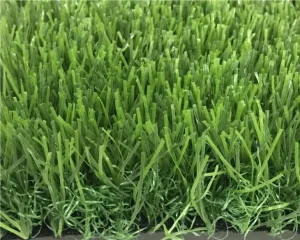
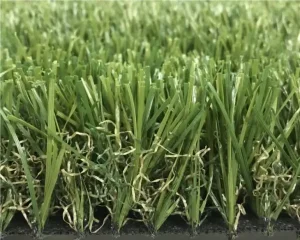
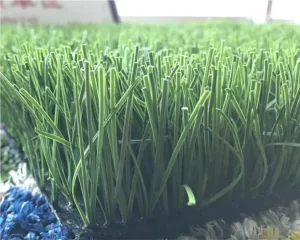
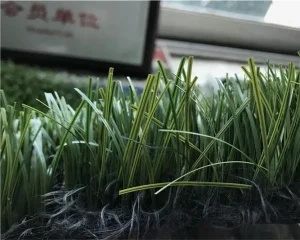
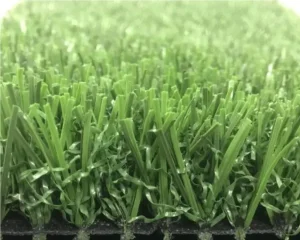
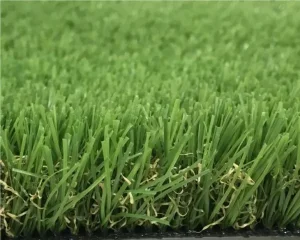
Comprehensive Product Selection: Sports & Specialized Turf
Review our factory-direct models engineered for multi-sport arenas, golf academies, decorative landscape installations, and high-traffic public grounds.
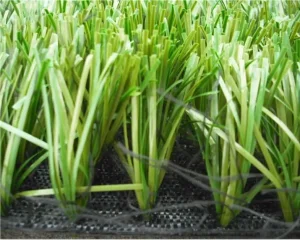
Request a Comprehensive Sports Turf Specification Kit
Direct pricing, physical sample binders with cross-sectional fiber geometry, and certified tender test reports (EN 15330-1 / PFAS-Free / ISO) shipped to international contractors and distributors within 48 hours.