High-Performance Synthetic Turf Solutions
Explore our certified commercial-grade production lines engineered for putting greens, stadiums, landscaping, and versatile sports installations.
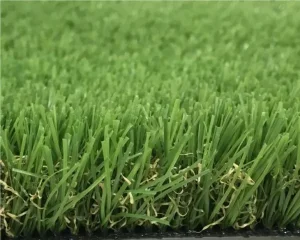
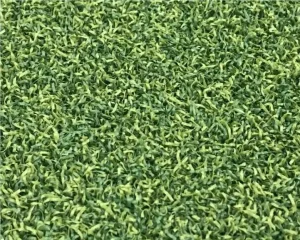
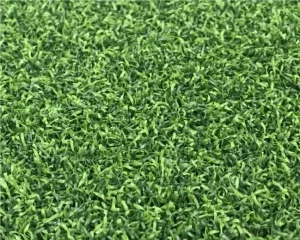
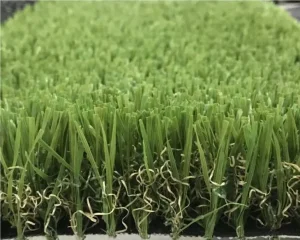
Global Market Status: The Commercial Evolution of Putting Greens
An in-depth perspective on the global shift toward water-conscious, zero-chemical golf and putting surfaces.
Supply Chain Realignment
The global putting green artificial turf sector has transitioned from decorative landscaping mimics to precision-calibrated sports surfaces. As municipal water restrictions tighten across North America, Europe, and Australia, commercial courses and resorts are systematically substituting natural bentgrass greens with texturized monofilament synthetic systems, drastically curtailing OPEX.
Stimp Consistency Engineering
Modern commercial purchasers prioritize consistent Stimp ratings (10.0 to 12.5) over purely aesthetic features. To meet PGA and USGA true-roll parameters, manufacturers utilize dense, non-directional texturized nylon (PA) or cross-linked polyethylene (PE) formulations that completely eliminate grain bias, providing a ball roll indistinguishable from natural turf.
Regulatory Demands & PFAS-Free Mandates
With environmental protection directives accelerating worldwide (such as EU REACH regulations and stringent US state EPA laws), the global supply chain has phased out fluorinated processing aids. High-caliber wholesale suppliers are now audited for 100% PFAS-free chemistry, zero heavy metals, and recyclable multi-layer backing matrices.
Five Decades of Polymer Expertise: Engineering Excellence
Combining primary polymer yarn extrusion roots dating back to 1977 with cutting-edge ISO-certified synthetic turf tufting lines.
Engineering Standards: Synthetic Putting Surface Architecture
Technical parameters required by professional golf course architects, B2B wholesalers, and commercial installers.
| System Architecture | Yarn Polymer & Denier | Pile Height | Stitch Rate & Density | True-Roll Stimp Rating | Recommended Drainage Infill |
|---|---|---|---|---|---|
| Pro-Tournament Sand-Filled Green | 100% Polypropylene (PP) / Fibrillated or Texturized PE (5,500 - 8,000 Dtex) | 13mm – 18mm | 240 – 320 stitches/m (~63,000 stitches/m²) | 10.5 – 12.5 (Adjustable via infill compaction) | Round quartz silica sand (0.3 - 0.8mm), 25–35 kg/m² |
| Non-Infill Commercial Green | Texturized High-Memory Polyamide (Nylon 6,6) (4,000 - 5,500 Dtex) | 10mm – 15mm | 320 – 400 stitches/m (~84,000 stitches/m²) | 10.0 – 11.5 (True uncompacted roll) | Optional light topdressing for extreme UV zones |
| Hybrid Multi-Sport / Putting Fringe | Dual-Tone PE Monofilament + Texturized PP Thatch (8,800 - 11,000 Dtex) | 25mm – 35mm | 160 – 210 stitches/m (~18,900 stitches/m²) | N/A (Chip/Pitch deceleration buffer) | Silica sand layer (5-10 kg/m²) for root stabilization |
| Indoor Training & Acoustic Greens | C-Shape / Dense Curl Polyamide (PA) with Closed-Cell Foam Backing | 8mm – 12mm | 360 – 420 stitches/m (~92,000 stitches/m²) | 10.0 – 11.0 (True-track calibration) | Zero infill required; 5mm acoustic polyurethane pad |
Macro Industry Solutions & Micro-Climate Adaptations
Addressing structural challenges across varying regional environments, commercial spaces, and multi-tier sports complexes.
Arid & High-UV Climate Engineering
In regions such as the American Southwest, the Middle East, and Mediterranean Europe, extreme solar irradiance breaks down unfortified polymers. Our turf incorporates specialized Ciba® UV stabilizer masterbatches, engineered to withstand over 5,000 hours of accelerated QUV weathering without fiber embrittlement or chalking.
Urban Rooftop & Hospitality Integration
Luxury hotels and metropolitan rooftop leisure centers demand superior drainage and strict fire mitigation. Suntex putting systems are backed by polyurethane (PU) or permeable latex with pre-punched multi-flow drainage holes exceeding 1,600 mm/hour water evacuation rates, certified compliant with Class 1 non-flammability benchmarks.
Commercial Driving Ranges & Golf Academies
High-volume commercial simulators and golf academies require putting surfaces capable of absorbing millions of footfalls annually. Utilizing high-density texturized nylon yarns, these synthetic greens prevent permanent path trenching, preserving planar ball rolls over five to ten years of commercial usage.
Technological Trajectory: Synthetic Turf 2026–2030
Strategic R&D milestones setting modern performance benchmarks across the global synthetic turf industry.
Fully Circular Monomaterial Systems
Traditional turf fuses PE yarn with latex/PU backing, rendering post-life recycling complex and cost-intensive. Our future roadmap champions 100% Polyolefin monomaterial assemblies where yarn, backing scrim, and bonding resin belong to the exact same polymer family, enabling seamless closed-loop pelletization at the end of product life.
Infrared Heat-Reflective Pigments
Surface heat build-up has historically limited synthetic turf adoption in high-end golf applications. By compounding dynamic infrared-reflective pigments into the core monofilament extrusion process, next-generation putting surfaces lower ambient surface temperatures by up to 10°C to 15°C compared to conventional synthetic greens.
AI-Guided Micro-Tufting Precision
By implementing real-time computer vision scanners on our tufting needles, we achieve precise yarn loop density tracking and zero-defect tuft bind strength. This eliminates localized depressions, guaranteeing millimeter-level ball roll consistency across 100% of the roll's surface.
Frequently Asked Questions: B2B Sourcing & Specifications
Direct technical responses addressing quality certification, material comparison, and custom OEM manufacturing.
What distinguishes professional putting green turf from standard landscaping grass?
How is ball roll speed (Stimp Rating) calibrated on wholesale synthetic greens?
Are Suntex putting green products certified free of PFAS and heavy metals?
What are the minimum order quantities (MOQ) and lead times for custom OEM specifications?
How does Suntex maintain consistency across large-volume multi-container orders?
Commercial Athletic, Soccer & Professional Sports Line
Engineered for high resilience, exceptional drainage, and athlete safety across commercial stadiums, golf complexes, and residential facilities.