Primary Engineered Product Showcase
Featured Commercial Turf Formulations (Batch 01–08)
High-density sports, landscape, and recreational polymer surfaces tested for resilient elasticity, dimensional stability, and prolonged ultraviolet endurance.
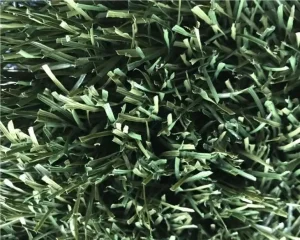
Buy FIFA Approved Turf Football Field Manufacturer, Products
Product Details & RFQ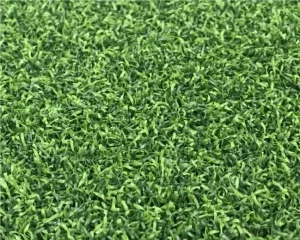
Wholesale Harmless Indoor Putting Green Turf Manufacturers, Manufacturer
Product Details & RFQ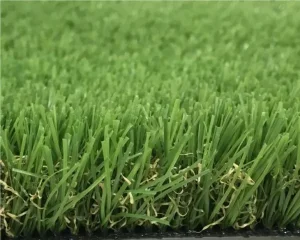
Buy Best Green Lawn Grass Safe And Non-toxic Products, Factories
Product Details & RFQ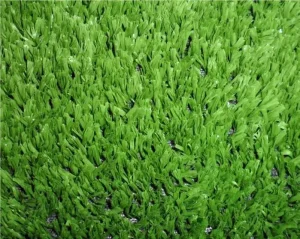
Wholesale ITF Approved Tencate Tennis Turf Factories, Factory
Product Details & RFQ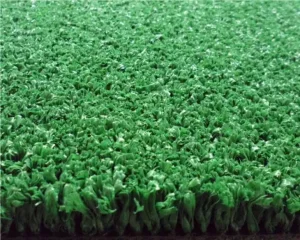
Wholesale High Quality Artificial Turf for Hockey Field Products, Suppliers
Product Details & RFQ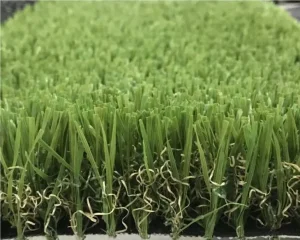
OEM Drainable Synthetic Pet Turf with Realistic Artificial Grass Manufacturers, Product
Product Details & RFQ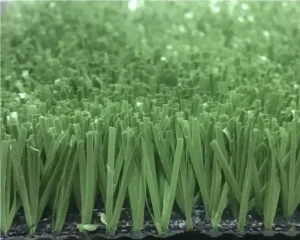
Wholesale Professional Synthetic Turf for Tennis Courts Manufacturer, Suppliers
Product Details & RFQ
Macro-Economic Infrastructure Analysis
The Strategic Transition to Synthetic Golf Agronomy
How international golf course architects, municipal operators, and commercial golf hospitality developments leverage engineered polymer turf systems to overcome water constraints, operational costs, and seasonal playability ceilings.
78%
Reduction in localized irrigation consumption compared to bentgrass/bermudagrass greens.
3,500+
Playable hours per annum per putting facility without requiring aeration downtime.
10-12
Standard Stimpmeter speed calibration maintained across all seasonal ambient temperatures.
Zero
Synthetic chemical pesticide, fungicide, or nitrogenous fertilizer runoff into groundwater.
Escalating Water Tariffs & Arid Zone Compliance
Global golf facility management faces unprecedented ecological scrutiny. In regions spanning the American Southwest, Southern Europe, Australia, and the Gulf Cooperation Council (GCC), municipal water pricing models have transformed natural bentgrass maintenance into an unsustainable capital burden. High-performance polyethylene and polyamide golf turf systems deliver a permanent, hyper-realistic green envelope that eliminates 100% of surface irrigation while complying with regional environmental sustainability mandates.
Commercial Utilization Intensity & ROI Parity
Traditional natural greens require strict capping of daily player rounds, bi-weekly topdressing, spiking, rolling, and mandatory winter overseeding. For commercial driving ranges, family golf entertainment venues (such as Topgolf-style hospitality hubs), and resort putting layouts, synthetic golf grass ensures uninterrupted revenue generation. Synthetic putting surfaces endure over 2,500 footfalls per square meter weekly with zero degradation in true-roll ball dynamics, achieving capital payback within 18 to 26 months.
Microplastic Mitigation & PFAS-Free Chemistry
As global regulatory bodies (including the European Chemicals Agency under REACH and US EPA guidelines) tighten oversight on per- and polyfluoroalkyl substances (PFAS) and microplastic migration, modern golf grass engineering has evolved. Next-generation wholesale turf relies on high-grade masterbatch compounding free of halogenated flame retardants, PFAS extrusion aids, or heavy metals, backed by DIN 18035-7 and EN 71-3 toxicological certifications.
Engineering Classification
Taxonomy of Wholesale Golf Grass Types
Technical differentiation across specialized zones: putting greens, fringe collars, multi-tiered roughs, and heavy-impact tee lines.
Putting Green: Non-Infill Nylon
Manufactured with texturized Polyamide 6,6 (PA) fibers (12mm–16mm pile height). Delivers superior thermal stability, memory retention, and authentic directional grain response without requiring sand topdressing. Preferred for indoor simulation suites and luxury residential installs.
Putting Green: Sand-Filled Polypropylene
Utilizes fibrillated or monofilament Polypropylene (PP) (15mm–20mm pile height). Ball roll speed is completely customizable (Stimpmeter 9.0–13.5) by grading and adjusting kiln-dried rounded silica sand infill depths. Ideal for outdoor championship complexes.
Fringe & Collar Transition Turf
Features dual-tone polyethylene fibers combined with a dense, curled polypropylene thatch layer (25mm–35mm pile). Engineered to absorb chip shots, provide realistic club resistance, and visually frame the putting surface with natural agronomic transitions.
Heavy-Duty Tee Line & Driving Mats
Engineered with high-density crimped nylon monofilaments (30mm–40mm pile) fused to an ultra-thick 10mm–15mm elastic closed-cell foam shock pad. Allows real wooden golf tees to be driven anywhere on the surface while protecting golfers' wrists and elbows from repetitive strain.
| Zone / Application | Polymer Composition | Pile Height Range | Stitch Density / m² | Target Stimpmeter | Infill Specification |
|---|---|---|---|---|---|
| Indoor Championship Putting | Texturized PA 6,6 Monofilament | 13 mm – 16 mm | 75,600 – 88,200 | 10.5 – 12.0 | Zero Infill Required |
| Commercial Sand-Dressed Green | PP Fibrillated / Straight PE | 15 mm – 20 mm | 50,400 – 63,000 | 9.5 – 13.5 (Variable) | 15–20 kg/m² Silica Sand (0.3–0.8mm) |
| Chipping Collar / Fringe | PE Monofilament + PP Thatch | 25 mm – 32 mm | 18,900 – 25,200 | N/A (Chip Deceleration) | 5–8 kg/m² Washed Sand optional |
| First-Cut & Deep Rough | Heavy C/W-Shape PE Monofilament | 38 mm – 50 mm | 14,700 – 18,900 | N/A (Lie Simulation) | 10 kg/m² Sand Infill stabilizing base |
| Commercial Tee-Line Box | Crimped High-Dtex Polyamide | 30 mm – 40 mm | 81,900 – 94,500 | N/A (Driver / Iron Impact) | Zero Infill (Tee-holding tuft density) |
Material Science & Quality Control
Industrial Fiber Geometry & Backing Mechanics
Delivering five decades of Taiwanese polymer heritage, authorized TenCate yarn integrations, and automated tufting precision to eliminate grain bias and pile shedding.
Extrusion Heritage & TenCate Partnership
Tracing its industrial lineage to parent corporation RiThai International (producing synthetic nylon monofilaments in Taipei since 1977) and Suntex Sports-Turf Corporation (founded March 2002), our facility integrates decades of polymer chemistry. As an authorized distributor and converter of TenCate turf yarns since 2002, our fiber matrices utilize high-purity masterbatch formulas equipped with Hindered Amine Light Stabilizers (HALS), withstanding over 5,000 hours of accelerated UVA/UVB weathering under ASTM G154 protocols without tensile fatigue.
Non-Directional Texturization Engineering
The primary defect in low-grade putting turf is "grain bias"—where extruded blades lean toward the tufting pull direction, causing ball deviation and inconsistent roll friction. Our specialized hot-air mechanical texturizing processes curl and crimp the nylon and polypropylene yarns into a multidirectional, interlocking dense carpet. Whether a golfer strikes a putt North-to-South or East-to-West, ball rolling resistance remains perfectly homogenous, mimicking high-spec USGA tournament greens.
Polyurethane (PU) vs. SBR Latex Backings
Golf greens endure intense rotational torque from golf cleat pivots. While standard Styrene-Butadiene Rubber (SBR) latex backings are vulnerable to moisture softening and edge delamination over time, our advanced Polyurethane (PU) secondary coatings encapsulate tufted loops with over 55 Newtons of fiber lock retention. PU backings are fully hydrolytically stable, preventing rot or shrinkage during torrential rainfall, freeze-thaw cycles, or humid indoor subfloor installations.
Global Operations & Local Integration
Localized Support, Engineering & Compliance
How wholesale distributors, landscape contractors, and golf developers in over 30 countries leverage our factory-direct OEM frameworks, tender documentation, and layout design services.
B2B Municipal & Architectural Tendering
Securing public sector golf facilities, municipal park contracts, or hotel development tenders requires rigorous documentation. Our engineering support desk provides comprehensive tender submittal packages: third-party SGS/Labosport physical test sheets, flammability ratings (EN 13501-1 Class Cfl-s1), water drainage certifications exceeding 2,500 mm/hour, and strict non-toxic compliance declarations confirming the total absence of lead, cadmium, phthalates, and PFAS.
Precision Roll Sizing & Seam Reduction
Seaming on a golf putting green is the most vulnerable point for ball redirection. Through computerized tufting control, we supply custom roll widths (2.0m, 4.0m, and specialized 3.66m imperial sizing) along with roll lengths cut directly to architectural CAD drawings. This minimizes jobsite cuts, reduces expensive installation scrap rates from 18% down to under 5%, and eliminates cross-seams in critical putting corridors.
Full Cold-Chain & Maritime Container Logistics
Exporting synthetic turf rolls worldwide requires disciplined packaging protection. Each roll is packed in multi-layer woven geotextile wrappers reinforced with moisture-resistant end caps to prevent core-flattening or edge crushing during ocean transit. With 22+ years of international shipping experience across North America, Europe, the Middle East, and APAC, we guarantee timely containerized dispatch and bonded customs clearances.
Next-Generation R&D
Technological Roadmap & Future Horizons
Pioneering circular economy closed-loop turf recycling, low-temperature yarn extrusion, and embedded smart-sensing putting greens.
100% Mono-Material Polyolefin Recycling
Traditional turf fuses polyethylene fibers with polypropylene backing fabrics and SBR latex, making end-of-life recycling commercially unfeasible without intense thermal separation. Our upcoming 2026-2028 production line features 100% mono-material Polyethylene construction: PE face fibers, woven PE matrix, and a hot-melt thermoplastic PE backing. At the end of its 12-year lifespan, the turf can be melted directly into post-consumer polymer pellets without disassembly.
IR-Reflective & Evaporative Cooling Fibers
Surface heat retention has historically restricted artificial grass in extreme climates like the UAE or Southern Spain. By integrating titanium dioxide nanoparticles and infrared-deflecting inorganic pigments into the core yarn extrusion, our CoolTurf™ technology reflects near-infrared solar spectra, lowering golf turf surface temperatures by 8°C to 14°C compared to conventional dark green fibers.
Sensor-Integrated Intelligent Putting Surfaces
Collaborating with commercial golf simulator brands, we are prototyping conductive sub-base geotextiles embedded with micro-piezoelectric sensors. Installed beneath our texturized putting turf, these sub-bases track ball deceleration curves, break angles, and strike velocities in real time, transmitting live biomechanical analytics to companion coaching software without requiring high-speed external optical cameras.
Secondary Engineered Product Showcase
Specialty Sports & Golf Turf Formulations (Batch 09–16)
High-specification multisport surfaces, sand-filled putting greens, heavy rough grasses, and resilient school athletics fields.
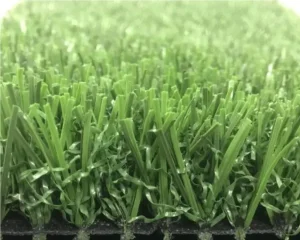
Wholesale New Developed Best Multi-sports Turf Products, Product
Product Details & RFQ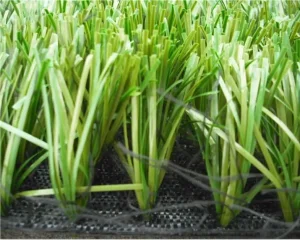
Buy Wear-resistant TenCate Football Turf Product, Factory
Product Details & RFQ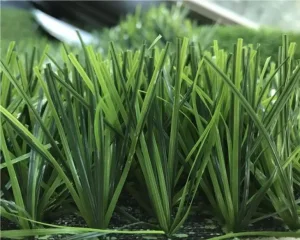
Buy Affordable Football Grass For Schools Manufacturer, Factories
Product Details & RFQ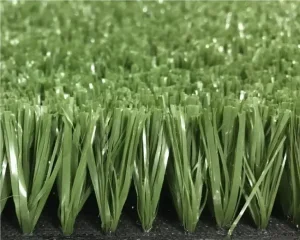
Buy Professional Sand Filled Putting Green Factories, Supplier
Product Details & RFQ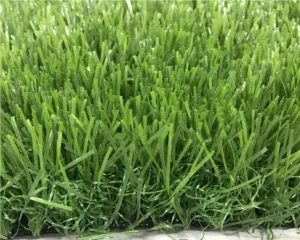
Buy Easy To Clean And Dry Up Fake Grass for Dogs Product, Suppliers
Product Details & RFQ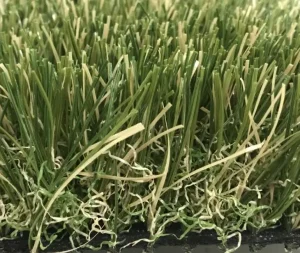
Buy High Density Two-color Landscaping Turf Manufacturer, Factory
Product Details & RFQ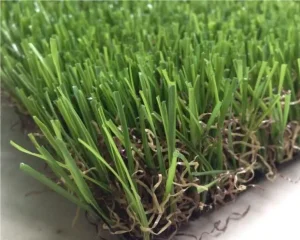
OEM High Quality Multipurpose Golf Rough Grass Factory, Suppliers
Product Details & RFQ
Buy Sand Filled Multi-artificial grass Manufacturer, Supplier
Product Details & RFQ
Technical Clarifications
Industrial Golf Turf Technical FAQ
Crucial engineering insights for project specifiers, commercial contractors, and wholesale buyers regarding sub-bases, ball mechanics, and longevity.
How does sand infill grading directly influence Stimpmeter readings and ball check?
In sand-filled golf turf systems (typically 15mm–20mm polypropylene or straight polyethylene monofilament), the kiln-dried silica sand functions as the primary speed and resilience regulator. We specify sub-angular or rounded silica sand with a grain distribution of 0.3mm to 0.8mm, free of organic fines or clay. Introducing 15 kg/m² yields an average Stimpmeter speed of 9.0 to 10.0 feet (standard club green). Increasing compaction and top-dressing sand up to 18–20 kg/m² exposes only 2–3mm of fiber tips, elevating the roll speed to tournament grade (11.5–13.5 feet). Furthermore, the cushion of sand allows high-lofted pitch and wedge shots from 100+ yards out to check, bounce realistically, and hold the green just like natural USGA-spec bentgrass greens.
Why is Polyamide (Nylon) preferred over Polyethylene for non-infill indoor putting suites?
Polyamide 6,6 (PA / Nylon) exhibits a significantly higher thermal melting point (~260°C) and superior elastic yield recovery compared to standard Polyethylene (~125°C). In high-throughput indoor simulation centers, family entertainment venues, or putting testing labs where sand infill is undesirable due to dust generation, nylon fibers resist matting down from continuous foot traffic. Even without granular infill, texturized nylon maintains its upright multi-directional curl, ensuring a true, grainless ball roll for millions of putts across multiple operational years.
What sub-base construction is required beneath commercial synthetic putting greens?
A permanent commercial installation requires a dynamic stone aggregate sub-base. The standard specification consists of a 100mm–150mm compacted primary road base (crushed limestone or granite aggregate, 0–20mm grading), vibrated to a 95% Proctor compaction density. This is overlaid by a 20mm–30mm screeded "fines" layer (granite or basalt dust, 0–4mm grading) shaped to create designed undulations and slopes. For rooftop installs or indoor concrete pads, we recommend introducing a 10mm–15mm dual-density elastomeric shock pad with vertical drainage channels, which absorbs shock and prevents the putting surface from feeling rock-hard underfoot.
Are Suntex golf turf products certified PFAS-free and compliant with EU REACH?
Yes. Every production run undergoes stringent third-party screening (SGS, Labosport, Intertek) to verify zero added PFAS/PFOS chemistries and non-detectable total organic fluorine (TOF) levels. Our products fully comply with European Union REACH Annex XVII restrictions, RoHS environmental safety regulations, and USA state-level requirements (such as California Prop 65). Test reports are furnished directly with wholesale B2B export documentation.
What are the minimum order quantities (MOQ) and customization parameters for OEM private label turf?
For standard inventory formulations, our baseline MOQ is 500 square meters. For custom OEM specifications—including bespoke yarn blends, specific Dtex thicknesses, custom pile heights (ranging from 6mm to 75mm), custom color tones (tournament emerald, field green, olive, lime, or bi-color), specialized drain perforation rates, and custom branded geotextile wrap packaging—the standard factory batch MOQ is 1,500 to 2,000 square meters. We provide rapid prototype lab sample strike-offs within 7 to 10 business days for client approval.
How does Suntex turf withstand severe thermal cycling and intense solar UV in desert climates?
Our parent group’s 48-year polymer extrusion legacy and authorized TenCate yarn distribution enable us to engineer UV stabilization specifically calibrated for high-radiation regions (such as the Arabian Peninsula, Arizona, Texas, and Australia). We incorporate Ciba/BASF Chimassorb® hindered amine light stabilizer (HALS) chemistry into virgin resin masterbatches. This prevents the polymer chain scission and radical breakdown caused by solar UV photons. Our materials retain over 85% of their original tensile strength after 5,000 hours of accelerated weathering (QUV testing), backed by a comprehensive 8-to-10-year commercial warranty against chalking, fading, or fiber embrittlement.
Collaborate Directly with our Golf Turf Technical Engineers
From turnkey architectural CAD cutting layouts and customized Stimpmeter pile formulation to international containerized tender supply: request your comprehensive engineering sample kit and OEM specification book today.