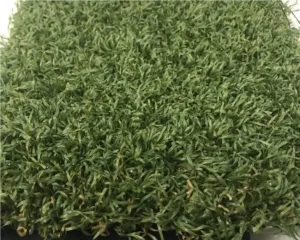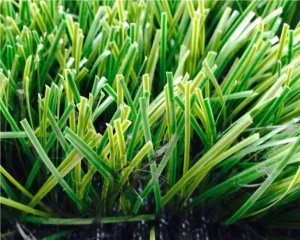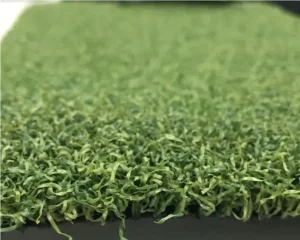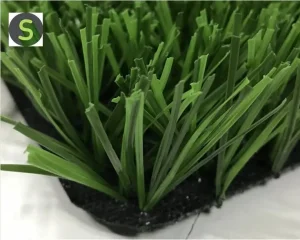
High-Spec Turf Products Directly From Production Lines
Explore certified sports and commercial landscaping turfs. Engineered with advanced tufting technology for heavy traffic, high drainage capacity, and severe canine chemical exposure.
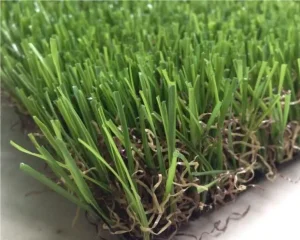
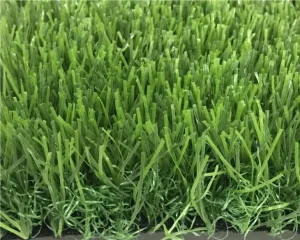
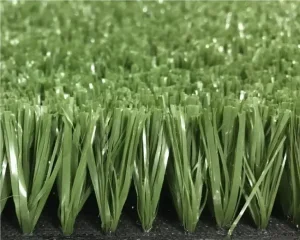
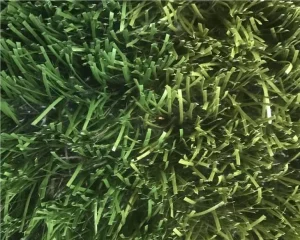
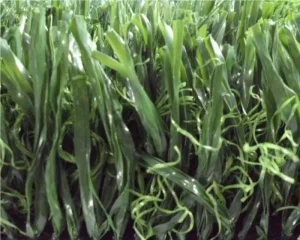
The Chemical Mechanism Behind "Dog Urine Killing Grass"
Understanding why natural lawn systems fail under canine traffic and how synthetic polyolefin monofilaments eliminate nitrogen toxicity and biological decay.
For municipal authorities, residential developers, and pet boarding facility operators, "dog urine killing grass" is an agronomic inevitability rather than a routine maintenance problem. Canine urine contains high concentrations of urea, nitrogen metabolites, and mineral salts. When deposited onto natural turfgrass varieties such as Kentucky Bluegrass, Bermuda, or Fescue, the concentrated urea acts identically to an over-application of non-diluted commercial nitrogen fertilizer. This induces severe osmotic shock (commonly recognized as "lawn burn" or desiccation), which rapidly draws moisture outward from the plant's root cellular structures, turning the surrounding foliar tissue yellow, brown, and necrotic within 48 to 72 hours.
Furthermore, female canines commonly squat during urination, saturating a tightly localized perimeter. In high-traffic communal zones, recurring canine urination disrupts soil pH equilibriums, promotes alkaline accumulation, and accelerates root rot via pathogenic microbial development. Traditional remedies—such as daily soil flushing, chemical gypsum treatments, or constant reseeding—require unsustainable quantities of municipal water and chemical interventions that contradict modern environmental stewardship.
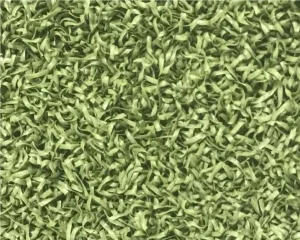
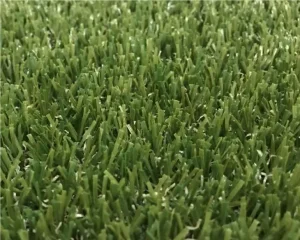
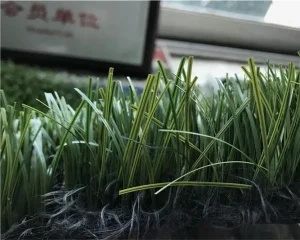
Suntex engineers our specialized pet and landscape synthetic grass solutions to replace reactive lawn patching with an inert, engineered root and thatch matrix. Fabricated using high-purity Polyethylene (PE) and Polypropylene (PP) virgin resins from TenCate, our synthetic fibers are 100% immune to nitrogen caustic scorch, acid degradation, and osmotic dehydration. Liquid animal waste passes unhindered through fully permeable primary and secondary backings, eliminating yellow patches, muddy depressions, and residual turf destruction at the source.
Integrated Manufacturing Infrastructure & Supply Chain Authority
Suntex Sports-Turf (Kunshan) Corporation bridges Taiwanese polymer precision with mainland China's comprehensive industrial supply chain.
Vertical Integration Since 1977
Backed by our parent corporation RiThai International (producing synthetic monofilaments since 1977) and operational since 2002 in Kunshan, we eliminate trading middlemen margins. We compound custom color masterbatches, extrude proprietary monofilaments, and tuft rolls under one traceable enterprise resource platform.
TenCate Strategic Distribution
As an authorized distributor of TenCate turf yarn since 2002, Suntex utilizes verified C-shape, W-shape, and Diamond monofilaments. Every batch undergoes strict differential scanning calorimetry and melt flow indexing, ensuring pet turf remains resilient against high canine claws and UV degradation.
PFAS-Free & Chemical Non-Toxicity
Rigorous OEM production requires compliance for residential and canine safety. Our factory delivers verifiable third-party testing proving products are 100% lead-free, heavy-metal-free, non-flammable (DIN 51960), and free from Per- and Polyfluoroalkyl Substances (PFAS), guarding pet health upon ingestion contact.
Global Market Dynamics & Commercial Sourcing Requirements
How urban density, municipal water mandates, and pet ownership growth drive international specifications for anti-urine synthetic turf.
The global pet infrastructure and veterinary landscape sector is undergoing a massive engineering transition. According to international trade data, demand for dedicated antimicrobial, ultra-permeable pet grass is compounding at over 11.4% annually across North America, the EU, Australia, and the GCC. Three macro drivers dictate this international demand:
1. Strict Water Conservation Mandates: Arid and drought-vulnerable zones across the US Southwest, Southern Europe, and Australia have enforced tiered municipal water restrictions. Pouring potable water onto natural sod simply to dilute recurring canine urine burn is economically unviable and legally restricted. Synthetic turf provides a permanent green footprint with zero continuous irrigation.
2. Rapid Commercial Pet Boarding Expansion: Dog daycare franchises, veterinary boarding hospitals, and airport animal relief terminals host hundreds of dogs per day. Natural turf stands zero chance of surviving this concentration of uric acid and physical wear. Commercial buyers demand fully synthetic systems paired with specialized antimicrobial infills (such as coated zeolite minerals) that absorb and neutralize ammonia gas (NH3) ions on contact.
3. Polyurethane Backing vs. Traditional SBR Latex: The market is shifting from standard styrene-butadiene rubber (SBR) latex to 100% recyclable Polyurethane (PU) or permeable woven backings. While latex can absorb minor amounts of moisture and degrade over decades of intense urine exposure, PU backing is completely hydrophobic, preventing urine retention within the primary backing structure.
| Procurement Parameter | Standard Landscape Grass | Suntex Anti-Urine Pet Turf System | B2B Value Impact |
|---|---|---|---|
| Urine Resistance | Chemical degradation of latex over time | 100% Polyolefin yarn + PU backing barrier | Eliminates structural deterioration and rotting odor |
| Drainage Permeability | Standard punched holes (~500 mm/h) | High-density perforations (>2,500 mm/h) | Zero surface ponding; swift washdown cycles |
| Bacterial & Mold Growth | Organic matter accumulation in thatch | Silver-ion antimicrobial additive capability | Reduces canine pathogens and kennel cough vectors |
| Claw & Tear Resistance | 8,000–10,000 dtex single yarn | 12,000–16,000 dtex heavy-ribbed monofilament | Withstands relentless canine digging and sprints |
Localized Scenarios: Where Anti-Urine Turf Delivers ROI
Engineered for varied real-world operating environments, from residential yards to intensive commercial facilities.
Commercial Pet Boarding & Daycare
Designed for ultra-dense animal rotations. The non-porous monofilament construction allows custodial staff to hose down waste, disinfect with veterinary sanitizers, and return yards to service within minutes.
Municipal Dog Parks & Urban Greenways
Public installations face non-stop canine traffic. Our tufted heavy-dtex fibers resist digging, shearing, and intense biological saturation without generating muddy trenches or dead patches.
Multi-Family Balconies & Rooftops
Urban pet relief zones on high-rise residential properties require rapid vertical drainage. Integrated grid bases quickly guide liquid waste to floor drain channels, keeping surfaces clean and odor-free.
High-End Residential Villa Lawns
Provides homeowners with an immaculate, pristine lawn aesthetic that never develops brown nitrogen-burn circles, retaining its lush appearance regardless of pet size or frequency of use.
Frequently Asked Questions on Anti-Urine Turf Sourcing
Key technical, mechanical, and procurement questions answered by Suntex polymer engineers.
How does artificial turf permanently solve the "dog urine killing grass" problem?
Natural grass dies because concentrated urea causes chemical fertilizer burn, dehydrating plant cells through reverse osmosis. Synthetic turf fibers are constructed from pure polyethylene (PE) and polypropylene (PP) polymers that are chemically inert. They do not absorb biological salts, nitrogen, or uric acid, meaning discoloration, root scorch, and bare patches are physically impossible.
Will canine urine cause foul odors over time in hot weather?
Odor only accumulates if urine remains trapped in a poorly draining backing or infill. Suntex pet turf systems use high-frequency drainage perforations or porous woven backings combined with antimicrobial volcanic zeolite infills. The zeolite captures ammonium ions via ion exchange, preventing ammonia off-gassing until natural rainwater flushes it cleanly away.
Is the turf safe if dogs chew or lick the fibers?
Yes. All Suntex turf products are manufactured from non-toxic, virgin polymer raw materials. Our products are fully certified heavy-metal-free (RoHS, REACH compliance), non-flammable, and tested 100% PFAS-free. The fibers contain zero volatile organic chemicals (VOCs) and will not harm animals if touched or licked.
What is the recommended cleaning and maintenance cycle?
For residential installations, simply remove solid waste as usual and rinse the area weekly with a standard garden hose. For high-density commercial facilities (kennels and daycare centers), daily enzymatic washdowns or dilute veterinary disinfectant flushes are recommended to maintain pristine sanitation without damaging the fiber pigments.
Commercial Athletic & Multi-Use Synthetic Turf Range
Explore our wider collection of FIFA, FIH, and multipurpose landscaping solutions engineered for contractors and international distributors.