Precision Putting Greens & Specialty Turf Solutions
Explore our certified synthetic putting surfaces and multi-sport turf manufactured in compliance with international wear-tolerance, UV resistance, and ball-roll roll benchmarks.
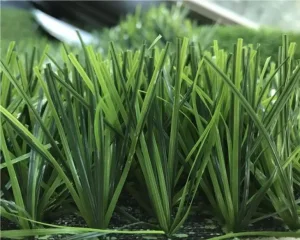
Macro Dynamics of the Global Backyard Putting Green Sector
Analyzing shifting residential recreation investments, eco-mandates on municipal water preservation, and the technology leap in polyolefin monofilaments.
Surging Residential ROI & Golf Real Estate Integration
The global backyard putting green ecosystem has evolved from a niche luxury accessory into a standard outdoor architectural enhancement. With golf participation reaching historical highs across North America, Australasia, and Western Europe, high-net-worth homeowners and boutique commercial developers seek professional-grade, multi-hole backyard greens. These installations improve real estate appraisals by an estimated 8% to 14% while reducing seasonal landscape irrigation expenditures to absolute zero.
Environmental Mandates & Drought Legislation
Strict regional groundwater limitations in drought-prone jurisdictions—including California, Nevada, Spain, and South Australia—have accelerated the transition toward synthetic turf. Natural bentgrass or Bermuda greens demand intensive chemical fertilizers, regular fungicides, and upwards of 55 gallons of water per square foot annually. Synthetic polyolefin surfaces provide permanent drought-resilience, eliminating toxic runoff while remaining compliant with emerging municipal water preservation regulations.
Polymer Evolution: True-Roll Non-Directional Texturization
Historic putting greens suffered from distinct grain biases and inconsistent ball deceleration. Modern wholesale putting green solutions deploy high-density texturized nylon (Polyamide) and specialized cross-linked Polypropylene (PP) yarns. Through precision crimping and heat-setting, these fibers provide omnidirectional ball rolling speeds between 9.5 and 12.0 on the standard USGA Stimpmeter, replicating championship country club green speeds without turf deflection.
China Factory Direct Efficiency & Supply Chain Resilience
Combining Taiwanese polymer engineering heritage dating back to 1977 with state-of-the-art tufting and latex backing infrastructure in Kunshan.
Authorized TenCate Turf Yarn Distribution
Since 2002, our Kunshan manufacturing hub has maintained an authorized distribution partnership with TenCate Grass. We leverage world-class polymer extrusion formulas containing specialized UV stabilizers (Ciba Geigy Tinuvin chemistry) to ensure maximum colorfastness under extreme global UV indexes ranging from desert climates to coastal humid zones.
ISO 9001, 14001 & 45001 Certification
Every square meter undergoes strict digital quality tracking. We audit tensile strength, tuft bind retention (exceeding 35N dry/wet standards), pile density consistency, and backing delamination resistance. Our facilities are audited according to ISO quality, environmental, and occupational safety frameworks to satisfy municipal and corporate procurement protocols.
Cost Advantage & Rapid Container Logistics
By producing our primary PP woven backings, reinforced fleece layers, and specialized polyurethane (PU) or SBR latex coatings in-house, we eliminate multi-tier contractor markups. Wholesale partners enjoy direct mill pricing, customizable container loading plans (optimizing 40HQ container cube utilization up to 98%), and expedited turnaround cycles.
Backyard Putting Green & Sports Turf Specifications
A reference guide for bulk buyers, distributors, and installation engineers to evaluate fiber composition, pile height, stitch rates, and specialized project deployment.
| System Type | Pile Height | Material / Fiber Structure | Stitch Rate & Density | Stimpmeter Speed | Primary Application |
|---|---|---|---|---|---|
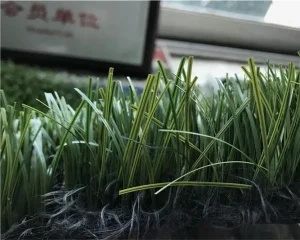
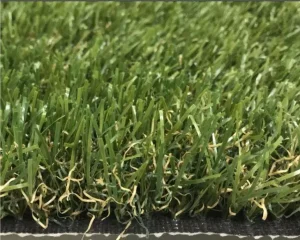
| Pro Tour Putting Surface | 12 mm – 15 mm | 100% Texturized PP / Nylon Monofilament | 32/10cm | 67,200 tufts/m² | 10.5 – 12.0 | Backyard luxury greens, commercial golf clubs, rooftop simulators |
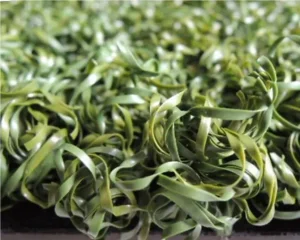
| Non-Sand Filled Casual Putting | 13 mm – 18 mm | Curled PE & PP Hybrid Monofilament | 28/10cm | 58,800 tufts/m² | 9.5 – 10.5 | Residential DIY kits, indoor golf rooms, hotel patio amenities |
| Surrounding Fringe & Rough Grass | 25 mm – 35 mm | PE Monofilament with PP Curled Thatch | 16/10cm | 21,000 tufts/m² | Chipping Zone | True-to-life fringe borders, chipping targets, fairway simulators |
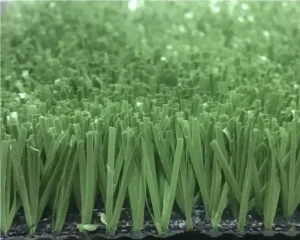
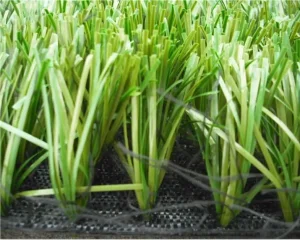
| FIFA Approved Football Turf | 40 mm – 60 mm | Diamond / C-Shape Heavy PE Monofilament | 14/10cm | 10,500 tufts/m² | Standard Roll | Municipal athletic complexes, academic stadiums, training grounds |
| All-Weather Tennis & Multi-Sport | 10 mm – 20 mm | Fibrillated or Texturized PE / PP | 22/10cm | 46,200 tufts/m² | High Friction | Dual-use basketball/pickleball/putting backyard combinations |
Commercial & Residential Application Scenarios
Engineered to adapt across multiple sub-base topologies, weather climates, and architectural frameworks worldwide.
Private Estate Putting Complexes
Integrated backyard green installations featuring undulating contours, dry sand traps, chipping fringe perimeters, and multiple target cups, transforming underutilized domestic grounds into private training sanctuaries.
Urban Rooftop & Balcony Greens
Lightweight non-sand-filled putting mats combined with rapid vertical drainage backings (permeability exceeding 60L/min/m²). Designed for luxury penthouse terraces, corporate building recreational roofs, and indoor executive suites.
Hospitality & Golf Resorts
Heavy-duty, wear-tolerant putting circuits for 5-star hotels, luxury golf lodges, and family entertainment centers capable of handling hundreds of continuous player rounds daily without matting or fiber degradation.
Commercial Golf Academies
Calibrated indoor practice tracks compatible with advanced launch monitors, high-speed camera swing analysis booths, and precision laser alignment systems demanding completely flat, non-directional green roll.
Emerging Industry Trends Shaping Global B2B Procurement
Strategic analysis of sustainability, regulatory changes, and manufacturing standards impacting synthetic turf importers.
100% Recyclable Polyolefin Backing Systems
Traditional synthetic turf relies on black SBR latex backing, which permanently binds different polymers together and makes end-of-life recycling commercially unfeasible. The market is shifting decisively toward mono-material turf constructions. By utilizing 100% Polyolefin (PE/PP) backings with hot-melt thermal bonding, the entire turf system can be granulated and recycled directly back into raw polymer pellets without secondary chemical stripping.
PFAS-Free Chemistry & Non-Toxic Testing
With the European Union's REACH regulation expansion and various United States state statutes phasing out Per- and Polyfluoroalkyl Substances (PFAS), wholesale purchasers must provide laboratory-certified proof of non-fluorinated processing aids. Suntex maintains third-party certified PFAS-free test documentation, RoHS compliance, and SVHC non-toxicity reports, shielding brand partners from regulatory liabilities and customs impoundment.
Thermal Reduction & Anti-Glare Surface Technology
Excessive surface heating has historically deterred residential buyers from installing synthetic turf in sun-exposed backyards. The introduction of IR-reflective pigment additives and concave fiber profiles lowers surface temperatures by up to 10°C to 15°C compared to standard synthetic yarns. Additionally, micro-embossed fiber surfaces diffuse direct solar rays, preventing artificial shine and mimicking the matte finish of natural greens.
Wholesale Backyard Putting Green FAQ
Essential technical, installation, and procurement questions answered by our synthetic turf engineering division.
What is the technical difference between sand-filled and non-sand-filled putting green turf?
How do you ensure consistent ball roll speed (Stimpmeter rating) across production batches?
How does Suntex support OEM and private-label requests for turf distributors?
What are the key base preparation requirements for backyard putting greens?
What documentation and quality reports are provided with international orders?
High-Durability Sports, Play & Residential Surfaces
Explore our extended synthetic turf catalog, built on 50 years of polymer know-how and designed for sports fields, multi-use facilities, playgrounds, and residential spaces.