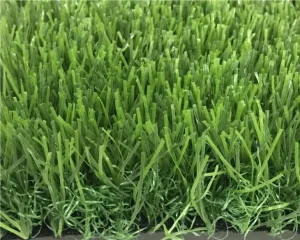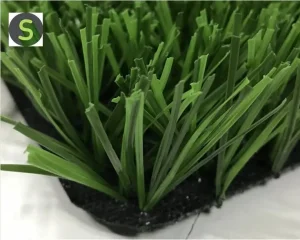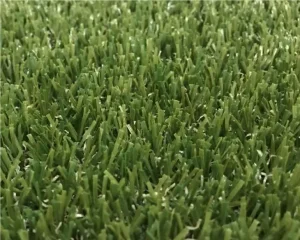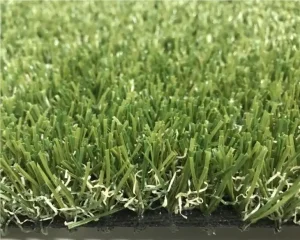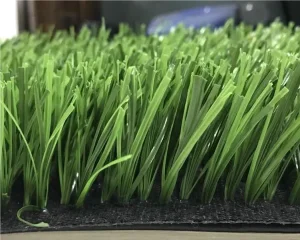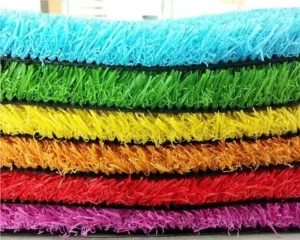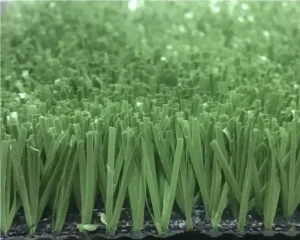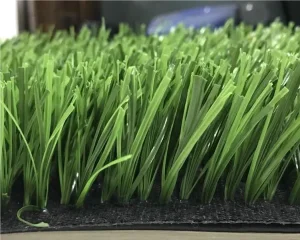
Engineered Sports Turf Solutions: Batch 01
Certified synthetic turf systems engineered for multi-sport complexes, baseball diamonds, putting greens, and professional tennis courts requiring high tuft lock resilience.
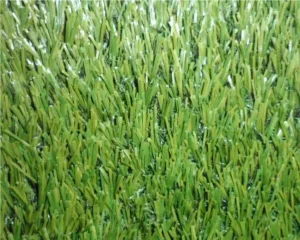
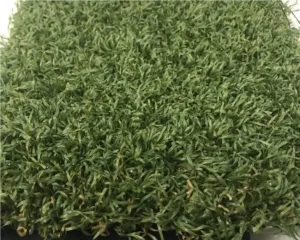
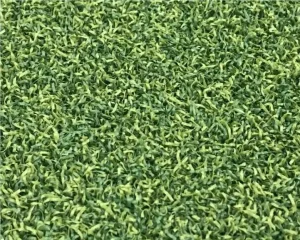
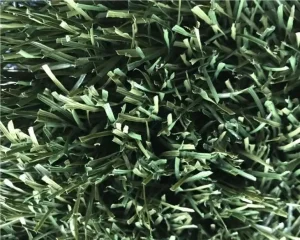
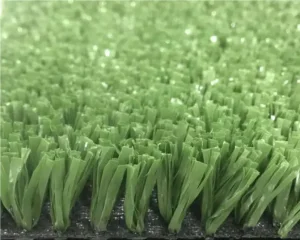
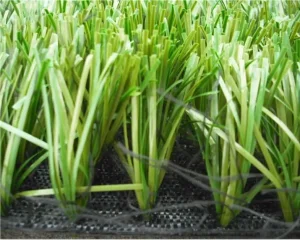
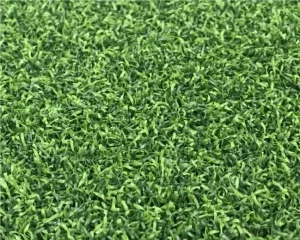
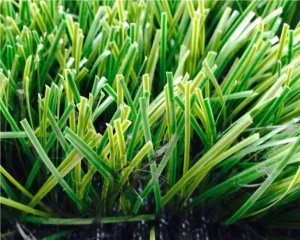
Why Tier-1 Contractors Source Artificial Tennis Turf in China
Consolidated supply ecosystems, integrated resin compounding, and precision tufting lines give our Chinese manufacturing complex unrivaled cost and quality leadership.
Vertically Integrated Extrusion
Unlike assembly-only mills, our facility controls the entire polymer pipeline. Inheriting yarn technology established in 1977, we process virgin polypropylene (PP) and polyethylene (PE) masterbatches directly into high-denier fibrillated and monofilament fibers.
- TenCate yarn processing partnership since 2002
- Exact control over tensile strength and thermal memory
- Direct elimination of third-party yarn surcharges
Certified ITF Class Standards
Tennis court surfaces demand stringent Court Pace Ratings (CPR). We customize pile heights (10mm to 20mm), stitch gauges (3/8", 5/16", 3/16"), and yarn profiles to hit precise ITF categories, ranging from Slow (Category 1) to Fast (Category 5).
- Optimized sand-filling compatibility (silica sand infill)
- Uniform ball rebound coefficient matching natural clay/grass
- Exceptional foot pivot security reducing knee torques
Automated High-Gauge Tufting
Our Kunshan manufacturing hub utilizes high-speed multi-needle tufting machinery. Integrated computerized cameras inspect needle spacing and stitch densities continuously, ensuring seamless roll seaming and invisible court line integration.
- Heavy dual-layer PP + Net backing with SBR/PU coating
- Tuft bind retention exceeding 45–55 N
- Automated perforations delivering >60 L/min/m² drainage
Tennis Surface Engineering & Pile Parameter Standards
A detailed cross-reference designed for stadium architects, municipal tenders, and international athletic surface contractors.
| Court System Tier | Fiber Polymer | Typical Pile Height | Stitch Density / m² | Dtex Value | Infill Specification | Target CPR (Pace) |
|---|---|---|---|---|---|---|
| Pro Tour Fibrillated | 100% High-Grade PP | 10 mm – 13 mm | 48,000 – 63,000 | 6,600 – 8,800 | Rounded quartz sand (0.3–0.8mm) | ITF Category 4 (Medium-Fast) |
| Club Championship Mono | PE Monofilament + Texturized | 12 mm – 15 mm | 35,000 – 45,000 | 8,000 – 11,000 | Kiln-dried silica sand (80% infill) | ITF Category 3 (Medium) |
| Multi-Court All-Weather | PE & PP Hybrid Blend | 15 mm – 20 mm | 28,000 – 38,000 | 9,000 – 12,000 | Stabilizing sand infill (15–20kg/m²) | ITF Category 2 (Medium-Slow) |
| Sand-Dressed Elite | Curled Micro-Polymer PE | 13 mm – 16 mm | 42,000 – 52,000 | 7,500 – 9,500 | Surface dressing only (clean look) | ITF Category 3 (Medium) |
| Clay-Turf Hybrid System | Fibrillated UV-Treated PP | 10 mm – 12 mm | 50,000 – 65,000 | 8,800 | Ceramic/terracotta coated sand | ITF Category 1 (Slow / Sliding) |
Global Market Evolution & Technical Trends
How ecological directives, circular polymer economies, and climate extremes are transforming athletic synthetic turf manufacturing.
PFAS Elimination & REACH Compliance
Global regulatory bodies, including the EU ECHA and North American EPA, are strictly monitoring halogenated processing aids. As an environmentally responsible supplier, our tennis grass formulations are third-party validated 100% PFAS-free, eliminating heavy metals and phthalates to guarantee safe long-term play in scholastic and municipal installations.
Extreme UV Stabilization & Heat Dissipation
With artificial tennis courts subjected to brutal solar radiation in regions like the Middle East, Southern Europe, and Australia, yarn degradation is a major risk. We blend premium Hindered Amine Light Stabilizers (HALS) directly into the polymer masterbatch, achieving over 5,000 hours of accelerated UVA/UVB exposure testing with color fastness ≥ Grade 4-5.
Fully Recyclable Single-Polymer Turf
Traditional courts combine PE fibers with thermoset latex coatings, making mechanical recycling difficult. The emerging trend spearheaded by our R&D is 100% polyolefin structures (PP fiber + PP woven backing + thermoplastic hot-melt coating). This monolithic system allows complete re-pelletization at end-of-life, dramatically lowering project carbon footprints.
Tailored Solutions for Commercial & Institutional Projects
From premier hospitality facilities to dense public parks, our tennis systems deliver tailored shock absorption, rapid drainage, and consistent ball spin.
Luxury Resorts & Hotels
Delivers lush, vibrant aesthetics year-round without watering, chemical fertilizer, or court maintenance downtime. Features soft-fiber textures that are gentle on casual resort guests.
Schools & Municipalities
Resists intensive daily wear with up to 60,000 stitches/m². Multi-functional markings allow courts to transition seamlessly between tennis, netball, and youth soccer training.
Professional Academies
High-density fibrillated blades capture silica sand infill evenly, enabling controlled sliding akin to red clay courts while substantially reducing ankle and lower-back fatigue.
Rooftop & Urban Venues
Engineered with lightweight, ultra-permeable backing. Allows rapid water discharge through engineered roof screeds without overloading building load-bearing limits.
Addressing Enterprise B2B Procurement Requirements
Meeting the rigorous supply chain, customization, and logistical demands of global wholesale importers, contractors, and sporting federations.
Custom OEM & Roll Optimization
We supply custom roll widths (up to 4.0m or 2.0m) cut to precise court layout plans. White and yellow playing lines are pre-tufted directly into rolls during fabrication, eliminating up to 70% of on-site seam-cutting labor and adhesive waste for contractors.
Container Maximization & Export Care
With ocean freight volatility, packaging efficiency is vital. We utilize automated rolling, vacuum-compression packaging, and heavy-duty UV-stabilized poly sleeves to load up to 6,500m² of sand-filled tennis turf in a single 40ft HQ container without core warping.
Tender-Ready Technical Documentation
We empower international bidders with comprehensive tender dossiers. Every wholesale batch is supported by mill certificates, yarn Dtex assay sheets, UV weatherometer results, and verified fire test certifications (EN 13501-1 Class Cfl-s1 / Bfl-s1).
Frequently Asked Questions for Project Specifiers
Key technical insights to guide your procurement, installation design, and pitch maintenance planning.
Why is fibrillated polypropylene preferred over monofilament for sand-filled tennis courts?
Fibrillated PP fibers feature a micro-slitted honeycomb structure that splits slightly during the brushing and infill process. This creates a mechanical lattice that traps quartz sand particles evenly in place, preventing shifting under hard athlete stops and ensuring consistent ball bounce across the entire playing court.
What sub-base preparation is required for high-grade synthetic turf tennis courts?
Artificial tennis turf is a surfacing layer that requires a stable, free-draining base. Ideal configurations include permeable macadam (porous asphalt) or reinforced engineered concrete with a cross-fall gradient of 0.5% to 1.0% to ensure high-capacity water run-off and laser-measured planarity.
How much silica sand infill is required per square meter?
For standard 15mm pile height fibrillated turf, infill quantities typically range between 15kg to 22kg of rounded, washed, and dried quartz silica sand (0.3mm–0.8mm particle grain size) per square meter. The sand should fill the surface to within 2–3mm of the blade tips.
What is the expected functional service life of your tennis court turf?
Our heavy-duty courts manufactured with UV-resistant polymers and reinforced backings deliver a service lifespan of 8 to 12 years under intensive commercial club play, supported by regular drag-brushing maintenance routines and seasonal sand de-compaction.
Specialized Artificial Turf Applications: Batch 02
High-specification commercial landscaping, FIFA-compatible soccer turf, golf greens, and certified professional tennis court surfaces.