Commercial-Grade Golf & Athletic Synthetic Turf Solutions
Engineered to rigorous biomechanical tolerances with authentic TenCate yarn integration, multi-directional ball response, and superior climatic resilience.
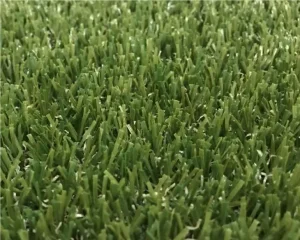
Wholesale Artificial Golf Landscaping Green Grass Manufacturer, Supplier
Request Quote & Spec Sheet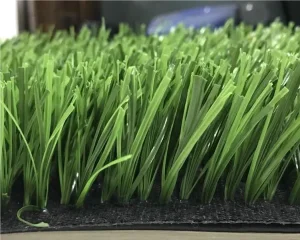
Buy Professional Football Fake Turf Manufacturer, Supplier
Request Quote & Spec Sheet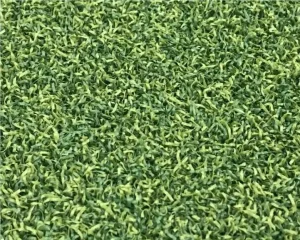
Buy Wholesale Nonslip Putting Green Turf Factories, Factory
Request Quote & Spec Sheet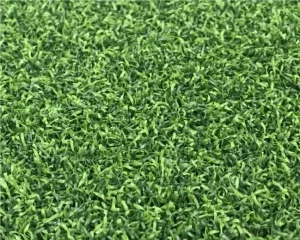
Wholesale Harmless Indoor Putting Green Turf Manufacturers, Manufacturer
Request Quote & Spec Sheet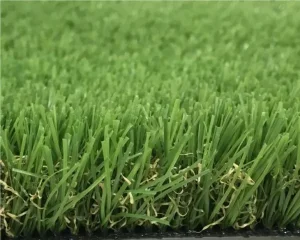
Buy Best Green Lawn Grass Safe And Non-toxic Products, Factories
Request Quote & Spec Sheet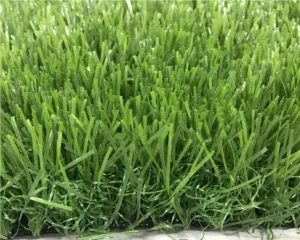
Buy Easy To Clean And Dry Up Fake Grass for Dogs Product, Suppliers
Request Quote & Spec Sheet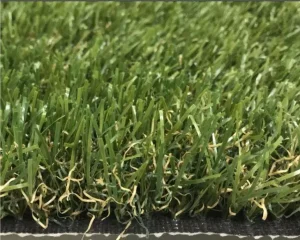
Buy Pet Artificial Grass manufacturer Product, Factories
Request Quote & Spec Sheet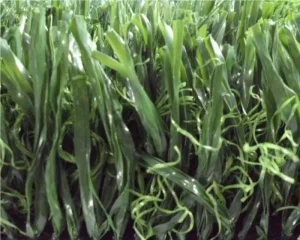
Buy Artificial Baseball Turf manufacturer Product, Factories
Request Quote & Spec SheetThe Global Synthetic Golf Infrastructure Shift: Commercial Drivers
Analyzing water stewardship mandates, real estate asset value maximization, and long-term operating expenditure mitigation in precision sports surfaces.
Hydrological Scarcity & Regulation
Traditional bentgrass and Bermuda putting greens require upwards of 500,000 gallons of potable water annually per hole, facing intense regulatory pressure in arid and metropolitan zones worldwide. Wholesale synthetic green systems reduce direct municipal water consumption to negligible levels, serving as a critical hedge against drought penalties and operational shutdown directives.
Urban Micro-Golf & Commercialization
The sports entertainment industry has decoupled golf from expansive 18-hole countryside facilities. High-density urban centers, luxury hospitality developments, indoor simulator suites, and interactive entertainment venues require wear-resistant putting modules capable of withstanding constant foot traffic and delivering measurable stimpmeter speeds from 9.5 to 12.0.
Lifecycle ROI & Chemical Elimination
Commercial operators spend significant resources on fungicides, selective herbicides, specialized aeration machinery, and certified agronomist personnel. Direct procurement of high-density polyamide and texturized polypropylene golf surfaces provides institutional developers with upfront capital expenditure predictability and minimizes maintenance budgets.
Precision Polymer Science: Fiber Memory & Ball Dynamics
Understanding how cross-linked polymer matrix chemistry, stitch geometry, and multi-tier secondary backings prevent directional grain bias and structural degradation.
| Performance Metric | Polyamide (Nylon 6.6) Precision Green | Texturized Polypropylene (PP) Core | Monofilament Polyethylene (PE) Fringe |
|---|---|---|---|
| Primary Application | Tournament Greens / High-Traffic Ranges | Residential Putting / Target Greens | Rough, Apron, and Surrounding Landscape |
| Thermal Stability (°C) | Melting Point > 220°C (Non-Curling) | Melting Point ~ 160°C (Sand-Stabilized) | Melting Point ~ 125°C (Flexible Soft Touch) |
| Stimpmeter Range | 10.5 – 12.5 (True Multidirectional Roll) | 9.0 – 10.5 (Infill Dependent) | N/A (Deceleration Buffer Zone) |
| Elastic Modulus | Superior Elastic Recovery (No Flattening) | Moderate; Stabilized via Rounded Quartz | High Flexural Memory (C-Shape/Diamond) |
| Backing Technology | Reinforced Multi-Layer Double PP + PU | Reinforced Double PP + SBR Latex | Permeable Perforated Environmental Mesh |
International Regulatory Compliance & Regional Integration
Ensuring frictionless municipal bids, customs approval, and end-user safety through rigorous third-party auditing and documentation.
PFAS-Free & REACH Compliance
Municipal and institutional procurements require strict chemical transparency. Every wholesale batch produced undergoes certified screening to verify the absence of per- and polyfluoroalkyl substances (PFAS), heavy metals (lead, cadmium, mercury), and volatile organic compounds (VOCs), meeting European REACH and American state-level environmental mandates.
ISO 9001 · 14001 · 45001 Systems
Our production facilities operate under continuous international management auditing. From initial masterbatch dispersion to computerized tufting stitch tension control, automated PU vulcanization, and finished roll packaging, each production run maintains full supply chain traceability to ensure batch-to-batch consistency.
Turnkey Logistics & Architectural OEM
Serving over 30 countries across North America, Europe, Australia, and the Middle East, our technical sales engineers assist clients with container optimization plans, custom roll dimension cutting to minimize job-site scrap, custom private labeling, and targeted freight forwarder integration.
Commercial Architectures: Engineered for Real-World Environments
Deploying specialized sub-base engineering, drainage capacity, and yarn profiles across diverse commercial installation environments.
Hospitality & Luxury Rooftops
Engineered for lightweight installations where drainage rates are critical. Incorporating permeable backing grids providing water infiltration speeds exceeding 500 mm/hour, paired with Class 1 fire-rated and non-flammable test certifications required for urban commercial structural codes.
Driving Ranges & Target Greens
High-impact zones require engineered density to accept pitch shots without yarn fragmentation. Our texturized polyamide matrix stabilizes specialized sand infill to replicate realistic approach-shot check and true spin response, lowering annual maintenance overhead.
Simulator Bays & Indoor Academies
Featuring non-directional tufting that eliminates artificial ball tracking errors in camera- and sensor-based golf simulation systems. Low-sheen, anti-glare additives reduce projector washout, creating an authentic aesthetic for indoor commercial facilities.
High-Durability Sports Turf & Specialty Synthetic Solutions
Complete multi-sport configurations built to FIFA, World Rugby, and international standards, leveraging advanced co-extruded monofilaments.
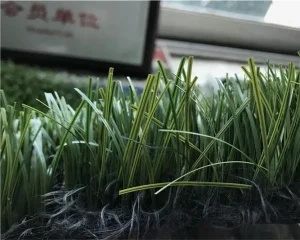
Buy Professional Fake Turf for Football Field Factories, Supplier
Request Quote & Spec Sheet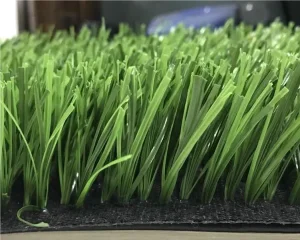
OEM Customized Affordable Artificial Football Turf Manufacturer, Factory
Request Quote & Spec Sheet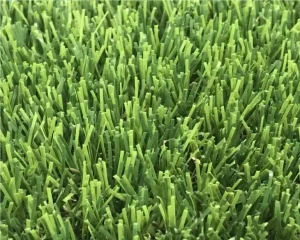
Buy Best Non-toxic Kids Playground Grass Manufacturer, Factory
Request Quote & Spec Sheet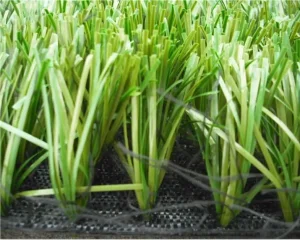
Buy Wear-resistant TenCate Football Turf Product, Factory
Request Quote & Spec Sheet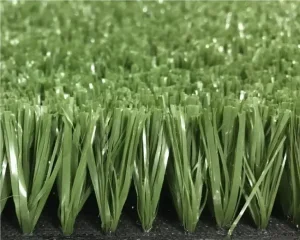
Buy Professional Sand Filled Putting Green Factories, Supplier
Request Quote & Spec Sheet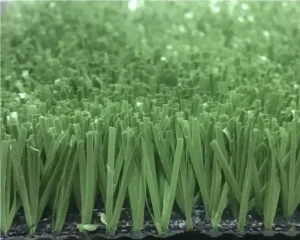
Wholesale Professional Synthetic Turf for Tennis Courts Manufacturer, Suppliers
Request Quote & Spec Sheet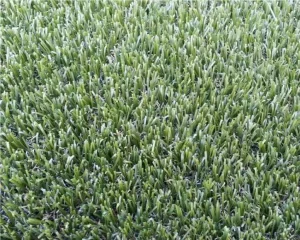
OEM High-Density UV-Resistant Artificial Grass Turf for Garden & Lawn Manufacturers, Product
Request Quote & Spec Sheet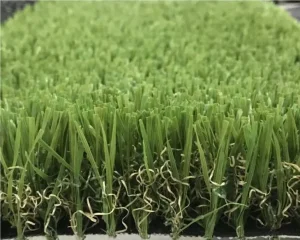
OEM Drainable Synthetic Pet Turf with Realistic Artificial Grass Manufacturers, Product
Request Quote & Spec SheetFrequently Asked Engineering & Procurement Questions
Direct responses from our production managers addressing material specifications, testing protocols, and project workflows.
How does yarn polymer choice affect stimpmeter speeds on artificial greens?
Texturized Polypropylene (PP) and high-density Polyamide (PA) fibers are selected for putting surfaces because their curling structures resist directional lie. Polyamide yields higher resilience under thermal expansion and foot traffic, maintaining a consistent ball roll (Stimp 10.5–12.0), whereas standard polyethylene landscape grass creates ball veer due to blade deflection.
What tufting pile heights and stitch densities can your factory manufacture?
Our production facilities support tufting gauges from 3/16 inch up to 3/4 inch, with pile heights ranging from 6 mm (ultra-fast tournament greens) to 75 mm (FIFA-grade football turf). Stitch densities are engineered between 12,600 and 65,000 stitches per square meter, configured to project specifications.
How are heavy metal and PFAS-free compliances verified for international import?
Every raw material masterbatch batch is tested for safety, and finished rolls undergo periodic third-party testing (SGS/Labosport) for SVHC (Substances of Very High Concern) under REACH regulations and total fluorine concentration to guarantee 100% PFAS-free status for safe commercial and school installations.
Can you provide custom color blending, roll dimensions, and OEM private branding?
Yes. As a direct manufacturer, we offer full private-label support. We customize roll widths (from 2.0 m to 4.0 m), lengths to project specifications (minimizing job-site cutting), multi-color yarn blends (olive, field green, lime, tan thatch), and client-branded protective wrapping with custom documentation.