Verified OEM Lines
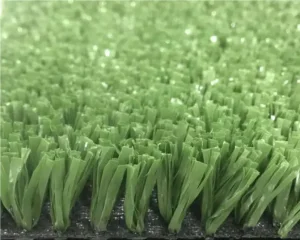
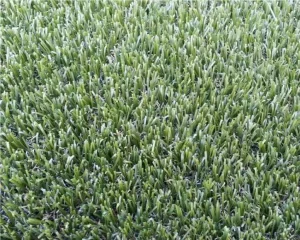
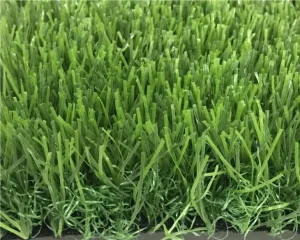
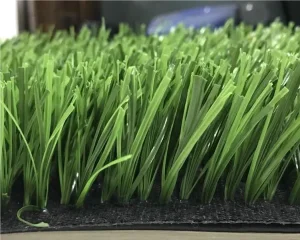
Featured International Tournament & Institutional Turf Systems
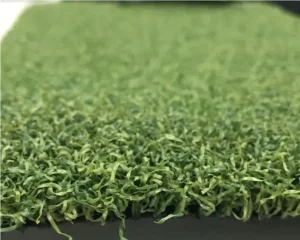
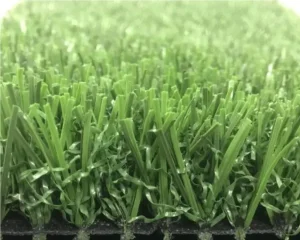
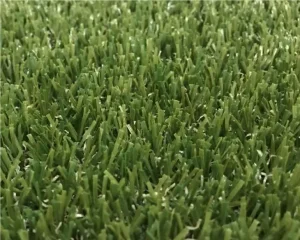
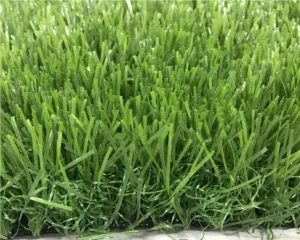
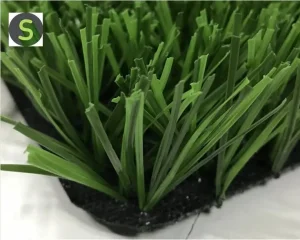
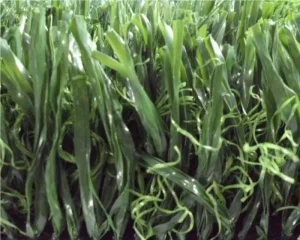
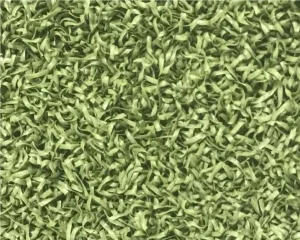
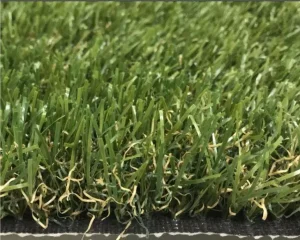
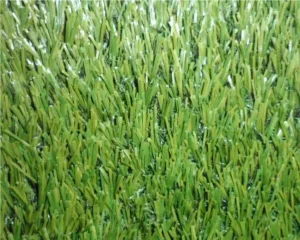
Certified stadium and multi-use turf profiles available for rapid factory dispatch and customized OEM formulation.
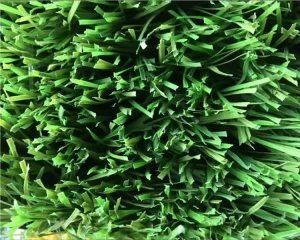
Industry Benchmark Report
Global Sports Turf Dynamics: Industrialization, Polymer Standards, and OEM Sourcing Architecture
The global sports turf sector has evolved far beyond basic aesthetic landscaping. Modern athletic surfaces operate as high-precision engineering systems governed by strict mechanical kinetics, player-surface interaction metrics, bio-mechanical shock mitigation, and stringent environmental chemical regulations. For procurement directors, regional brand owners, and general contractors managing municipal tenders, evaluating an OEM Sports Turf Supplier is a rigorous exercise in material chemistry, automated extrusion control, and tufting precision.
The Engineering Reality:
Sports turf resilience depends heavily on the polymer masterbatch and molecular chain orientation during fiber extrusion. Substandard suppliers often cut costs using reprocessed polyethylene (PE) pellets or excessive calcium carbonate filler, which degrades the fiber's dynamic elastic memory and causes premature splitting under UV radiation and mechanical friction.
1. Macro Industry Trends: The PFAS Phase-out & Circular Mono-Material Backing
The global synthetic sports surfacing sector faces its most consequential regulatory transformation in three decades. In North America (e.g., California AB 1423) and the European Union under ECHA REACH revisions, environmental protection frameworks are actively restricting polyfluoroalkyl substances (PFAS) commonly used as processing aids in yarn extrusion. Concurrently, the EU microplastics restriction is driving fields toward sand-dressed non-infill architectures or organic infill media (cork, olive core, walnut shell matrix).
Forward-thinking OEM operations are redesigning backings away from conventional Styrene-Butadiene Rubber (SBR) latex coatings. Because SBR cross-links thermoset rubbers onto thermoplastic PE fibers, end-of-life recycling requires mechanical separation that is often economically non-viable. Advanced facilities are transitioning to 100% Polyolefin mono-material systems (Hot Melt or Polyurethane PU backing), enabling complete mechanical recycling into secondary industrial resins without de-coating.
2. Polymer Formulation: Why TenCate Fiber Science Matters
At the core of professional artificial grass is the chemical structure of the monofilament. Suntex Sports-Turf Corporation operates with a legacy tracing back to its parent entity, RiThai International, which began industrial nylon monofilament extrusion in Taipei in 1977. Backed by an authorized distribution partnership with TenCate Grass since 2002, Suntex formulates yarn using C6 and C8 metallocene-catalyzed resins combined with premium Hindered Amine Light Stabilizers (HALS). This configuration directly addresses fiber chalking, photodegradation, and tensile breakdown under intense UV exposure (tested rigorously up to UVA/UVB 5,000-hour exposure thresholds).
Operational Superiority
China’s Integrated Manufacturing Advantage
How deep supply clusters, automated tufting, and vertical resin integration deliver superior cost efficiency and strict batch consistency for global tenders.
100%
Vertical Value Chain Integration
From raw virgin C8 LLDPE resin intake and masterbatch compounding to tufting and automated coating, direct line control minimizes conversion loss and margin stacking.
7–12 Days
Rapid OEM Production Turnaround
Equipped with multi-gauge tufting heads (3/8", 5/8", 3/4", 5/16") operating alongside 5-meter-wide drying tunnels, factory infrastructure readily supports high-volume 40HQ container runs.
ISO Triple
Certified Quality & Compliance
Manufacturing operations strictly adhere to ISO 9001, ISO 14001, and ISO 45001 workflows, complemented by heavy-metal-free, SVHC-free, and PFAS-free third-party verification.
Technical Blueprint
Sports Field Engineering: Comparative Specification Guide
Match end-use sport demands to structural specifications—fiber geometry, dtex, stitch density, and infill mechanics.
| Application Target | Optimal Pile Height | Yarn Geometry & Polymer | Dtex & Gauge | Primary Functional Rationale |
|---|---|---|---|---|
| Professional Soccer (FIFA Quality Pro) | 50 mm – 60 mm | Monofilament with Spine / Diamond (PE) | 12,000 – 16,000 Dtex (5/8") | Maximum skin friction minimization, controlled vertical ball rebound, and structural resilience under continuous stud shear forces. |
| Field Hockey (FIH Standard) | 12 mm – 18 mm | Texturized / Fibrillated Kinked PE or PA | 8,000 – 10,000 Dtex (3/16" or 5/16") | Omnidirectional non-directional ball roll, eliminates surface deviation, maximizing high-velocity ball tracking and player stick handling. |
| Baseball & Softball | 32 mm – 45 mm | Dual-layer Monofilament + Texturized Thatch | 11,000 – 14,000 Dtex (3/8") | High infill retention on base paths, slide friction optimization, and impact dissipation against repetitive cleat penetration. |
| Padel & Tennis Courts | 12 mm – 15 mm | Texturized Polypropylene (PP) / PE | 7,500 – 9,000 Dtex (3/16") | Consistent angular ball exit velocities, precise sand grip dispersion, and superior resistance to high-frequency lateral foot scuffing. |
| Multi-Sport Agility / Training | 20 mm – 30 mm | Heavy Duty S-Shape / C-Shape PE | 9,000 – 12,000 Dtex (3/8") | All-round tensile wear resilience, multi-purpose markings compatibility, and low maintenance footprint for high-traffic schools. |
Strategic Sourcing Insights
Global Procurement Audit: Navigating Tenders, Testing, and OEM Logistics
For global importers, sourcing synthetic turf is not merely a purchase order—it is an exercise in risk mitigation across fluctuating maritime freight lanes, raw material indexing (ethylene monomer pricing), and stringent regional compliance frameworks.
Tender Documentation Protocols
Public municipal and educational tenders require verified laboratory certifications, such as Lisport XL mechanical wear simulations (typically up to 10,000–20,000 cycles without yarn splitting), fire retardancy classifications (EN ISO 9239-1 / ASTM E648 Class 1), and dynamic water infiltration rates surpassing 2,000 mm/h.
Roll Optimization & Container Geometry
Efficient roll geometry directly lowers shipping expenses. Precise factory rolling with heavy-duty moisture-barrier wrapping allows 4.0-meter and 2.0-meter width rolls to maximize 40HQ cube utilization, minimizing trans-oceanic freight costs per square meter while preventing internal creasing during transit.
Technical Knowledge Base
Frequently Asked Engineering & Procurement Questions
Direct, authoritative technical answers to assist OEM product managers and commercial estimators.
What specific factors differentiate high-grade sports turf yarn from generic landscaping turf fiber?
High-performance sports turf yarn is engineered to withstand severe dynamic mechanical stress. It utilizes specialized resin polymers (primarily heavy-duty C8 metallocene linear low-density polyethylene) with higher molecular weights and narrow molecular-weight distributions. Sports monofilaments are extruded with distinctive structural profiles (such as central spines, diamonds, or dual-arc shapes) with thicknesses of 250 to 450 microns. This geometry delivers high elastic recovery and structural memory, preventing the fiber from lying flat after cleat impacts. In contrast, landscaping grass prioritizes softness and multi-hue aesthetics, using thinner gauges (100–180 microns) with lower tensile break strength.
How does backing chemistry (Latex vs. Polyurethane vs. Hot Melt) impact field durability and sustainability?
Conventional SBR latex backing provides reliable tuft lock at an economical price point, but can experience hydrolytic degradation in humid, high-salinity, or constantly wet sub-bases over extended periods. Polyurethane (PU) backing offers superior tuft bind forces (exceeding 45-50 N), will not break down in water-saturated environments, and retains its flexibility in freezing conditions. Hot Melt / PO (Polyolefin) backing represents the leading edge of circular economy engineering: it fuses thermally with PE face yarns to form a completely recyclable mono-material carpet, lowering overall carpet weight and simplifying transport and end-of-life recycling.
What is Dtex in artificial turf engineering, and how does it affect pitch specifications?
Dtex (Decitex) is an industrial metric defined as the mass in grams of 10,000 meters of an individual yarn fiber. For instance, a 16,000 Dtex monofilament indicates that 10,000 meters of that single fiber bundle weighs 16,000 grams. Higher Dtex values generally reflect thicker, sturdier blade profiles that resist wear and splitting under repetitive play. However, increasing Dtex without an appropriate polymer formulation can result in an excessively stiff, abrasive yarn. Optimal pitch engineering carefully balances Dtex, stitch gauge, and cross-sectional shape to achieve the ideal blend of durability and player safety.
What testing protocols verify that OEM turf materials are completely PFAS-free and non-toxic?
To verify that artificial turf is free of Per- and Polyfluoroalkyl Substances (PFAS), reputable OEM suppliers test products via liquid chromatography-tandem mass spectrometry (LC-MS/MS) and Total Organic Fluorine (TOF) combustion ion chromatography. These analyses ensure compliance with European REACH Annex XVII regulations, US state-level bans, and EN 71-3 toy safety limits for heavy metal migration (lead, cadmium, mercury, and hexavalent chromium).
Can Suntex supply custom roll lengths and tailored sports field markings directly from the production line?
Yes. Full OEM manufacturing customization includes tailoring roll lengths to exact field dimensions, minimizing waste and cutting requirements on site. Tufting machines can integrate white, yellow, or blue playlines directly into the rolls, and custom CAD turf inlays (such as institutional logos and technical end zones) can be tufted and pre-assembled at the factory to streamline installation and reduce field joint seams.
Specialty Sports & Landscaping Portfolio
Multi-Sport, Golf, and Specialty Turf Lines
Engineered synthetic surfaces tailored for golf greens, multi-use athletic setups, and durable high-traffic installations.