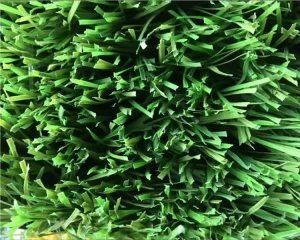
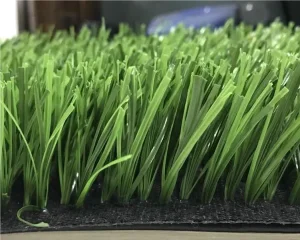
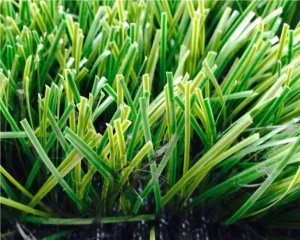
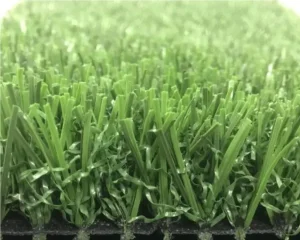
High-Performance Synthetic Sports & Landscape Turf Range
Direct manufacturer solutions engineered with TenCate polymer heritage, custom pile configurations, and stringent PFAS-free compliance.
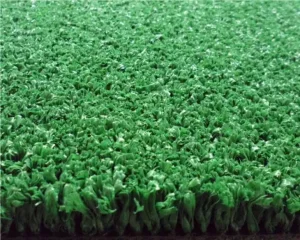
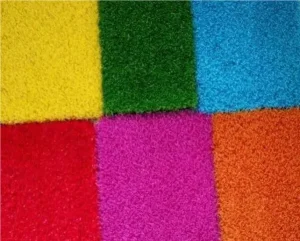
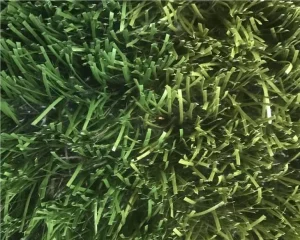
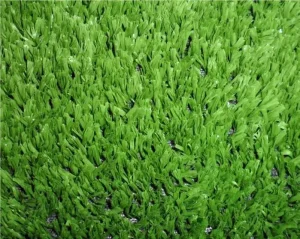
Global Commercial & Industrial Status of Practice Golf Greens
The transition from resource-heavy natural bentgrass to high-fidelity synthetic putting greens is accelerating worldwide under ecological and economic pressures.
Escalating Agronomic & Labor Costs
Maintaining championship-level bentgrass or Bermuda greens requires intensive chemical treatments, daily mowing, and heavy irrigation. Commercial golf operators face up to 65% reductions in overhead by transitioning practice surfaces to engineered synthetic systems.
Urbanization & Off-Course Golf Tech
The global proliferation of commercial golf entertainment hubs, simulator lounges, and rooftop academy installations demands ultra-dense, low-profile turf that replicates authentic roll physics while handling continuous, high-density foot traffic without grain distortion.
Strict Global Chemical Mandates
Stricter EPA and REACH regulations on polyfluoroalkyl substances (PFAS) require golf turf manufacturers to verify non-toxic, lead-free, and REACH-certified polymer compositions, preventing project delays in municipal, educational, and international contracts.
The Evolution of Synthetic Putting Surfaces: From Astroturf to Non-Directional Polymers
Early iterations of artificial golf greens were limited by directional graining, causing inconsistent ball roll speeds depending on the angle of approach. Modern OEM manufacturing combines textured polyamides (Nylon 6.6) and specialized fibrillated or texturized polypropylene (PP) yarns. With stitch rates exceeding 65,000 stitches per square meter, these surfaces deliver genuine 360-degree non-directional roll dynamics.
In addition, dual-component backing technologies featuring cross-linked polyurethane (PU) or multi-layer woven polyolefins eliminate dimensional shrinkage and turf rippling caused by seasonal thermal swings.
Technical Roadmap: Fiber Geometry, Dtex & Backing Architecture
Precision-matched physical and chemical specifications that guarantee tournament-grade ball roll, club interaction, and thermal stability.
| Application Tier | Polymer Composition | Pile Height & Gauge | Stitch Density | Stimp Meter Target | Infill Engineering |
|---|---|---|---|---|---|
| Championship Tour Green | 100% Texturized Nylon 6.6 (PA) | 12 mm – 15 mm | 3/16" | 68,000 – 75,000 / m² | 10.5 – 12.0+ (Adjustable) | Non-infill or ultra-fine ceramic coated sand |
| Commercial Range / Driving Mat | PP Fibrillated + PE Thatch Core | 14 mm – 18 mm | 5/32" | 52,000 – 62,000 / m² | 9.5 – 10.5 | Kiln-dried round silica sand (8-12 kg/m²) |
| Luxury Residential Putting Green | PE Monofilament texturized hybrid | 13 mm – 16 mm | 3/8" | 48,000 – 58,000 / m² | 10.0 – 11.0 | Non-sand filled or minimal ballast sand |
| Golf Rough & Fringe Border | C-Shape / Diamond Monofilament PE | 30 mm – 40 mm | 3/8" | 18,000 – 24,000 / m² | True-to-Life Chip Resistance | Heavy silica sand + performance elastomer infill |
Non-Directional Texturization
Proprietary heat-setting technology curls nylon and PP monofilaments into tight omni-directional loops, eliminating grain pull so putts roll on their intended path regardless of approach angle.
UV Stabilizer Masterbatch
Extrusion-grade Hindered Amine Light Stabilizers (HALS) safeguard turf polymers against intense UV exposure, preventing brittleness, chalking, and color degradation across severe climate zones.
Dual Polyurethane (PU) Backing
Replaces traditional SBR latex with moisture-impervious polyurethane coating, yielding exceptional tuft-bind strength (>45N) and eliminating degradation from sub-base moisture accumulation.
Localized Real-World Applications & Implementation Schemes
Configured for diverse physical environments, foot traffic demands, and architectural layouts worldwide.
Commercial Golf Academy & Club Fitting Centers
Engineered for high-volume indoor/outdoor tracking facilities. Integrates seamlessly with high-speed camera sensors and launch monitors, delivering reliable green speeds for biomechanical swing and putt analysis.
High-End Hospitality & Luxury Resorts
Custom-contoured outdoor putting greens that blend seamlessly with high-end landscapes. Delivers year-round green coverage for resort guests with zero pesticide exposure and minimal maintenance downtime.
Rooftop & Structural Urban Installations
Lightweight non-infill golf turf paired with specialized drainage shock pads, providing rapid water evacuation and strict non-flammability performance without exceeding building roof load limits.
End-to-End OEM/ODM Manufacturing & Supply Chain Solutions
Helping turf distributors, sports field contractors, and private brands build differentiated golf green portfolios backed by five decades of extrusion expertise.
Private Labeling & Custom Packaging
Custom packaging, printed outer sleeves, shrink wrapping, and precision die-cut modular green mats ready for immediate retail and distributor fulfillment.
Bespoke Fiber Tuning & Color Matching
Custom bi-color options, tailored field green/olive green blends, variable thatch densities, and custom yarn polymer mixtures (PE + Nylon hybrids) matched to target market preferences.
Certified Testing & Export Documentation
Full documentation suites including ISO 9001, ISO 14001, ISO 45001, DIN 18035-7 environmental compliance, EN 13501-1 fire reaction ratings, and comprehensive third-party PFAS-free lab test reports.
Frequently Asked Questions: Technical & Commercial Specifications
Direct answers from our senior engineering team to streamline specification reviews and procurement evaluations.
What is the difference between Sand-Filled and Non-Sand Filled golf putting greens?
Sand-filled greens utilize open-pile texturized PP or PE monofilaments that rely on round silica sand infill to regulate ball roll speeds, absorb energy on long approach shots, and maintain fiber verticality. Non-sand filled greens are engineered with ultra-dense texturized nylon (polyamide) or heavy crimped fibers (exceeding 60,000 stitches/m²), delivering consistent Stimp speeds straight from the roll without sand maintenance, making them ideal for indoor settings, rooftops, and luxury residential projects.
How do you prevent directional graining on synthetic golf putting greens?
Directional graining is eliminated during yarn manufacturing and tufting. We apply high-frequency thermal heat-setting processes to our Nylon 6.6 and textured PP yarns, forming an omni-directional crimp pattern. In addition, using a high stitch density and multi-directional fiber orientation ensures the golf ball rolls purely based on slope and inertia, without veering along a dominant tufting grain.
Why is Nylon (Polyamide) superior to Polypropylene for elite putting surfaces?
Nylon has superior thermal memory and tensile resilience compared to polypropylene. Under intensive foot traffic, nylon fibers spring back to their upright shape without permanent fiber matting. Furthermore, nylon features a higher melting point, preventing frictional blade melt from aggressive ball strikes or chip shots. While PP remains a cost-effective solution for sand-dressed builds, texturized nylon delivers unmatched longevity and ball roll accuracy.
Can the ball speed (Stimp meter reading) be calibrated on synthetic greens?
Yes. On sand-dressed installations, green speed is calibrated between 9.0 and 13.0+ on the Stimp meter by adjusting the silica infill depth, fine-tuning brushing frequency, and varying roller weight during final compaction. On non-infill installations, our factory tailors the pile height (from 10 mm to 16 mm) and thatch density to match the customer's specified target speed.
What third-party safety and environmental certifications are provided for B2B tenders?
Every production run complies with ISO 9001, ISO 14001, and ISO 45001 operating standards. We provide third-party PFAS-free testing (ensuring zero detectable per- and polyfluoroalkyl substances), REACH Regulation SVHC compliance, heavy metal leach tests (EN 71-3), and Class Cfl-s1 / Bfl-s1 fire reaction ratings according to EN 13501-1 for commercial architectural approvals.
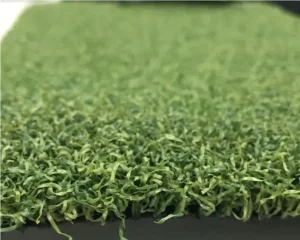
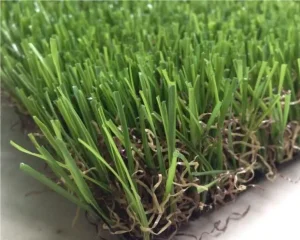
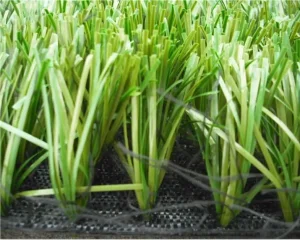
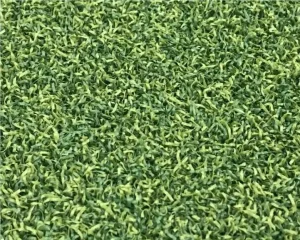
Engineered Putting Green & Specialized Sports Turf Collection
Explore our premium putting greens, rugged football turfs, and golf rough materials engineered for high durability and consistent playability.