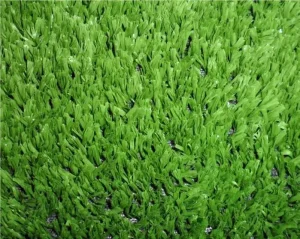
OEM Mens Baseball Turfs Products & Suppliers
Industrial-grade synthetic athletic turf engineering: High-durability monofilaments, professional ball-roll kinetics, and scalable contract manufacturing delivered from ISO-certified factory operations.
Featured Athletic & Sports Turf Systems
Engineered for intense multidirectional cleat traction, consistent true-bounce kinematics, and heavy-use municipal athletic environments.
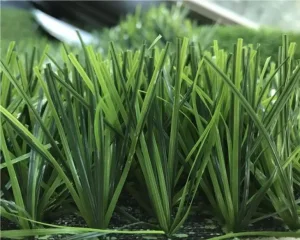
Buy Affordable Football Grass For Schools Manufacturer, Factories
View Specifications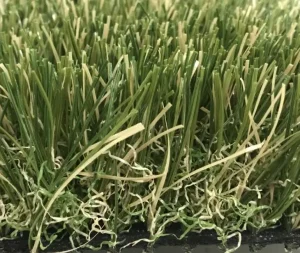
Buy High Density Two-color Landscaping Turf Manufacturer, Factory
View Specifications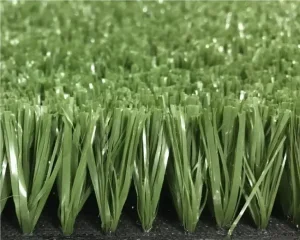
Buy Professional Sand Filled Putting Green Factories, Supplier
View Specifications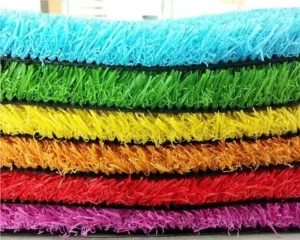
Buy Stylish And Durable Ornamental Grass Products, Product
View Specifications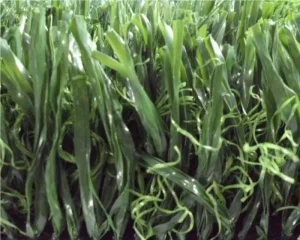
Buy Artificial Baseball Turf manufacturer Product, Factories
View Specifications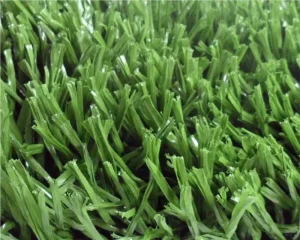
OEM FIFA Standard Synthetic Football Turf for Soccer Pitches Manufacturer, Products
View Specifications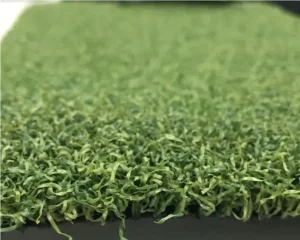
OEM Non-Sand Filled Golf Putting Green Product, Factory
View Specifications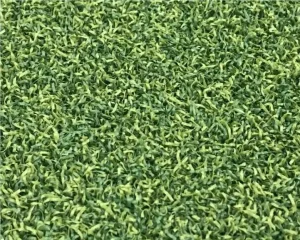
Buy Wholesale Nonslip Putting Green Turf Factories, Factory
View SpecificationsGlobal Mens Baseball Turfs Market Dynamics
The worldwide sports infrastructure market is transitioning rapidly toward high-performance artificial surfaces capable of withstanding dense practice schedules, unpredictable weather conditions, and aggressive cleat dynamics.
Surging Field Utilization
Traditional natural grass ballparks are limited to 200–300 hours of active play per season before suffering irreversible rutting, seam compaction, and dirt erosion. Synthetic baseball turf systems unlock 2,500+ playable hours annually, delivering lower amortization per athlete contact hour across athletic departments, prep academies, and community parks.
Capex & Resource Efficiency
With accelerating water conservation mandates and rising turf maintenance labor costs throughout the US Sunbelt, Australia, and Southern Europe, institutional athletic directors rely on synthetic infield and outfield installations to eliminate aeration, reseeding, fertilizing runoffs, and 500,000+ gallons of irrigation per diamond every season.
Performance Engineering
Mens baseball turfs demand specialized biomechanical considerations far exceeding standard soccer grass. Cleat release torque must prevent ligament trauma during sharp pivot maneuvers, while filament resilience dictates predictable grounder rollout speeds without erratic hops off hidden seams or clumping infill pockets.
Contract Engineering Note: The Evolution of Baseball-Specific Yarns
Unlike multi-purpose landscape or garden grass, baseball-specific turfs incorporate high Dtex monofilament fibers (often exceeding 12,000 to 16,000 Dtex) combined with dense secondary texturized thatch matrices. This dual-action construction prevents infill displacement under violent acceleration, slides, and batter's box pivoting.
Localized Application Scenarios for Mens Baseball Turfs
From indoor specialized batting academies to full-scale outdoor collegiate complexes, OEM turf specifications are adjusted across gauge, pile density, and infill capacity.
Collegiate & Semi-Pro Ballparks
High-traffic regulation diamonds require dual-color infield clay simulation systems paired with precision-tufted green outfields. Engineered to meet exacting Stimp bounce ratings and head injury criterion (HIC), our structural backing maintains sub-millimeter seam fidelity under extreme shear stress.
Indoor Batting Cages & Training Hubs
Indoor training centers face constant localized abrasion within batting cages and pitching tunnels. For these facilities, high-density non-infill texturized nylon (PA) or micro-cellular polyurethane-backed polyethylene (PE) systems prevent airborne rubber dust while resisting tear-out from metal spike drills.
Municipal Multi-Sport Complexes
Community recreation hubs demand multi-sport versatility where baseball diamonds overlap soccer or lacrosse boundaries. Our convertible multi-sport turf formulations incorporate inlaid, permanent lines in contrasting high-visibility pigments, eliminating continuous chalk re-marking and labor overhead.
| Facility Category | Recommended Pile Height | Yarn Polymer & Profile | Backing Coating | Infill Recommendation |
|---|---|---|---|---|
| Collegiate Main Stadium | 45 mm – 55 mm | High Dtex Diamond PE Monofilament | Polyurethane (PU) Anti-Mold | Cryogenic Coated Sand + TPE Elastomer |
| Indoor Cage / Tunnel | 12 mm – 19 mm | Texturized High-Tenacity Polyamide (Nylon) | Dual PP + SBR Latex Foam | Non-Infill (Zero Airborne Microparticles) |
| High School Multi-Use Field | 40 mm – 50 mm | PE C-Shape Monofilament + Thatch | Dual Polypropylene Base + SBR | Silica Sand Sub-base + Crumb Rubber |
| Bullpen & Catcher Boxes | 35 mm – 40 mm Ultra-Dense | Heavy Duty Fibrillated Matrix | Reinforced Multi-Layered PU | High-Density Stabilized Ceramic Infill |
Integrated China Manufacturing Advantage
From raw virgin polymer pellet compounding to precision automated broadloom tufting, our vertically controlled manufacturing infrastructure delivers unmatched consistency, scale, and landed cost efficiency.
Upstream Polymer Control
Rooted in parent group RiThai International's extrusion heritage dating back to 1977, we run in-house masterbatch formulation. By controlling UV stabilizers, masterbatch dispersants, and virgin Dow/SABIC resin inputs, our turf eliminates batch-to-batch color drift and premature photodegradation.
High-Capacity Tufting
Our modern tufting facilities operate 4-meter and 5-meter broadloom machinery capable of micro-gauge adjustments (3/8", 5/8", 3/4"). With annual production capacities exceeding 8,000,000 m², multi-field municipal turnarounds are delivered within tight seasonal procurement windows.
In-House Quality Control
Every batch undergoes rigorous mechanical torture testing: Lisport mechanical studded roller tests (up to 100,000 cycles), force reduction monitoring, tuft withdrawal lock testing (>45N force), and UV aging under accelerated QUV chamber irradiation according to ASTM G154 protocols.
Lead Time Acceleration
Strategic proximity to Shanghai and Ningbo maritime hubs provides consolidated container shipping lanes, automated customs clearing, and localized stock warehousing support across North America and Europe, driving delivery times down to 18–25 days from final CAD sign-off.
Technology Roadmap: Athletic Surface Innovations
Our engineering laboratory continuously advances synthetic fiber performance, addressing environmental directives, surface thermoregulation, and real-time player safety.
Infrared-Reflective Fibers
Direct sunlight on polymer surfaces can raise on-field temperatures up to 30°C above ambient levels. Our proprietary infrared-reflective masterbatch technology incorporates microscopic heat-dispersing mineral pigments that reflect near-infrared radiation (NIR), keeping mens baseball turf fields up to 12°C cooler during summer tournaments.
100% Closed-Loop Recyclability
Eliminating the challenge of multi-polymer separation at product end-of-life, our upcoming Mono-Polymer Architecture utilizes 100% polyethylene systems—from the face yarn down to the secondary woven backing and the backing adhesion adhesive. At decommissioning, entire turf fields can be pelletized directly without mechanical stripping.
Sensor-Ready Smart Diamonds
Partnering with athletic tech developers, our next-generation sports sub-bases are engineered to accommodate integrated sub-surface pressure sensor arrays. These systems capture real-time pitch launch speed, infield exit velocities, and base-running acceleration telemetry directly beneath the synthetic turf turf carpet.
Global Regulatory Compliance & OEM Support
Rigorous international compliance verifications ensure that tenders, school district bids, and commercial branding agreements pass technical inspection without friction.
Total PFAS-Free Formulations
With strict environmental directives emerging across North America and the EU (REACH, California Proposition 65), all Suntex athletic turf batches are certified third-party lab tested free of per- and polyfluoroalkyl substances (PFAS), heavy metals, lead, and hazardous phthalates.
Certified Management Systems
Manufacturing runs on comprehensive quality, environmental, and occupational safety frameworks: ISO 9001, ISO 14001, and ISO 45001. Detailed batch tracking records allow full traceability from resin supplier certificate to installed roll numbers.
Private Label Customization
We provide complete OEM & ODM contract manufacturing. From personalized backing printing and specialized stitch gauges to pre-cut diamond roll maps and private-branded packing wraps, we deliver turnkey solutions for global brand partners.
Frequently Asked Questions
Clear technical, logistic, and manufacturing answers for athletic directors, construction general contractors, and brand distributors.
What makes Mens Baseball Turfs distinct from standard multi-purpose or soccer turf?
Can Suntex manufacture baseball turfs with custom clay colors and permanent boundary markings?
What drainage rate can our athletic field contractors expect during severe rainfall?
Are Suntex synthetic turf products verified free of PFAS and toxic heavy metals?
What is the standard production lead time and minimum order quantity (MOQ) for custom OEM production?
Comprehensive Sports & Specialty Grass Systems
Explore our full OEM sports and multi-application product lines, tested across international athletic standards.
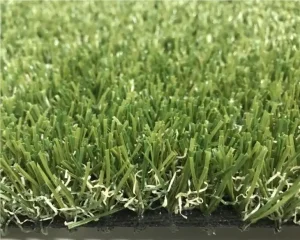
Buy Economical And Tough Golf Fairway Grass Product, Supplier
View Specifications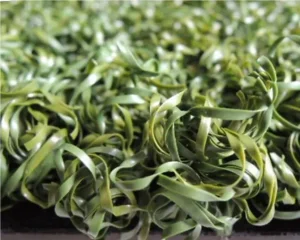
Buy Synthetic Turf for Baseball Surface Products, Suppliers
View Specifications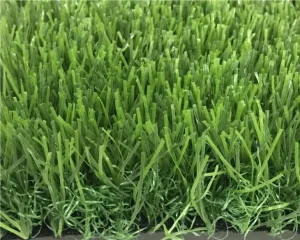
OEM Decorative Yard Grass With Good Water Permeability Factories, Supplier
View Specifications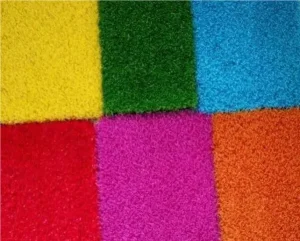
Buy High Quality Colorful Ornamental Grass Products, Suppliers
View Specifications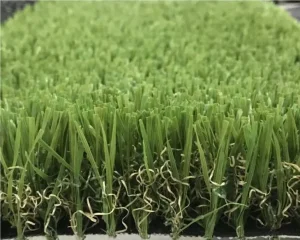
OEM Drainable Synthetic Pet Turf with Realistic Artificial Grass Manufacturers, Product
View Specifications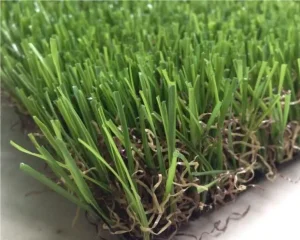
OEM High Quality Multipurpose Golf Rough Grass Factory, Suppliers
View Specifications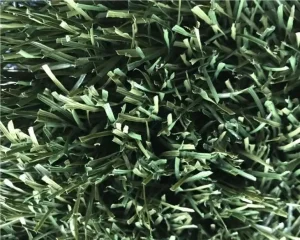
Buy FIFA Approved Turf Football Field Manufacturer, Products
View Specifications