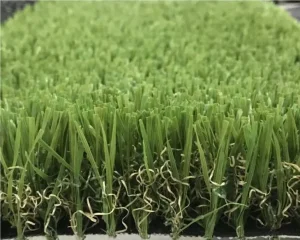
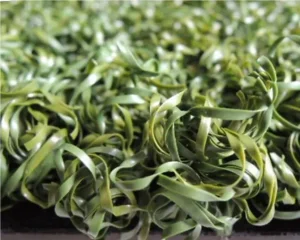
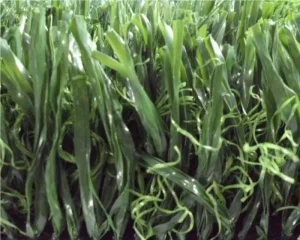
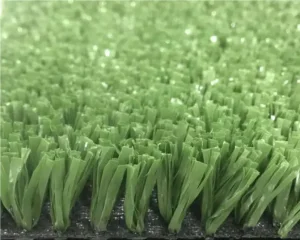
High-Performance Synthetic Sports & Landscape Systems
Direct from Suntex Sports-Turf Kunshan automated tufting facilities. Engineered with authorized TenCate fiber profiles, ISO multi-system verification, and precision yarn densities for international sports tenders and landscape distribution.
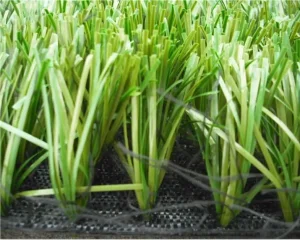
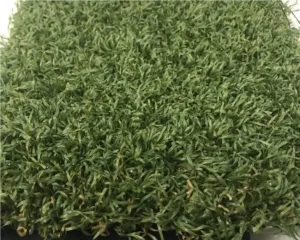
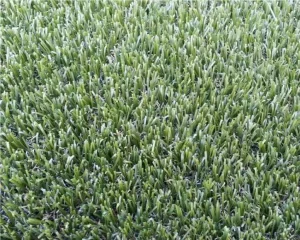
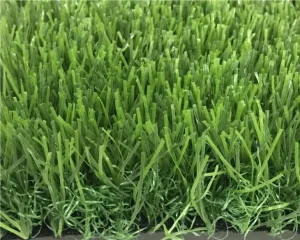
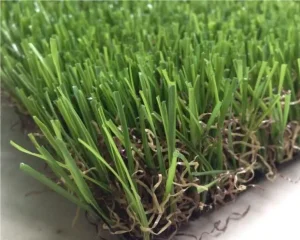
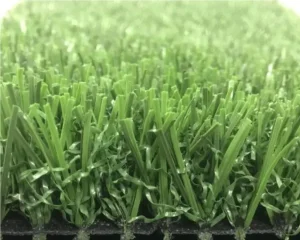
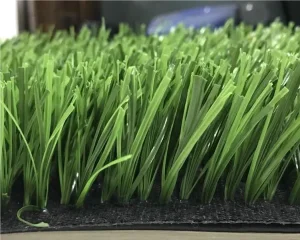
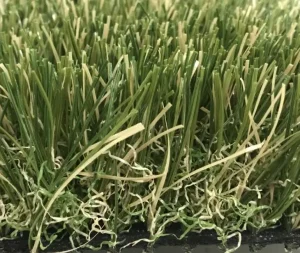
Engineering ITF Approved Tennis Turf: CPR Dynamics & Polymer Kinematics
In competitive tennis court construction, turf is not merely a synthetic grass surface; it is a meticulously calibrated athletic apparatus governed by International Tennis Federation (ITF) Court Pace Rating (CPR) standards. Ball rebound consistency, coefficient of friction, and rotational resistance directly dictate tournament playability and player safety.
| ITF Category | CPR Pace Range | Pile Height | Recommended Yarn Profile | Infill Ratio (Sand/Grading) | Primary Athletic Application |
|---|---|---|---|---|---|
| Category 1 | ≤ 29 (Slow) | 15 mm – 20 mm | Fibrillated PP / Texturized PE | High infill (20–24 kg/m², 0.3–0.8 mm) | Junior coaching, clay-feel tennis academies, baseline grinding |
| Category 2 | 30 – 34 (Medium-Slow) | 13 mm – 16 mm | Dense Curled PE / Monofilament Hybrid | Medium-High (18–21 kg/m², rounded silica) | Resort clubs, commercial tennis centers, senior tour training |
| Category 3 | 35 – 39 (Medium) | 12 mm – 15 mm | TenCate Fibrillated Thiolon® PP | Standard (15–18 kg/m², dust-free 0.2–0.7 mm) | National tournament venues, university courts, multi-sport hubs |
| Category 4 | 40 – 44 (Medium-Fast) | 10 mm – 13 mm | Texturized High-Dtex Monofilament | Controlled low (10–14 kg/m², micro-silica) | ATP/WTA fast-pace training camps, championship hard-court mimic |
| Category 5 | ≥ 45 (Fast) | 9 mm – 12 mm | Ultra-Dense Short-Pile Texturized PA/PE | Minimal sand / Non-infill hybrid pad | Indoor tennis clubs, professional serve-and-volley tournament play |
Friction Coefficient & Sliding Traction
Professional tennis demands precise sliding equilibrium. If the surface provides excessive grip, rotational torque transmits into the athlete's patellar and ankle tendons, causing injury. Suntex tennis turf utilizes proprietary cross-linked polyethylene and fibrillated polypropylene that allows controlled linear deceleration while providing instantaneous mechanical grip upon foot pivot.
True Ball Restitution (COR)
The Coefficient of Restitution (COR) determines how tennis ball kinetic energy behaves upon downward impact. Suntex multi-directional tufting ensures zero blade layover grain. This prevents irregular lateral kicks, ensuring uniform bounce height across baseline, service line, and volley zones, matching ITF-approved concrete and acrylic hard courts.
Silica Infill Matrix Stability
Our tennis turf systems feature calibrated stitch pitch and gauge (typically 3/8" or 3/16") specifically calculated to lock rounded, washed, dust-free silica sand granules within the lower root zone. This prevents sand displacement during heavy cross-court rallies and stops the "dead spot" compaction common in lower-grade synthetic surfaces.
China Factory Scale • Taiwanese Engineering Heritage
While many suppliers act as middle brokers or assemble turf from random third-party yarn sources, Suntex Sports-Turf (Kunshan) Corporation is rooted in nearly five decades of monofilament extrusion excellence through parent company RiThai International (Taipei, founded 1977). Coupled with our continuous factory operations since March 2002 and our 22+ year authorized TenCate partnership, we deliver end-to-end quality control that overseas procurement agents can verify on-site.
-
Kunshan High-Tech Industrial Hub Located adjacent to Shanghai Port, providing streamlined container consolidation, reduced drayage transit fees, and direct access to the world's most dense petrochemical and masterbatch supply ecosystem.
-
End-to-End In-House Polymer Formulation From virgin C6/C8 LLDPE resin melting to UV stabilization with BASF Tinuvin masterbatch, precision yarn twisting, computerized tufting, and continuous PU/Latex secondary backing coating lines.
-
Massive OEM Output Capacity Over 15,000 m² daily tufting throughput across high-speed Cobble and CTS tufting machinery, maintaining reliable lead times of 10–14 days even during peak Northern Hemisphere construction seasons.
Suntex Sports-Turf (Kunshan) Operations
Complete quality assurance compliant with ISO 9001 (Quality Management), ISO 14001 (Environmental Management), and ISO 45001 (Occupational Health & Safety). Our specialized testing lab conducts batch-by-batch tensile elongation, Lisport mechanical abrasion, water percolation, and UV accelerated weathering.
Localized Support, Environmental Safety & Global Procurement Norms
B2B importers, general contractors, and governmental sports authorities navigate stringent regulatory barriers. A tennis court contract won in Hamburg, Dallas, or Melbourne cannot afford customs seizure, toxic chemical penalties, or failed municipal fire reviews. Suntex builds compliance into the yarn core.
100% PFAS-Free Certification
Global environmental bodies (EU REACH, US EPA, ECHA) are aggressively banning per- and polyfluoroalkyl substances in synthetic turf. Suntex utilizes guaranteed PFAS-free processing aids throughout raw polymer extrusion, with comprehensive third-party lab documentation available for municipal tender packages.
Flame Retardancy & Indoor Safety
For indoor tennis facilities, sports bubble domes, and rooftop installations, flame propagation resistance is mandatory. Suntex tennis grass formulations meet European Standard EN 13501-1 Class Bfl-s1 and American ASTM E648 Class 1 Critical Radiant Flux requirements.
Extreme Climate Stabilization
From high UV indices and surface heats exceeding 65°C in Dubai or Arizona to severe sub-zero freeze-thaw soil heaving in Canada and Scandinavia, our tennis yarn compounds are enriched with high-molecular-weight Hindered Amine Light Stabilizers (HALS) ensuring zero brittle fiber failure.
Heavy Metal & Leachate Non-Toxicity
Meeting EN 71-3 toy safety safety standards and DIN 18035-7 soil leachate toxicology parameters. Zero lead (Pb), mercury (Hg), cadmium (Cd), or hazardous phthalate plasticizers. Safe for barefoot children, domestic pets, and eco-sensitive groundwater preservation.
Technological Frontiers in Synthetic Court Architecture
The global sports surface industry is entering an era defined by circular recyclability, microclimate temperature mitigation, and non-infill multi-court engineering. Importers capitalizing on these emerging specifications gain distinct competitive advantages in their domestic commercial bids.
100% Fully Recyclable Single-Polymer Turf
Traditional turf combines polypropylene or polyethylene fibers with SBR latex backings, creating a multi-material composite that is difficult and costly to recycle. The industry is transitioning to 100% polyolefin systems where yarn, primary backing, and hot-melt secondary coatings are all chemically identical polyethylenes. At end-of-life, the court can be granulated directly into masterbatch pellets without resin delamination.
Micro-Sand & Non-Infill Hybrid Systems
Traditional sand-dressed courts require recurring sand brushing and replenishment to prevent fiber matting. Suntex has engineered ultra-high-density texturized micro-curled systems (over 45,000 stitches/m²) that achieve ITF Category 3 & 4 ball bounce kinetics with little to zero sand infill. This eliminates airborne dust, cuts installation labor by 35%, and slashes freight weights drastically.
Solar-Reflective Infrared Cooling Fibers
Urban heat islands and direct summer solar radiation can elevate artificial turf surface temperatures to over 70°C, accelerating player fatigue and shoe wear. By integrating near-infrared (NIR) reflective pigments into our extrusion melt, Suntex CoolCore™ yarn reflects solar thermal energy, lowering court surface temperatures by 8°C to 12°C compared to standard synthetic fibers.
Global Project Archetypes & Localized Court Applications
From private country clubs in temperate climates to municipal multi-sport stadiums and coastal holiday resorts, synthetic tennis turf delivers year-round drainage and playable performance without the maintenance downtime of natural clay or asphalt cracking.
Tournament Academies & Universities
Demands ITF Category 2 or 3 Medium pace, consistent ball speed, and durable white line integration. Custom tufted-in line markings save on-site seaming tape labor, eliminating trip hazards and seam separation under intensive varsity practice schedules.
Luxury Resorts & Private Estates
Focuses on aesthetic appeal, two-tone court color blends (Field Green / Terracotta Red or Australian Blue), zero watering requirements, and soft foot traction that caters to leisure players, luxury villa guests, and private club members.
Municipal Multi-Sport Tennis Hubs
Engineered for all-weather municipal recreation where a single court must support tennis, pickleball, netball, and youth futsal. High-density texturized hybrid fibers resist scuffing from varied athletic footwear without directional matting.
Coastal & High-Rainfall Environments
Features ultra-high water permeability (>60 L/min/m²) through laser-cut micro-porous drainage perforations and salt-fog resistant polyolefin yarns, enabling instant court playability just 20 minutes after heavy tropical downpours.
Frequently Asked Questions: B2B Procurement & Technical Specs
Expert answers formulated by Suntex engineering directors and export logistics managers to streamline your tender evaluations, import documentation, and court layout planning.
Q: How is Court Pace Rating (CPR) officially tested and certified on your tennis turf?
Our tennis surfaces are measured using an automated ball cannon that fires standard Type 2 pressurized tennis balls at a precise 16±2° angle and 30±2 m/s velocity. Infrared timing arrays calculate inbound and rebound horizontal velocity along with rebound angle. The resulting mathematical formula generates the ITF CPR score, accurately classifying the turf into Categories 1 through 5.
Q: What is the primary difference between Fibrillated and Monofilament tennis yarn?
Fibrillated yarn features a honeycombed, slotted slit-film structure that opens upon installation. This web-like matrix encapsulates silica sand exceptionally well, preventing sand migration and lowering total maintenance needs. Monofilament fibers, in contrast, are individual extruded blades that provide an authentic grass aesthetic and slightly faster lateral ball slide. We often recommend fibrillated systems for high-traffic public facilities and monofilament or curled texturized builds for high-end resort installations.
Q: Can Suntex supply custom roll lengths to minimize court cutting waste?
Yes. A standard tennis court measures 36.57 m x 18.29 m (120 ft x 60 ft) including runoffs. Standard 4.0-meter rolls can create excessive drop-off waste if not planned correctly. Our CAD engineering department prepares customized roll layout cutting schedules (e.g., custom 36.6 m lengths) with integrated white or yellow court line locations, cutting site seaming labor by 25% and reducing material waste to under 3%.
Q: What backing adhesive system is recommended for freeze-thaw climates?
While standard Carboxylated SBR latex provides excellent cost-efficiency for temperate regions, we strongly recommend our premium Polyurethane (PU) secondary coating for Northern Europe, Canada, and Northern USA. Polyurethane does not hydrolyze or absorb groundwater, remains flexible down to -40°C, and delivers a tuft bind withdrawal force exceeding 50 N, preventing blade pull-out during aggressive winter ice expansion.
Q: What is the typical lead time and minimum order quantity (MOQ) for custom OEM orders?
Our standard MOQ for custom specifications (custom pile height between 6 mm – 75 mm, specific dtex, yarn color blend, or custom stitch rates) is 1,000 m² (equivalent to approximately 1.5 standard tennis courts). Standard production turnaround is 10 to 14 business days from technical sign-off. Stock standard sport systems can ship in under 5 business days.
Q: How do your PFAS-Free test reports protect commercial importers?
We provide full third-party test documentation from internationally accredited testing bodies (such as SGS or TÜV) verifying that Total Fluorine content is below detection thresholds (<50 ppm). This ensures complete regulatory compliance with EU REACH Annex XVII restriction proposals, preventing costly port detentions or retroactive consumer safety fines in European and North American customs jurisdictions.
Q: What type and volume of sand infill is mandatory for tennis turf systems?
We mandate clean, dry, washed and dust-free rounded silica sand with a grain size profile between 0.3 mm and 0.8 mm. Angular crushed industrial sand must never be used, as sharp micro-edges can prematurely shear synthetic yarn fibers. Depending on the pile height (12 mm to 20 mm) and intended ITF CPR category, infill density ranges from 12 kg/m² up to 22 kg/m².
Q: Do you offer private label and custom OEM packaging for brand distributors?
Yes. More than 60% of our production volume is delivered under private OEM labeling. We provide branded roll core plugs, customized waterproof outer wrapping films, barcoded shipping labels, and personalized technical spec sheets so our B2B partners can seamlessly distribute under their own registered trademarks.
Expanded Synthetic Turf Portfolio for Global B2B Importers
Explore our specialized multisport, baseball, golf putting green, ornamental, and pet surface solutions manufactured to the same rigorous vertical quality standards as our tournament tennis systems.