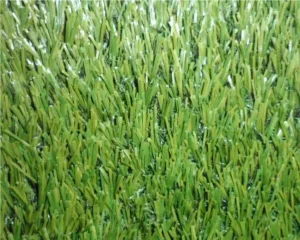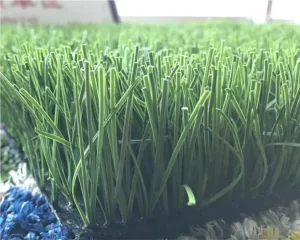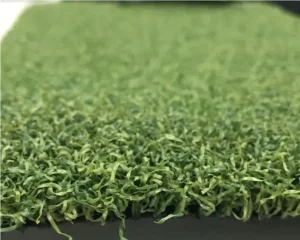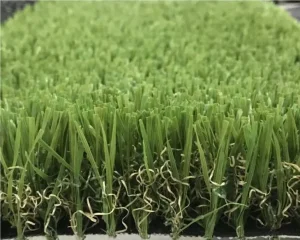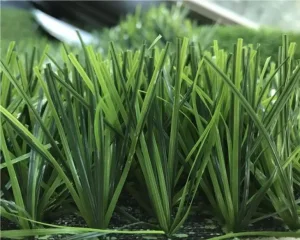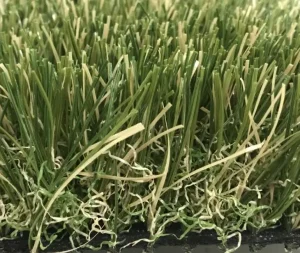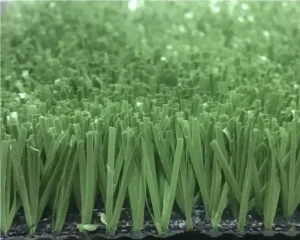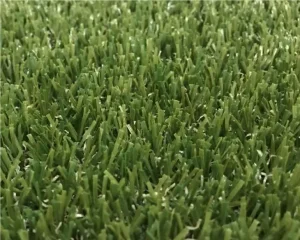
Featured OEM Engineered Turf Portfolio
Precision-manufactured synthetic systems covering multi-sport versatility, high-density residential landscapes, and competitive athletic installations.
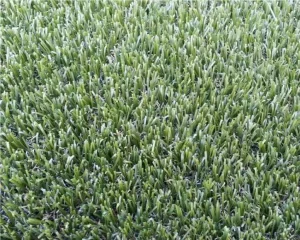
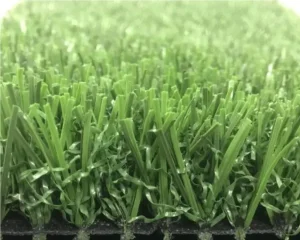
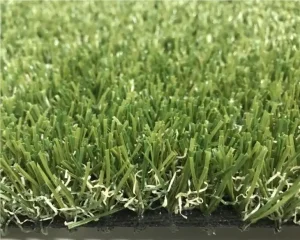
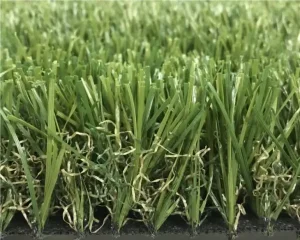
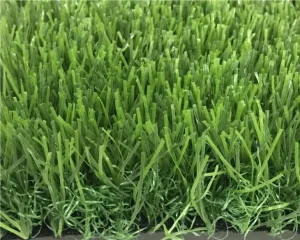
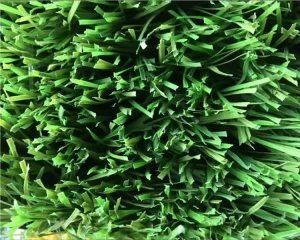
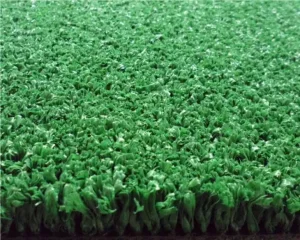
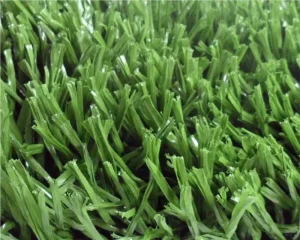
Global Hockey Turf Trends: The Transition to Dry & Bio-Based Pitches
Field hockey demands the most stringently controlled synthetic surface in professional athletics. Ball roll trueness, predictable friction coefficients, and high stitch density are vital engineering imperatives.
FIH Dry Turf Revolution
Following international sustainability mandates, field hockey is moving decisively away from water-doused surfaces toward non-watered (dry) systems. OEM manufacturers now formulate low-friction polyethylene textures that replicate traditional wet pitch sliding kinematics without requiring thousands of gallons of water per match.
Omnidirectional Ball Deviation Zeroing
Unlike football turf which relies on long-pile split fibers and elastomeric infill, field hockey requires a high-density, texturized monofilament yarn. Advanced curling mechanisms eliminate yarn grain direction, delivering zero deviation for technical stick handling and ultra-linear ball projection.
Circular Economy & PFAS Eliminative Chemistry
Strict European chemical regulations (REACH) and municipal guidelines worldwide demand full removal of fluorinated processing aids (PFAS/PTFE). Contemporary Tier-1 manufacturing facilities incorporate single-polymer constructions where pure PE face yarn combines with PE primary and secondary backings for complete post-consumer recyclability.
Deconstructing Global B2B Turf Procurement Demands
Turnkey turf contractors, institutional procurement committees, and brand labelers evaluate structural polymer resilience and comprehensive documentation before issuing purchase orders.
Tuft Lock Security
Hockey turf endures repeated lateral stresses from composite sticks and cleat pivots. Secondary backing compounds—whether pure Polyurethane (PU) or carboxylated styrene-butadiene rubber (SBR)—must demonstrate tuft extraction forces exceeding 35-45N to prevent premature thinning.
UV Index Degradation Resistance
Outdoor venues exposed to high UVA/UVB irradiance (such as Australasia, the Middle East, and Latin America) mandate automotive-grade Hindered Amine Light Stabilizers (HALS). Facilities test polymers up to 5,000 hours in accelerated weathering chambers to guarantee >80% tensile retention.
Documented Compliance
Municipal and international athletic tenders require verifiable, traceable laboratory reports. Sourcing criteria include DIN non-flammability classification (Cfl-s1), EN 71-3 non-toxic element safety, ISO 9001/14001/45001 operating systems, and PFAS-free test validation.
Dimensional Thermal Stability
With massive surface areas, sports carpets undergo significant linear expansion and contraction under diurnal temperature swings. Reinforced glass-fiber fleeces embedded within dual PP primary backings ensure the field remains flat without bubbling or joint separation.
China Factory 4.0: Supply Chain Resilience & Vertically Integrated Advantage
Suntex merges almost five decades of polymer extrusion heritage (dating back to RiThai International in 1977) with advanced tufting technology to yield unmatched consistency and speed.
In-House Polymer Extrusion & TenCate Partnership
By mastering the upstream extrusion of C, W, Diamond, and S-shaped monofilaments, while serving as an authorized TenCate yarn partner since 2002, our smart manufacturing infrastructure eliminates third-party supply bottlenecks. Direct formulation control allows tailored masterbatch coloration, melting index calibration, and consistent mechanical behavior across every master roll.
Computer-Controlled Micro-Tufting Precision
Field hockey surfaces demand unprecedented densities—often exceeding 100,000 to 120,000 stitches per square meter. Our computerized 3/16-inch and 5/32-inch gauge tufting lines continuously monitor yarn tension via optical sensors, eliminating tension streaks, dropped stitches, and textural variation across 4-meter and 2-meter working widths.
Automated Coating & Quality Control
Secondary latex and PU coating systems feature automated viscosity monitoring and variable-speed radiant heating tunnels. In-line laser calipers verify coating thickness and pile height uniformity, while computerized tensiometers confirm tuft-bind integrity before rolls are trimmed, tagged, and packed for container shipping.
| System Classification | Typical Pile Height | Yarn Density & Dtex | Backing Configuration | Primary Use Application |
|---|---|---|---|---|
| Elite Dry Hockey Surface | 12 mm – 15 mm | 5,500 – 7,500 Dtex / >110,000 stitches/m² | Multi-layer PP + PU / Woven Fleece | International FIH Stadiums |
| Sand-Dressed Multisport Turf | 15 mm – 20 mm | 6,600 – 8,800 Dtex / 45,000 – 65,000 stitches/m² | Dual PP + SBR Latex Compound | Schools & Municipal Clubs |
| Sand-Filled Traditional Turf | 18 mm – 25 mm | 8,000 – 9,000 Dtex / 35,000 – 45,000 stitches/m² | Reinforced PP Base + Latex | High-Traffic Community Hubs |
| Custom Hybrid Multi-Court | 10 mm – 18 mm | 7,000 – 10,000 Dtex / Variable Matrix | Polypropylene + Geotextile Fleece | Tennis / Hockey / Futsal Combo |
Global Deployment Scenarios & Regional Engineering Adaptation
Every sports installation faces unique climatic conditions, mechanical demands, and budgetary constraints. Our OEM engineering covers all field deployments.
Professional Athletic Stadiums
Engineered for elite domestic leagues and international tournaments. These surfaces prioritize high ball acceleration, uniform multi-directional glide, and optimal water retention (or advanced low-friction dry engineering) to protect athletes during high-speed sliding maneuvers.
Collegiate & Municipal Multi-Sport Arenas
Institutions maximize revenue through 50+ hours of weekly activity. Sand-dressed, curled PE/PP turf systems deliver a balanced compromise between fast-paced field hockey, tennis, non-infill football drills, and physical training zones within a single capital expenditure.
High-Aridity & Extreme UV Microclimates
For regions facing water scarcity or intense sun exposure, our custom masterbatch formulations use high concentrations of specialized thermal and UV stabilizers. These materials maintain elasticity and color saturation, resisting chalking and fiber fragmentation over years of intense play.
OEM Hockey Turf Sourcing: Frequently Asked Technical Questions
Comprehensive insights addressing material selection, system compliance, tooling customizations, and turnkey procurement.
What differentiates dedicated field hockey turf from standard 3G/4G football turf?
How does Suntex verify compliance with International Hockey Federation (FIH) requirements?
What OEM and private label customizations are supported for global brands?
Why is backing integrity particularly critical for field hockey turf systems?
Can Suntex supply test reports verifying that its turf systems are PFAS-free and heavy-metal compliant?
Specialized Turf Solutions & Factory Offerings
Explore our full line of synthetic turf variants, spanning competitive sport complexes, golf greens, institutional multi-courts, and high-density landscaping.