High-Performance Synthetic Systems Selection
Explore our certified turf portfolio engineered for specialized athletic resistance, hyper-realistic aesthetics, and elite multi-sport compliance across global sports infrastructure.
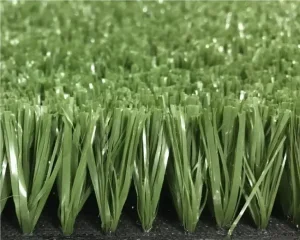
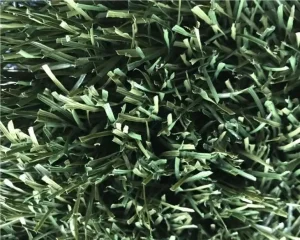
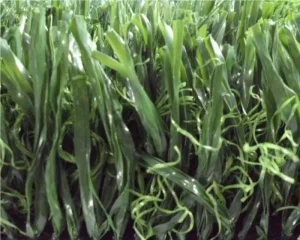
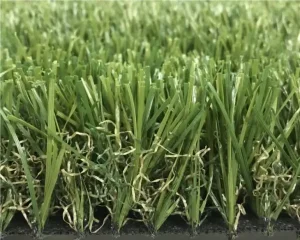
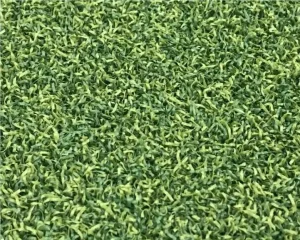
The Architecture of FIH Standards & Fiber Morphology
Field hockey is technically recognized as demanding the fastest, smoothest, and most uniform synthetic sports surface in modern athletics. Ball roll deviation of even half a degree alters game strategy.
FIH Global Elite (Non-Infill / Water-Based)
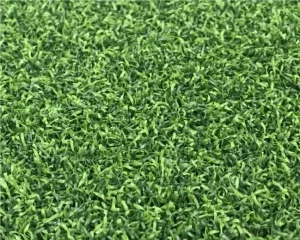
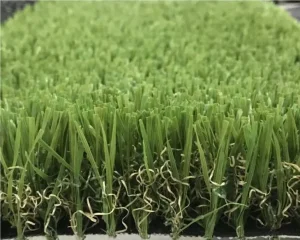
Engineered with micro-curly texturized monofilament polyethylene yarns at stitch densities exceeding 50,000 stitches/m². Requires high wetting uniformity to reduce skin friction and heat buildup while guaranteeing isotropic multi-directional ball roll without deviation.
FIH National Tier (Sand-Dressed Systems)
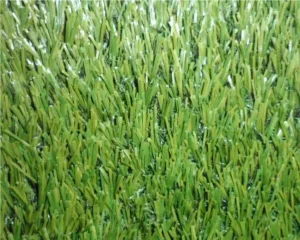
Utilizes medium-pile fibrillated or texturized PE fibers (18mm-22mm) embedded with round, sub-angular silica sand up to 60-70% pile depth. Strikes the optimum commercial balance for multi-sport school facilities, municipal arenas, and national-level tournament venues.
FIH Multi-Sport & Community Standard
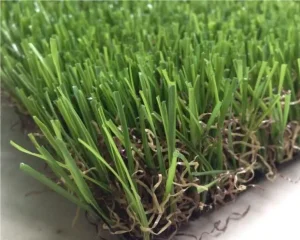
Dense hybrid matrices configured with resilient copolymer masterbatch formulas. Allows regional facilities to host field hockey, five-a-side football, and tennis on a unified surface, maximizing capital utility while maintaining FIH Standard recreational certification.
| Performance Metric | FIH Global Tier Spec | National Sand-Dressed | Manufacturing Protocol (Industry 4.0 Standard) |
|---|---|---|---|
| Ball Rebound Height | 100 - 400 mm | 150 - 450 mm | Continuous vertical drop test, calibrated acoustic sensors |
| Ball Roll Distance | 8.0 - 14.0 m | 6.0 - 12.0 m | Standard FIH 1m 45° Ramp velocity monitoring |
| Shoe-Surface Traction | 25 - 45 Nm | 30 - 50 Nm | Dynamic rotational torque assessment (Traction Stud Tester) |
| Shock Absorption (Force Reduction) | 45% - 65% | 40% - 60% | Integrated in-situ elastic shock pad or factory pre-laminated e-layer |
| Fiber Polymer Chemistry | TenCate / C8 Virgin PE Monofilament | High Dtex PE / PP Textured Monofilament | 50-year polymer extrusion lineage, multi-axial mechanical anchoring |
Global Enterprise Sourcing Trends & Environmental Imperatives
Procurement directors and tender committees across Europe, North America, Australia, and the Middle East are structurally adjusting criteria to prioritize circular economy readiness and supply accountability.
Dry Turf (Waterless) Transition
With water scarcity escalating globally, FIH’s "Dry Turf" mandate for high-level international play post-2024 has catalyzed new polymer development: proprietary low-friction masterbatches eliminate water irrigation needs entirely.
PFAS-Free and REACH Verification
Banned 'forever chemicals' and microplastic emission standards in the EU (ECHA compliance) require suppliers to provide verifiable laboratory documentation verifying non-fluorinated processing aids and zero phthalate traces.
Mono-Polymer Circular Recyclability
Traditional secondary coatings (SBR latex) are being replaced by hot-melt polyolefin (PU/PE-based) backings, allowing full closed-loop mechanical recycling without costly industrial separation of yarn and backing.
Lifecycle Operational Cost Containment
Global stadium authorities calculate turf investments on a Total Cost of Ownership (TCO) matrix—incorporating tuft lock strength (>35N pullout) to guarantee 10+ year longevity under 40+ playing hours per week.
Smart Factory 4.0: Supply Chain Resilience & Scale
Combining Taiwanese polymer engineering heritage dating back to 1977 with contemporary automated extrusion and tufting systems, our manufacturing facility delivers precision, speed, and audit transparency.
Upstream Yarn Science Control
As an authorized partner and converter with global fiber authorities like TenCate, alongside internal extrusion development of PE, PP, PA, and PET masterbatches, we eliminate third-party dye lot variations and tensile instability.
Industry 4.0 Automated Tufting Lines
Equipped with high-precision variable-gauge tufting machinery featuring automated defect detection, infrared pile-height tracking, and tension-regulated secondary backing processes for flawless planar uniformity.
Audited Management Systems
Fully compliant with ISO 9001 (Quality), ISO 14001 (Environmental Stewardship), and ISO 45001 (Occupational Health). Our supply chain undergoes independent audits, giving international contractors tender-ready documentation.
Engineering Field Hockey Across Divergent Climates
Field hockey surfaces operate under severe mechanical load and volatile microclimates. Our OEM custom configurations adapt structural backings and UV formulas to ensure multi-year structural integrity.
High UV Tropical & Desert Environments
For installations in the Middle East, Southeast Asia, and Australia, we formulate custom UV stabilization compounds capable of withstanding >5000 hours of continuous UVA/UVB exposure (QUV Test protocols) without tensile degradation or embrittlement.
Freeze-Thaw & Temperate Zones
For Central/Northern Europe and North America, backings are configured with reinforced multidirectional woven geotextiles and modified latex or PU compounds that remain flexible at -30°C, preventing surface cracking and dimensional shrinkage.
Shock Pad Sub-Base Interoperability
Hockey turf must function as an integrated structural system. We provide full project support, tailoring turf roll density and tuft lock backings to pair seamlessly with in-situ rubber crumb elastic layers (ET-pads) or prefabricated polyolefin shock pads.
Frequently Asked Questions: FIH Standards, OEM & Supply Chain
Essential technical and logistical answers for distributors, athletic project contractors, and stadium engineers sourcing directly from our factory.
What is the structural difference between FIH Global and FIH National turf?
Can your factory produce custom OEM branded turf lines with private labeling?
How do you guarantee PFAS-free compliance and environmental safety?
What is your typical production lead time and minimum order quantity (MOQ)?
How do you ensure seam strength and dimensional stability under high temperature?
Verified Multi-Sport & Landscape Solutions
From soccer stadiums and golf putting greens to high-drainage residential landscapes, browse our factory-direct products manufactured under ISO 9001/14001/45001 disciplines.