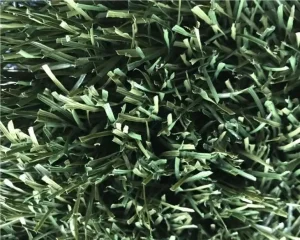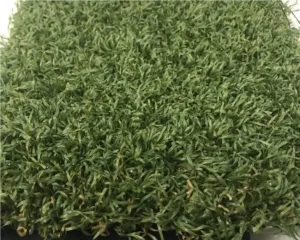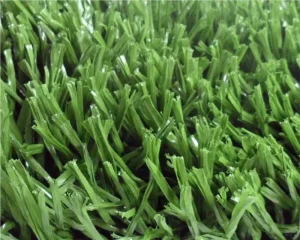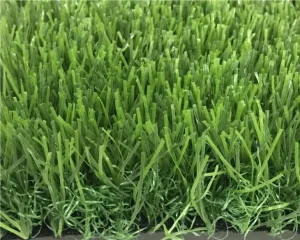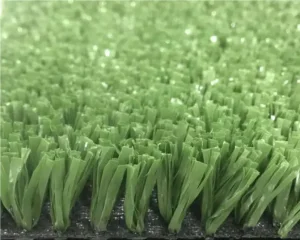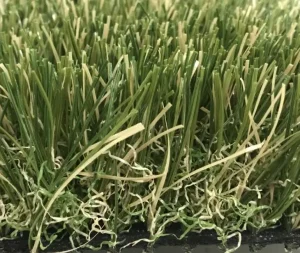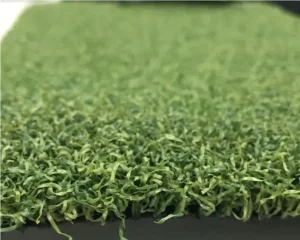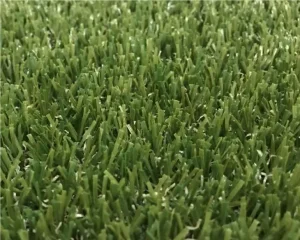
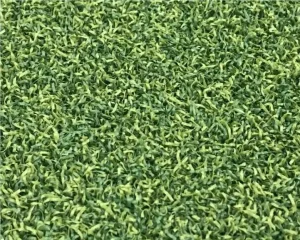
Featured Product Showcase: Batch A
Factory-Direct Performance Turf Systems
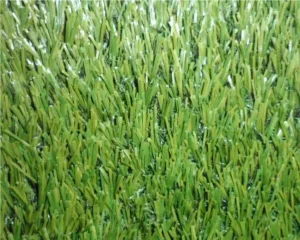
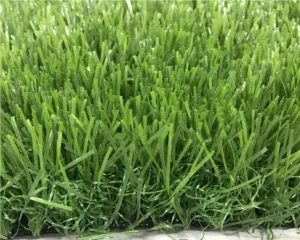
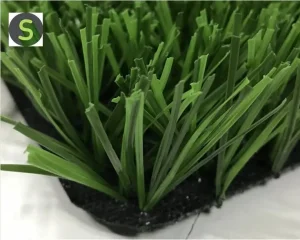
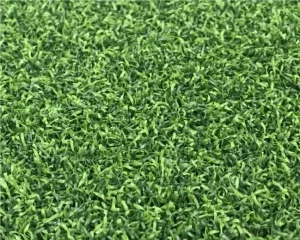
Comprehensive synthetic turf solutions designed for professional arenas, multi-sport complexes, putting greens, and high-frequency training facilities.
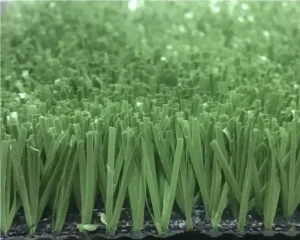
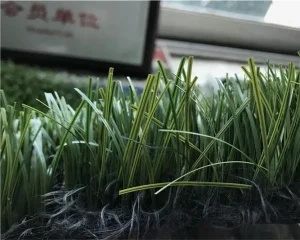
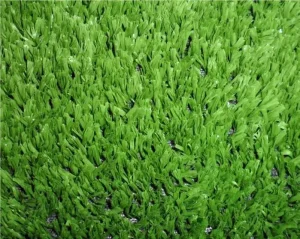
Macro Industry Intelligence
Global Landscape & Commercial Realities of Baseball Turf Systems
Analyzing procurement shifts, polymer stability demands, and life-cycle economics across international sporting organizations and municipal operators.
Climate Resilience & Water Neutrality
Standard natural baseball diamonds consume 18,000 to 36,000 gallons of potable water per week during peak season. With municipal restrictions tightening across North America, Southern Europe, and East Asia, synthetic baseball turf retrofits offer water-neutral operability and eliminate chronic rainouts through high-permeability perforated matrix systems.
Operational Capacity & Revenue Multipliers
Traditional clay and grass diamonds accommodate roughly 250 to 300 hours of active play per year before turf degradation risks player safety. Engineered OEM synthetic systems sustain 2,000+ playing hours annually with non-directional ball bounce, permitting multi-league scheduling, night tournaments, and mixed-use municipal monetization.
Strict Cleat Abrasion & Shear Resistance
Baseball subjects artificial turf to aggressive rotational and shear loads: pitchers driving cleated footwork off the mound, batters planting, and infielders pivoting. Modern engineering requires specialized copolymer formulations with cross-linked backings that eliminate fiber unraveling, edge breakdown, and dimensional drift under dynamic multi-axial stress.
Sub-System Deployment
Localized Baseball Turf Applications & Field Zoning Engineering
A baseball facility is not a monoculture. Each zone encounters radically different ball mechanics, friction thresholds, and player impacts demanding tailored OEM pile specifications.
Infield Clay-Zone Synthetic Systems
Engineered with terracotta/clay-colored texturized polyethylene monofilament (typically 30–35 mm) paired with specialized high-density sand infill. Delivers the authentic slide friction and controlled true-hop ball roll of natural crushed shale while eliminating ruts, uneven dips, and post-rain muddy compaction.
Outfield Monofilament Turf Matrix
Features 40–50 mm monofilament fibers featuring reinforced C-Shape or Diamond profiles with performance thatch layers. Provides realistic grass deceleration, low glare under stadium lighting, and shock absorption designed to protect outfielders diving or making full-speed sprint stops.
Indoor Cages & High-Impact Batter's Boxes
Ultra-dense, non-infill or minimal-infill nylon 6.6 or heavy-duty texturized PP modules (12–15 mm). Built to withstand hundreds of thousands of spiked cleat twists, intense vibration, pitching machine impact zones, and compact commercial indoor footprints without shedding microplastics.
| Zone / Application | Recommended Yarn Profile | Pile Height | Dtex & Gauge | Target Infill Ratio |
|---|---|---|---|---|
| Pitcher's Mound & Batter's Box | Reinforced High-Tenacity Polyamide / PE | 12 – 18 mm (High Tuft Density) | 12,000 – 15,000 / 3/16 inch | Non-infill or High Rubber Shock Infill |
| Infield Diamond & Base Paths | Texturized Clay-PE Monofilament | 28 – 35 mm | 10,000 – 12,000 / 3/8 inch | 70% Silica Sand + 30% Performance Granule |
| Outfield Territory & Foul Lines | Diamond / C-Shape Monofilament + Thatch | 40 – 50 mm | 9,000 – 11,000 / 5/8 inch | 80% Rounded Silica Sand + 20% EPDM/TPE |
| Indoor Training & Bullpen Cages | Curled Heavy Nylon / Fibrillated PP Hybrid | 15 – 22 mm | 11,000 – 14,000 / 3/8 inch | Uninfilled bonded onto 5mm Polyurethane Foam Pad |
Direct Sourcing Competitiveness
Chinese Factory Supply Chain Resilience, Vertical Integration & Cost Agility
How direct partnerships with tier-1 Chinese manufacturers eliminate multi-tier middlemen margins, assure raw material traceability, and provide unmatched production scalability.
Full Vertical Extrusion-to-Coating Ecosystem
By producing our polymer masterbatch, extruding high-tensile monofilament fibers in-house, and partnering directly with industry leaders like TenCate, our factory controls the production chain from virgin pellets to fully vulcanized rolls. This vertical posture reduces raw material volatility, eliminates external tolling surcharges, and guarantees color consistency roll-to-roll.
Dynamic Scalability & High-Throughput Tufting Lines
Equipped with wide-gauge tufting equipment capable of producing 2-meter and 4-meter wide seamless rolls at speeds up to 15,000 square meters per day. This industrial capacity enables fast lead times for full baseball field complexes (typically 12,000 to 14,000 m²) within 14 business days, preserving tight municipal project handover deadlines.
Unbroken Raw Polymer Redundancy
Backed by decades of polymer yarn heritage dating back to 1977, our supply chain maintains strategic reserves of UV masterbatch, anti-aging additives, and cross-linking agents. Long-term resin supply agreements guard overseas distributors against unexpected petrochemical disruptions and shipping bottleneck cost surges.
Optimized Multimodal Freight Coordination
Direct proximity to core deep-water logistics hubs in Shanghai and Ningbo minimizes internal trucking legs. We offer customized roll roll-up geometries and vacuum compression packaging that increases 40ft High Cube container payload efficiency by up to 22%, dramatically reducing per-square-meter international shipping overhead.
Future-Ready Engineering
Technology Roadmap: The Next Generation of High-Performance Turf
Continuous R&D investments driving circular polymers, thermal regulation, and structural backing durability for the next decade of baseball facility investments.
Phase 1: Thermal Mitigation
Infrared Reflective Masterbatch
Surface temperatures on standard synthetic sports pitches can surge 20°C above ambient air under intense solar radiation. Our proprietary CoolCore pigment dispersion technology reflects near-infrared (NIR) wavelengths, reducing field surface temperatures by 8°C to 12°C without compromising color saturation or fiber tenacity.
Phase 2: Microplastic Elimination
Engineered Non-Infill Matrix Systems
As the European Union and regional sports authorities restrict microplastic polymeric infills (SBR crumb rubber), our engineering pipeline features ultra-dense, texturized monofilament combinations backed by integrated closed-cell shock pads that replicate natural cleat release without unbound loose rubber particles.
Phase 3: 100% Circular Lifecycle
Mono-Component Polyolefin Backing
Traditional secondary backings fuse polypropylene primary meshes with styrene-butadiene latex (SBR) or polyurethane glues, making post-consumer separation and recycling difficult. Our next-generation baseball turf lines utilize 100% mono-material polyolefin thermo-bonded backings, allowing full melt-recycling at end-of-life.
Global Assurance
Localized Engineering Support, Testing Verification & Global Compliance
Mitigating municipal risk and ensuring swift approval processes across North America, Europe, Australia, and Latin America through verified certifications.
PFAS-Free Chemical Verification
Every lot manufactured for sports distribution undergoes independent GC-MS / LC-MS testing to certify zero detected per- and polyfluoroalkyl substances (PFAS). Fully compliant with EPA guidelines, California Proposition 65, and European REACH Annex XVII regulations.
Triple ISO Standard Operational Framework
Our operations function under verified ISO 9001 (Quality Assurance), ISO 14001 (Environmental Accountability), and ISO 45001 (Occupational Safety) standards. Every production roll is labeled with a serialized barcode linked to yarn extrusion logs and coating tensile checks.
CAD Layouts & Direct Contractor Technical Support
We provide global project partners with detailed CAD seam-cutting schedules, minimizing infield waste and roll overlapping. Engineering consultations include base aggregate grading, shock-pad pairing, and specialized installation guidelines for seamless foul line inlays.
B2B Buyer Knowledge Base
Frequently Asked Questions on OEM Baseball Turf Procurement
Clear, technical answers regarding specifications, OEM capabilities, container loading, and field longevity.
How does baseball turf fiber engineering differ from standard soccer or landscaping grass?
Baseball turf requires specific ball-bounce mechanics and cleat pivot resistance. Unlike soccer fields where ball roll is relatively low-angle, baseball infields demand high-density texturized or specialized ribbed monofilaments to prevent erratic ball hops on grounders. Furthermore, the batter’s boxes and pitcher's landing areas experience localized rotational friction up to five times greater than soccer run paths, requiring high-tenacity polymers and specialized tuft-lock backing coatings.
What customizations are available under your OEM / Private Label manufacturing programs?
We provide complete specification tailoring: pile heights from 6 mm to 75 mm, custom Dtex profiles (from 6,000 to 16,000 Dtex), custom face weights, gauge adjustments (3/8", 5/8", 3/16"), and customized yarn profiles (Diamond, C-Shape, W-Shape, or Texturized). In addition, we offer customized roll lengths to match specific infield blueprints, custom-branded roll backing tapes, customized packaging sleeves, and pre-tufted white foul line integration.
Are your baseball turf products certified PFAS-free and heavy-metal safe?
Yes. All artificial turf systems produced at our facility undergo independent third-party testing (SGS/TÜV) confirming the absence of lead, cadmium, phthalates, and intentional PFAS/fluorinated compounds. Test reports are available upon request for municipal contract submittals and environmental authority filings.
What is the typical lifespan and UV degradation warranty for outdoor baseball installations?
Our sports turf systems incorporate premium Ciba/BASF UV stabilizer masterbatch formulas, qualified to endure 5,000+ hours of accelerated QUV weather testing. We provide standard commercial warranties ranging from 8 to 10 years against excessive UV fading, tensile breakdown, and fiber embrittlement, even in intense UV regions such as the American Sunbelt, the Middle East, and Australia.
What is the average lead time and container packing efficiency for a full diamond project?
Standard lead times for a complete baseball facility (approx. 10,000–13,000 m²) run between 12 to 18 business days from final technical sign-off. We package turf rolls with protective multi-layer geotextile wrapping and inner steel cores. A standard 40ft High Cube container typically holds between 3,500 and 4,500 m² of sports turf, allowing a complete baseball diamond complex to ship in 3 to 4 containers.
Featured Product Showcase: Batch B
Specialized Artificial Sports & Multi-Sport Grass Solutions
Explore additional high-performance OEM options covering football fields, versatile training areas, commercial decorative surfaces, and golf landscapes.