Featured OEM Synthetic Turf & Court Systems
Engineered from premium monofilament and texturized polyolefin yarns. Our high-density tufted products are tailored to international sports benchmarks, golf putting standards, and resilient commercial landscape applications.
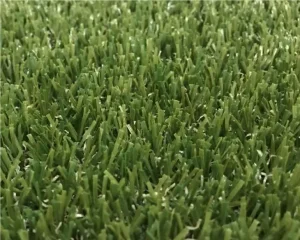
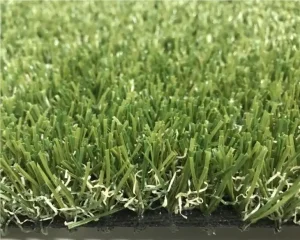
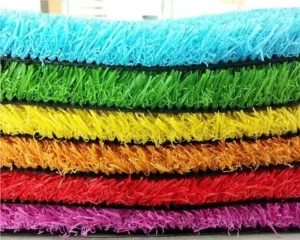
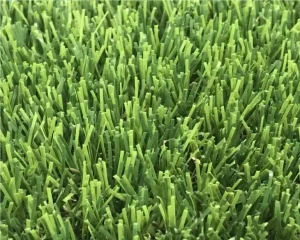
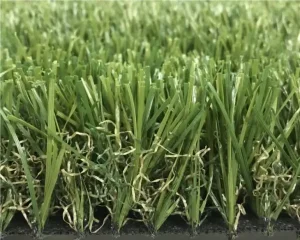
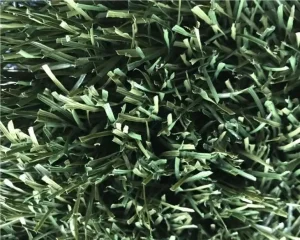
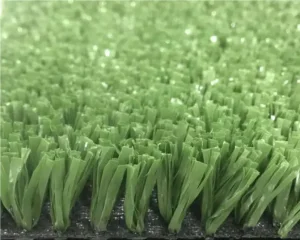
Engineering Tour-Grade Artificial Tennis Grass
Modern tournament facilities and commercial racquets clubs require sports surfaces that deliver consistent ball bounce, controlled foot slide, and uncompromised biomechanical shock attenuation across 365 days of play.
Surface Pace Rating (CPR) Calibration
Under International Tennis Federation (ITF) guidelines, a court's playability is governed by its Court Pace Rating (CPR), calculated from ball rebound coefficient (COR) and sliding friction coefficient. Our OEM tufting formulations allow distributors to specify exact CPR ratings ranging from Category 1 (Slow / Clay-like performance) to Category 4 & 5 (Medium-Fast to Fast Hardcourt dynamics).
By adjusting fiber texturization density (from 44,000 to 65,000 stitches/m²) and round-grain silica sand infill depths, Suntex tailors ball apex trajectory and spin responsiveness to national tournament specifications.
High-Tenacity Polymer Science
Backed by parent company RiThai International's extrusion heritage dating back to 1977, Suntex synthetic tennis grass utilizes engineered Polyethylene (PE) and texturized Polypropylene (PP) filaments. Unlike generic landscape yarn, tennis turf undergoes high cyclic lateral shearing forces when players pivot, decelerate, and slide.
Our filaments incorporate proprietary C8 virgin resins, Hindered Amine Light Stabilizers (HALS), and TenCate authorized polymers to prevent premature fibril splitting, chalking, or UV photo-oxidation even in regions exceeding 220 kLy solar irradiation.
Dimensional Backing & Permeability
Tennis courts require extreme planarity. Thermal contraction and expansion can cause blistering, seam curling, or undulating ball trajectories. Suntex employs a multilayer backing architecture consisting of UV-stabilized woven PP primary backing, locked with high-tensile Leno mesh fabric, and coated with either vulcanized Carboxylated Butadiene Styrene (SBR) latex or aliphatic Polyurethane (PU).
Standard CNC drainage punch holes deliver vertical water evacuation rates exceeding 60 liters/min/m², enabling immediate return-to-play after heavy precipitation.
| ITF Court Pace Code | Recommended Pile Height | Fiber Type & Dtex | Stitch Density (m²) | Silica Sand Infill Loading | Pace Rating & Slip Index |
|---|---|---|---|---|---|
| Category 1 (Slow) | 15 mm – 20 mm | PE Fibrillated / 8,800 – 10,000 Dtex | 42,000 – 48,000 | 18 – 22 kg/m² (Sub-surface layer) | CPR ≤ 29 (High Friction, Clay Feel) |
| Category 2 (Medium-Slow) | 13 mm – 16 mm | PP Texturized Curl / 6,600 Dtex | 48,000 – 54,000 | 15 – 18 kg/m² | CPR 30 – 34 (Extended Rallies) |
| Category 3 (Medium) | 12 mm – 15 mm | PE / PP Monofilament / 8,000 Dtex | 52,000 – 58,000 | 12 – 15 kg/m² | CPR 35 – 39 (All-Round Tournament Standard) |
| Category 4 (Medium-Fast) | 10 mm – 13 mm | KDK High-Density Monofil / 5,500 Dtex | 58,000 – 65,000 | 8 – 11 kg/m² | CPR 40 – 44 (Low Skid, Fast Rebound) |
| Category 5 (Fast) | 10 mm – 12 mm | PP Dense Texturized / 5,000 Dtex | 63,000 – 72,000 | 5 – 8 kg/m² (Stabilization only) | CPR ≥ 45 (Aggressive Serve & Volley) |
Suntex specifies kiln-dried, dust-free rounded silica quartz (purity ≥ 98.5% SiO2) with a grain sizing of 0.3 mm to 0.8 mm. Angular sands must be avoided as sharp edges cut monofilament cuticles under dynamic foot rotation, accelerating pile degradation and compacting the base drainage matrix.
Synthetic Tennis Turf: Commercial Market Dynamics
Public facilities, commercial racquets clubs, and private resorts worldwide are progressively substituting traditional red clay and hard acrylic courts with advanced sand-dressed synthetic grass systems.
Substantial Operational TCO Savings
Natural clay courts demand continuous rolling, daily manual sweeping, seasonal calcium chloride treatments, and massive water consumption (averaging 3,000–5,000 liters weekly per court). In arid regions such as Southern Europe, California, and the Middle East, water restrictions make clay courts financially untenable.
Hard acrylic courts, while requiring minimal daily grooming, are vulnerable to thermal cracking and necessitate expensive re-topping every 4–6 years. A Suntex OEM synthetic tennis turf court reduces annual maintenance expenditure by up to 72% while sustaining an 8-to-10-year service lifecycle.
Joint Biomechanics & Player Retention
Hard courts impart severe ground reaction forces (GRF) into the player's kinetic chain, causing elevated rates of patellar tendonitis, lumbar stress, and lower extremity trauma among senior and junior club members. Natural grass courts, while forgiving, allow negligible annual operational hours.
Sand-filled synthetic tennis grass delivers controlled sliding friction combined with 15–25% Force Reduction (Shock Absorption). This ergonomic balance prolongs playing careers, mitigates joint impact, and boosts court booking hours across international racquets academies.
The Padel & Multi-Sport Club Revolution
The explosive global expansion of Padel and Pickleball across Europe, Latin America, and North America has heightened the demand for short-pile, high-density fibrillated and texturized monofilament grass (typically 10 mm to 12 mm). Club operators leverage multi-sport artificial grass to maximize usable revenue per square meter.
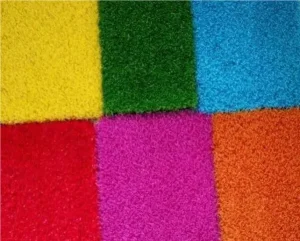
Suntex manufactures bespoke two-tone color formats (Field Green, Olive, Azure Blue, Clay Red) with integrated, factory-tufted line systems, enabling clubs to convert single-use spaces into multi-functional tennis and padel arenas.
Localized Application Scenarios & Climatic Adaptation
Artificial tennis grass installations operate across drastically divergent climatic conditions. Suntex engineers custom masterbatch formulations, backing laminates, and stitch configurations optimized for localized environmental stressors.
High-UV Desert & Equatorial Regions
Target Zones: Middle East (GCC), Southern Spain, Australia, Arizona.
Technical Challenge: Extreme solar radiation degrades tensile molecular bonds, causing fading, shrinkage, and premature brittleness.
Suntex Formulation: Synergistic Chimassorb HALS masterbatch resisting ≥ 250 kLy/year. Monofilaments are certified via 5,000-hour accelerated Xenon Arc weathering (ISO 4892-2) with >80% tensile strength retention.
Tropical Monsoon & High-Rainfall Belts
Target Zones: Southeast Asia, Florida, UK & Pacific Northwest.
Technical Challenge: Waterlogging, fungal/algal spore accumulation, and backing hydrolysis.
Suntex Formulation: High-density CNC micro-perforation matrix delivering drainage > 65 L/min/m². Fibers integrate broad-spectrum silver-ion antimicrobial additives to inhibit biological growth and surface slip hazards.
Sub-Zero Alpine & Continental Freeze-Thaw
Target Zones: Scandinavia, Canada, Northern Japan, Central Europe.
Technical Challenge: Frost heaving, thermal contraction, and backing delamination below -30°C.
Suntex Formulation: Cross-linked Polyurethane (PU) backing chemistry remaining ductile down to -40°C. Eliminates the brittle fracturing associated with standard carboxylated latex in freeze-thaw cycles.
Indoor Complexes & Rooftop Arenas
Target Zones: Metropolitan commercial complexes, hotel rooftops, sports hubs.
Technical Challenge: Stringent municipal fire codes, structural weight thresholds, acoustic bounce.
Suntex Formulation: Halogen-free flame retardant (FR) masterbatches achieving EN 13501-1 Class Bfl-s1 flammability compliance. Pairable with acoustic shock-pads to suppress impact vibrations on elevated concrete slabs.
Chinese Supply Chain Resilience & Direct OEM Advantage
Suntex Sports-Turf (Kunshan) Corporation operates at the heart of East China’s world-class polymer manufacturing corridor, translating raw-material proximity, automated tufting, and port logistics into measurable client margins.
While Western distributors frequently encounter extended factory lead times and fragmented supply chains, Suntex controls the entire vertical value chain: from polymer compounding, color matching, and fiber extrusion to precision gauge tufting and computer-controlled backing vulcanization.
-
Raw Material Resilience: Direct partnerships with Sinopec, ExxonMobil, and TenCate ensure uninterrupted C6/C8 resin allocations during global commodity volatility.
-
High-Speed Tufting Capacity: Multi-gauge tufting infrastructure (3/8", 5/16", 3/16", 5/32") capable of generating over 45,000 m² of precision sports turf per week.
-
Lead-Time Optimization: Standard project production completed in 10–14 business days. Located within 60 km of Shanghai and Ningbo deep-water ports for prompt shipping.
-
Bespoke OEM / Private-Label Customization: Full OEM packaging support—custom roll widths (2.0 m / 4.0 m), precision roll lengths, custom branded labels, and barcode integration.
Why Global Importers Transition to Suntex OEM
Sourcing directly from Suntex provides international brand holders and court contractors with an estimated 25% to 40% landed cost advantage compared to European or North American domestic turf converters, without compromising on fiber performance.
Every linear meter shipped is tracked by an automated batch testing log covering tuft lock pull force (≥ 40 N), Dtex verification, color delta-E stability, and drainage porosity.
Localized Support, Testing & Compliance Assurance
Navigating municipal public tenders and regional environmental directives demands uncompromised, verified third-party laboratory credentials. Suntex protects your brand equity and tender eligibility.
PFAS-Free & REACH Compliance
As global jurisdictions enact stringent bans on Per- and Polyfluoroalkyl Substances (PFAS "forever chemicals"), Suntex leads the industry by eliminating fluorinated processing aids during masterbatch extrusion. Our tennis turf lines are independently audited via LC-MS/MS testing in compliance with EU REACH SVHC 235+ regulations and US state-level environmental protections (e.g., CA Proposition 65).
Tender Specification Dossiers
We provide engineering contractors with ready-to-submit tender packs, including CAD seaming blueprints, line layout schematics, silica sand grading certifications, slip resistance test reports (ASTM F1015 / EN 13036-4), and Lisport mechanical wear test reports demonstrating fiber integrity through 50,000 cycles.
Installation & On-Site Support
To safeguard installation quality across export markets, Suntex supplies field-proven seaming consumables (high-tensile seaming tape and two-part solvent-free polyurethane adhesives) and detailed sub-base guidelines (asphalt, porous concrete, or crushed dynamic stone foundations with laser-leveled tolerances).
Technology Roadmap & Future Outlook
The sports surface engineering sector is evolving toward full cradle-to-cradle circularity, infill-free microstructures, and sensor-integrated smart courts. Here is how Suntex is driving synthetic turf innovation.
Non-Infill Tennis Grass Systems
Eliminating silica sand infill entirely through ultra-dense, multi-tier texturized texturization (up to 75,000 stitches/m²). Non-infill courts eliminate sand migration, airborne dust inhalation, and uneven ball skid, resulting in near-zero routine maintenance for commercial indoor tennis venues.
Mono-Material 100% Recyclable Turf
Conventional turf bonds polypropylene fibers with SBR latex, complicating post-consumer recycling. Suntex's next-generation "PurePE" systems fuse polyethylene pile fibers directly onto a thermo-stabilized polyethylene woven matrix, enabling 100% closed-loop re-pelletization at end-of-life without mechanical shredding separation.
Bio-Circular Polymers & IoT Sensing
Development of bio-attributed polyethylene synthesized from certified ISCC PLUS forestry and agricultural waste residues, yielding a carbon-neutral product footprint. Concurrently, conductive fiber tracks embedded within line markings allow real-time optical/pressure line-calling and player kinetic analytics.
Frequently Asked Questions & Technical Clarifications
Direct answers on manufacturing parameters, court pace mechanics, minimum orders, and supply-chain logistics for B2B buyers and sports contractors.
High-Performance Multi-Sport & Turf Portfolio
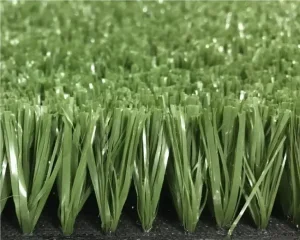
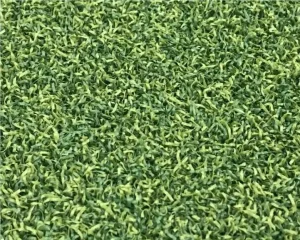
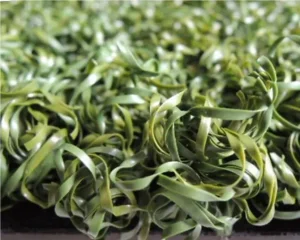
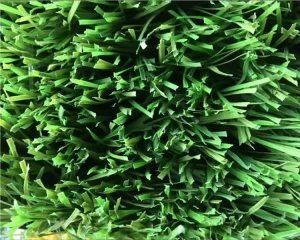
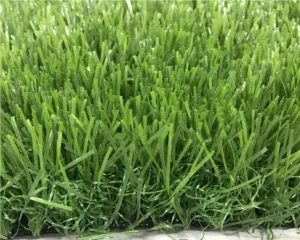
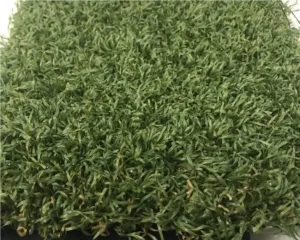
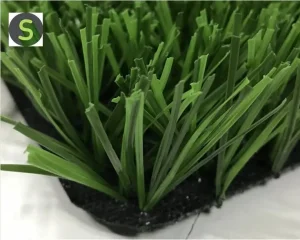
Explore our expanded range of engineered synthetic surfaces, encompassing sand-filled putting turf, high-durability baseball surfaces, FIFA-standard football systems, and heavy-traffic landscaping products.
Request Your Comprehensive OEM Tennis Sample & Tender Kit
Partner directly with Suntex Sports-Turf Corporation. Receive technical physical yarn samples, backing samples, laboratory test certificates (PFAS-Free, UV, Flame-Retardant), and CAD court cut plans for your pending tenders.