Direct Factory Catalog
High-Performance Synthetic Sports & Landscape Turf
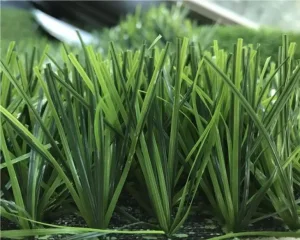
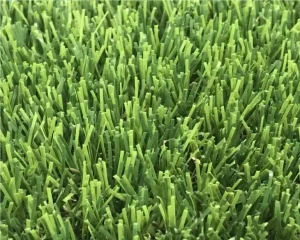
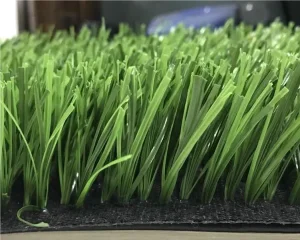
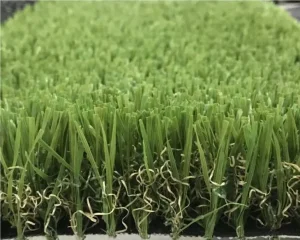
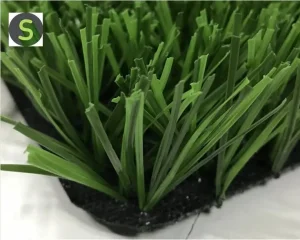
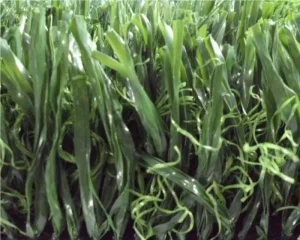
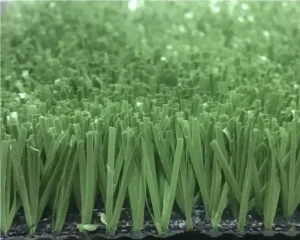
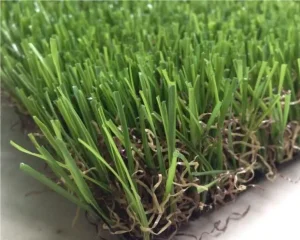
Explore our certified performance grass systems engineered with TenCate yarn formulations, ultra-dense tufting, and weather-resistant polymeric backing.
Industry Intelligence
Global Commercial Dynamics of Modern Tennis Turf
The global sports infrastructure landscape has undergone a tectonic shift. Municipalities, athletic clubs, and commercial racquet venues are transitioning rapidly from traditional clay and rigid acrylic hardcourts toward advanced synthetic turf systems.
Year-Round Economic Utility
Traditional clay courts require extensive rolled maintenance, chemical treatments, and weeks of seasonal downtime under inclement weather. Engineered tennis turf surfaces with sand-dressed configurations allow 98% water evacuation through permeable backing, unlocking up to 3,500 active playing hours annually across diverse geographic zones without surface deterioration.
ITF-Calibrated Ball Physics
Modern tennis turf systems rely on precision texturized fibrillated and monofilament PE/PP fibers. The specific pile height (typically 12mm to 20mm) and calibrated silica sand infill density dictate ITF Court Pace Rating (CPR) classes, offering controllable ball bounce height, consistent spin response, and lower joint-impact shock absorption compared to unforgiving concrete substrates.
Global Padel & Tennis Boom
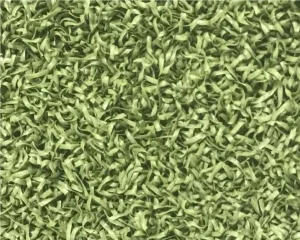
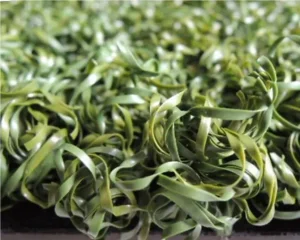
With racquet sports surging across Europe, the Middle East, and the Americas, commercial facility developers require turn-key surface solutions that withstand intense, concentrated pivot wear. Specialized curled monofilament systems ensure infill locks evenly into the matrix, preventing pile deflection and bald spots even under continuous daily turn rates.
Global Market CAGR
8.4%
Projected sports turf expansion through 2032
Maintenance Cost Reduction
-65%
Versus natural grass and maintenance-heavy clay
Drainage Flow Rate
>60L
Per minute per square meter through porous backing
Polymer Fiber Lifespan
10-12 yrs
UV-stabilized resistance (DIN 53387 standard)
Industrial Upstream Superiority
Precision Chinese Manufacturing: Integrated Supply Chain Efficiency
Combining Taiwanese polymer engineering heritage dating back to 1977 with state-of-the-art tufting and automated coating facilities in Kunshan, China, Suntex delivers structural advantages unattainable by regional assemblers.
Vertical Polymer Extrusion
Unlike factories relying on generic purchased fiber, our operational continuity stems from parent company RiThai International. From high-grade polymer virgin masterbatch compounding to anti-UV thermal stabilization and TenCate yarn partnerships, every millimeter of yarn features balanced mechanical tensile strength and elongation metrics.
High-Gauge Computerized Tufting
Our Kunshan facilities feature high-speed multi-gauge tufting heads capable of precise 3/8", 5/16", and 3/16" gauges. This ensures seamless production of specialized short-pile tennis turf (10–15mm) and high-density padel grass with consistent stitch distribution, eliminating directional roll bias and unpredictable ball bounce.
Advanced Polyurethane & Latex Backing
Tuft-lock strength is the defining variable in sports turf longevity. Suntex lines utilize automated dual-component PU or SBR carboxylated latex dipping ovens, guaranteeing tuft withdrawal forces far exceeding 35 Newtons. This prevents fiber extraction during high-torque deceleration, aggressive slides, and repetitive power serves.
Tailored Implementations
Localized Applications: Engineering for Climate & Commerce
A single turf formulation cannot perform universally. Commercial engineering demands specialized formulations that withstand unique thermal, ultraviolet, and mechanical environments across worldwide markets.
High UV Tropical & Arid Zones
In regions such as the Middle East, Southern US, and Australia, solar radiation rapidly degrades cheap polypropylene. Suntex incorporates hindered amine light stabilizers (HALS) within C-Shape and diamond monofilament matrices, preventing embrittlement, fading, and chalking even after 6,500 hours of accelerated UVA/UVB exposure testing.
High-Precipitation Northern Regions
For installations throughout Northern and Western Europe, drainage velocity is paramount. Our perforated secondary backings, combined with silica sand infill and anti-algae coatings, maintain hydraulic conductivity above 60 liters per minute per square meter, eliminating standing puddles and surface hydroplaning during continuous downpours.
Dual-Use School & Community Venues
Schools and community leisure hubs require maximum versatility. Our sand-dressed multi-sport artificial grass allows tennis, netball, futsal, and hockey play on a single integrated pad, providing exceptional abrasion resistance and fire-retardant certification (EN 13501-1 Class Cfl-s1) for indoor and outdoor installations.
Technical Specification Matrix
Engineering Benchmarks: Tennis & Multi-Sport Systems
A reference architecture for commercial buyers, architectural consultants, and sports contractors detailing physical parameters required for tender qualification.
| System Category | Fiber Polymer & Profile | Pile Height & Gauge | Dtex & Stitch Rate | Primary / Secondary Backing | ITF Court Pace Rating |
|---|---|---|---|---|---|
| Championship Tennis | 100% PE Monofilament or PP Curled | 12 mm – 15 mm (3/8" or 3/16") | 6,600 – 8,800 Dtex / 280–320 st/m | UV Polypropylene Double Layer + Polyurethane | Category 3 (Medium) / Cat 4 (Medium-Fast) |
| Club Sand-Filled Multi-Turf | PP Fibrillated Anti-Split | 15 mm – 20 mm (3/8") | 8,800 – 11,000 Dtex / 210–240 st/m | Reinforced Fleeced Grid + SBR Latex | Category 4 (Medium-Fast) / Cat 5 (Fast) |
| Commercial Padel Court | Texturized PE Monofilament (KDK) | 10 mm – 12 mm (3/16") | 8,000 – 10,000 Dtex / 300–360 st/m | Heavy-Duty PP Woven + PU Advanced Coating | Category 3 (Consistent Low-Friction Slide) |
| Multi-Sport Academy Turf | PE Diamond + PP Curled Thatch | 20 mm – 25 mm (5/8") | 9,500 – 13,000 Dtex / 160–200 st/m | Composite Dual Weave + High-Tuft Latex | Multifunctional (Tennis / Soccer / Hockey) |
Enterprise Sourcing
Enterprise Procurement Criteria: Meeting Global Tender Mandates
Institutional clients, global distributors, and government infrastructure projects require rigorous compliance, verifiable supply chain provenance, and transparent production auditing.
PFAS-Free & Heavy-Metal Testing
Stricter European REACH standards, US EPA guidelines, and international consumer safety directives require artificial turf to be completely free of intentional PFAS chemistry (poly- and perfluoroalkyl substances) and toxic heavy metals (lead, cadmium, mercury). Suntex supplies audited third-party lab documentation confirming zero detectable fluorine.
Turnkey Roll Layout & Cut Optimization
Procuring commercial tennis turf requires sophisticated cutting-plan synchronization. Standard tennis courts (36.57m x 18.29m) require customized roll lengths and pre-tufted or inlaid boundary markings (white and yellow game lines). Our pre-cut roll programs minimize on-site seam joins and cut waste by up to 18%, dramatically reducing installation labor costs.
ISO 9001, 14001 & 45001 Audited Quality
For municipal bids and international sports tenders, uncertified supply chains pose massive commercial liability. Suntex operates strictly under audited ISO 9001 (Quality Management), ISO 14001 (Environmental Standards), and ISO 45001 (Occupational Safety) protocols, providing batch traceability codes printed directly onto every roll backing.
Technical Sourcing Advisory
Frequently Asked Questions on Tennis Turf Procurement
Expert answers addressing the technical, logistical, and architectural concerns of sports contractors, facility engineers, and B2B buyers.
What is the difference between sand-filled and sand-dressed tennis turf?
Sand-filled tennis turf typically features a pile height of 18mm to 20mm, where round-grain silica sand is applied almost to the top of the fiber (leaving only 2-3mm exposed). This provides a firm, fast surface resembling hardcourt play. Sand-dressed systems use shorter, denser fibers (12mm to 15mm) with sand filled only half-to-two-thirds up the pile, allowing the polymer fibers to dominate ball interaction for superior spin response, enhanced foot sliding control, and a richer natural aesthetic.
How does artificial grass tennis turf impact player joints compared to hardcourts?
Traditional acrylic and asphalt hardcourts offer nearly zero vertical deformation, returning continuous vibrational shock through the player's knees, ankles, and lumbar spine. Synthetic tennis turf installed with proper sand infill and optional elastic shock pads (6mm-8mm in situ or pre-fabricated polyurethane/foam) absorbs up to 45% of peak impact energy, dramatically reducing joint fatigue, tendon strain, and slide-related abrasions.
Can Suntex supply custom roll dimensions with integrated game lines for tennis courts?
Yes. To eliminate extensive hand-cutting, inaccurate line seaming, and site waste, Suntex offers pre-engineered roll layout packages. Line markings (typically 50mm white or yellow lines for singles/doubles alleys and service boxes) can be custom tufted directly into the turf rolls during manufacturing or supplied as precision-cut matched line rolls with seaming tape and two-part polyurethane adhesive.
What specific type and grade of sand should be specified for tennis court infill?
We recommend dry, kiln-dried, dust-free silica sand with sub-angular or rounded grain geometry, graded between 0.3mm and 0.8mm (typical 80-90% roundness). Sharp-edged or angular construction sand must never be used, as sharp edges cut and shred polymer monofilaments under foot traffic and cause premature fiber compaction.
What is the lifespan of Suntex sports turf under continuous commercial usage?
Our sports surfaces are engineered for an operational lifespan of 8 to 12 years under normal commercial club conditions (30 to 45 hours of weekly play), supported by regular drag-brushing and infill aeration. Our TenCate yarn formulations and UV stabilizer masterbatches retain over 80% tensile strength and colorfastness after 6,000+ hours of accelerated weathering tests.
Are your sports turf products certified PFAS-free and compliant with environmental standards?
Yes. Suntex operates with full compliance to environmental and safety frameworks. We provide authoritative third-party laboratory test reports (including SGS and TÜV testing) confirming that our turf fibers, primary backings, and adhesive coatings contain no detectable PFAS, heavy metals, or phthalates, meeting European REACH and American consumer safety standards.
Complete Sports Portfolio
Enterprise Athletic Surfaces & Commercial Solutions
Browse our extensive manufacturing portfolio covering putting greens, playground safety systems, hockey turfs, and professional soccer fields.