High-Performance Synthetic Turf & Putting Green Systems
Explore precision-tufted surfaces engineered for tournament golf, elite athletics, and commercial installations directly from an authorized TenCate partner mill.
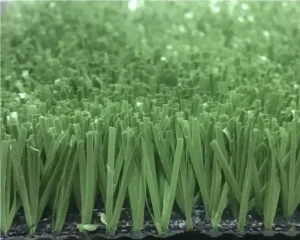
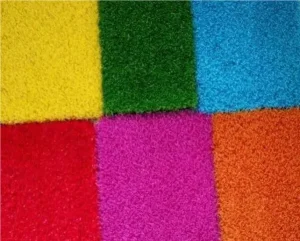
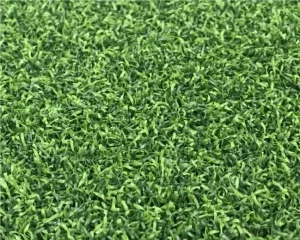
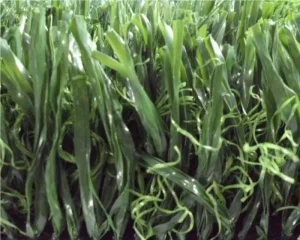
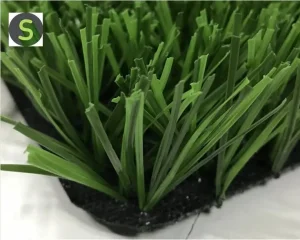
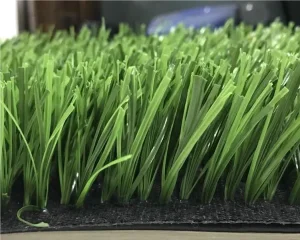
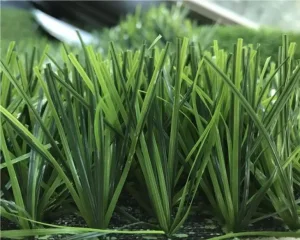
The Paradigm Shift in Golf Turf Manufacturing & Global Procurement
Analyzing how molecular yarn stabilization, hydraulic sub-base engineering, and environmental stewardship govern synthetic putting green cost efficiency in enterprise markets.
The global commercial landscape for synthetic sports surfaces has evolved from simple aesthetic substitutes to biomechanically engineered performance systems. In the golf sector, evaluating the cost to buy synthetic putting green materials requires dissecting polymer purity, texturization dynamics, Stimpmeter ball-roll accuracy, and operational lifecycle depreciation. Modern facility developers—ranging from PGA-standard training academies and championship golf resorts to commercial driving ranges—no longer source putting greens merely on initial square-meter roll price. Instead, enterprise procurement teams prioritize Total Cost of Ownership (TCO), where yarn curl retention, UV masterbatch stabilization against hydrolytic degradation, and secondary backing shear resistance dictate long-term project viability.
Historically, early generation artificial putting greens relied heavily on heavy sand infill systems with basic fibrillated polypropylene yarn. While economical in initial raw material costs, these obsolete builds suffered from rapid pile compaction, severe directional grain bias, and unpredictable Stimpmeter roll degradation within 24 to 36 months of intense ultraviolet radiation exposure. Today, tier-one manufacturers utilize proprietary cross-linked Polyethylene (PE) and high-tenacity Polyamide (Nylon) filaments extruded with micro-textured helical profiles. This allows modern synthetic putting surfaces to sustain a consistent 9.5 to 12.0 Stimpmeter speed without excessive sand migration or maintenance overhead.
Stimpmeter Consistency Index
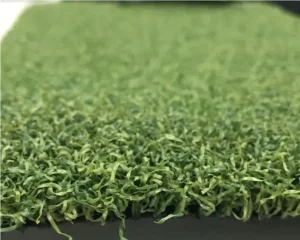
Precision-controlled texturization eliminates directional pull. Engineered fiber curl density replicates natural bentgrass greens, ensuring uniform trueness, speed retention, and realistic chip-shot check behavior.
Polymer Thermostability & UV
Formulated with Ciba Geigy Tinuvin-based hindered amine light stabilizers (HALS), our fibers withstand extreme UV indexes (>15,000 hrs QUV exposure) without chalking, tensile loss, or chromatic shift.
PFAS-Free Global Compliance
Adhering to strict EU REACH Annex XVII revisions and US state EPA regulations, every turf roll guarantees zero intentional PFAS, polyfluoroalkyl substances, or heavy metal leachate.
Granular Cost Drivers: Buy Synthetic Putting Green Price Factors
Demystifying factory ex-works calculations, Dtex filament weighting, stitch density mechanics, and secondary backing chemistry for international importers.
When purchasing managers ask, "What is the actual wholesale cost to buy synthetic putting green turf?", the quote is shaped by an intricate interplay of five core engineering variables. Commercial tier pricing generally ranges from $7.50 to $19.80 USD per square meter (FOB Kunshan/Shanghai) depending on pile chemistry, total face weight, and backing chemistry. B2B buyers must differentiate between cheap domestic landscape derivatives and authentic tournament-spec golf surfaces.
| Turf Grade / Spec | Yarn Composition & Dtex | Pile Height & Gauge | Backing System | Estimated Factory Cost (USD/m²) | Target Application |
|---|---|---|---|---|---|
| Club Elite Pro Non-Infill | Texturized PE + Nylon curl / 5,500–8,000 Dtex | 12mm – 15mm / 3/16 inch | Triple PP + Polyurethane (PU) | $14.50 – $19.80 | Championship Putting Greens, Commercial Indoors |
| Tournament Sand-Filled | High-tenacity PP texturized / 4,400–6,600 Dtex | 13mm – 18mm / 3/8 inch | Dual PP + SBR Latex reinforced | $9.20 – $13.40 | Resort Golf Greens, Driving Range Targets |
| Fringe & Collar System | Monofilament PE + curled thatch / 9,000–12,000 Dtex | 25mm – 35mm / 3/8 inch | Dual PP + Net + SBR / PU | $8.80 – $12.50 | Golf Fringe, Approach Zones, Chipping Aprons |
| Commercial DIY Leisure | Standard texturized PP / 3,300–4,500 Dtex | 10mm – 12mm / 5/32 inch | Single PP + SBR Latex | $6.80 – $8.90 | Mini-golf, Office Greens, Rooftop Recreational |
1. Yarn Polymer Chemistry: PE vs. PA vs. PP
Nylon (Polyamide) delivers unmatched spring recovery and melting temperature (up to 220°C), making it virtually immune to friction-induced club scuffing, though it carries a 25–40% premium. Polyethylene (PE) offers the ideal blend of softness, UV resilience, and affordability, while Polypropylene (PP) provides rigid ball speed in cost-sensitive installations.
2. Stitch Density and Face Weight Metric
Unlike landscape lawns which function at 14,000 to 18,000 stitches/m², premium putting greens demand 45,000 to 75,000 stitches/m². This extraordinary density creates an omnidirectional, non-directional plane. A 500g/m² increase in face weight typically shifts ex-factory procurement costs by $1.80 to $2.40/m².
3. Secondary Backing: SBR Latex vs. Polyurethane
Styrene-Butadiene Rubber (SBR) latex remains the industry benchmark for standard installations. However, Polyurethane (PU) coating eliminates sulfur off-gassing, offers superior tuft bind (>45N per stitch lock), prevents moisture delamination, and thrives in freeze-thaw sub-bases, commanding a $1.20 to $1.90/m² upgrade.
4. Supply Chain Freight & Container Packaging Efficiency
Artificial grass is a volumetric, heavy bulk commodity. Suntex optimizes container cubing by utilizing custom core winding mandrels and compressed vacuum polythene sleeving, enabling 5,500 to 6,200 m² of putting green rolls per 40ft HQ container, effectively decreasing landed ocean freight amortization by 18%.
Macro Industry Procurement Paradigms
Customizing engineering specifications, tuft bind tolerances, and packaging configurations for distinct commercial, municipal, and private-label buyers.
Commercial Golf Centers & Resorts
Prioritize 15mm texturized nylon or non-infill PE. Designed to withstand over 200,000 foot-traffic events per quarter without pile flattening. Key metrics include high tensile recovery, anti-static yarn additives, and minimal silica sand upkeep requirements.
Civil Tenders & Municipal Recreation
Require strict documentation verifying ISO 9001/14001, zero leachable toxins, and DIN 18035-7 environmental compliance. Typically specified with perforated backing systems delivering hydraulic permeability exceeding 3,600 mm/hour.
OEM Private-Label Wholesalers
Distributors require tailored roll dimensions (2m or 4m widths), localized barcode labeling, custom branded outer film, and specialized color combinations (Olive green, Field green, or dual bi-color) backed by mill warranty contracts.
Localized Support, Testing & Compliance Assurance
How factory-certified testing protocols safeguard global importers against customs delays, environmental sanctions, and premature surface failure.
ASTM & EN Flammability
Passes ASTM D2859 Methenamine Pill test and EN 13501-1 Class Cfl-s1 fire retardancy ratings for safe interior and rooftop putting facilities.
Heavy Metal Screening
Independent laboratory testing confirms zero trace lead, cadmium, mercury, or hexavalent chromium under RoHS directive 2011/65/EU.
UV Accelerated Weathering
Tested under ISO 4892-3 Xenon-arc and UVA/UVB cycle chambers to prove tensile retention >80% after 6,000+ continuous radiation hours.
ISO Integrated Quality
Our manufacturing facility operates under audited ISO 9001:2015, ISO 14001:2015, and ISO 45001:2018 documented management systems.
Future Innovations in Synthetic Golf Surface Engineering
Strategic advancements in circular monofilament polymers, AI-assisted tufting, and thermal micro-reflective yarn matrixes.
100% Fully Circular Turf Systems
Transitioning toward mono-material turf builds where both the face yarn and the backing composite utilize identical polyolefin polymer bases (100% PE-on-PE). This breakthrough eliminates mechanical separation barriers during end-of-life recycling, enabling full circular cradle-to-cradle reprocessing without polymer downgrading.
Cooling Infrared Reflex Fibers
Incorporating proprietary optical reflection additives into the core masterbatch that reflect near-infrared (NIR) solar wavelengths. This technology lowers surface temperatures by up to 10°C to 15°C compared to conventional dark synthetic putting turf, significantly extending user comfort in tropical and arid climates.
Computer Vision Tuft Monitoring
Integrating real-time high-speed automated visual inspection cameras along the entire width of our tufting looms. System sensors spot dropped stitches, tension variations, and yarn misfeeds at millimeter resolution, ensuring seamless zero-defect roll lengths for master distributors.
Frequently Asked Questions on Synthetic Putting Green Sourcing
Clear, direct answers regarding production capabilities, MOQ structures, price calculations, and maintenance economics.
What is the typical B2B Minimum Order Quantity (MOQ) for custom putting green production?
For in-stock catalog specifications, our baseline MOQ starts at 500 m². For custom OEM formulations involving unique Dtex specifications, bespoke color blending, or proprietary stitch densities, our standard extrusion and tufting batch run requires 1,500 to 2,000 m². However, sample master rolls can be arranged for trial testing and showroom qualification.
How does Stimpmeter ball-speed control correlate with artificial putting green cost?
Stimpmeter ball speed is governed by pile height, texturization tightness (crimp frequency), and yarn material. Standard budget putting greens (PP fibrillated, 10mm) typically roll between 8.5 and 9.5 feet. Achieving tournament speeds of 10.5 to 12.0 feet requires ultra-dense texturized PE or Nylon at 50,000+ stitches/m² with non-directional orientation. The additional yarn consumption and specialized heat-setting process account for a 20% to 35% higher cost per square meter.
Should we specify sand-filled or non-infill putting green turf for enterprise projects?
Sand-filled systems (13mm–18mm) are the preferred choice for outdoor championship layouts where golfers hit approach shots from beyond 30 yards, as the silica sand infill absorbs ball impact and permits fine-tuning of green speeds via mechanical rolling. Non-infill systems (10mm–13mm high-density texturized nylon) are ideal for indoor facilities, mini-golf, and low-maintenance residential greens where infill tracking and maintenance labor must be eliminated.
What factory warranty coverage applies to Suntex putting greens in high-UV regions?
Suntex backs its synthetic golf surfaces with an 8-year comprehensive manufacturer warranty covering abnormal yarn degradation, chalking, and premature tensile breakdown under intense outdoor conditions. When matched with our authorized TenCate yarn systems, products are engineered to provide a 10 to 12-year operational lifespan under proper routine maintenance.
How do you certify that shipments are PFAS-free for European and American imports?
Every production batch runs through rigorous screening via third-party testing bodies such as SGS or TÜV Rheinland. We test for Total Fluorine content and verify compliance below reporting limits (<50 ppm TF or zero detectable PFAS under EPA 537 / CEN/TS 17652). Fully traceable certificates of analysis are provided alongside project shipping manifests.
Multipurpose Athletic, Pet & Specialty Golf Surfaces
Engineered multi-sport systems, impact-absorbing rugby surfaces, and specialized pet turf manufactured to exacting international standards.