
Certified Soccer Pitch & High-Durability Systems
Explore our core stadium-grade systems and precision-engineered tufted surfaces, fully compliant with international performance standards and export quality assurance.
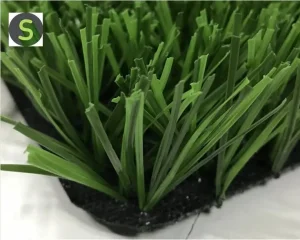
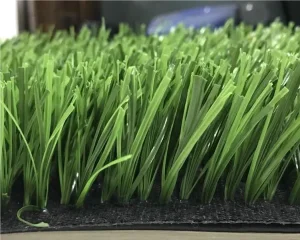
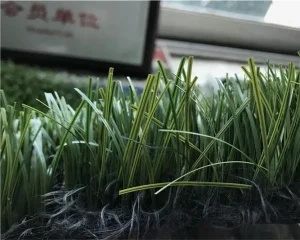
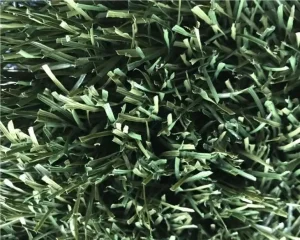
Global Soccer Field Grass Trends: The 2025–2035 Paradigm Shift
From microplastic restrictions to fully recyclable mono-material polymers, modern sports field procurement has shifted from simple commodity purchasing to rigorous materials science and biomechanical engineering.
1. The Non-Microplastic Transition
Under the European Commission Regulation (EU) 2023/2055 and global environmental scrutiny, traditional polymeric microplastic infills (such as end-of-life tire SBR crumb) face immediate phase-outs. Commercial purchasers now require factory-integrated solutions: non-infill dense crimped fiber matrices or organically stabilized systems utilizing cork, olive pit particulates, and coated silica aggregates that safeguard groundwater while maintaining shock absorption.
2. Fully Circular Mono-Material Systems
Historical soccer pitch turf bonded polypropylene primary backings with styrene-butadiene (SBR) latex, making post-consumer separation and mechanical recycling cost-prohibitive. Next-generation tier-1 manufacturers have engineered 100% circular, all-polyethylene (All-PE) or woven thermoplastic (PRT) backings. The entire pitch can be granulated and re-extruded into industrial masterbatches at the end of its 10-year lifespan without cross-polymer contamination.
3. Biomechanical & Thermal Protection
Global stadium authorities and community clubs now demand rigorous skin-friction reduction and thermal management. Advanced C-Shape and Diamond cross-section fibers incorporate specialized heat-reflective mineral masterbatches capable of depressing surface temperatures by 8°C to 12°C compared to conventional dark-carbon black compounds, mitigating athlete dehydration and turf heat exhaustion during peak summer matches.
Global Enterprise Procurement Criteria: Vetting Soccer Field Grass Factories
Institutional procurement officers, municipal tender boards, and professional soccer club syndicates must assess synthetic turf suppliers across five uncompromising engineering pillars.
1. Fiber Extrusion & Polymer Integrity
A premier soccer grass manufacturer must possess captive extrusion capabilities rather than relying entirely on spot-market yarn brokers. Raw polymers must utilize C6/C8 metallocene-catalyzed linear low-density polyethylene (LLDPE) ensuring consistent melt flow indices (MFI). Buyers must audit:
- Yarn Weight / Denier (Dtex): Standard soccer pitches require 12,000 to 17,000 Dtex monofilament fibers to prevent premature splitting and fibrillation under heavy rotational cleat torque.
- Micro-Spine Profile: Central spine or diamond structural ribs (minimum 360–420 microns thickness) engineered to spring back vertically after 12,000 Lisport XL friction cycles.
- UV Masterbatch Stability: Ciba/BASF Hindered Amine Light Stabilizers (HALS) guaranteeing tensile strength retention (>80%) post 5,000 hours of accelerated UVA/UVB exposure.
2. FIFA Quality Programme Compliance
Any field destined for competitive play must align with the FIFA Quality Programme for Football Turf (FIFA Quality and FIFA Quality Pro certification guidelines). Verifiable lab credentials must include:
- Shock Absorption (Force Reduction): Calibrated between 60% and 70% to safeguard player cruciate ligaments and reduce concussion force upon impact.
- Vertical Deformation: Precise tolerances between 4.0 mm and 10.0 mm, guaranteeing foot stability during sudden directional sprint shifts.
- Rotational Resistance & Ball Roll: 30 to 45 Nm rotational traction to avoid knee torque injuries, paired with a uniform 4 to 8 meter ball roll under calibrated ramp tests.
3. Backing Chemistry & Tuft Lock Dynamics
The operational lifespan of a football pitch is dictated by backing resilience under intense deluge and freeze-thaw cycles. Essential enterprise inspection criteria include:
- Tuft Withdrawal Force: Exceeding 45 to 55 Newtons per stitch (ISO 4919) to ensure cleats do not rip yarn bundles out during sliding tackles.
- Secondary Backing Formulations: High-density polyurethane (PU) or advanced cross-linked hot-melt polymers that do not degrade or hydrolyze under prolonged saturation.
- Engineered Drainage Matrix: Pre-punched 4mm drainage ports at 10x10cm pitch or micro-porous membrane backing delivering drainage rates >2,500 mm/hour.
4. Toxicological & PFAS-Free Verification
Regulatory scrutiny regarding Per- and polyfluoroalkyl substances (PFAS) has created massive legal exposure for municipal field developers. Importers must demand third-party documented proof:
- PFAS Total Organic Fluorine (TOF): Chromatography reports confirming TOF levels below detectable limits (50 ppm) in accordance with DIN and EPA methodologies.
- Heavy Metal Screening: Complete compliance with EN 71-3, SVHC REACH (230+ substances), verifying zero lead, cadmium, mercury, or volatile plasticizers.
- Non-Flammability Rating: Class Cfl-s1 or Bfl-s1 fire retardant certification for stadium concourses and enclosed indoor training arenas.
Macro Field Engineering: From Civil Sub-Bases to Final Play
A soccer pitch is an interconnected mechanical system. Sourcing artificial grass from a professional factory requires evaluating how the turf layer synchronizes with shock pads, civil substrates, and infill layers.
| System Architecture Layer | Technical Specification Standard | Material Formulation | Critical Procurement Milestone | Performance Status |
|---|---|---|---|---|
| Surface Turf Carpet | 50mm – 60mm Monofilament (14,000 Dtex) | TenCate / C6 Metallocene PE (Diamond Spine) | Lisport XL > 12,000 cycles, UV 5000h retention | FIFA Quality Pro |
| Stabilizing Granular Layer | 0.5 – 1.0 mm round-grain washed silica sand | 99.2% Pure Quartz Sand (15–20 kg/sqm) | Ballast stability, prevents blade matting & fold-over | Structural Ballast |
| Performance Shock Infill | 0.8 – 2.5 mm organic or TPE micro-pellets | Pure Virgin EPDM / Food-Contact TPE / Organic Cork | Non-microplastic EU 2023/2055 compliance, low odor | Eco-Certified |
| Elastic Shock Pad (E-Pad) | 10mm – 15mm pre-formed puzzle or in-situ pad | Cross-linked closed-cell PE / In-situ Polyurethane | Force reduction 55-65%, critical fall height >1.8m | Impact Safety |
| Engineered Civil Sub-Base | 0.5%–1% dual-pitch crowning cross-slope | Crushed aggregate dynamic base / Porous asphalt | Drainage rate >500mm/h, zero differential settlement | Foundation Core |
Five Decades of Polymer Heritage: Quality Assurance Behind Every Roll
Suntex Sports-Turf Corporation operates as a Taiwanese-invested high-precision turf manufacturing entity established in March 2002. Rooted in parent group RiThai International's nylon monofilament synthesis operations since 1977, we eliminate supply chain middlemen.
Precision Cobble Tufting Lines
Equipped with computerized British Cobble tufting machines operating in 5/8", 3/8", and 5/16" gauges. Multi-needle staggered configurations eliminate linear banding lines, ensuring uniform yarn dispersion, symmetrical ball roll in 360 degrees, and seamless on-site joint seaming.
TenCate Yarn Partnership
As an authorized distributor and manufacturing partner with TenCate Grass since 2002, our factories combine world-class patented fiber polymers with stringent in-house quality control labs. Every production masterbatch undergoes tensile break-force and elongation verification.
Export Logistics to 30+ Countries
Our Kunshan facilities feature direct access to Shanghai shipping hubs. With over 22 years of containerized ocean export know-how, rolls are rolled on heavy-gauge PVC cores, hermetically sealed in anti-UV geotextile sleeves, and load-optimized to fit up to 4,800m² per 40ft HQ container without core creasing.
Technical Roadmap: Next-Gen Soccer Surface Technologies
Continuous R&D investments target the intersections of artificial intelligence, bio-renewable polymers, and digital stadium monitoring to future-proof global field investments.
Bio-Based Polymers (Net-Zero Carbon)
Pioneering the commercial transition from fossil-derived naphtha to ethylene synthesized from non-food sugarcane ethanol. This achieves a negative carbon footprint during fiber generation while maintaining identical chemical, mechanical, and UV stabilization parameters as virgin PE.
AI-Calibrated Blade Memory Geometry
Utilizing high-speed finite-element dynamic analysis (FEA) to sculpt fiber cross-sections with progressive wall thickness. Thicker load-bearing cores support micro-thin cooling fins, optimizing cleat penetration while ensuring zero fiber tip fibrillation even after 100,000 athlete footfalls.
Smart Backing IoT Integration
Embedding passive UHF RFID tags and moisture/compaction sensor ribbons into the primary matrix backing during tufting. Field managers scan pitches via handheld diagnostics to detect sub-base settlement, infill migration hotspots, and schedule targeted robotic decompaction brushing.
Enterprise Procurement FAQ: Expert Answers for Project Engineers
Direct answers from our senior materials scientists and field certification directors addressing crucial questions regarding synthetic soccer turf production and international sourcing.
What is the exact difference between standard football turf and FIFA Quality Pro certified systems?
How does yarn shape (Diamond vs. C-Shape vs. Fibrillated) influence field longevity?
Can Suntex manufacture custom pile heights and Dtex specifications under OEM / private labeling?
How are Suntex products verified to be 100% PFAS-free?
What are the optimal container loading and unloading guidelines for ocean shipping?
Why is backing type (SBR Latex vs. Polyurethane vs. All-PE) so vital for soccer pitches?
Specialized Athletics, Golf, & Heavy-Duty Landscaping Surfaces
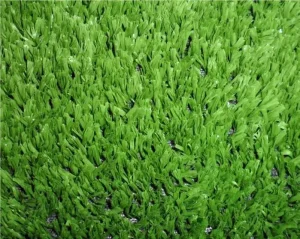
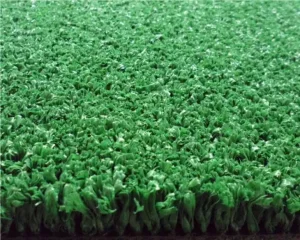
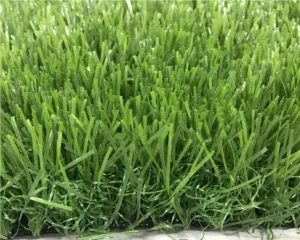
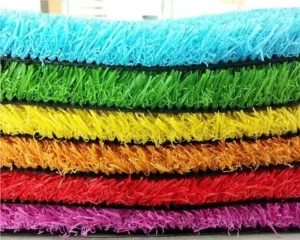
Beyond competitive soccer pitches, our vertically integrated extrusion and tufting systems provide world-class surfaces for tennis, field hockey, commercial landscaping, and pet zones.
Request an Enterprise Architectural Spec & Physical Sample Kit
Connect with our technical application engineers to receive full laboratory test dossiers, DIN/FIFA compliance documentation, and custom container freight estimates tailored to your project geography.
Consult a Senior Turf Engineer