Engineered Sports & Landscaping Turf Catalogue
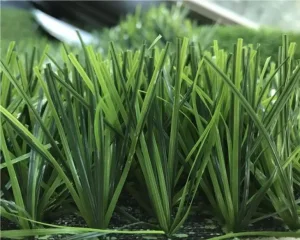
Explore our high-performance synthetic turf systems tufted on German-engineered machinery utilizing certified TenCate fiber yarn.
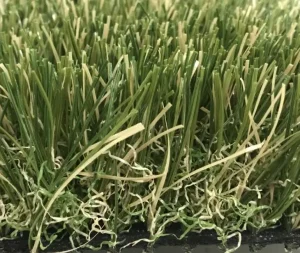
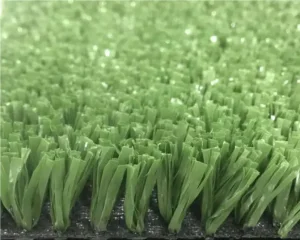
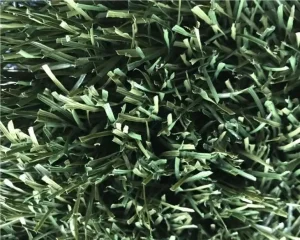
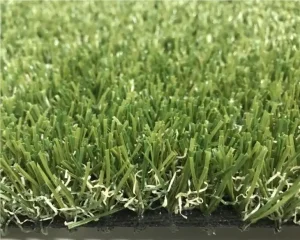
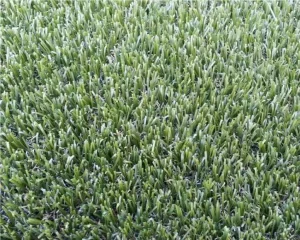
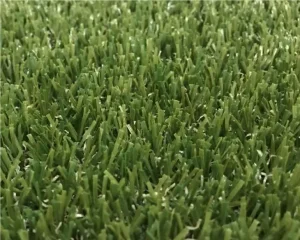
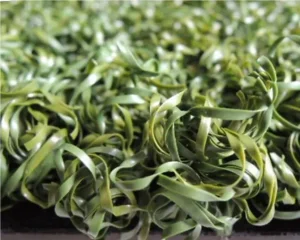
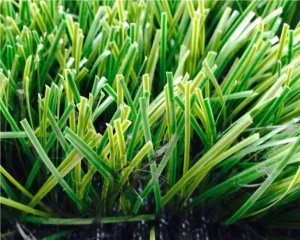
Global Industrial Status: The Synthetic Putting Green Transition
Macro-environmental constraints and precision agronomy costs are driving commercial properties and athletic facilities toward engineered polymer surfaces.
Water Crisis & Operational Shocks
Traditional bentgrass and hybrid bermuda putting greens consume between 25,000 to 40,000 gallons of potable water per square yard annually. In regions facing strict municipal aquifer quotas (such as California, Spain, and UAE), commercial golf courses, luxury resorts, and high-density developments are systematically substituting natural turf for precision-gauge texturized polypropylene and nylon systems.
Maintenance Automation & Labor Margins
The specialized labor required for greenkeeping—daily rolling, core aerification, chemical fungicide programs, and topdressing—has seen operational expenditure inflate over 34% since 2021. Engineered putting greens maintain a constant Stimp rating from day 1 to year 10, drastically lowering ongoing facility management overhead.
Year-Round True Ball Roll Dynamics
Modern extrusion techniques ensure monofilament yarn eliminates ball skip, hopping, and grain pulling. By texturizing the fibers at micro-tolerances, synthetic putting surfaces now replicate the check, bite, and true spin response of professional bentgrass surfaces under both approach shots and short puts.
Putting Green Grass Types: Polymer Architecture Comparison
A multi-attribute evaluation for commercial buyers, civil contractors, and facility architects deciding between polymer compounds.
| Polymer Type | Typical Pile Height | Dtex / Stitch Density | Stimp Speed Range | Infill Requirement | Thermal & Wear Profile |
|---|---|---|---|---|---|
| Texturized Nylon (Polyamide 6,6) | 12mm – 16mm | 4,500 – 6,000 Dtex / 65,000+ | 10.0 – 12.0 (Non-directional) | Non-infill or light sand | Highest thermal resistance (Melting point ~260°C); zero memory crush. |
| Texturized Polypropylene (PP) | 10mm – 15mm | 6,000 – 8,000 Dtex / 55,000+ | 9.5 – 11.5 (Consistent) | Light silica sand stabilizing infill | Excellent cost-to-performance ratio; highly resilient to UV in mid-latitudes. |
| Cross-Linked Polyethylene (PE) | 13mm – 18mm | 7,500 – 9,000 Dtex / 48,000+ | 9.0 – 10.5 (True roll) | Rounded quartz sand infill | Ultra-soft hand-feel; lower friction coefficient; absorbs wedge shots effectively. |
| Hybrid Slit-Film / Fibrillated | 15mm – 20mm | 8,000 – 10,000 Dtex / 42,000+ | Adjustable via sand topdressing | Structured graded silica (20-30 lbs/sqm) | Industrial multi-use durability; captures high-trajectory ball impacts seamlessly. |
Localized Engineering & Global Application Scenarios
Adapting backing compositions, secondary latex/polyurethane coatings, and sub-base physics across diverse macro-climatic environments.
Arid & High-Solar Radiation Markets (Middle East, Arizona, Australia)
In high UV index zones (UV 9+), standard polyethylene fibers experience photo-oxidative degradation and fiber chalking within 3 years. We formulate our fibers with proprietary hindered amine light stabilizers (HALS) and antioxidant masterbatches, paired with permeable polyurethane backing that resists dimensional heat expansion up to 75°C.
High Precipitation & Monsoon Zones (Southeast Asia, Coastal EU)
Excessive moisture can create algal film and surface liquefaction if drainage fails. For these territories, our putting green specs utilize custom punch-hole perforation patterns delivering vertical drainage metrics in excess of 60 liters/min/m², supported by crushed aggregates and geogrid sub-base layering.
Commercial Rooftop & Hospitality Projects
Installing putting greens on multi-story developments requires weight-reduction strategies and stringent fire certifications. Our system configurations include class Bfl-s1 flame retardant yarn matrices paired with lightweight shock pads, eliminating heavy aggregate requirements while absorbing kinetic ball impact.
Technical Roadmap: Next-Generation Putting Green Systems
Addressing chemical sustainability, microplastics containment, and circular lifecycle polymer economics from 2024 to 2030.
100% Circular Mono-Polymer Tufting
Conventional turf systems laminate PE/PP fibers to a polypropylene backing cloth using styrene-butadiene rubber (SBR) latex. This multi-material composition prevents standard mechanical recycling. Our engineering pipeline is transitioning to mono-PE systems where yarn, primary backing, and hot-melt adhesive are homogeneous, facilitating 100% post-use recycling.
PFAS-Free Fluorine Elimination
Anticipating incoming EU and North American chemical prohibitions, our extrusion plants utilize fluorine-free processing aids (FFPA). This guarantees that every linear yard of putting green turf strictly complies with global zero-PFAS and heavy-metal-free toxicological standards without losing lubricity during high-speed yarn extrusion.
Infrared Reflective CoolTurf™ Resins
Surface heat buildup has historically been the primary operational drawback of artificial putting greens. Incorporating specialized IR-reflective pigments deflects near-infrared radiation, reducing surface temperatures by up to 12°C compared to conventional turf under direct sunlight.
Enterprise Sourcing: How to Audit Putting Green Suppliers
A rigorous checklist for B2B procurement officers, distributors, and general contractors to prevent supply failures and field claims.
Tuft Lock Strength
Verify that secondary coating delivers minimum tuft bind strength of >45 N according to ISO 4919 to avoid fiber shedding from rigorous ball interaction and mechanical cleaning.
Accelerated Xenon Testing
Demand minimum 5,000-hour Xenon Arc exposure test data (ISO 4892-2 / ASTM G155) demonstrating color change Grey Scale >= 4-5 to ensure longevity in high-UV climates.
Dimensional Tolerance
Audit multi-layer backing matrices (Double PP + Non-woven fleece) for dimensional stability <0.2% under thermal variation to prevent roll bubbling or wrinkling.
Third-Party Reports
Always inspect verifiable SGS, Labosport, or FIFA/ITF accredited laboratory test documentation covering non-flammability, PFAS-free chemistry, and VOC non-toxicity.
Frequently Asked Questions: Technical Sourcing
Direct technical answers from our production engineers regarding specifications, installations, and manufacturing logistics.
Commercial Athletic & Specialized Turf Systems
Complete your facility design with our specialized multi-sport, hockey, school stadium, and landscaping turf varieties.
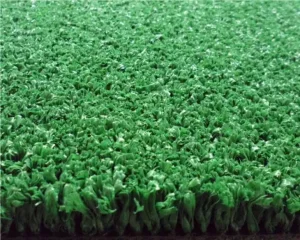
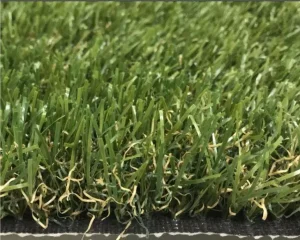
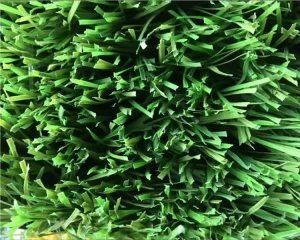
Initiate Technical Consultation & Mill Sampling
Contact our senior polymer engineering team to specify custom pile heights, Dtex densities, backing chemistries, or request certified B2B project sample boxes.