High-Spec Surfaces: Primary Production Series
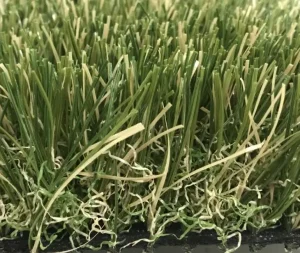
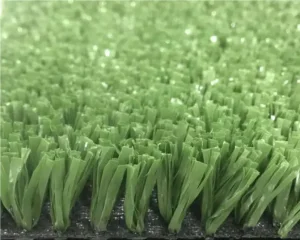
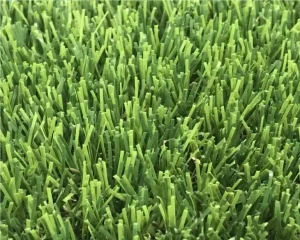
Explore directly manufactured industrial synthetic turf solutions, from tournament-calibrated texturized golf surfaces to UV-resilient multi-sport playing profiles.
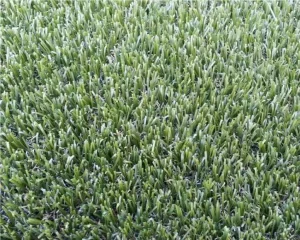
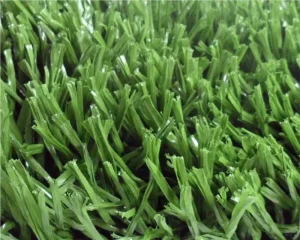
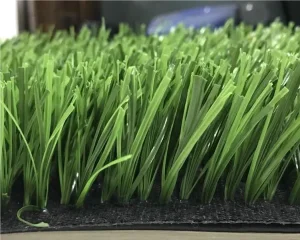
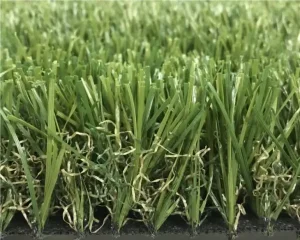
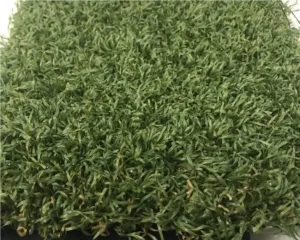
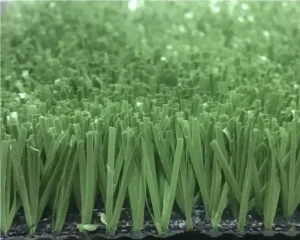
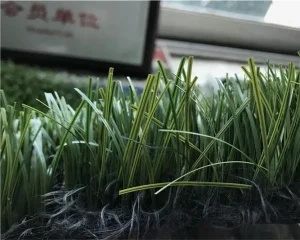
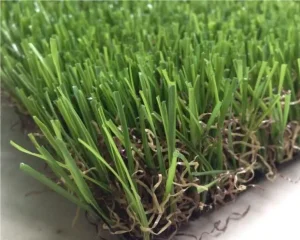
The Global Mini Putting Green Revolution: Commercial & Industrial Paradigms
The convergence of real estate density optimization, social entertainment venues, and residential landscape upgrades has elevated mini putting greens from a niche novelty into a multi-million-dollar architectural asset class.
Gamified Hospitality & Social Venues
The explosive rise of experiential entertainment hubs—such as competitive social bars, resort attractions, and high-traffic family leisure centers—demands industrial-grade mini putting turf capable of handling over 25,000 footfalls per week without pile flattening or directional grain decay.
Luxury Residential & Urban Micro-Courts
Modern luxury architecture prioritizes water conservation and zero-pesticide maintenance without sacrificing pristine aesthetic value. High-density texturized nylon and polypropylene mini putting greens deliver lush, tournament-speed greens in compact spaces from rooftop terraces to villa courtyards.
Corporate Wellness & Pro Training Hubs
Fortune 500 tech campuses, executive suites, and PGA-certified indoor training academies deploy custom mini putting installations equipped with sensor tracking. These surfaces require millimeter-accurate planarity, zero grain deviation, and true ball-roll consistency across thermal cycles.
True-Roll Dynamics: The Physics of Ball-Fiber Interaction
A golf ball moving at low initial velocity over synthetic grass experiences complex micro-friction dynamics. Suntex custom-engineers pile density, cross-sectional geometry, and fiber elasticity to duplicate natural creeping bentgrass greens.
| Polymer & Fiber Structure | Typical Pile Height | Stitch Density (Stitches/m²) | Stimp Rating | Primary Industrial Advantage |
|---|---|---|---|---|
| Texturized Nylon (PA 6.6) | 12 mm – 15 mm | 65,000 – 85,000 | 10.5 – 12.5 | Unrivaled memory resilience; non-directional ball roll; impervious to extreme thermal deformation under intense sun. |
| Texturized Polypropylene (PP) | 13 mm – 18 mm | 55,000 – 72,000 | 9.5 – 11.0 | High chemical resistance, cost-efficient procurement, optimized for sand-dressed outdoor installations. |
| PE Monofilament + Thatch System | 16 mm – 22 mm | 42,000 – 58,000 | 8.5 – 10.0 | Soft hand feel, hyper-realistic fringe transition, ideal for family leisure mini putting and chip-and-putt setups. |
| Fibrillated High-Density Polyethylene | 10 mm – 14 mm | 50,000 – 68,000 | 10.0 – 11.5 | Balanced glide resistance, excellent mechanical anchoring for infill silica, enhanced abrasion tolerance. |
Directional Grain Elimination
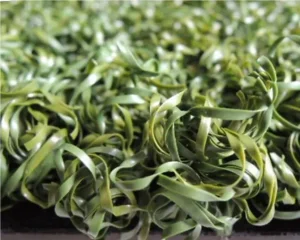
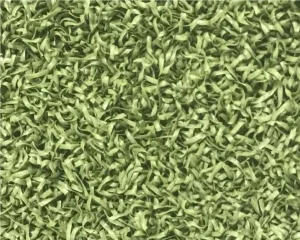
Standard landscaping turf exhibits strong grain bias, skewing putts left or right. Our multi-directional curled yarn crimping technology forces fibers into an interlocking spiral matrix, providing omnidirectional roll fidelity without requiring heavy silica infill dressing.
Multi-Layer Backing Integrity
Featuring dual-woven polypropylene primary backings combined with high-grade cross-linked polyurethane (PU) or carboxylated styrene-butadiene rubber (SBR) latex compound, our turf guarantees tuft lock values exceeding 45 N, preventing fiber extraction even under rigorous maintenance.
UV Stabilizer Masterbatch Formulation
Incorporating premium Hindered Amine Light Stabilizers (HALS) directly into the molten polymer during extrusion prevents photo-oxidative embrittlement. Our putting greens demonstrate colorfastness rating Grey Scale 4-5 after 5,000 hours of accelerated UVA/UVB exposure testing.
Taiwanese Heritage Meets Advanced Mainland Manufacturing Scale
Originating from parent group RiThai International’s monofilament synthesis in 1977 and operating specialized production in Kunshan since 2002, Suntex offers a unique operational model combining Taiwanese polymer precision with mainland production capacity.
Vertical Upstream Monofilament Synthesis
Unlike secondary tufters who source commodity yarn from third-party brokers, we control raw resin compounding, masterbatch blending, and monofilament extrusion in-house. This closed-loop process delivers batch-to-batch color stability (Delta E < 0.8) and tensile uniformity across millions of square meters.
Logistical Proximity & Freight Optimization
Located in the Yangtze River Delta industrial belt, our Kunshan facility leverages direct highway access to Shanghai Port. Our automated high-compression roll wrapping systems optimize container cubic efficiency by up to 28%, drastically lowering maritime freight overhead for global importers.
OEM/ODM Customization Agility
We empower golf brands, landscaping contractors, and retail chains to formulate bespoke turf specifications. From custom gauge tufting (3/16", 5/32", 1/8") and dual-color yarn blending to customized laser-printed drainage holes, private-label backing stamps, and custom packaging boxes.
Precision Localization: Adapting to Global Climatic & Spatial Constraints
Synthetic mini putting greens must endure diverse environmental conditions. Our products are engineered to excel in varied climates, from arid heat to sub-zero freeze-thaw cycles.
Hyper-Arid & High-UV GCC Climates
In Middle Eastern and desert climates where ground temperatures often exceed 60°C, ordinary turf suffers plasticization and color shifting. We integrate specialized heat-reflective mineral additives and advanced PA/PE co-extrusion technology to resist thermal degradation and maintain steady ball speeds.
Nordic Freeze-Thaw & High-Precipitation Regions
For Northern European and Canadian markets, our permeable polyurethane (PU) backing systems maintain elasticity down to -40°C. Coupled with high-flow drainage perforations providing > 2,500 mm/h percolation capacity, our turf eliminates waterlogging and ice blistering during freeze-thaw cycles.
Indoor Commercial Venues & Fire Compliance
Indoor family entertainment centers, hospitality greens, and office putting suites require strict fire safety adherence. Suntex supplies custom flame-retardant putting turf certified to EN ISO 9239-1 (Class Bfl-s1) and ASTM E648 standards, ensuring smoke-safe installation across global commercial projects.
Verified Quality Architecture: Tested, Traceable, and Certified
International tenders, municipal bids, and premium retail contracts require verified chemical purity, human safety, and manufacturing transparency. We operate fully audited quality systems.
PFAS-Free Chemical Verification
Every roll of artificial turf produced at our facility is third-party certified to be free of PFAS (per- and polyfluoroalkyl substances), lead, and hazardous heavy metals under strict European REACH and US CPSIA regulations, safeguarding athletes, pets, and children.
Triple ISO Industrial Standards
Since 2003, our production infrastructure operates under unified ISO 9001 (Quality Management), ISO 14001 (Environmental Accountability), and ISO 45001 (Occupational Health & Safety) certifications, guaranteeing audited production traceability from virgin resin batch to wrapped roll.
TenCate Yarn Partnership Legacy
Authorized as a TenCate turf yarn distributor since 2002, Suntex combines world-leading international yarn polymer systems with proprietary extrusion lines, providing our B2B procurement partners with an optimal balance of cost, performance, and international pedigree.
The 2025–2030 Putting Green Evolution: Circularity & Smart Sensors
Synthetic turf is entering an era defined by mono-material circular recycling, bio-derived feedstocks, and integration with digital tracking technologies.
Mono-Material Closed-Loop Systems
Phase 1: ActiveTraditional turf combines PP yarn, polyester mesh, and SBR latex, complicating recycling. We are moving toward 100% Polyethylene-exclusive systems (PE yarn + PE matrix backing) that can be fully pelletized and remanufactured without chemical delamination.
Bio-Based Polymers & Carbon Neutrality
Phase 2: ValidatedTransitioning from fossil fuels to non-food crop bio-polyethylene derived from sugarcane ethanol. This process achieves negative cradle-to-gate carbon footprints while preserving identical tensile strength, UV stabilization kinetics, and ball-roll characteristics.
Smart-Underlay Sensing & IoT Feedback
Phase 3: R&D LabDeveloping sub-base shockpad matrices embedded with piezoelectric pressure sensors. These systems stream real-time data on ball velocity, strike angle, and green friction directly to iOS and Android companion apps for professional putting studios.
Microclimate Evaporative Cooling Fibers
Phase 4: CommercializationEngineered core micro-capillaries within each synthetic blade harvest ambient dew and rainwater, cooling the putting surface via evaporative mechanics and reducing synthetic turf surface temperatures by 12°C to 18°C during peak sunlight.
Commercial Specifier's Blueprint: Precision Engineering Metrics
Use this technical framework when drafting engineering tenders, retail private-label requirements, or contractor procurement guidelines.
Dtex (Decitex) Yarn Weight Precision
Dtex measures yarn linear mass density (grams per 10,000 meters). For mini putting greens, an optimal Dtex rating ranges between 5,500 and 8,000. Specifying too low leads to rapid fiber fatigue; specifying too high induces unnecessary ball bounce and erratic roll resistance.
Needle Gauge & Stitch Count Strategy
Mini putting greens require high stitch densities to create an even, carpet-smooth glide. We recommend a 3/16" or 5/32" needle gauge with 28 to 36 stitches per 10 cm, resulting in a dense surface of 60,000 to 80,000 stitches per square meter that prevents golf balls from dropping into gaps.
Sub-Base Engineering & Drainage Shockpads
Performance depends on the underlying base. We advise installing over a laser-graded, compacted crushed stone foundation with an open-cell porous elastic shockpad (8 mm – 12 mm thickness). This base ensures vertical drainage and provides realistic ball reception on chip shots.
Frequently Asked Questions for Importers, Architects & Distributors
Clear, direct answers regarding manufacturing capability, procurement minimums, material performance, and customization.
What are the key technical differences between Nylon (PA) and Polypropylene (PP) mini putting greens?
What are the standard pile height options available for OEM manufacturing?
How does Suntex maintain batch-to-batch color and mechanical consistency?
Can you supply certified PFAS-free and flame-retardant compliance documentation?
What are the standard roll widths, minimum order quantities (MOQ), and container capacities?
Do your mini putting greens require infill sand, and what type is recommended?
High-Spec Surfaces: Specialized Production Series
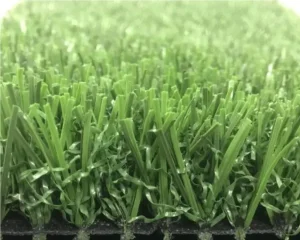
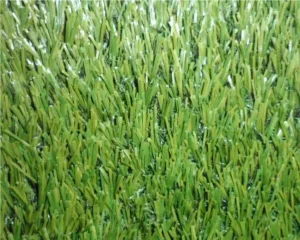
Explore our diverse collection of specialized synthetic turf systems engineered for multi-sport arenas, baseball diamonds, high-density landscaping, and safety-critical playgrounds.
Initiate Your Custom OEM Specification & Sample Testing
Connect directly with our Kunshan engineering center. Request complimentary technical sample swatch boxes, customize your Dtex and pile densities, and receive audited factory quotes within one business day.