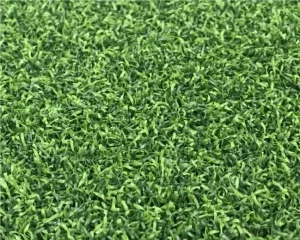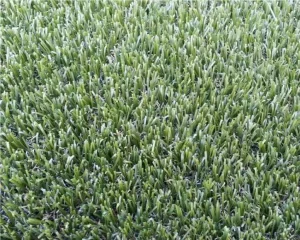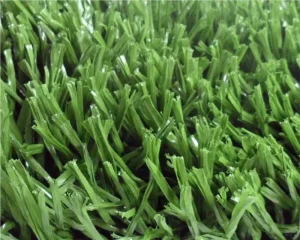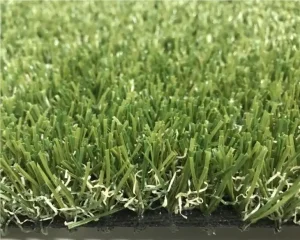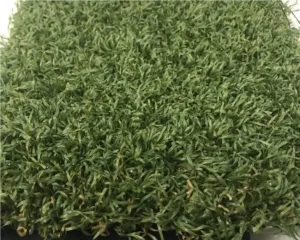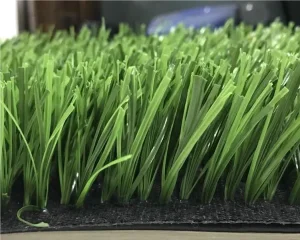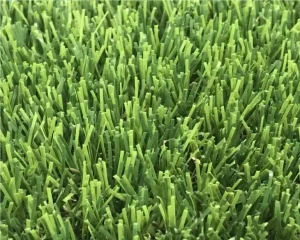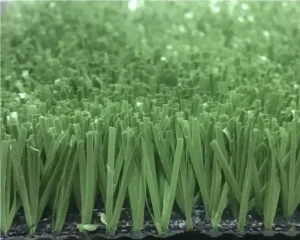
Featured Sports & Multi-Application Turf Solutions
Certified synthetic surfaces manufactured under strict ISO 9001 and ITF guidelines for tournament, institutional, and high-frequency athletic deployment.
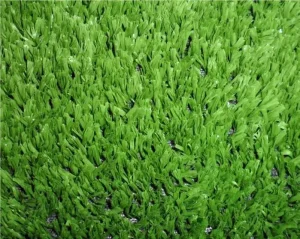
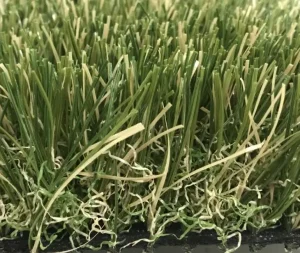
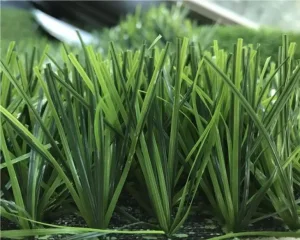
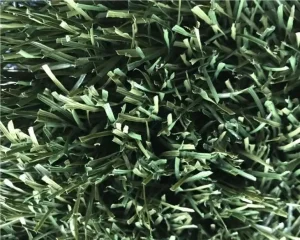
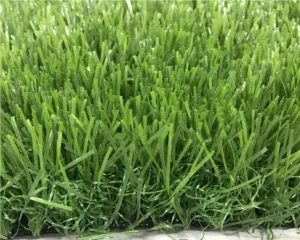
Global Industry Trends: The Engineering Evolution of Grass Tennis Courts
Natural lawn tennis courts, while steeped in prestige through venues like Wimbledon, impose immense agronomic vulnerabilities, consuming excessive municipal water resources and restricting playable lifecycle hours to fewer than 150 hours annually before grass dormancy and soil compaction fail. The global tennis sector is undergoing an aggressive transition toward precision-engineered synthetic grass court systems.
Microclimate Climate Resilience
Modern sports infrastructure demands courts capable of enduring intense UV-A and UV-B exposure without thermal fiber degradation or pigment chalking. Suntex incorporates advanced hindered amine light stabilizers (HALS) within C8 hexene-based linear low-density polyethylene (LLDPE) to guarantee 3,000+ kLy UV stability across arid Middle Eastern and high-altitude Oceania terrains.
ITF Pace Categorization (CPR)
Court Pace Rating (CPR) governing ball rebound coefficient (COR) and sliding friction is no longer left to chance. By engineering precise fiber pile heights (10 mm to 20 mm) combined with calibrated rounded silica sand infill depths, factories can predictably tune court speeds across ITF Category 2 (Medium-Slow) to Category 4 (Medium-Fast) for professional academies.
All-Weather Drainage Porosity
Unlike natural sod, which requires up to 48 hours to dry post-precipitation, synthetic grass courts featuring dual primary backing and perforated carboxylated styrene-butadiene (SBR) or polyurethane (PU) matrices facilitate vertical percolation rates exceeding 1,200 mm/hour, allowing immediate resumption of play 15 minutes after torrential downpours.
Global Procurement Matrix: What B2B Buyers Require
Commercial sports directors, municipal tender boards, and resort contractors evaluate artificial turf through total lifecycle cost calculations, risk mitigation, and physiological biomechanics rather than simple roll pricing.
Player Joint Biomechanics
Procurement teams demand head-injury criterion (HIC) and shock absorption ratings (Force Reduction > 25–40%). Engineered turf systems mitigate athlete micro-trauma across patellar tendons, ankles, and lumbar vertebrae compared to unyielding acrylic hardcourts.
Tuft Lock & Shear Force
Rotational torque during sliding forehands exerts immense lateral force. Enterprise tenders specify tuft withdrawal forces > 35N to prevent premature yarn detachment, utilizing multi-layered woven polypropylene backs reinforced with fiberglass fleeces.
Integrated Factory In-Lays
To eliminate fragile manually cut line adhesives on site, tier-1 clients require factory-tufted permanent white or yellow playing boundaries woven directly into the structural carpet grid, ensuring thermal consistency and pitch integrity over decades.
Batch Color Consistency
Large sporting academies installing 8 to 20 contiguous courts demand zero delta-E chromatic variance between master roll batches. Suntex's closed-loop polymer compounding guarantees identical optical and chromatic spectrum properties across mega shipments.
Synthetic Grass Tennis Court Specification Architecture
Cross-reference our production standards against global tournament requirements. Every roll is backed by verified polymer science derived from our RiThai International extrusion roots dating back to 1977.
| Performance Specification | Tournament Pro Series | Club & Resort Multipurpose | Municipal Heavy-Duty | Test Verification Protocol |
|---|---|---|---|---|
| Primary Polymer Base | TenCate Fibrillated PP / LLDPE | 100% High-Memory PE Monofilament | Reinforced High-Dtex PP Texturized | Differential Scanning Calorimetry (DSC) |
| Pile Height Range | 10 mm – 13 mm | 15 mm – 16 mm | 18 mm – 20 mm | ISO 2549 Direct Gauge Micrometer |
| Yarn Linear Density (Dtex) | 6,600 – 8,800 Dtex | 8,000 – 11,000 Dtex | 9,000 – 12,000 Dtex | ISO 1973 Gravimetric Analytical Test |
| Stitch Density (Stitches/m²) | 48,000 – 63,000 / m² | 38,000 – 52,000 / m² | 32,000 – 45,000 / m² | EN 13045 Structural Count |
| Sand Infill Recommendation | Dried Silica (0.3–0.8 mm, 15 kg/m²) | Silica / Ceramic Bead (18 kg/m²) | Dual-Layer Sub-Infill (22 kg/m²) | Sieve Analysis & Sphericity Grade >0.8 |
| ITF Court Pace Index (CPR) | Category 3 to 4 (Fast Roll) | Category 2 to 3 (Medium) | Category 1 to 2 (Controlled Slow) | ITF CS 01/02 Acoustic / Sensor Dynamic |
| Tuft Withdrawal Lock Force | > 40 N (High Velocity Shear) | > 35 N (Standard Multi-Sport) | > 45 N (Reinforced Polyurethane) | ISO 4919 Tensile Mechanical Pull |
| Environmental & Toxicity Status | PFAS-Free / Heavy-Metal-Free | PFAS-Free / Heavy-Metal-Free | PFAS-Free / Heavy-Metal-Free | EN 71-3, REACH SVHC, EPA 537 Test |
Macro Industry Solutions: Subbase Engineering to Drainage Integration
A world-class synthetic grass tennis court cannot perform without geotechnical stability. Suntex works alongside international civil contractors to provide holistic subbase-to-fiber integration blueprints.
Engineered Mineral Subbases
Proper surface execution requires an open-graded stone subbase or porous macadam asphalt base engineered to laser tolerances of 3 mm under a 3-meter straight edge. This absolute planarity prevents sand migration, hollow spots, and localized ball dead zones during play.
Shock Pad Underlayment Options
For elite training facilities desiring enhanced joint cushioning, our systems pair seamlessly with expanded polypropylene (EPP) or in-situ prefabricated polyurethane shock pads (4 mm – 8 mm). These shock layers optimize force reduction without dampening vertical ball bounce.
Sub-Surface Micro-Drainage
Pairing perforated backing designs with herringbone perimeter drain channels prevents standing water accumulation. The court remains ready for competitive tournaments even during high-humidity monsoons or post-thaw winter cycles across temperate zones.
Localized Regulatory Support & Environmental Compliance
Navigating stringent environmental legislation across North America, Europe, and Australasia is paramount for distributors and municipal contractors seeking seamless tender approval.
Total PFAS-Free Formulations
In accordance with expanding EU REACH annexes and US state-level fluorinated chemical restrictions, Suntex products are certified 100% PFAS-free (free from organic fluorine surfactants or processing aids), verified by third-party chromatographic spectroscopy.
Fire Safety (EN 13501-1)
For indoor tennis pavilions and rooftop sports complexes, fire spread characteristics are crucial. Our texturized synthetic court models achieve high reaction-to-fire classifications (Cfl-s1), minimizing smoke density and preventing flame migration.
Heavy Metal Leaching Controls
Suntex artificial turf lines are rigorously tested against DIN 18035-7 and EN 71-3 toy safety parameters, ensuring zero leaching of lead, cadmium, zinc, or polycyclic aromatic hydrocarbons (PAHs) into localized municipal aquifers or urban water systems.
Technical Roadmap: The Future of Grass Tennis Court Engineering
Discover how our research team is pioneering circular manufacturing models, hyper-cool yarn chemistry, and smart sensor-enabled playing surfaces for next-generation athletics.
100% Mono-Polymer Circularity
Traditional turf bonds PE fibers to latex backings, forcing end-of-life courts into thermal energy recovery or landfills. Suntex is commercializing 100% polyethylene mono-material assemblies where face fiber, primary matrix, and hot-melt backing are fully recyclable in a single melt-regranulation cycle.
Infrared Reflective Heat Mitigation
Surface heat buildup has historically challenged synthetic turf in tropical venues. Our upcoming thermo-reflective masterbatch utilizes specialized inorganic pigments that reflect near-infrared (NIR) solar radiation, decreasing court surface temps by up to 10°C (18°F) compared to standard resins.
Non-Directional Sand Texturing
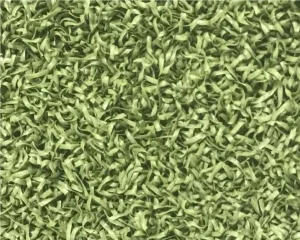
To eliminate yarn grain effects that bias ball roll directionally, next-generation crimped monofilaments lock silica infill solidly in place. This guarantees an omnidirectional, low-skid bounce that mimics pristine, freshly trimmed natural lawn grass at peak tournament season.
Grass Tennis Court Factory Procurement FAQ
Technical clarifications for international buyers, sports facility operators, and commercial contractors seeking direct factory relationships with Suntex.
The industry consensus for professional synthetic grass tennis courts ranges between 10 mm and 15 mm. A 10 mm to 12 mm fibrillated or texturized profile with silica infill delivers an authentic fast-court ball reaction (ITF Medium-Fast/Fast), while 15 mm to 20 mm piles are typically specified for multi-sport tennis/hockey resort installations.
Unlike trading middlemen, Suntex operates fully owned manufacturing infrastructure founded in 2002. Supported by our parent group, RiThai International (producing monofilament yarn in Taipei since 1977), we control the masterbatch extrusion, yarn texturization, UV compounding, precision tufting, and backing application under ISO 9001, 14001, and 45001 certifications.
We specify washed, kiln-dried, sub-angular to rounded silica quartz sand with a grain distribution of 0.3 mm to 0.8 mm and over 98% purity. Angular building sands must never be utilized, as sharp micro-edges fracture synthetic yarn fibers and accelerate premature carpet degradation.
Standard production runs for customized court configurations (custom widths of 2 m or 4 m, specific line tufting, and custom Dtex densities) require an MOQ of 1,000 square meters. Standard export order fulfillment spans 15 to 20 business days from specification sign-off to container loading.
Explore Specialized Athletic & Engineered Turf Lines
From high-wear municipal playgrounds to golf putting greens and commercial landscape projects, inspect our precision-engineered sports and landscape collection.