
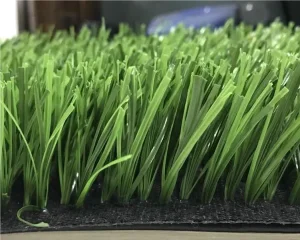
Direct-From-Factory Series (Group Alpha)
Engineered turf configurations available directly from specialized tufting lines for global B2B supply, OEM branding, and international infrastructure tenders.
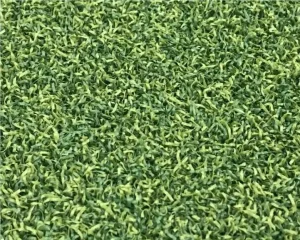
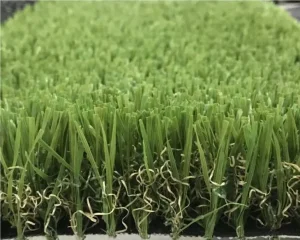
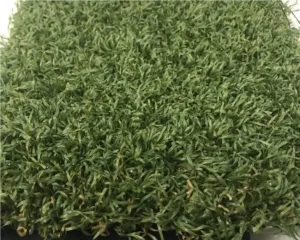
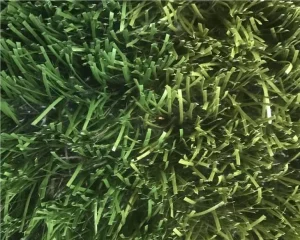
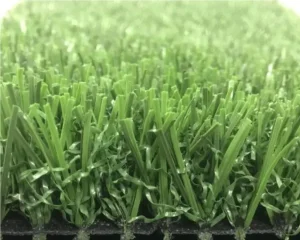
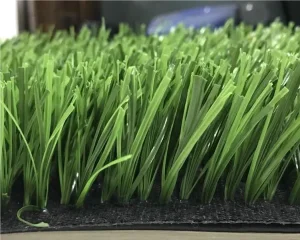
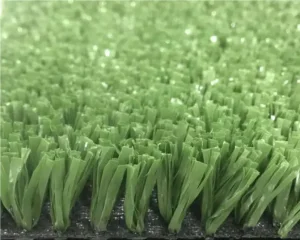
Global Enterprise Procurement Requirements
Analyzing procurement dynamics for commercial resort facilities, golf academies, urban rooftops, and high-traffic municipal driving ranges.
Total Lifecycle Cost Reductions
Real grass putting greens require constant aerification, high fertilizer input, continuous irrigation, and dedicated agronomists. For enterprise operators, switching to precision synthetic turf cuts annual operating expenses by up to 78%, yielding rapid ROI over a 10-year lifespan without downtime during drought seasons or cold weather transitions.
Uniform Ball Roll & Stimp Consistency
Commercial golf enterprises demand repeatable rolling dynamics. Utilizing texturized cross-linked nylon (PA) or fibrillated polypropylene (PP) allows factories to calibrate true directional control, producing Stimp ratings between 9.5 and 12.0 without turf grain deviation or unsightly blade directional bias.
Rapid Delivery & Customization
Global golf resort developers require rapid container dispatch, specialized custom roll dimensions (up to 4m or 5m seamless widths), and tailor-made pile heights spanning 10mm to 18mm with specific sand infill ratios or pure non-infill setups customized for immediate commercial play.
China Factory 4.0: Supply Chain Resilience & Precision Extrusion
Combining nearly five decades of polymer science (originating with RiThai monofilament in 1977) with modernized Industry 4.0 manufacturing processes.
Sourcing directly from an integrated artificial turf manufacturer in China provides enterprise buyers with unprecedented supply chain transparency, volume scalability, and technical execution. Rooted in Taiwanese polymer manufacturing expertise since 1977, our Kunshan facilities maintain closed-loop control from raw virgin masterbatches to robotic tufting and polyurethane (PU) double-coating backing lines.
Authorized TenCate Partnership
Direct supply line integration with TenCate Grass yarn delivers high-tenacity, UV-stabilized polymer fibers engineered to endure intense ultraviolet bombardment (UV-A and UV-B 5000+ hour Xenon test passed).
High Gauge Precision Tufting
Equipped with 3/16", 5/32", and 1/8" ultra-fine gauge computerized tufting machines capable of producing stitch counts exceeding 70,000 to 85,000 stitches per square meter for hyper-dense putting surfaces.
Advanced Backing Chemistry
Enterprise options for premium Polyurethane (PU) backing or reinforced SBR latex, delivering pull-out resistance exceeding 45–55 Newtons, zero delamination under water submersion, and mold resistance.
Automated Quality Assurance
Real-time machine-vision defect detection scans rolls continuously during tufting to eliminate loop anomalies, color streaks, and needle line issues prior to roll packaging and container dispatch.
Macro-Scale Industrial Golf Solutions
Turnkey engineered turf systems designed for distinct athletic environments and high-traffic commercial zones.
Championship Tournament Putting Greens
System Spec: 13mm to 15mm Texturized PE/PP or Pure 100% PA Nylon.
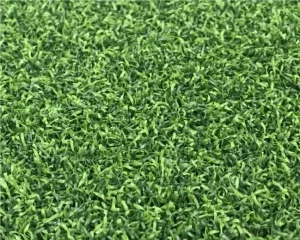
Characteristics: Extremely uniform ball response matching USGA professional specifications. High fiber density eliminates irregular ball roll, and low infill or micro-sand infill ensures true Stimp speed year-round.
Commercial Driving Ranges & Tee Lines
System Spec: 30mm to 35mm Dense Nylon 6,6 Monofilament with Elastic Layer.
Characteristics: Engineered specifically to accept authentic wooden and plastic tees directly without pre-drilled rubber holes. Resists severe iron delamination, club bounce, and repetitive turf gouging.
Fringe, Rough & Fairway Surfacing
System Spec: 25mm to 40mm Multi-Tone PE with Curled PP Thatch.
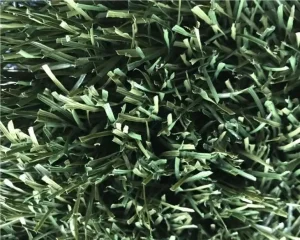
Characteristics: Natural appearance combining olive, field green, and warm beige thatch. Acts as realistic golf fringe and rough areas, absorbing off-green chip shots while offering seamless aesthetic integration.
Localized Regulatory Support & Compliance Safeguards
Safeguarding global tenders, municipal contracts, and high-profile developments through third-party accredited compliance testing.
Tested free of Per- and Polyfluoroalkyl Substances (PFAS, PFOS, PFOA) to ensure zero soil or groundwater contamination under stringent US and EU environmental mandates.
Complies strictly with EU REACH 1907/2006, RoHS, and EN71-3 safety directives, ensuring zero lead (Pb), cadmium (Cd), or toxic plasticizer content.
Independently certified for EN ISO 9239-1 (Bfl-s1 or Cfl-s1 flammability classifications) and ASTM E648 testing for safe rooftop, indoor commercial, and atrium use.
Technical Roadmap: The Next Generation of Golf Turf (2026–2030)
Driving material science innovations to address climate change, extreme heat retention, and closed-loop recyclability.
Phase 1: Present
Heat-Reflective Cool Turf
Infusing specialized infrared-reflective additives into raw masterbatch extrusion to lower surface temperatures by 8°C to 12°C in hot desert climates and open fairways.
Phase 2: Scale-Up
100% Mono-Polymer Circularity
Developing fully mono-component turf systems where face yarn, primary backing, and backing coating share identical pure PE composition for complete post-consumer mechanical recycling.
Phase 3: Development
Bio-Derived Polymer Resins
Integrating non-fossil renewable bio-PE derived from sugarcane ethanol, lowering product carbon footprint by over 45% without compromising mechanical tensile strength or Stimp roll stability.
Phase 4: Horizon
Embedded Ball Tracking Systems
Conductive synthetic fibers woven seamlessly into putting green tufting fabrics to enable precise IoT-driven telemetry, instant putting trace analytics, and digital green reading.
Direct-From-Factory Series (Group Beta)
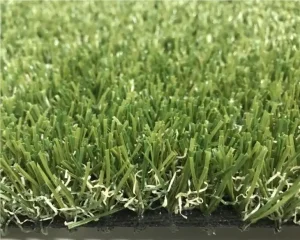
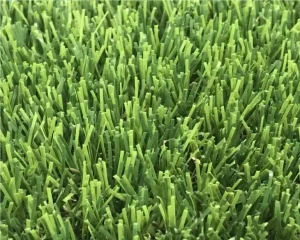
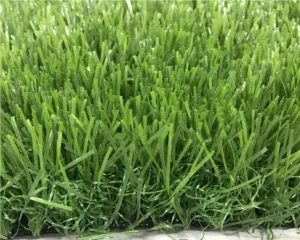
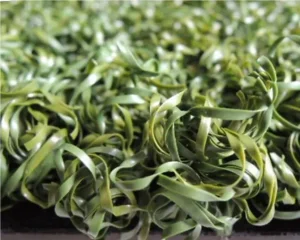
Extended inventory of OEM-ready sports turf solutions, landscape varieties, and commercial multi-sport applications manufactured under ISO 9001/14001/45001 disciplines.
Frequently Asked Questions (Procurement & Engineering)
Direct answers for commercial buyers, civil contractors, and sourcing agents navigating factory specifications.
What yarn polymer performs best for professional putting greens: Nylon (PA) or Polypropylene (PP)?
Nylon (Polyamide) delivers superior resilience, high heat resistance, and long-term memory, retaining its true upright curl structure under heavy foot traffic without matting. However, texturized Polypropylene (PP) provides an exceptional, cost-effective alternative for projects utilizing rounded silica sand infill. In high-sun, extreme UV environments, specialized PE/PP blends formulated with high concentrations of hindered amine light stabilizers (HALS) can also be tailored to prevent fiber degradation.
How can commercial buyers verify that artificial turf is 100% PFAS-free?
Legitimate industrial suppliers provide accredited third-party test reports (such as SGS, Eurofins, or TÜV) analyzing Total Organic Fluorine (TOF) via combustion ion chromatography, as well as targeted LC-MS/MS testing for specific compounds like PFOS and PFOA. Suntex ensures strict chemical audits across masterbatch extrusion stages to maintain completely non-detectable PFAS limits.
What is the minimum order quantity (MOQ) and lead time for factory-direct custom orders?
Standard in-stock golf and landscape specifications require minimal quantities starting at 500 to 1,000 square meters. For custom tufted configurations (custom pile height, tailored stitch density, or unique color combinations), typical minimums are approximately 2,000 m². Production cycles typically range from 10 to 18 working days per 40ft High Cube container, with comprehensive export consolidation handled directly from our factory loading docks.
How does backing selection (Polyurethane vs. SBR Latex) impact golf turf longevity?
Polyurethane (PU) backing offers superior tuft bind strength (often exceeding 50N), completely eliminates moisture retention, will not crumble or hydrolyze over time, and remains highly flexible in freezing climates. SBR latex is a proven, economical industry standard suitable for dry climates and properly sloped, well-draining crushed aggregate civil sub-bases.
Can customized rolls be manufactured to minimize site seams and installation waste?
Yes. Our industrial tufting and finishing equipment supports full custom roll widths of 2.0 meters, 3.66 meters, 4.0 meters, and select 5.0-meter formats. By reviewing golf course CAD site drawings prior to production, our engineers produce optimized cutting layouts that minimize job-site waste, eliminate unnecessary seams across critical putting paths, and substantially lower overall project costs.