Factory-Direct Artificial Football & Multi-Sport Surfaces
Engineered to FIFA Quality Pro standards and high-frequency community play parameters. Explore verified production runs with traceable polymer batch lineage.
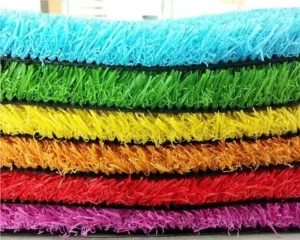
Global State of the Synthetic Football Turf Manufacturing Industry
A rigorous examination of shifting procurement frameworks, ESG compliance directives, and high-tensile yarn longevity standards across international stadiums.
The global synthetic sports turf sector has evolved far beyond rudimentary aesthetic replications of natural grass. Today's commercial arena requires synthetic football pitches to operate as sophisticated polymer shock-absorption and rotational traction systems. Driven by climate stress, intensive land utilization mandates, and extreme year-round scheduling, municipal sports boards and private football clubs have shifted from natural sod to engineered artificial turf systems capable of sustaining over 1,800 to 2,200 hours of active play annually without surface deterioration, compared to fewer than 300 viable hours for natural grass.
From an international trade perspective, procurement strategies are increasingly dictated by rigorous compliance frameworks. The European Chemicals Agency (ECHA) microplastics restriction timeline and stricter North American EPA PFAS mandates have forced tier-1 manufacturers to reconstruct their yarn masterbatch chemistry. Modern football turf factory operations must deliver verified non-fluorinated polyolefin resins, heavy-metal-free UV stabilizers, and REACH-compliant primary backing materials that guarantee non-toxicity throughout an eight to twelve-year field lifecycle.
“Modern sports turf engineering is no longer simply about tufting height; it is defined by molecular resilience: polymer melt index uniformity, molecular orientation during filament extrusion, and long-term yarn memory under continuous studded friction.”
Furthermore, the global marketplace has witnessed a structural consolidation. Discerning procurement directors are bypassing multi-tiered distribution brokers in favor of direct integrated manufacturing facilities that combine raw granule extrusion, precision twisting, masterbatch compounding, automated multi-gauge tufting, and robotic polyurethane or secondary latex backing vulcanization under a single audited roof.
Chinese Manufacturing Velocity, Quality Control & Cost Ergonomics
Why leading sports construction conglomerates source turf rolls directly from China's high-precision vertical polymer clusters.
Vertically Integrated Polymer Extrusion
By controlling everything from virgin C8 metallocene PE granule compounding to proprietary yarn masterbatch pigment stabilization, our facility eliminates reliance on third-party filament suppliers, driving uniform shrinkage, color lock, and cost stability across tens of thousands of square meters.
Unrivaled Cost-to-Performance Ratios
Leveraging high-throughput Cobble tufting machinery operating at up to 1,500 stitches per minute, high-speed automated backing drying lines, and regional raw material agglomeration allows a reduction in gross production overhead by 22–35% compared to Western European alternatives, without compromising polymer tensile performance.
Intermodal Export Logistics Precision
Situated within rapid logistics proximity to major international deep-water seaports, roll inventory is routed via automated container roll-packing systems. Rolls are tightly vacuum-wrapped with moisture-resistant geotextile packaging, optimizing 40ft High Cube container volumetric load capacity to minimize ocean shipping cost per square meter.
Engineering Parameters by Pitch Classification
Direct comparison of fiber cross-sections, pile heights, stitch gauges, and primary/secondary backing architectures across real-world application envelopes.
| Application Tier | Recommended Yarn Profile | Dtex & Micron Core | Pile Height & Gauge | Backing & Coating Matrix | Compliance Standard |
|---|---|---|---|---|---|
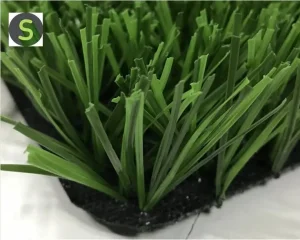
| Professional Stadium / FIFA Quality Pro | TenCate Diamond / Spine Monofilament | 12,000 – 16,000 Dtex / 360μm | 50 mm – 60 mm | 5/8" or 1/2" | Triple Layer (PP + Net + Fleecy) + Polyurethane (PU) | FIFA Quality Pro |
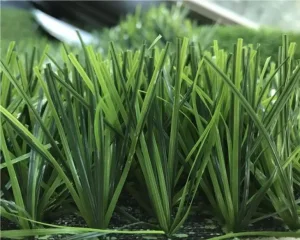
| Municipal Club & Training Academy | Omega / Stem Shape High-Resilience PE | 11,000 – 14,000 Dtex / 320μm | 40 mm – 50 mm | 5/8" | Dual Polypropylene Backing + Reinforced SBR Latex | EN 15330-1 |
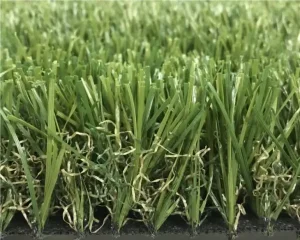
| School & University Dual-Use | Double C-Shape Monofilament + Thatch | 8,800 – 12,000 Dtex / 280μm | 35 mm – 45 mm | 3/8" or 5/8" | Heavy UV Primary Fabric + Carboxylated SBR | DIN 18035-7 |
| Commercial 5-a-Side & Cage Arenas | High-Density Fibrillated or S-Shape PE | 8,000 – 11,000 Dtex / 260μm | 25 mm – 32 mm | 3/8" Non-Infill | High-Density Fleece Grid + Advanced Polyurethane | High Abrasion Test |
| Extreme Arid / High UV Venues | TenCate Modified PE with Ciba UV Additives | 12,500 – 15,000 Dtex / 380μm | 50 mm – 60 mm | 5/8" | PP Woven + Fiberglass Mesh + Thermal PU | UV > 8000 hrs W.O.M |
Site-Specific Field Dynamics & Global Operational Environments
How our synthetic turf formulations adapt to distinct climate challenges, usage loads, and institutional requirements.
Extreme High-Traffic School Districts
Educational institutions require continuous performance under 40+ hours of physical education, intramural soccer, and community rental per week. We engineer high-Dtex C-spine profiles with multi-directional tufting that prevent flattening, delivering up to 10 years of consistent ball rebound and player skin friction safety without premature yarn splitting.
Arid Middle East & Equatorial High-Heat Zones
High ambient thermal loads and intense solar radiation (UV index 11+) degrade conventional polyolefins rapidly. Our Middle Eastern field deployments incorporate proprietary hindered amine light stabilizers (HALS) and specialized cool-surface pigments that reduce peak turf surface temperature by up to 8°C – 12°C while preventing polymer embrittlement.
High-Yield Indoor Commercial Football Arenas
Indoor facilities lack rainwater self-cleaning and natural settling, demanding zero rubber pellet fly-out and stringent indoor air quality. We deploy specialized short-pile texturized non-infill football grass systems backed with odorless polyurethane that conform to EN 13501-1 Class Bfl-s1 fire protection requirements.
Emerging Turf Paradigms: The Circular Non-Infill Revolution
Addressing international environmental mandates through next-generation mono-material engineering and bio-based infills.
100% Mono-Material Circular Recycling
Traditional fields laminate PE blades onto PP cloth with latex, making recycling complex. Our newest circular turf rolls utilize pure polyethylene yarn, backing cloth, and PE hot-melt adhesive, allowing complete shredding and direct extrusion back into raw industrial granules without secondary separation.
ECHA-Compliant Non-Infill Football Turf
Anticipating microplastic infill bans across the EU, we have engineered dense, high-frequency texturized thatch systems paired with elastic shock-pads that eliminate SBR crumb rubber entirely while maintaining certified G-Max shock absorbency and head impact criterion (HIC).
Micro-Grooved Water-Permeable Backing
Replacing traditional punch holes with overall porous backing structures that allow vertical drainage rates exceeding 1,800 mm per hour. This guarantees zero surface pooling during monsoonal downpours and eliminates lateral sediment shifts.
Infrared Heat Reflective Yarn Coating
Integrating sub-micron infrared scattering ceramic particles directly into the polyolefin matrix. This disperses incoming thermal radiation without affecting blade flexibility, maintaining a cooler playing surface during summer tournament schedules.
Enterprise Buyer’s Verification Framework for Artificial Turf
Essential checklist criteria that international project developers must verify before issuing letters of credit to synthetic grass factories.
Procuring synthetic turf on a commercial scale (typically 7,000 to 8,500 m² per full 11-a-side field) involves substantial capital expenditure where raw material degradation cannot be rectified post-installation. Enterprise procurement teams must verify five critical milestones:
1. Laboratory Polymer Identity & Metallocene Ratio: Request third-party differential scanning calorimetry (DSC) reports to verify virgin polyethylene polymer purity. Lower-tier suppliers frequently blend post-consumer regrind that introduces micro-voids, resulting in rapid blade fracture under studded soccer cleats.
2. Lisport XL Mechanical Stress Verification: Ensure test reports validate at least 15,000 to 20,000 cycles on the updated Lisport XL testing apparatus (simulating spiked footwear shear forces). Standard Lisport pendulum testing is no longer sufficient to guarantee durability over an 8-year warranty window.
3. Tuft Lock Extraction Pull Force: Verify that secondary coating vulcanization achieves a minimum tuft bind extraction force of 40 N – 55 N (tested according to ISO 4919). Sub-standard latex binding results in severe yarn pull-out during aggressive mechanical grooming or line marking operations.
4. Roll Dimension & Seaming Strategy: Require factories to deliver CAD-driven field cutting plans. Factory-inlaid white line tufting reduces on-site contractor seam gluing errors by up to 60%, drastically accelerating field commissioning timelines.
5. PFAS-Free & Heavy Metal Assays: Demand current independent laboratory test documentation (SGS, TUV, or Labosport) verifying compliance with EN 71-3 (migration of elements) and total organic fluorine (TOF) levels under 50 ppm to guarantee long-term liability protection.
Enterprise Sourcing & Manufacturing Questions Answered
Direct technical answers from our senior chemical engineers, tufting directors, and global logistics managers.
What distinguishes FIFA Quality from FIFA Quality Pro certified pitch systems? +
Why is polyurethane (PU) backing considered superior to traditional carboxylated SBR latex? +
How does TenCate yarn integration affect long-term commercial turf investment? +
What is the typical production lead time and container loading capacity for a full football stadium? +
Can your factory customize roll lengths and insert permanent line markings during manufacturing? +
What infill sand and rubber distribution ratios are required for 50mm and 60mm systems? +
Specialized Sports & Multi-Functional Engineered Surfaces
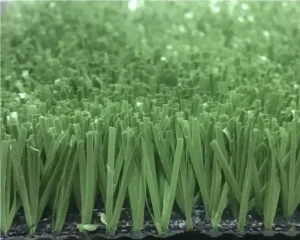
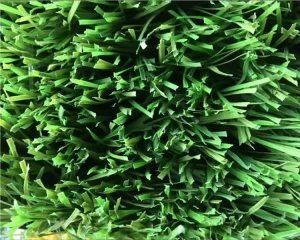
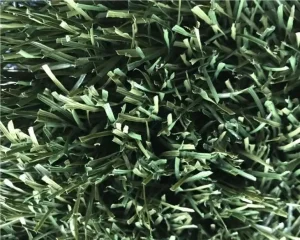
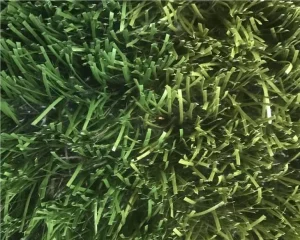
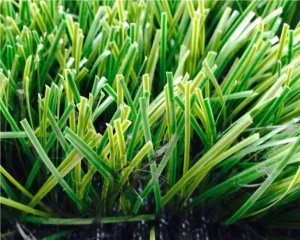
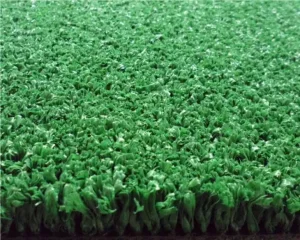
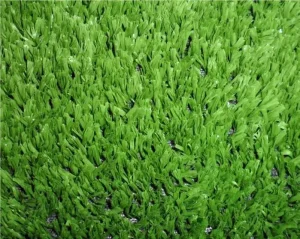
Explore dedicated systems for tennis, rugby, hockey, high-toughness soccer, and golf rough applications produced on our automated tufting lines.
Establishing Direct Factory OEM & Tender Partnerships
A transparent industrial manufacturing bridge between Chinese precision production facilities and global sports infrastructure developers.
As the international sports turf market transitions toward higher performance requirements and stricter environmental governance, building direct relationships with vertically integrated manufacturing plants is essential for maintaining competitive tender margins and delivering verified pitch longevity. Backed by nearly five decades of polymer extrusion heritage via RiThai International and over 22 years of continuous sports turf manufacturing under Suntex Sports-Turf (Kunshan) Corporation, our facility provides international contractors, wholesalers, and municipal project managers with reliable, end-to-end industrial manufacturing.
Whether your projects require FIFA Quality Pro certified pitch systems with TenCate Diamond monofilament, non-infill indoor commercial cages, or high-durability school playground lawns, our engineering team provides direct batch customization, private label branding, complete tender documentation, and optimized container dispatch to major international ports worldwide.