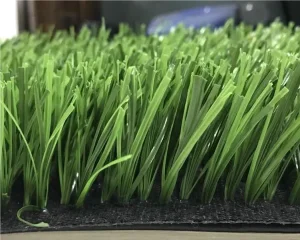
Engineered Football & Multi-Sport Turf Systems
Precision-tufted artificial grass manufactured with virgin polymers, TenCate fibers, and FIFA/EN testing certification for municipal, commercial, and athletic infrastructures worldwide.
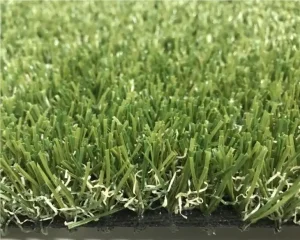
Deconstructing Football Turf Cost: Capital Expenditure vs. Operational Yield
When institutional buyers and municipal project engineers evaluate the decision to buy football turf, the factory carpet cost represents only one component of a holistic structural and commercial ecosystem.
1. Turf Carpet & Polymer Architecture (30–40% Initial Cost)
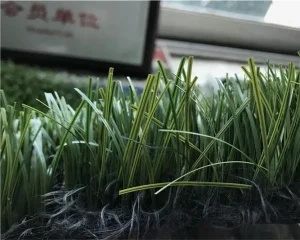
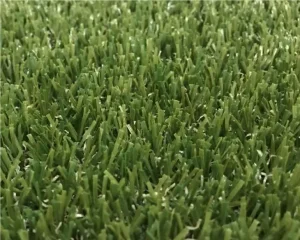
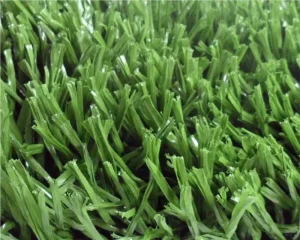
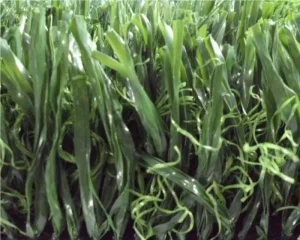
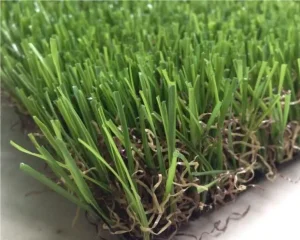
Carpet pricing is fundamentally governed by raw material purity, yarn linear mass density (Dtex), stitch rate per linear meter, and secondary coating formulations. Premium football systems utilize C8 metallocene-catalyzed virgin Polyethylene (PE) monofilament with reinforced diamond or dual-spine ribs to prevent premature fiber fibrillation.
2. Sub-Base Civil Works & Permeable Foundations (35–45% Initial Cost)
A football turf system is only as stable as its foundation. Civil engineering costs include earthworks, sub-grade stabilization, geotextile membrane placement, open-graded crushed aggregate layers, and optional dynamic shock pads (ETPU or cross-linked closed-cell PE). Inadequate base grading leads to undulation and premature carpet wear.
3. Infill System & Regulatory Compliance (15–25% Initial Cost)
The infill matrix provides ballast, rotational resistance, and impact absorption (HIC values). While vulcanized SBR rubber crumb offers the lowest upfront expenditure, forward-looking developers are shifting toward thermoplastic elastomers (TPE), EPDM, coated quartz sand, or organic cork to satisfy evolving environmental regulations.
| Pitch Category & Tier | Typical Pile Height | Yarn Dtex & Cross-Section | FOB Factory Unit Cost (m²) | Full System Turnkey Cost (m²) | Recommended Usage Profile |
|---|---|---|---|---|---|
| FIFA Quality Pro Tier | 50 mm – 60 mm | 12,000 – 16,000 Dtex Monofilament (Diamond / Core-Spine) | $7.20 – $13.50 | $38.00 – $65.00 | Professional Stadiums, National League Clubs, FIFA Tenders |
| Commercial Community / High-Duty | 40 mm – 50 mm | 10,000 – 12,500 Dtex Stem / C-Shape Monofilament | $5.60 – $8.90 | $28.00 – $44.00 | Municipal Sports Centers, University Pitches, Rental Academies |
| Non-Infilled 4G/5G Hybrid System | 30 mm – 35 mm | Dense PE Monofilament + Texturized PP Thatch Layer | $8.50 – $14.20 | $34.00 – $52.00 | Indoor Arenas, EU Microplastic-Restricted Municipalities |
| Multi-Sport / School Standard | 35 mm – 45 mm | 8,800 – 10,000 Dtex Fibrillated or Monofilament | $4.80 – $6.80 | $22.00 – $36.00 | Primary/Secondary Schools, Training Grounds, Multi-Use Courts |
Global Corporate Procurement Demands & Regulatory Evolution
Procurement executives and general contractors across Europe, the Americas, and the Middle East are operating under radically changed environmental, safety, and performance standards.
The European Union Microplastics Restriction (ECHA Annex XVII)
The regulatory ban on intentionally added synthetic polymeric microparticles (transition deadline 2031) has fundamentally disrupted European purchasing behavior. Procurement directors can no longer specify conventional polymeric loose infills without risk of obsolescence. This policy accelerates the direct global adoption of engineered mineral sand infills, organic bio-based infills (cork/olive pit core), and ultra-dense non-infilled 4G sports turf systems with high stitch frequencies.
PFAS-Free Chemistry & SVHC Substance Traceability
Global architectural and municipal tenders now strictly demand certified non-detectable PFAS (per- and polyfluoroalkyl substances) in both yarn extrusion processing aids and backing chemistries. Suntex enforces rigorous gas chromatography-mass spectrometry (GC-MS) batch screening, assuring buyers that artificial turf fibers comply with strict total organic fluorine (TOF) thresholds and European REACH SVHC candidate limits.
FIFA Quality & FIFA Quality Pro Certification Protocols
For stadium-grade deployments, field verification hinges on passing FIFA Quality Programme standards. Testing assesses vertical ball rebound (0.60–1.00m), ball roll (4–10m), rotational resistance (30–45 Nm), and shock absorption (55–70%). Ensuring our factory turf passes Lisbon Lisport XL accelerated mechanical wear simulations (over 12,000 cycles) guarantees project acceptance and performance longevity.
Carbon Footprint Reduction & Circular Life-Cycle (LCA)
Institutional clients calculate Scope 3 greenhouse emissions throughout pitch lifespans. By transitioning from conventional carbon-heavy SBR secondary backing coatings to recyclable hot-melt polyolefin or polyurethane backings, our manufacturing process reduces raw weight, lowers shipping container energy usage, and enables 100% end-of-life polymer mechanical re-granulation.
China Industry 4.0: Supply Chain Resilience & Production Efficiency
How advanced automation, upstream petrochemical clustering, and digital quality assurance provide international importers with an unmatched 20% to 35% unit cost advantage.
Vertically Integrated Extrusion & Masterbatch Control
Unlike regional conversion plants that purchase yarn from external extruders, Suntex leverages deep polymer synthesis roots (originating with RiThai International nylon monofilament operations since 1977). Operating high-precision twin-screw extrusion lines running licensed TenCate fiber formulations allows in-house blending of UV anti-aging masterbatches (Ciba-Geigy Chimassorb stabilizers), antioxidants, and heavy-metal-free pigments. This vertical integration directly eliminates supplier markups.
Automated High-Speed Multi-Gauge Tufting
Our Kunshan facility houses computer-controlled tufting machines capable of producing 5/8-inch, 3/8-inch, 3/4-inch, and 1/2-inch gauge sports turf carpet at over 1,200 RPM. Integrated laser-guided sensors monitor real-time tuft insertion tension, instantaneously detecting drop stitches or missing rows. This automated precision ensures 100% uniformity in pile height and dimensional alignment across 4.0-meter roll widths, preventing field seaming disparities on-site.
Smart Coating, Tuft Lock Force & Logistics Aggregation
Secondary backings must guarantee long-term filament retention. Operating 70-meter drying and vulcanization chambers ensures uniform drying temperatures, enabling carboxylated styrene-butadiene latex (SBR) or polyurethane (PU) formulations to lock fiber root tufts with a withdrawal resistance force exceeding 45–55 Newtons (exceeding the 30N FIFA baseline). Strategic proximity to Shanghai and Ningbo deep-water ports reduces container drayage costs and ensures rapid vessel booking.
Global Commercial Landscapes & Localized Operating Environments
Different climatic zones, usage intensities, and business models require tailored artificial football turf specifications to maximize operational profitability.
Middle East & GCC: Ultra-High UV Degradation & Thermal Resistance
Football fields in Saudi Arabia, the UAE, and Qatar experience solar radiation indices exceeding 220 kLy/year and turf surface temperatures exceeding 70°C. Standard polymers experience photo-oxidative degradation and rapid tensile embrittlement. For this operating environment, we formulate custom C8 resins compounded with concentrated Hindered Amine Light Stabilizers (HALS) and IR-reflective cool-pigment masterbatches that decrease surface temperatures by 6°C to 10°C, extending functional field lifespan past 8–10 years.
North America: High-Impact Multi-Use Municipal Fields
School districts, universities, and park authorities in the United States and Canada run high-frequency multi-sport programs that alternate continuously between football, American football, lacrosse, and soccer. These heavy-contact systems require a minimum 2.0 to 2.5-inch pile height (50–65mm), combined with a dedicated 10mm–12mm in-situ or pre-fabricated elastic shock layer to maintain continuous G-Max impact shock attenuation below 100 Gs throughout decade-long heavy field duty.
Latin America & Southeast Asia: Commercial Pay-to-Play Futsal Arenas
In high-density urban corridors (e.g., Brazil, Colombia, Thailand, Vietnam), 5-a-side and 7-a-side commercial soccer arenas operate from 14 to 18 hours per day, 7 days a week. Financial returns hinge strictly on abrasion resistance and quick drainage during monsoon downpours. Specifying dense 50mm diamond monofilament with perforated, multi-layered polypropylene/polyethylene backing guarantees drainage rates exceeding 1,800mm per hour, preventing field downtime during wet seasons.
Engineering Blueprints for Specialized Pitch Typologies
Optimizing field configuration parameters directly reduces the total buy football turf cost by eliminating material over-specification and excess site waste.
Full 11-a-Side Regulation Pitch (105m × 68m)
Total Turf Area: ~7,700 m² (including safety run-offs).
Recommended Architecture: 50mm–60mm Monofilament PE (Diamond / Stem), 5/8" gauge, 160–180 stitches/m, 12,000–14,000 Dtex.
Infill Ratios: 20–25 kg/m² graded silica sand (0.3–0.8mm) + 5–7 kg/m² performance TPE or cryogenic SBR.
Carpet Budget Range: $46,000 – $75,000 FOB Factory.
7-a-Side / 9-a-Side Youth Academy Complex (65m × 45m)
Total Turf Area: ~3,150 m².
Recommended Architecture: 40mm–50mm Monofilament C-Shape PE, 5/8" gauge, 150 stitches/m, 11,000 Dtex.
Infill Ratios: 18 kg/m² silica sand + 4.5 kg/m² virgin elastomer infill.
Carpet Budget Range: $17,500 – $27,000 FOB Factory.
ROI Payback Period: 12–16 months based on regional field rental schedules.
Indoor Urban Futsal & Commercial Rooftop Arenas (40m × 20m)
Total Turf Area: ~850 m².
Recommended Architecture: 30mm Non-Infilled High-Density Hybrid or 40mm Monofilament with PU fire-retardant coating (Class Bfl-s1).
Special Construction Note: Weight reduction considerations for rooftop structural load capacity; eliminated black rubber crumbs eliminate airborne microdust.
Direct Factory Sourcing: Frequently Asked Questions
Detailed technical, commercial, and operational clarifications direct from our chief manufacturing engineers and international trade directors.
What are the exact technical drivers that cause football turf carpet prices to vary from $4.80 to $13.50/m²?
1. Polymer Composition & Dtex: 16,000 Dtex fibers consume roughly 35% more raw polymer per linear meter than 10,000 Dtex fibers, shifting material cost accordingly. Virgin C8 metallocene PE costs more than reprocessed polymer flakes.
2. Stitch Density & Pile Height: Moving from 40mm at 140 stitches/m to 60mm at 180 stitches/m increases yarn mass per square meter from ~950g/m² to ~1,650g/m².
3. Backing Technology: Dual-layer Polypropylene plus net backing with SBR latex is economical, whereas specialized high-adhesion Polyurethane (PU) or thermo-recyclable polyolefin backing adds $1.20 to $2.40/m² while dramatically boosting water immersion tuft lock.
4. Brand Fiber Licensing: Incorporating genuine TenCate synthetic monofilament fibers involves royalty and engineering costs over unbranded generic yarns, balanced by traceable international performance warranties.
How does the cost of maintaining synthetic turf compare with natural turf over an 8-year operational cycle?
What documentation and laboratory reports should B2B importers verify before issuing a deposit?
1. Mechanical Tribology & Wear Resistance: Lisport XL mechanical wear test report confirming fiber durability after a minimum of 12,000 cycles (EN 15330-1 / FIFA Quality Concept).
2. Environmental & Safety Compliance: GC-MS laboratory test reports verifying total absence of extractable heavy metals (EN 71-3), compliance with REACH Annex XVII SVHC candidate lists, and certified non-detectable PFAS content.
3. Accelerated Artificial Weathering: UV radiation exposure data according to ISO 4892-3 or ASTM G154 verifying high colorfastness (Grey Scale ≥ 4-5) and tensile retention after 3,000–5,000 hours of continuous UV light exposure.
4. Manufacturing Verification: Factory ISO 9001 (Quality Management), ISO 14001 (Environmental Systems), and ISO 45001 (Occupational Safety) certifications.
How do ocean freight container dimensions affect turf delivery volume and roll layout planning?
Is it possible to install artificial football turf directly on an existing asphalt or concrete slab?
What are the minimum order quantities (MOQ) and production lead times for custom OEM turf orders?
Explore Specialized Athletic & Landscaping Products
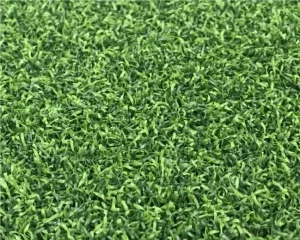
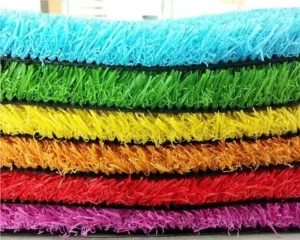
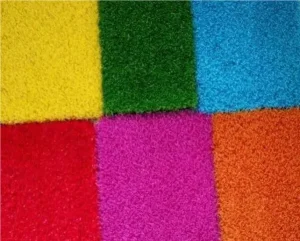
From FIFA-compatible sports surfaces to heavy-duty pet turf, golf greens, and colorful architectural landscapes—manufactured under certified ISO quality management.