
High-Performance Football & Professional Athletic Surfaces
Explore our certified athletic turf series, engineered for high tensile resilience, optimal vertical ball bounce, low rotational resistance, and multi-climate environmental stability.
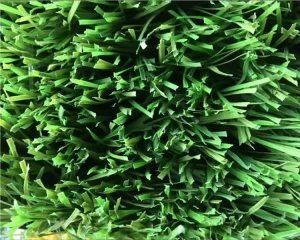
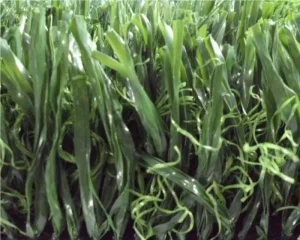
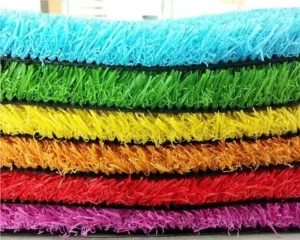
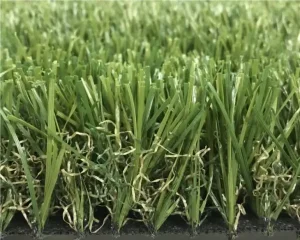
Global Football Grass Industrial Landscape & Supply Dynamics
Modern football infrastructure has transitioned from generic synthetic carpets to precision polymer-engineered athletic systems. Global commercial procurement is governed by rigorous mechanical resilience, shock absorption thresholds, and tightening European chemical directives.
FIFA Standard Rigor & Testing
The commercial turf sector is driven by strict adherence to the FIFA Quality Programme for Football Turf. Procurement standards enforce parameters such as vertical deformation (4–11 mm), shock absorption (60%–70%), rotational torque resistance (30–45 Nm), and ball rebound consistency across thousands of duty cycles.
- FIFA Quality and FIFA Quality Pro thresholds
- Mechanical wear tracking via Lisport XL 12,000 cycles
- Low skin friction index minimizing abrasion injuries
ECHA Microplastics Regulation Impact
The European Chemicals Agency (ECHA) restriction on intentionally added microplastics (Annex XVII REACH) has initiated a tectonic shift away from traditional end-of-life polymeric crumb rubber (SBR). Suppliers must offer bio-mineral, coated organic, or non-infill systems capable of sustaining performance without microplastic runoff.
- Transition windows for municipal and private pitches
- Organic cork, olive pit, and coated sand matrix infills
- Zero microplastic migration certification requirements
Supply Chain Consolidation & Verticals
Importers and project contractors face significant margin and defect risks when buying from middle-tier trading houses. Total quality assurance demands vertical integration: masterbatch formulation, UV stabilizer injection, continuous monofilament extrusion, high-precision gauge tufting, and automated secondary backing chemistry.
- TenCate Grass fiber partnership since 2002
- Parent group RiThai nylon extrusion roots since 1977
- Traceability through ISO 9001, 14001, and 45001 systems
Fiber Geometry, Cross-Section Mechanics & Longevity
The durability of an artificial soccer pitch is primarily dictated by its cross-sectional fiber geometry, molecular weight distribution, and primary backing tuft-lock adhesion.
Diamond Spine Monofilament
Engineered with a thickened central core tapering toward the edges. Delivers maximum split resistance and immediate vertical restitution under heavy cleat shearing force.
- Dtex Range: 11,000 – 16,500
- Thickness: Up to 400–450 microns
- Ideal for FIFA Quality Pro competitive stadiums
Stem / C-Shape Fiber Profile
Incorporates a curved reinforcing rib acting as a mechanical spring. Reduces surface glare through irregular light refraction while preventing matting under high playing hours.
- Resilience Rating: 9.2 / 10
- Optimized for municipal multi-use training facilities
- Enhanced rotational torque dissipation
W & V Anti-Friction Ribbed
Multi-faceted blade ridges disperse surface heat accumulation in intense solar zones and distribute surface friction to eliminate turf burn during sliding tackles.
- Significant surface temperature mitigation
- High thatch density integration capability
- Superior aesthetics across multiple viewing angles
Non-Infill Texturized Hybrid
Combines high-Dtex monofilament with ultra-dense, crimped polymer thatch matrices. Negates the operational need for performance infill while preserving shock attenuation.
- 100% compliant with ECHA zero-infill regulations
- Reduced lifecycle civil maintenance labor
- Paired with calibrated factory shock pads
| Application Grade | Pile Height | Yarn Polymer & Profile | Dtex & Gauge | Stitch Density | Tuft Lock Bind Force | Compliance Standards |
|---|---|---|---|---|---|---|
| Professional Stadium | 50 mm – 60 mm | 100% PE Diamond Monofilament (TenCate) | 12,000 – 16,000 Dtex / 5/8" | 9,500 – 10,500 stitches/m² | ≥ 45 N (ISO 4919) | FIFA Quality Pro, EN 15330-1 |
| Municipal & Academy | 40 mm – 50 mm | PE Monofilament with Stem / C-Rib | 10,000 – 13,000 Dtex / 5/8" | 10,000 – 11,500 stitches/m² | ≥ 40 N | FIFA Quality, DIN 18035-7 |
| Non-Infill Multi-Sport | 28 mm – 35 mm | PE Straight + PP Texturized Thatch | 14,000 – 18,000 Dtex / 3/8" | 18,900 – 23,100 stitches/m² | ≥ 40 N | ECHA Microplastic-Free, ISO 9001 |
| Five-a-Side & Cage Soccer | 32 mm – 40 mm | Heavy-Duty Monofilament Fibrillated Hybrid | 9,000 – 12,000 Dtex / 5/8" | 11,000 – 13,000 stitches/m² | ≥ 42 N | Lisport XL 15,000 cycles |
Localized Application Scenarios: Engineered for Global Microclimates
A football pitch specification that succeeds in Central Europe will fail prematurely in the Middle East or Scandinavia without precise resin stabilization, drainage matrices, and sub-base moisture balancing.
Desert & Extreme Solar Radiation Zones (GCC, MENA, Australia)
In regions with UV Index ratings exceeding 11 and surface ambient temperatures reaching 65°C, standard turf polymers undergo photo-oxidative degradation, molecular chain scission, and rapid chalking. Suntex incorporates specialized Hindered Amine Light Stabilizers (HALS) into virgin C4/C6 LLDPE polymers. Our desert-grade yarn resists up to 5,000 hours of continuous UVA/UVB accelerated aging (ASTM G154), preserving over 85% tensile retention. Infrared-reflective color pigments reduce total surface thermal absorption by up to 8°C.
High-Precipitation & Monsoon Basins (Southeast Asia, Tropical Zones)
Tropical precipitation patterns require hydraulic permeability surpassing standard specifications. Suntex equips our backing systems with multi-directional perforation configurations producing infiltration capacity exceeding 1,200 mm/hour (exceeding FIFA's 180 mm/hr requirement by 6x). Secondary polyurethane (PU) backings eliminate waterlogged SBR latex degradation, preventing fiber pullout, fungal spore formation, and subterranean aggregate washout during continuous downpours.
Sub-Zero Frost Heave Climates (Nordic, Canada, Alpine Regions)
Sub-freezing freeze-thaw cycles cause standard primary backings to become brittle, leading to crack propagation along installation seams. By employing dual-layer cross-directional woven geotextile fabrics coupled with high cold-flex polyurethane coatings, our systems maintain mechanical elasticity down to -40°C. Coupled with closed-cell expanded polyethylene (XPE) shock pads, the pitch structure remains dimensionally stable against winter sub-base frost heave.
High-Intensity Urban & Academic Training Grounds
Municipal stadiums and school pitches regularly operate 45 to 60 playing hours weekly—far exceeding professional match venues (5–10 hours). In these high-load scenarios, Suntex deploys high-density spine monofilaments combined with texturized thatch layers that retain infill and resist cleat slicing. The design maintains vertical ball roll (4–8 m) and shock absorption parameters throughout five or more years of unyielding daily traffic.
Turnkey Field Engineering: From Base Dynamics to System Commissioning
An elite football pitch is an interconnected engineered system. Upward performance reflects sub-base civil stability, drainage dynamics, and precision component staging.
1. Sub-Base Civil Foundation
Engineering long-term pitch planar accuracy (±3 mm under 3-meter straight edge) requires layered aggregate stabilization. Incorporating crushed dynamic stone matrices, laser-graded open-graded stone, or permeable asphalt ensures uniform weight distribution and rapid subsurface lateral drainage discharge.
- Geotextile separation membranes preventing subgrade intrusion
- Perforated perimeter collector pipe network
- Slope laser grading at 0.5%–0.8% from pitch crown to perimeter
2. Elastic Shock Pad Integration
Modern football systems decouple biomechanical safety from the turf carpet alone. Installing an in-situ elastic layer (e-layer) or factory-molded cross-linked polyethylene (XPE) shock pad stabilizes Head Injury Criterion (HIC) and Critical Fall Height (CFH) ratings over time, permitting lower turf pile heights and infill reduction.
- Uniform shock absorption across 100% of pitch layout
- 3D drainage channel design accelerating vertical water drop
- Elimination of base hardening over multi-year cycles
3. Calibrated Infill Staging
Precision ball roll (Ball Roll: 4–8m) and rotational release torque depend on accurate infill distribution. High-purity, dust-free rounded silica sand (0.2–0.8mm) forms the ballast foundation, followed by performance infill (TPE, EPDM, or organic cork) metered via laser-guided top-dressing machines.
- Dual-layer mechanical ballast and elasticity control
- De-compacting and mechanical cross-brushing cycles
- Compliance with microplastic containment requirements
Technological Roadmap: 2025–2035 Circular Architecture
Environmental stewardship, carbon accountability, and closed-loop recyclability define the next decade of turf manufacturing. Suntex leads this transition with non-toxic, single-polymer architectures.
100% Mono-Material Recyclability
Traditional artificial turf pairs polyethylene (PE) blades with polypropylene (PP) backing fabrics and styrene-butadiene rubber (SBR) latex coating. Separating these three incompatible polymers at decommissioning is energy-prohibitive. Suntex is pioneering mono-material turf: 100% Polyethylene yarn, backing, and thermoplastic coating, enabling direct pelletizing and remanufacturing without material separation.
- Zero landfill mandate for municipal end-of-life pitches
- Closed-loop circular resin reprocessing
- Substantial reduction in lifecycle Scope 3 carbon footprint
Bio-Based & Non-Fossil Polymers
Integrating bio-polyethylene derived from sugarcane ethanol and waste biomass reduces virgin crude reliance. Our R&D extrusion pilots exhibit equivalent molecular tensile strength, elastic memory, and UV stability compared to standard petrochemical polymers, cutting net cradle-to-gate carbon emissions by 40%.
- Bio-based carbon verification (ASTM D6866)
- Full mechanical equivalence in Lisport rolling tests
- Compatibility with municipal green procurement subsidies
IoT-Enabled Smart Field Integration
Future athletic installations will feature subterranean sensor matrices embedded beneath the shock pad. Continuous monitoring tracks sub-base moisture saturation, shock attenuation degradation, usage intensity zones, and fiber verticality—feeding actionable preventive maintenance data directly to stadium ground crews.
- Real-time automated compaction and hardness tracking
- Predictive maintenance alerts preventing premature wear
- Continuous FIFA performance metric validation
Specialty Athletic, Recreational & OEM Turf Solutions
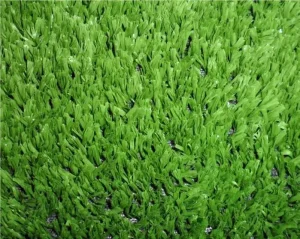
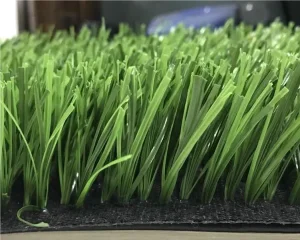
Complete your project portfolio with our certified non-infill sports pitches, shock-absorbing playground turf, tennis courts, and high-drainage custom OEM grass products.
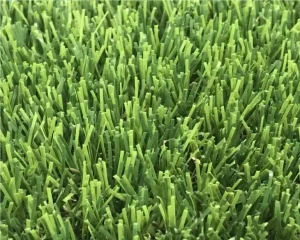
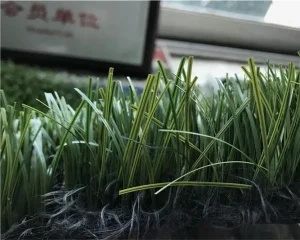
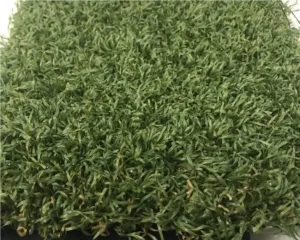
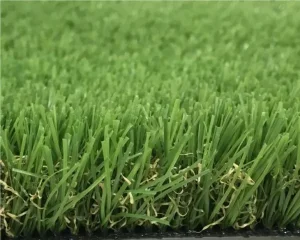
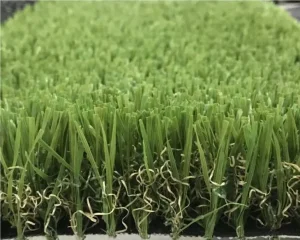
OEM Drainable Synthetic Pet Turf with Realistic Artificial Grass Manufacturers, Product
Configure Specification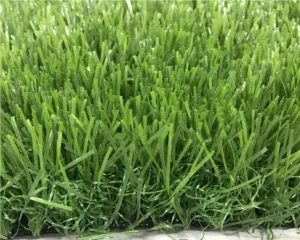
Frequently Asked Questions for Project Bidders & Importers
Authoritative technical clarification on certification parameters, chemical compliance, yarn selection, manufacturing capacity, and containerized logistics.
What are the key technical differences between FIFA Quality and FIFA Quality Pro certified football turf?
How does Suntex comply with the European ECHA restriction on polymeric microplastic infill?
Can Suntex provide verified PFAS-free and heavy-metal test reports for municipal tenders?
Why is primary and secondary backing chemistry critical to field longevity?
What are the logistics, container loading capacities, and standard lead times?
Is Suntex a trading company or a direct manufacturer with vertical extruder operations?
Partner with an Accountable Manufacturer for Your Next Pitch
Request our complete 2026 Architectural Football Turf Catalog, project design specifications, and a complimentary physical engineering sample case configured to your local climatic and competitive requirements.