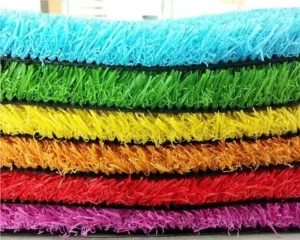
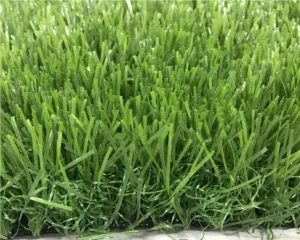
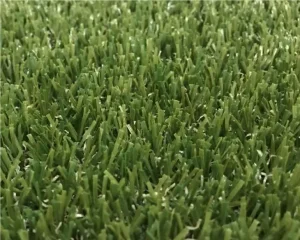
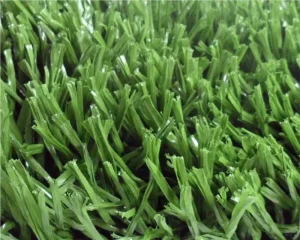
High-Performance Synthetic Pet Turf & Multi-Sport Systems
Explore our industrial-grade monofilament artificial grass rolls manufactured under ISO 9001 and ISO 14001 specifications with heavy-duty backing and rapid fluid discharge.
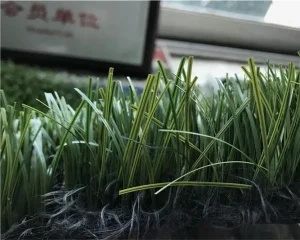
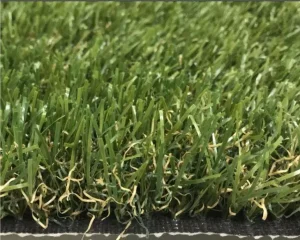
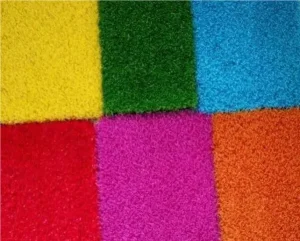
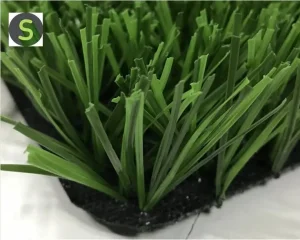
The Global Commercial Landscape of Artificial Turf for Dogs
Analyzing the shift from decorative landscape turf to biologically optimized, heavy-traffic synthetic grass engineered for canine physiological behaviors and rigorous commercial sanitization.
The global demand for dedicated canine synthetic surfacing has undergone an explosive transition over the past five years. Across North America, Western Europe, Australasia, and high-density Asian metropolitan hubs, traditional landscaping turf has repeatedly failed when subjected to the concentrated biomechanical and chemical stresses imposed by dogs. Standard residential turf possesses neither the backing hydraulic conductivity to drain canine urine volumes rapidly nor the claw-tear tensile resistance required to prevent pile fraying and subsurface excavation.
As commercial dog daycares, boarding kennels, veterinary hospitals, municipal bark parks, and multi-family residential pet runs adopt synthetic grass, procurement officers and engineering contractors face unique challenges. Canine urine contains high concentrations of urea, uric acid, ammonia, and proteins that quickly cause intense odor formation and pathogen multiplication if trapped in traditional perforated latex backings. Furthermore, dogs instinctively scratch, chew, and dig at surfaces, quickly loosening weakly bound tufts and posing dangerous foreign-body ingestion hazards.
Technical Consensus: Engineering genuine artificial turf for dogs requires a vertical synthesis of non-porous antimicrobial polyethylene (PE) monofilaments, anti-static texturized thatch yarns, 100% permeable polyurethane (PU) or fully woven thermoplastic backings, and heavy non-toxic antimicrobial infills. Sourcing from experienced original equipment manufacturers ensures verified compliance with DIN, EN71-3, ASTM, and PFAS-free global benchmarks.
From an operational standpoint, commercial pet enterprises realize massive cost amortizations by transitioning to synthetic dog grass. Eliminating muddy paws eliminates indoor facility washdowns, avoids turf dead spots caused by nitrogen burns in dog urine, and removes pest vectors such as ticks, fleas, and chiggers from play yards without applying hazardous synthetic fertilizers, pesticides, or weed killers.
Ammonia & Acid Hydrolysis Resistance
Polymer formulations integrated with specialized UV and chemical stabilizers prevent polymer chain embrittlement from repeated exposure to canine uric acid, aggressive enzymatic cleansers, and dilute quaternary ammonium disinfectants.
High-Flow Permeable Hydraulics
Unlike standard turf with punched drainage holes spaced every 10 cm that pool fluid between perforations, pet-specific turf utilizes fully porous backing matrices delivering drainage percolation exceeding 3,000 to 5,000 mm per hour.
Claw-Proof Tuft Anchorage
Lock-stitch gauge tufting combined with hot-melt polyurethane or modified latex coating delivers tuft bind pull-out resistance up to 75–85 N, preventing dogs from unraveling stitches with their claws or teeth.
Chinese Manufacturing Efficiency: Scaling Pet Turf for Global B2B
Why Tier-1 Chinese artificial turf factories provide unmatched cost-to-performance ratios, rapid custom tooling, and vertically integrated production for world-leading turf brands.
When international buyers seek to buy artificial turf for dogs products directly from factories, China represents over 65% of global synthetic turf extrusion and tufting capacity. However, the true competitive moat extends far beyond labor economics. Leading Chinese production centers, such as those rooted in East China's industrial manufacturing clusters, leverage complete upstream-to-downstream vertical integration.
Our integrated manufacturing model spans polymer virgin granule compounding, masterbatch formulation, C-shape, W-shape, and diamond monofilament extrusion, dual-twisting texturization, precision gauge tufting, backing coating, perforating, and automated roll packing. This tight loop eliminates secondary supply markups and enables rigorous quality checkpoints at every production phase.
Vertical Granule to Roll Control
Virgin virgin C4/C8 LLDPE polymers blended in-house with BASF antioxidants and Clariant light stabilizers ensure color consistency, zero heavy metals, and consistent batch tensile strength.
Massive Scale & Fast Lead Times
Equipped with multi-gauge tufting machinery running 24/7, high-volume orders of 20,000 to 80,000 square meters are completed within 10 to 15 business days, cutting lead times for major seasonal rollouts.
Agile OEM/ODM Customization
Distributors can customize pile height (20–45 mm), stitch rate (130–220 s/m), yarn Dtex (7,000–16,000), antimicrobial masterbatch additives, roll widths (2 m, 3.75 m, 4 m, 5 m), and private label branding.
Ocean Freight Consolidation
Situated within two hours of Shanghai and Ningbo maritime terminals, shipments benefit from optimized roll compression, container loading software maximization, and seamless export customs processing.
Commercial Dog Turf Technical Architecture Guide
Recommended engineering parameters for contractors, landscape architects, and commercial facility specifiers.
| Turf Grade / Application | Pile Height | Yarn Profile & Dtex | Stitch Density | Backing Substrate | Drainage Efficiency | Sanitization Tolerance |
|---|---|---|---|---|---|---|
| Commercial K9 Boarding & Vet Clinics | 25 mm – 30 mm | Short-Spine PE Monofilament + PP Thatch (10,500 Dtex) | 18,900 – 21,000 stitches/m² | 100% Permeable Polyurethane (PU) | > 4,500 mm/h | Daily enzymatic & quaternary cleansers |
| Municipal High-Density Dog Parks | 30 mm – 35 mm | W-Shape or Diamond Anti-Glare PE (12,000 Dtex) | 16,800 – 18,900 stitches/m² | Dual PP woven + Hydro-Perforated Latex | > 2,500 mm/h | Periodic mechanical pressure wash |
| High-End Residential Pet Yards | 35 mm – 40 mm | C-Shape 4-Tone Natural PE + Curled Thatch (14,000 Dtex) | 15,750 – 17,850 stitches/m² | Composite Backing + Micro-Drain Mesh | > 1,800 mm/h | Weekly hose rinse & bio-spray |
| Urban Rooftops & Multi-Family Runs | 20 mm – 28 mm | Texturized Monofilament Low-Friction PE (9,000 Dtex) | 21,000 – 23,100 stitches/m² | Thermoplastic Recyclable Monolithic Backing | > 5,000 mm/h | Daily automated flushing systems |
| Agility Training & Canine Sports Centers | 15 mm – 22 mm | High-Density Texturized Nylon (PA) / PE Hybrid | 25,200 – 29,400 stitches/m² | Heavy-Duty PU with Integral Shock Layer | > 2,000 mm/h | High indoor scrub tolerance |
Decoding Yarn Geometry for Canine Paw Dynamics
Pile height and yarn profile directly determine the cleanability and resilience of pet turf. While human landscape turf often favors 45 mm to 55 mm pile heights for lush aesthetics, such long fibers are counterproductive for dog yards. Solid waste becomes trapped deep inside long blades, making collection difficult and creating unsanitary residue that cannot be cleared with routine scooping.
For this reason, international dog facility engineers standardize on 25 mm to 35 mm pile heights. When paired with specialized yarn shapes like C-Shape or W-Shape, the blades provide sufficient spring-back to withstand energetic canine running, without sprawling flat under paws or entangling solid waste.
Tailored Engineering for Diverse Localized Scenarios
Examining field installations across municipal, private, veterinary, and residential applications.
Commercial Boarding Kennels & Daycares
These facilities face continuous canine traffic and high urine loads daily. The recommended installation combines 28 mm antimicrobial polyurethane-backed turf over a dynamic crushed granite or porous aggregate sub-base, sloped at 1.5–2% toward perimeter drainage channels with automated enzyme misting heads.
Municipal Bark Parks & Public Runs
Public dog parks endure thousands of visitor hours per month in all weather conditions. Durable 35 mm W-shape turf with anti-dig galvanized perimeter locking tracks prevents dogs from exposing borders, while zeolite antimicrobial infills absorb ammonium ions and neutralize odor safely.
Veterinary Clinics & Quarantine Yards
Veterinary facilities demand clinical hygiene. Our medical-grade non-porous PE turf resists bleach dilutions and hospital-grade germicides. The short 20–25 mm pile makes blood, vomit, or fecal pathogens immediately visible and easy to sanitize, reducing nosocomial transmission risks.
Urban High-Rise Rooftop Pet Lounges
Modern luxury condominiums integrate rooftop dog relief stations. These installations sit atop elevated interlocking drainage grids, allowing fluid to pass through 100% permeable turf directly to underlying roof deck floor drains, with integrated flush valve wash-down cycles.
Pet-Friendly Cafés & Hospitality Venues
Outdoor dining terraces catering to dog owners require natural aesthetic fidelity combined with rapid cleanability. Multi-tone 4-color olive-emerald blend turf provides a lush natural lawn aesthetic that conceals spills and maintains rapid rinse capability.
Canine Agility & Working Dog Fields
Police K9, Schutzhund, and flyball training centers require high foot traction without paw abrasion. Texturized nylon and polyolefin hybrid fibers provide secure grip for high-speed turns while remaining soft on sensitive paw pads during training drills.
Emerging Technological Trends in Synthetic Pet Turf
Next-generation innovations reshaping durability, environmental safety, and thermal management in canine turf engineering.
1. The Universal Transition to PFAS-Free and Zero-Toxin Formulations
Regulatory scrutiny across the European Union (REACH) and United States state legislations (EPA limits on per- and polyfluoroalkyl substances) has made PFAS-free compliance mandatory for turf importers. Earlier extrusion processes used fluorinated processing aids (PPAs) to lubricate extruder dies. Modern Chinese Tier-1 facilities have replaced fluorinated lubricants with advanced bio-based silicone and stearate processing aids, achieving third-party certified 100% PFAS-free status with zero lead, cadmium, phthalates, or PAH compounds.
2. Monomaterial Circularity and 100% Recyclable Backing Systems
Historic synthetic turf disposal challenges stemmed from vulcanized multi-material construction: polyethylene fibers tufted into polypropylene fabrics and sealed with cross-linked styrene-butadiene rubber (SBR) latex. At end-of-life, these mixed materials could not be economically separated, landing in landfills. The latest frontier is monomaterial circularity: tufting polyethylene fibers into woven polyethylene backing fabrics, locked with hot-melt polyolefin backing coatings. At decommission, the entire turf roll can be ground directly into PE pellets for industrial remanufacturing without mechanical separation.
3. Infrared Reflective & Paw-Safe Cooling Technologies
On hot summer days, standard synthetic grass surfaces can exceed 65°C (150°F), posing severe thermal burn hazards to canine foot pads. Advanced turf yarn formulations now integrate nanoscale infrared-reflective optical pigments. These compounds reflect short-wave infrared solar energy rather than absorbing it as sensible heat, keeping surface temperatures up to 8°C to 12°C cooler than standard dark pigments. When paired with evaporative infill materials, surface heat stays within safe operating parameters.
4. Antimicrobial Masterbatch Molecular Integration
Rather than applying topical antimicrobial sprays that wash away after several rains, forward-looking manufacturers incorporate silver-ion and zinc-pyrithione antimicrobial compounds directly into the polymer melt prior to extrusion. The active ions remain embedded in the polymer matrix, disrupting bacterial cellular walls and inhibiting microbial proliferation, mold growth, and urine odor generation throughout the turf's operational lifespan.
Enterprise Buyer's Verification & Procurement Checklist
Key quality milestones and verification criteria for international buyers sourcing pet turf containerloads.
1. Request Granule Batch & Safety Dossiers
Verify that your manufacturing partner runs strictly virgin C8/C6 polyethylene resins. Require current third-party laboratory test reports: EN 71-3 (Toy Safety), EPA 3052 (Heavy Metals), and Total Organic Fluorine (TOF) PFAS-free testing under 50 ppm detection limits.
2. Specify Backing Chemistry & Tuft Bind
For pet applications, specify polyurethane (PU) or fully woven permeable backing instead of cheap single-layer SBR latex. Validate that ASTM D1335 tuft bind test values exceed 65–80 N to prevent claw displacement and premature shedding.
3. Inspect Hydraulic Infiltration Data
Demand documented ASTM F1551 water permeability test metrics. Standard turf rates of 300–500 mm/h fail in high-urine dog facilities. Pet systems should demonstrate minimum flow throughput above 2,500 mm/h, ideally exceeding 4,000 mm/h for indoor dog relief areas.
Container Optimization & Roll Width Engineering
International shipping freight rates require smart packaging design. Standard shipping containers (40ft High Cube) hold roughly 6,000 to 7,500 square meters of 30 mm pet grass depending on roll diameter and backing thickness. Working with a factory capable of producing flexible roll widths (2.0 m, 3.75 m, 4.0 m, or custom cut lengths) minimizes project seaming cuts and scrap rates on installation sites, saving 12% to 18% in total project installation labor.
Frequently Asked Questions: Buying Dog Turf from Direct Factories
Detailed technical, commercial, and operational answers for professional turf buyers and commercial contractors.
What makes artificial turf for dogs structurally different from standard landscaping grass?
Why is polyurethane (PU) backing superior to latex for dog applications?
Can pet artificial turf cause toxicity or lead poisoning if dogs chew on it?
How does the drainage system perform during heavy rain or urine accumulation?
What infill should be specified for high-traffic canine facilities?
What are typical Minimum Order Quantities (MOQ) and production lead times for OEM orders?
Commercial Athletic, Playground & Specialized Turf Systems
Explore our complete commercial synthetic turf production matrix, including FIFA-grade sports surfaces, non-sand putting greens, and certified playground safety grass.