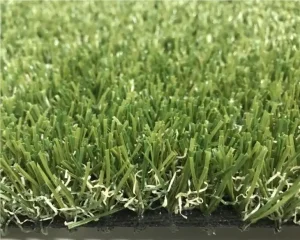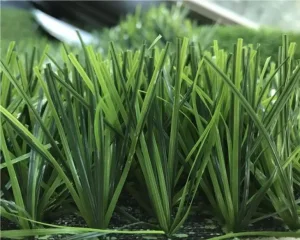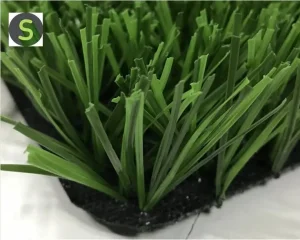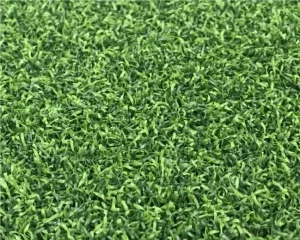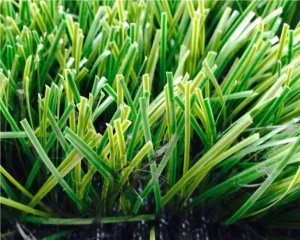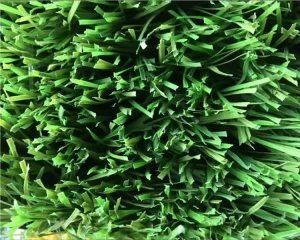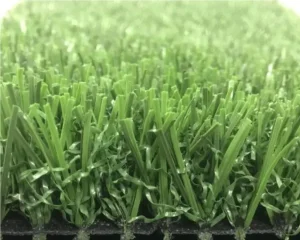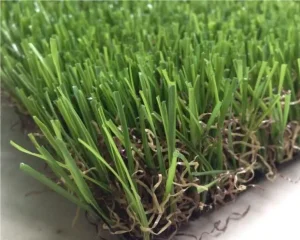
Featured Precision Sports & Putting Turf Selections
Direct factory configurations matching international standards for ball deceleration, resilience, and multi-climate endurance.
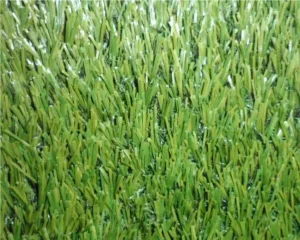
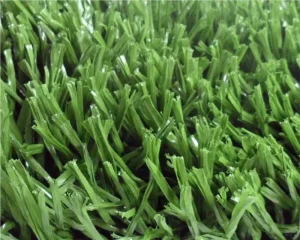
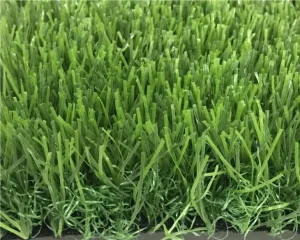
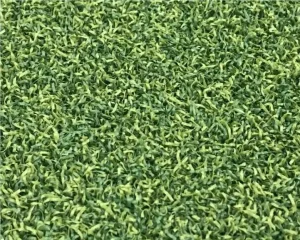
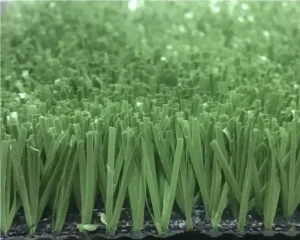
Artificial Golf Putting Green Industry Trends
Global golf facility management is undergoing a paradigm shift driven by water scarcity, precision engineering, and the demand for year-round playable conditions.
Eco-Compliance & Zero Chemical Regimes
Traditional greens demand high pesticides and heavy irrigation. The shift toward modern synthetic putting surfaces enables hospitality resorts and urban clubs to meet municipal eco-quotas while completely cutting water consumption.
Directionless True-Roll Polymer Engineering
Early putting greens suffered from fiber directional grain. Modern solutions utilize non-directional texturized monofilament nylon (PA) and polyolefin blends that provide predictable 360-degree ball deflection identical to tour-grade grass.
Commercial Mini-Golf & Indoor Simulators
Urban golf lounges, corporate entertainment centers, and specialized training academies require fire-retardant (ASTM certified) turf with zero infill migration to preserve indoor air quality and simulator sensor arrays.
Global Enterprise Procurement Requirements
B2B buyers, institutional contractors, and commercial developers evaluate manufacturers based on stringent technical criteria beyond square-meter pricing.
Batch-to-Batch Yarn Consistency
Large-scale projects require multi-roll installations without visible dye-lot variances. Utilizing TenCate raw yarns and in-house extrusion ensures optical homogeneity and identical tensile friction properties across container loads.
Tuft Bind & Backing Integrity
Putting turf undergoes repetitive friction and mechanical grooming. Enterprise buyers demand tuft bind resistance exceeding 35-45N, backed with dual-layer polypropylene cloth and reinforced polyurethane (PU) or SBR secondary coatings.
Total Cost of Ownership (TCO)
Procurement teams factor in lifecycle performance: warranty span (8-10 years minimum), sub-base preparation requirements, silica sand infill ratios, and UV degradation resistance under severe high-index radiation.
Macro Industry Solutions: Integrated Putting Green Architectures
A putting green is a multi-tiered engineering system. Our products integrate seamlessly with sub-base stabilization, drainage, and infill mechanics.
| System Architecture | Primary Fiber Profile | Pile Height & Density | Stimp Speed Target | Optimal Application Scenario |
|---|---|---|---|---|
| Pro-Infill Sand Dressed System | Polypropylene (PP) Fibrillated / Monofilament | 15mm - 18mm | 68,000 tufts/m² | 10.5 - 12.0 (Customizable) | Championship training facilities, resort greens, long-range chipping zones. |
| Non-Infill High-Density Texturized | Polyamide (Nylon 6,6) Kinked Yarn | 12mm - 15mm | 84,000 tufts/m² | 9.5 - 11.0 (True-Roll) | Commercial mini-golf, rooftop installations, residential patios, indoor simulators. |
| Dual-Color Fringe & Rough Transition | Polyethylene (PE) Monofilament with Thatch | 30mm - 40mm | 18,900 tufts/m² | Check & Spin Absorption | Perimeter collar stabilization, approach shot deceleration, authentic aesthetics. |
| Modular Portable Target Grid | Texturized Polyethylene + Shock Pad Core | 10mm - 13mm | 75,000 tufts/m² | 10.0 (Uniform) | Driving range target greens, temporary corporate event courses, cruise decks. |
Localization Support, Testing & Compliance Assurance
Overcoming regulatory hurdles in international jurisdictions with fully documented laboratory qualifications and localized shipping workflows.
PFAS-Free & Chemical Safety Reports
Rigorous test certification verifying zero per- and polyfluoroalkyl substances (PFAS), heavy metals (RoHS / REACH), and harmful SVHC compounds, allowing rapid customs clearance in Europe and California.
Fire Retardancy & Shockpad Synergy
EN 13501-1 and ASTM D2859 flammability compliance documentation for enclosed commercial builds. Precision roll planning to integrate directly with closed-cell drainage/shock pads.
Global Logistics & Job-Site Cutting Plans
Exporting to 30+ countries with custom roll width manufacturing (2m and 4m options) and seam optimization schematics to reduce scrap rates and speed up contractor installation timelines.
Technology Roadmap & Future Outlook (2025–2030)
Pioneering circular polymer systems, thermal mitigation coatings, and sensor-responsive putting environments.
Phase 1: Mono-Component Recyclable Backings
Eliminating polyurethane/latex cross-bonding to allow 100% circular post-consumer melting and re-pelletization of whole turf rolls without mechanical peeling.
Phase 2: Infrared Refractive Heat-Shield Fibers
Integrating specialized solar-reflective pigments that dissipate thermal energy, reducing surface green temperatures by up to 10°C in high-temperature arid golf developments.
Phase 3: Sensor-Embedded Smart Greens
Conductive polymer traces integrated beneath the turf backing to interface with launch monitors and training apps for instant roll vector and velocity telemetry.
Frequently Asked Questions for Project Specifiers
Detailed technical answers to common queries submitted by landscape architects, golf builders, and sports turf importers.
How is ball speed (Stimpmeter rating) adjusted on synthetic putting greens?
Ball roll speed is controlled through a combination of fiber pile height, yarn density, and the volume/gradation of rounded silica sand infill. Infilled systems can be adjusted from Stimp 9 to 12+ through sand depth and mechanical roller compacting. Non-infill nylon systems provide factory-calibrated consistent speeds from 10 to 11.
What is the structural difference between Nylon (PA) and Polypropylene (PP) putting turf?
Nylon has superior mechanical memory and thermal stability, making it resilient to foot traffic without packing down, but commands a higher price point. Polypropylene is cost-effective, inherently hydrophobic, and excels in sand-infilled designs where the silica sand provides vertical support to the fibers.
How does the drainage system perform during torrential rainfall?
Our putting turf utilizes perforated backings engineered with drainage holes spaced systematically, yielding vertical water permeability rates in excess of 60 liters/minute/m². When installed over an open-graded aggregate sub-base, water drains through the matrix, leaving no standing puddles.
Can you accommodate custom OEM yarn colors and pile specifications?
Yes. As a primary manufacturer with five decades of polymer experience and authorized TenCate partnerships, we manufacture custom pile heights from 6mm to 75mm, adjust dtex parameters, stitch rates, and provide private-label backing print and packaging for global brands.
Specialized Turf Lines & Additional Solutions
Explore our full line of multi-sport, soccer, baseball, and commercial golf rough engineered for long-term playability.