China Top 10 Artificial Football Turf Manufacturers?

Time:2026-10-29 Author:Sienna
0%

China’s artificial turf sector spans fiber extrusion, backing, coating, and finished-pitch installation. Yet a polished sample tells only part of the story. Buyers comparing China’s top ten Artificial Football Turf manufacturers should examine product specifications, quality controls, export experience, and after-sales support. The seams matter. So does the drainage beneath them.

FIFA’s Quality Programme for Football Turf sets out test criteria for surfaces, including ball behavior, shock absorption, and rotational resistance. Its technical documents offer a useful reference when assessing manufacturer claims. Grand View Research’s Artificial Turf Market report provides broader market context, while FIFA’s framework focuses on football-specific performance. These sources answer different questions; neither replaces independent product testing or a factory audit.

Sports-surface researcher Dr. David James is known for work on artificial turf performance. A careful paraphrase of the practical lesson from this field is: “Assess the complete surface system, not just the turf fibers.” That distinction is easy to miss. A dense pile may look convincing under showroom lights, but backing, infill, installation, and maintenance shape how a pitch performs over time. This guide compares ten Chinese manufacturers through those practical lenses. Rankings can never capture every buyer’s needs, and published specifications do not prove real-world durability. Treat each shortlist as a starting point, then verify samples, test documents, and project references before making a decision.
China Top 10 Artificial Football Turf Manufacturers?

Understanding Artificial Football Turf and Its Uses in China

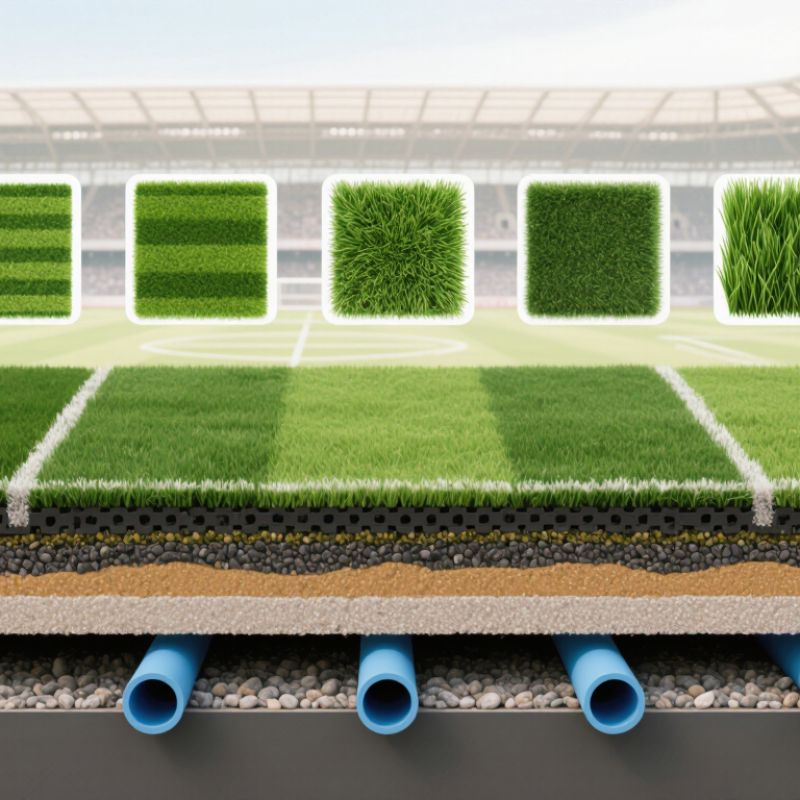
Artificial football turf is a layered playing surface designed for repeated use, with synthetic grass, infill, and a shock-absorbing base. In China, it is used on school grounds, community pitches, and training fields where natural grass may struggle with heavy foot traffic. Regional weather matters: intense summer sun, rainfall, and drainage conditions can all affect surface performance. The details matter.

Grand View Research’s 2023 Artificial Turf Market report estimated the global market at USD 4.31 billion in 2022. It forecast 6.3% annual growth from 2023 to 2030. This figure covers multiple applications worldwide, not China’s football-turf market alone.

FIFA’s Quality Programme for Football Turf evaluates factors such as ball roll, shock absorption, and rotational resistance. For Chinese project planners, those checks offer useful benchmarks, but they do not replace local site testing.

A school field used daily needs different maintenance planning from a lightly used community pitch. On a hot afternoon, surface temperature can also affect comfort. A neat surface can hide poor drainage or uneven infill, so inspection after rain and regular maintenance remain essential.

Criteria for Ranking China’s Artificial Football Turf Manufacturers

A credible ranking of China’s artificial football turf manufacturers should begin with tested performance, not catalogue claims. FIFA’s Quality Programme for Football Turf assesses factors such as ball behaviour, player-surface interaction, and durability through laboratory and field testing. Request current, independently issued test reports, and confirm that the tested product matches the proposed turf system. Small differences matter.

Manufacturing consistency deserves equal weight. Review fibre specifications, backing construction, batch records, drainage design, and documented resistance to UV exposure and wear. Factory visits can reveal practical details: whether yarn rolls are traceable, whether production checks are recorded, and how rejected batches are handled. Capacity alone proves little. A large line can still produce uneven results.

Market context helps explain the pressure to compare suppliers carefully. Grand View Research estimated the global artificial turf market at about USD 4.2 billion in 2023 and forecast growth through 2030 in its Artificial Turf Market report. That figure covers multiple applications, not football turf alone. Rankings should therefore disclose their scoring weights, sample sizes, and evidence dates. No ranking is perfectly neutral; even a sensible method may underweight after-sales support or local installation conditions. Do not treat a polished brochure as proof.

Profiles of China’s Top 10 Artificial Football Turf Manufacturers

Profiles of China’s top artificial football turf manufacturers should reveal more than factory size. A useful comparison examines how each company designs its turf system, sources yarn, and controls tufting and backing. These details affect surface consistency, drainage, and wear under repeated play. Some manufacturers manage several production stages in-house; others rely on specialist suppliers. Ask which processes are handled internally. Clear answers matter.

Product specifications deserve close attention. Compare pile height, stitch rate, backing construction, and stated yarn shape across each profile. Then check whether test reports match the exact product being considered. A certificate alone may not describe performance on a full-size pitch. Request installation references, maintenance guidance, and warranty terms in writing. Small details count.

The strongest profiles also explain where their systems are intended to perform, such as school grounds, community fields, or intensive training venues. Check sample consistency by comparing color, fiber feel, and backing finish across multiple pieces. Factory visits or independent inspections can help verify production claims, though access may not always be practical. Rankings can change with project needs, and “top ten” is not a universal technical standard. That deserves a second look.

Materials, Production Methods, and Quality Standards

China’s artificial football turf manufacturers commonly use polyethylene yarn for its soft feel and resistance to repeated foot traffic. Some products combine it with a more supportive pile structure, while polypropylene may appear in backing layers. The right choice depends on climate, player age, and expected use. Small details matter. Ask for the yarn type, pile height, stitch rate, and backing construction—not just a product sample.

Production typically begins with tufting yarn into a primary backing. A coating is then applied to help lock the tufts in place, followed by curing and roll inspection. Some factories also test seams and drainage on finished sections. Poor coating control can lead to loose fibers; inconsistent tufting may create visible stripes. These problems are not always obvious in a small showroom sample.

Quality checks should match the field’s intended use. Useful measurements include yarn pull-out strength, dimensional stability, water permeability, and ball rebound. Testing for ultraviolet ageing and surface performance can also show how materials may hold up outdoors. Request dated reports from a competent independent laboratory, and confirm that the tested sample matches the proposed production batch. A certificate alone is not enough. Even careful testing has limits: installation, infill depth, and maintenance can change how the surface performs over time.

How to Choose a Manufacturer for Your Football Field

Choosing a manufacturer for a football field starts with matching the turf to its use. A school pitch with daily training needs different wear performance from a community field used occasionally. Ask for the pile height, yarn shape, stitch rate, backing construction, and recommended infill. Request test reports that identify the tested product, not just general company figures. Ask for proof.

Drainage and installation deserve close attention. A sample cannot show how the full surface handles heavy rain, so ask about the base requirements and drainage design. Confirm who supervises installation and how seams, line markings, and transitions are checked. Visit a completed field if possible. Look closely at worn goal areas and seams, not only the clean center. Details matter.

Compare warranty terms in writing, including maintenance duties, expected usage, and what counts as a defect. Ask for references from fields with similar climates and traffic, then speak with the operator about repairs and upkeep. A low quote may leave out site preparation or after-sales support. I would still question even a polished presentation; product samples and promises cannot replace documented testing and a clear installation plan. Request a full specification sheet and itemized quote before choosing.

FAQS

What is artificial football turf made of?

It usually combines synthetic grass, infill, and a shock-absorbing base. The system is layered.

Where is artificial football turf commonly used in China?

Schools, community pitches, and training fields use it where natural grass struggles with heavy foot traffic. Daily school use needs a different maintenance plan from occasional community play.

Which site conditions should be checked before choosing turf?

Consider summer heat, rainfall, drainage, and expected foot traffic. Inspect the field after rain; a neat surface can hide standing water or uneven infill. That’s easy to miss.

What specifications should buyers compare?

Check pile height, stitch rate, yarn type, and backing construction. Compare color and fiber feel across several samples. A single sample may not represent a full production batch.

How is artificial football turf manufactured?

Yarn is tufted into a primary backing, then coated to secure the tufts and cured. Finished rolls may be checked for seams, drainage, and consistency. Loose fibers or stripes can signal process-control problems.

Which quality tests are useful?

Ask for reports on yarn pull-out strength, dimensional stability, water permeability, and ball rebound. Outdoor projects may also need ultraviolet-ageing and surface-performance tests. I may be putting too much weight on paperwork; site conditions still matter.

Does a certificate guarantee good field performance?

No. A certificate may not cover the exact product or production batch. Confirm that the tested sample matches the proposed material, then consider independent site testing. Not always.

How should manufacturers be compared?

Look beyond factory size and ask which production stages are handled in-house. Request installation references, maintenance instructions, and written warranty terms. “Top ten” is not a universal technical standard, so rankings need a second look.

Conclusion

This article explores the role of Artificial Football Turf in China, including its common uses in schools, sports facilities, and community fields. It explains how manufacturers can be assessed by factors such as product durability, playing performance, production capacity, customer support, and quality control. The article also presents an overview of ten leading manufacturers, focusing on their capabilities and the considerations buyers may use when comparing suppliers, without relying on brand names.

Readers will learn how turf materials, manufacturing methods, and quality standards can affect a field’s safety, resilience, drainage, and long-term maintenance needs. The final section offers practical guidance for selecting a manufacturer, from checking product specifications and testing procedures to evaluating installation support and project requirements. Together, these topics help buyers make informed decisions when planning a football field.

Sienna

Sienna

Sienna is a skilled marketing professional with a deep expertise in our company’s core products and services. With a passion for innovation and detail, she plays a pivotal role in crafting insightful blog posts that not only highlight the unique features of our offerings but also provide valuable......